

In the coming years, coffee from Brazil might start to taste a bit different.
The South American country is the world’s biggest producer of arabica, a mild variety of coffee bean. But as climate change makes it harder to grow those beans, some farmers are investing in robusta, which produces a more bitter bean but can tolerate higher temperatures and is more resistant to diseases.
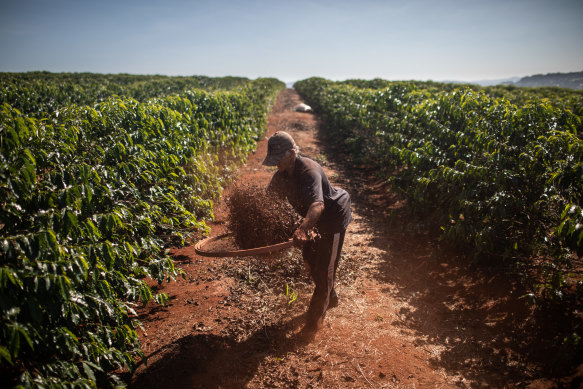
Brazil’s traditional coffee growing regions, which largely produce arabica, have been beset by more intense and frequent droughts, and hotter temperatures. Credit: Bloomberg
Brazil’s traditional coffee growing regions, which largely produce arabica, have been beset by more intense and frequent droughts, and hotter temperatures. Arabica is still the country’s main coffee export, but robusta production is now growing at a faster rate: by over 81 per cent over the past 10 years, according to the United States Department of Agriculture, which tracks global coffee production.
For Brazil, robusta provides an opportunity to remain the world’s largest coffee supplier in the future even as the effects of climate change intensify, says Fernando Maximiliano, Coffee Market Intelligence Manager at StoneX, a financial services company.
“It wasn’t necessarily demand that resulted in the growth of robusta production,” he adds. “In reality, climate problems and losses in arabica were the main factors that contributed to stimulating robusta growth.”
Loading
For the past three years, arabica coffee production in Brazil has grown at a rate of around 2 per cent to 2.5 per cent annually, while robusta production has risen about 4.8 per cent annually. This year’s growing season, robusta hit a nearly 22 per cent increase, a record harvest, according to StoneX. This means that robusta production has stood out for its ability to better cope with more adverse weather conditions and also for its profitability, analysts say.
In warmer areas of Brazil where arabica can’t grow, coffee producers are finding ways to produce robusta and mitigate the impact of hotter temperatures. Planting coffee trees under the shade of native trees and other species is one of these techniques.
“This way it will remain productive, it will stay a little more moist, so it won’t degrade so easily,” Jonatas Machado, commercial director of Café Apuí, an agroforestry robusta coffee producer in the Amazon region.