
Eben Etzebeth is not a thug. He is a hard man and a “bully”, though. But what happened in the last few seconds in Cardiff was an aberration. Those envious of this superb South Africa rugby team and their great second row will post the slow-motion replay of the eye gouge on Wales’s Alex Mann as evidence against the Springboks’ record 141-cap lock.
I did not see the gouge in real time because I had left my seat on Saturday afternoon in the Bristol Bears press room, kick-off imminent in the West Country with Northampton Saints in town. Wales were — to put it mildly — well beaten and battered. Nothing left to see, so we thought.
The incident was, according to Rassie Erasmus, a “justified” red card. “It didn’t look good,” he said. Slow-motion footage is certainly not the best type of video from which to judge, but if the Springboks head coach says it doesn’t look good, then it doesn’t look good.
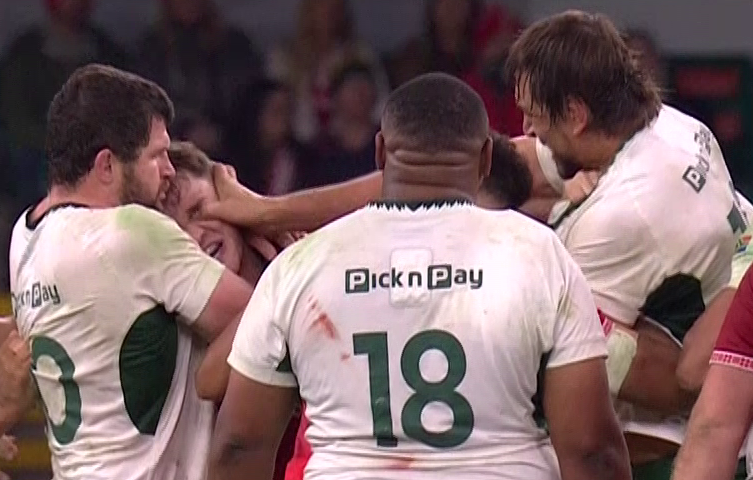
Even Erasmus, the Springboks head coach, admitted that red was a just punishment for Etzebeth
Alastair Campbell, a bizarre choice as Lions press officer in 2005, provoked righteous fury on the part of the travelling British and Irish media circus in New Zealand when the touring side’s skipper, Brian O’Driscoll, was spear tackled by a couple of All Blacks. Anyone who watched Super Rugby that season could have pointed out that the “spear tackle” was all the rage. It didn’t make the O’Driscoll incident any better, but it added some much needed context.
Let’s ponder the rationale, or lack thereof, when Mann appears to have been gouged. Etzebeth, 34, is one of the most intimidating players on the planet. His greatness isn’t just the technical ability at the lineout, the grunt in the scrum, the power in the tackle, the running angles of a centre and his ability to take box-kicks like a winger. It’s his aura.
The spirit of the Springboks is captured in the threatening grin of the great man. He might not be captain but he has been the fulcrum of this team for many years. South Africa’s rugby history has revolved around size and power. What we are witnessing at present is an evolution in which South African speed and skill merges with strength. But the evolution will never leave behind the core essence of what being a Springbok means. South Africa can batter teams. They — for want of a better word — bully them. Etzebeth is a “bully” in the truest rugby sense. He is their enforcer as well as a fabulous player.
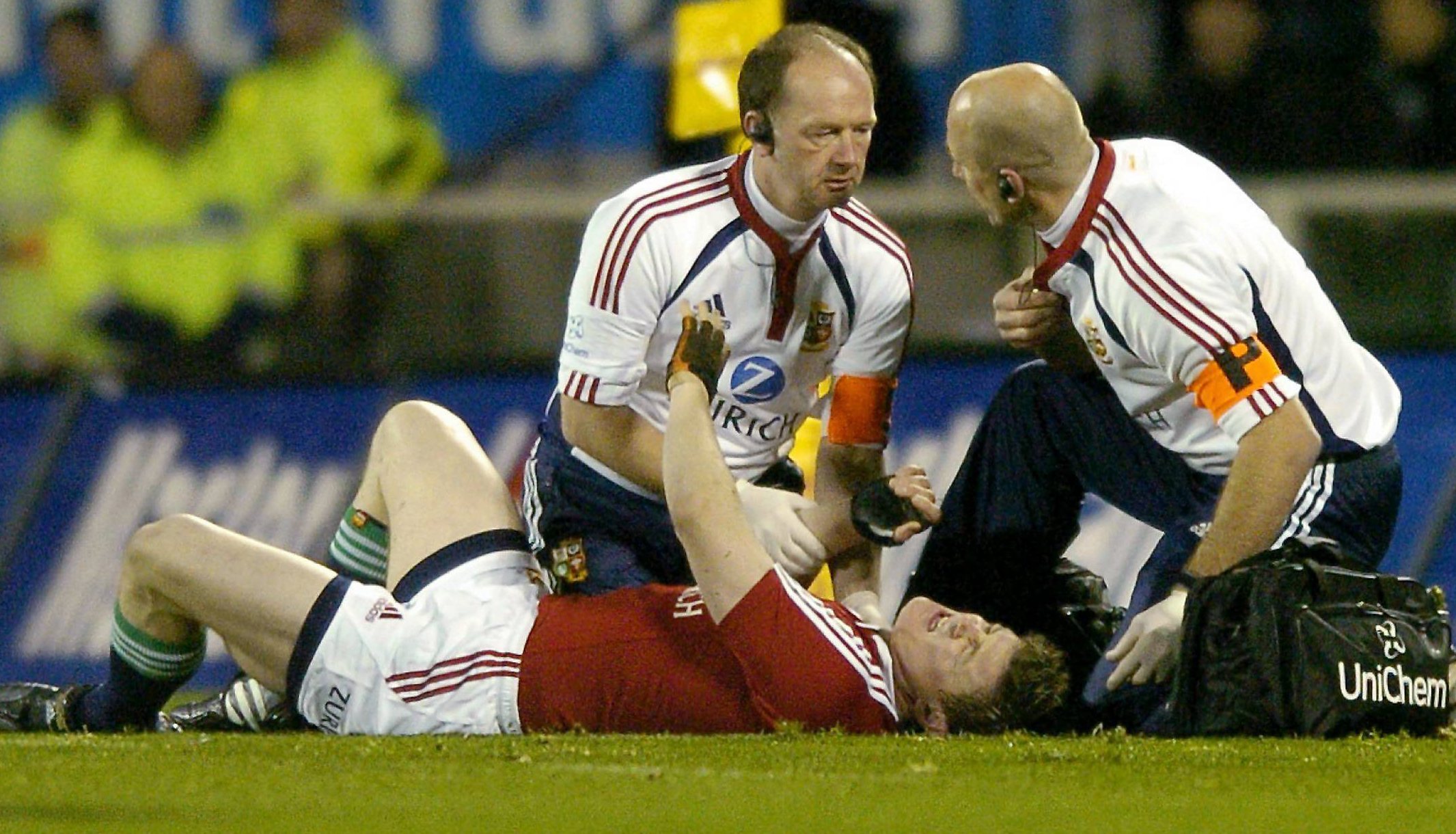
The spear tackle on O’Driscoll was one of the most controversial moments of the 2005 Lions tour to New Zealand
BRENDAN MORAN / SPORTSFILE
“Bully”, of course, has been the inflammatory word of the month since Felipe Contepomi, the Argentina coach, described Tom Curry as a bully. Former England players, coaches and team-mates have rushed to his defence. He visits cat cafés in Tokyo. What does that prove? That he has a soft heart off the field. We can throw that rubbish out of court as irrelevant.
Five minutes into Sale Sharks’ Friday night game against Exeter Chiefs, Curry hit Josh Hodge, high and anything but handsome with a leading right shoulder. Television took us through all the motions but the first live shot illustrated the dangerous nature of the smash. Each to their own, but this was a straight red in my eyes.
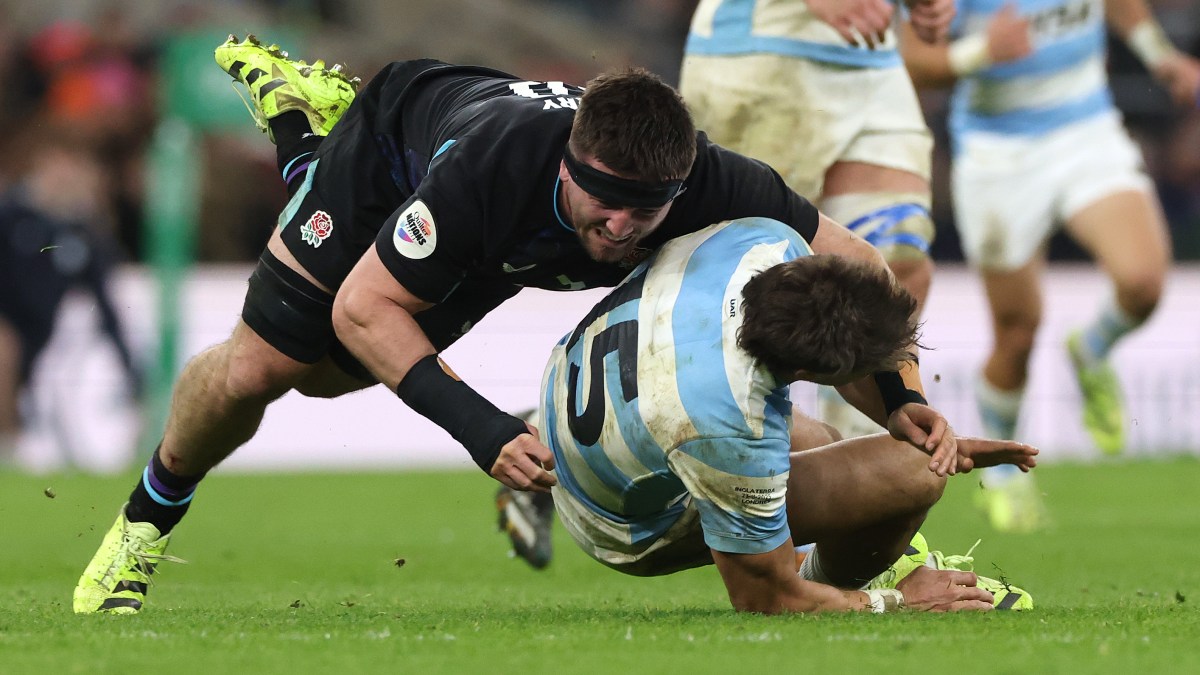
After all the brouhaha from the previous week, one wondered what he was thinking. He wasn’t. Any more than he wasn’t thinking when he caught Juan Cruz Mallía late against Argentina. Instinct has been drilled into him. The result is a torn ACL. I am sure Curry, 27, didn’t mean to cause any damage, but when a flanker floors a full back a second late, the intention is deliberate intimidation. It has been ever thus. That incident was — like the Etzebeth one — too late to impact upon the psychological state of the opponent. So why do it? It’s instinct.
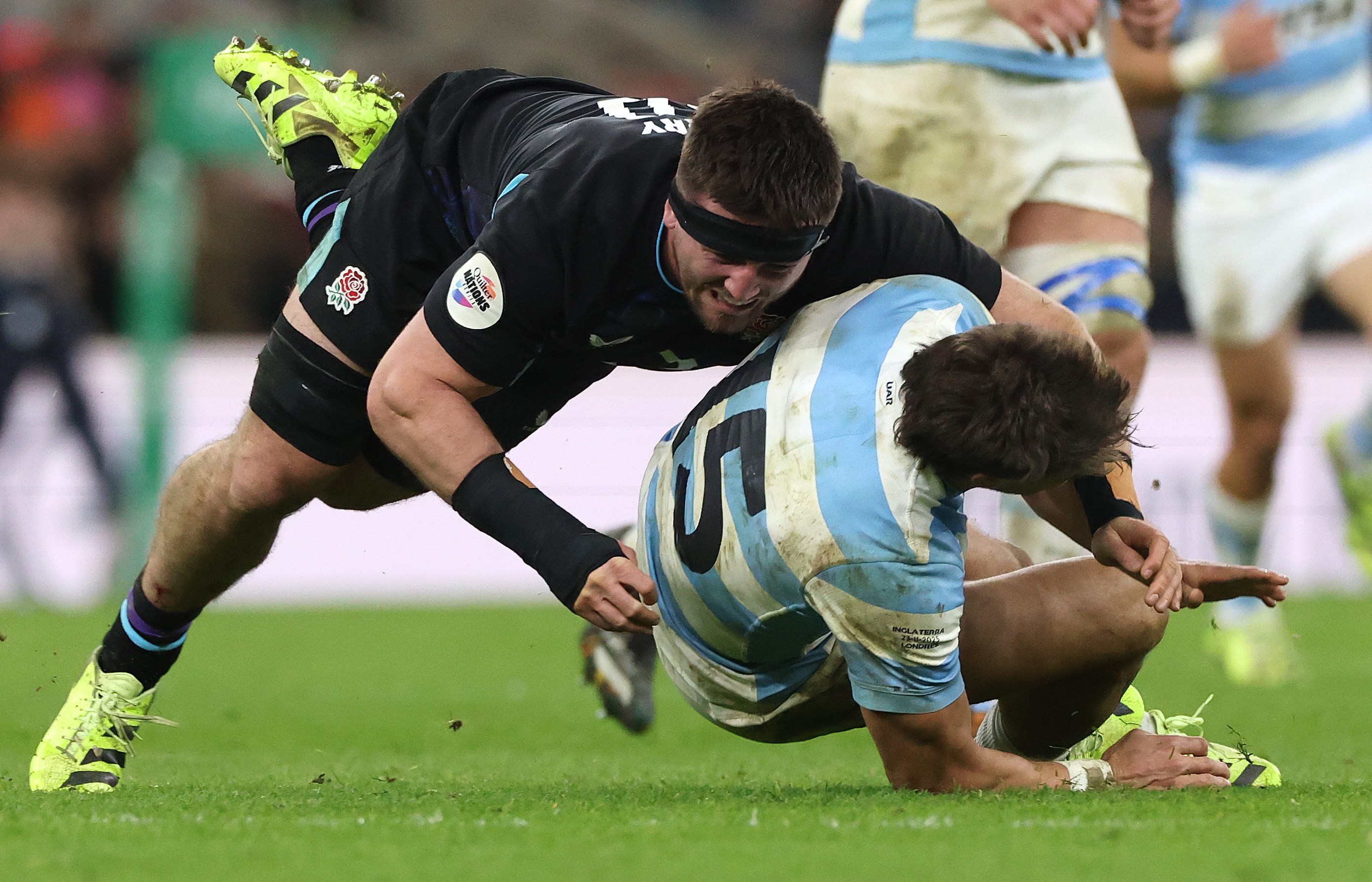
Curry’s late hit on Mallía led to an injury for the Pumas full back and prompted a furious reaction
DAVID ROGERS/GETTY IMAGES
Team-mates adore the rough and tough villains. In the days when television cameras didn’t find their way into those dark, bedeviled parts of a rugby field, there were dog-loving props who did terrible things. How we laughed and winked at the thuggery of it all. Only when the intimidation ended with a serious injury would we drink our post-match pints more sheepishly.
Curry is part of that tradition. In some ways his late charge was unlucky in that he almost certainly wasn’t setting out to do damage, just to rattle the full back. On Friday night, the hit was an uglier incident; the Sale flanker got away without any obvious injury to Exeter’s full back, who did not come out for the second half because of a knee injury that was seemingly unrelated to the high shoulder.
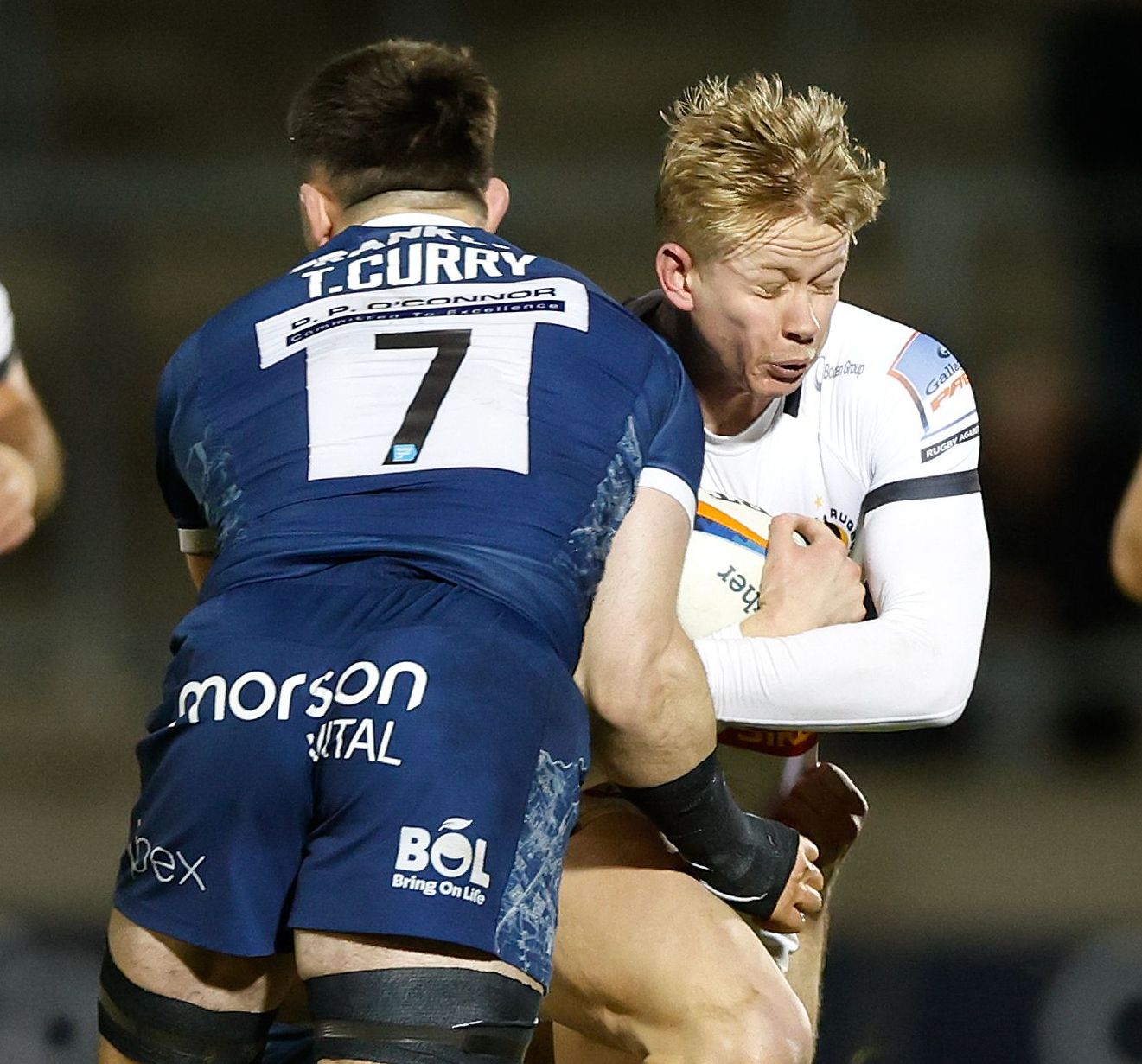
Curry’s ugly hit on Hodge came less than a week after he was described as a “bully” by Contepomi
MATT IMPEY/SHUTTERSTOCK
Before professional rugby, players were not coached to dislodge the carrier’s ball with thunderous shoulder hits. The complete wrap tackle, where both arms go around a player, was the way everyone was taught. They are a dying species these days. Players will not cease their more dangerous ways until the real problem is considered — the coaches who drill the shoulder hits into them.
The bully boys who would stamp and kick and punch are replaced by legalised big-hitters. Different in so many ways, but they are all bullies — Curry as well; bullying is an intrinsic part of the sport. If every player has a physical edge on his opposite number, it will be an easy afternoon for the dominant physical team. Every team needs its share of bullies.
Cast your mind back to 1997 and the appointment of Leicester’s Martin Johnson as Lions captain for the tour to South Africa. Until then, Johnson had been one of those bullies, intent on scaring the shit out of his opposition. Sir Ian McGeechan changed the course of Johnson’s career with this decision. One of the pre-eminent reasons for the choice was to ensure the Springboks skipper, the hulking No8 Gary Teichmann, would not look down on his Lions counterpart in the pre-match changing-room coin toss.
Rugby union can say all it wants about health and safety but the ghost of the amateur game is embedded within the presence of the professional game. It is a wildly physical game, its teams a mix of brain and brawn. Throughout history, team-mates have been drawn to the darker elements, the ones who do the dirty work. Bullies or not, Curry and Etzebeth are revered.
In the case of Mallía, the victim is absent with an injury and the villain is free to play (and get yellow-carded within five minutes). There is a moral issue here that goes beyond World Rugby. Waiting for justice is waiting in vain. The sport will never wipe out its bullies because without brutality, legalised or otherwise, rugby union doesn’t exist.