
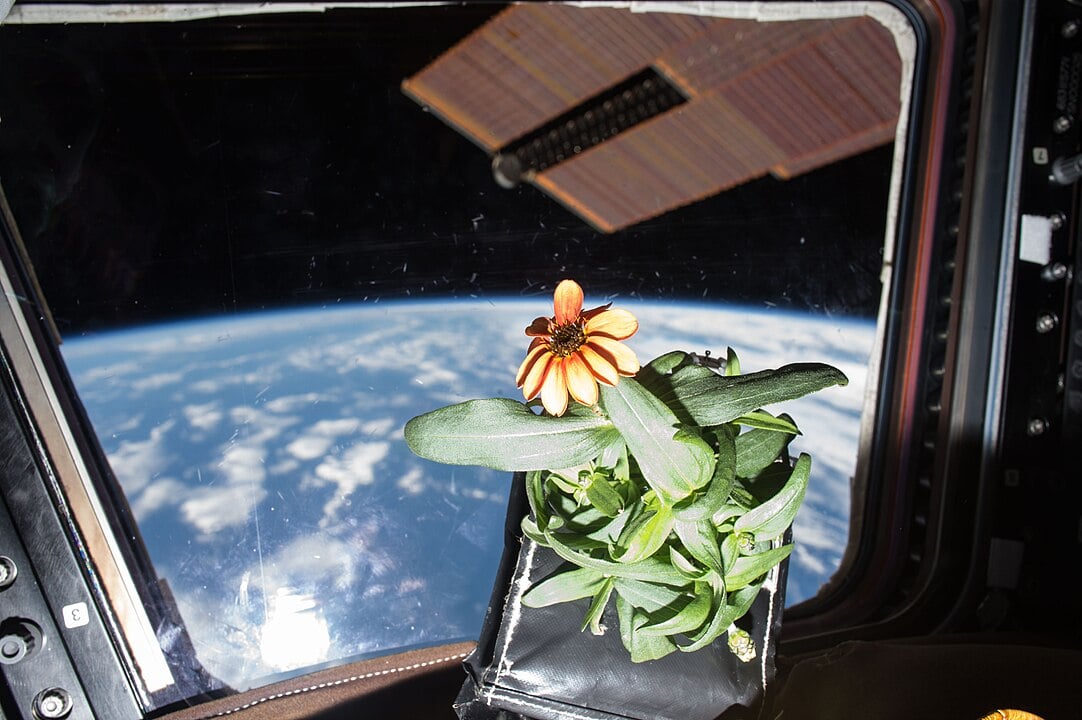
Picture an astronaut on the Moon in 2035, reaching for a crisp lettuce leaf grown in lunar soil simulant, gazing upon Earth which is visible through the window. It sounds like science fiction, but a global collaboration of scientists is making this vision increasingly tangible, developing the agricultural technologies that will sustain human exploration of the Moon and Mars.
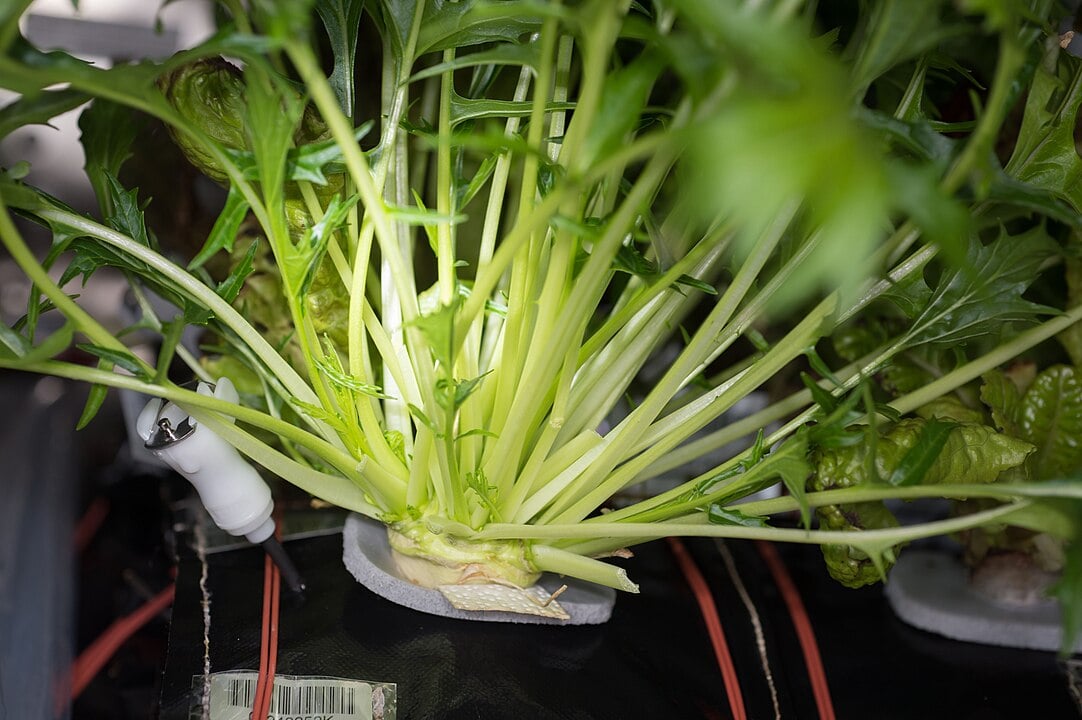 The arugula-like lettuce Mizuna growing for Veg-03 (Credit : NASA)
NASA has designated astronaut nutrition as a critical red risk, their terminology for the highest priority threats to crew health and mission success. For short trips to the International Space Station, freeze dried meals suffice. But journeys to Mars will take years, and no amount of vacuum sealed provisions can adequately sustain crews over such timescales. The solution requires growing fresh food in space, creating what scientists call Bioregenerative Life Support Systems.
Plants in space serve far more purposes than simple nutrition. They generate oxygen through photosynthesis, purify water, recycle waste products, and provide raw materials for pharmaceuticals and construction. Perhaps surprisingly, they also support psychological wellbeing during the isolation and monotony of deep space missions, offering living greenery and the satisfaction of tending growing things when crew members are millions of kilometres from home.
The challenge lies in fundamentally changing how plants behave. On Earth, gravity guides root growth downward and shoot growth upward through a process called gravitropism. Water and nutrients flow predictably through soil. Heat rises, creating convection currents that distribute warmth and circulate air. But the Moon’s gravity is just one sixth of Earth’s, Mars manages roughly one third, and spacecraft experience microgravity altogether. These altered conditions disrupt fluid dynamics, hinder nutrient flow to roots, and affect heat transfer in ways that can stunt or prevent plant growth.
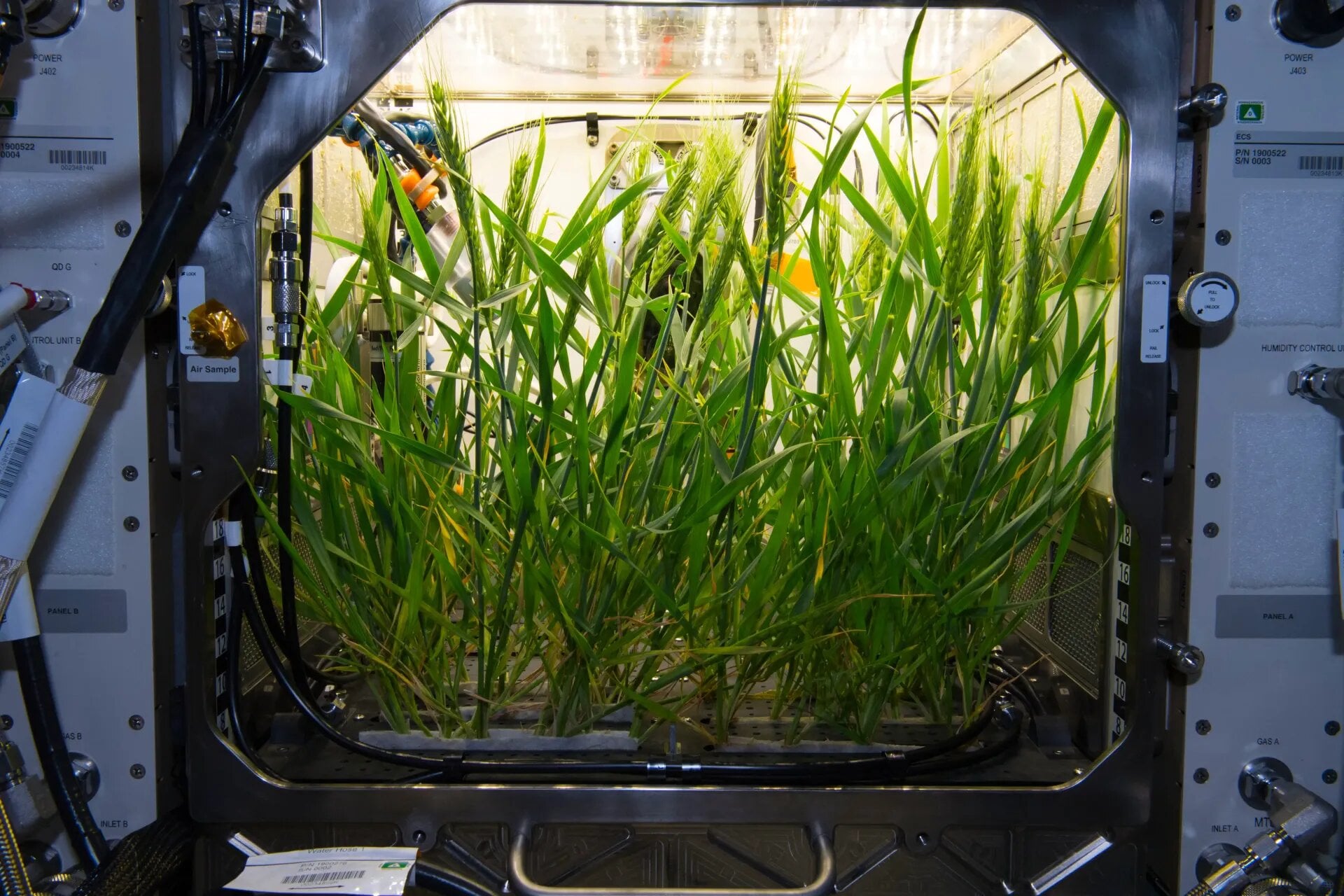 Plants being grown on board the ISS (Credit: NASA/Norishige Kanai)
The team led by University of Melbourne scientists present a framework for evaluating how effectively different plant species can function in space habitats. The system extends beyond simple crop yield to assess how well plants perform essential life support functions like air recycling and water purification under extraterrestrial conditions.
History will be made in late 2027 when NASA’s Artemis III mission conducts the Lunar Effects on Agricultural Flora experiment, quite the mouthful that involves growing three fast growing plant species in a controlled chamber on the lunar surface. After one week, 500 grams of plant samples will return to Earth for analysis, with Australian researchers examining how reduced gravity and increased radiation affect gene expression and plant physiology.
To facilitate progress, the team are creating sophisticated computer models that use artificial intelligence to optimise plant growth while accounting for how space conditions affect astronauts’ sensory perception and food preferences, preventing menu fatigue during multi year missions.
Source : Helping to grow plants in space for NASA missions to the moon and mars