
Stay informed with free updates
Simply sign up to the Artificial intelligence myFT Digest — delivered directly to your inbox.
The writer is chair of Deeptech Labs and founder of Cantab Capital Partners
Artificial intelligence fairy dust is being sprinkled liberally right now. But bluster, hype and unprofitable business models may only get you so far. Although there is little mention of the word “mathematics” among all this, eventually you have to face up to the numbers.
Governments, industry and the markets have largely overlooked the foundation stone of mathematics in all the frankly crazy amounts of money flowing into these technologies. It’s beyond time for the mathematical community to be recognised as the crucial ingredient in deriving genuine value and advantage from this sector.
Mathematicians often say that “everything is mathematics at the end of the day” — much to the annoyance of practitioners in fields as diverse as physics, genomics and economics. In the case of AI, however, the connection is obvious.
Modern neural networks work by, in effect, multiplying tensors — a more general version of matrices and vectors that many people will be familiar with — over and over again. Feature extraction in machine learning is done using the machinery of eigenvectors and eigenvalues. Creating a model out of data quickly and cheaply is a constrained optimisation problem which is predicated on advanced differential calculus. And so on and so on.
Indeed AI, and its more sober machine learning cousin, are sub-branches of statistics, which is itself a sub-branch of mathematics. Data is the fuel for AI, mathematics defines the rules to analyse it and computer scientists then implement these rules using hardware and software.
Yet the UK government has failed to understand how critical the mathematical community is both to our goal of AI excellence and in extracting genuine value from it. Since coming to power, they’ve cut funding to a number of mathematics initiatives, from the Advanced Mathematics Support Programme, which encouraged excellence in schools, to the Multiply scheme, aimed at boosting the general public’s mathematical literacy.
They have also stood by while many university mathematics departments suffer from cuts and closures. Research by the Campaign for Mathematical Sciences has shown the proportion of maths students is shrinking, and that in the next 10 years, the number of maths graduates is forecast to fall — at the very time when we need them most.
As we saw in the Bond Review in 2018, this area generates an enormous bang for its buck. It was estimated that mathematics generates nearly £500bn in gross value added. Yes, approximately 20 per cent of UK GDP.
While one might quibble about the magnitude, it is clear that mathematics is a significant contributor to our economy. And while the caricature of mathematicians only needing some paper and a pencil is a little outdated, it is still by far the cheapest branch of the Stem quadrumvirate.
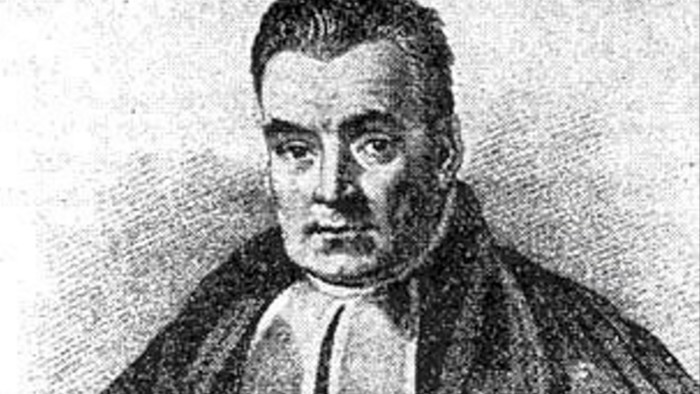
Once something is proved, it’s there for other researchers to use forever. Case in point: an 18th-century statistician named Thomas Bayes discovered a theorem that is even now a foundational part of how many AI systems “learn” from new data.
In the past, the UK has punched well above its weight in mathematics. However, without continuing and expanding support for the subject, we can build as many data centres as we like, but the innovation that will power what happens in them will come from elsewhere. Mathematics is the most cost-effective route to intellectual, ethical and technical leadership in this field.
If the AI bubble does burst, there will be value to be extracted from the rubble. The application of mathematics to real-world problems in medicine, government, business and our personal lives will still generate gains, much as it does in the financial world. Even in a doom scenario, mathematics will remain the driving force for future AI innovation — and we need to back it.
This article has been amended since original publication to correct the time during which Thomas Bayes lived