
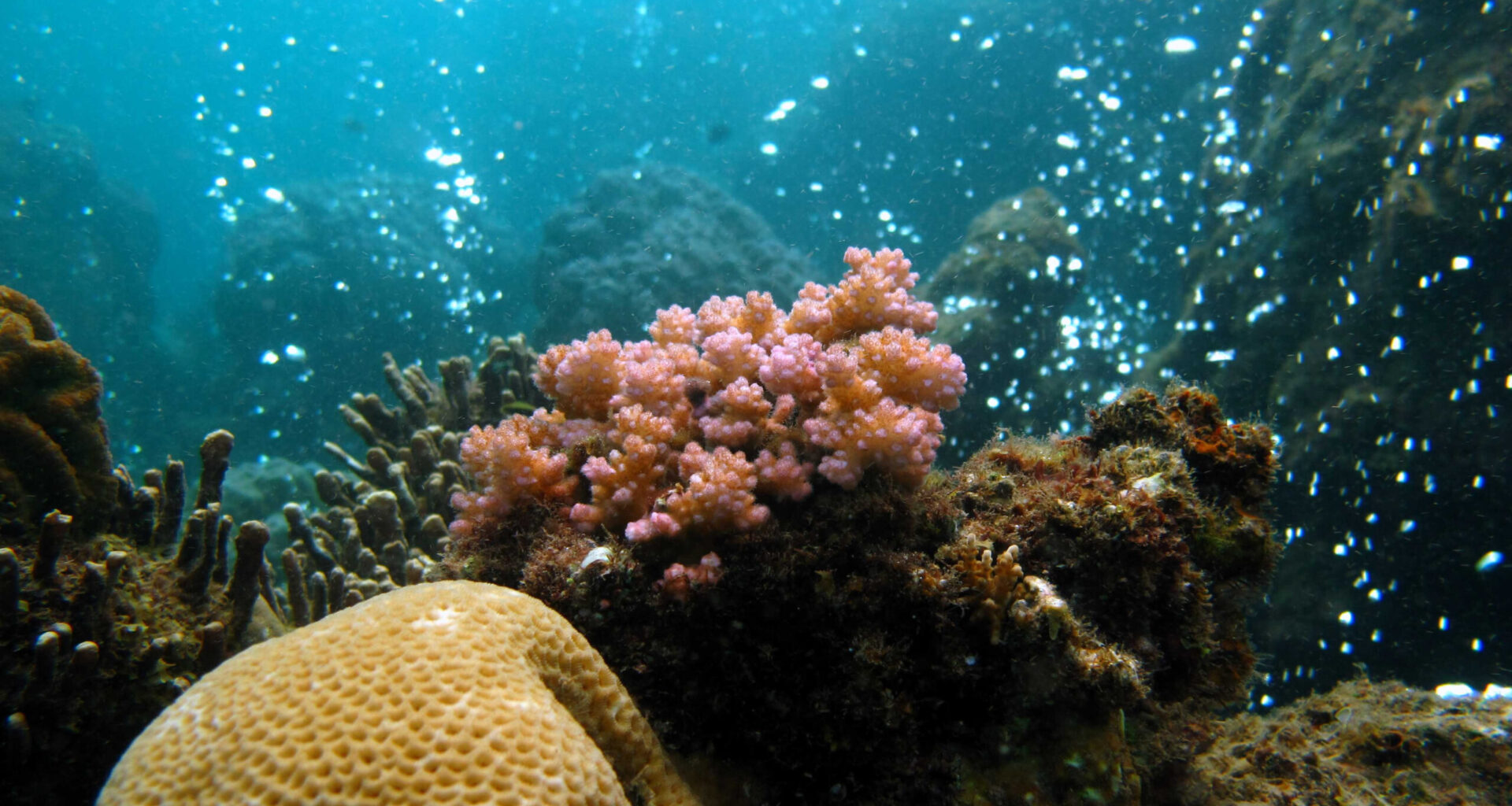
The results have been sobering.
“These Papua New Guinea reefs are telling us that with every bit of increase in CO₂, we will see fewer corals and more fleshy algae,” said Dr. Sam Noonan, AIMS researcher and lead author of the study. “Critically, we also found far fewer baby corals. Without new recruits, reefs can’t grow or recover quickly – and that affects all the species that depend on them, including people.”
Today’s oceans remain slightly alkaline, with a pH of about 8.0, but acidity has already increased by roughly 30% since the industrial era. If emissions continue to rise, global ocean pH could fall to around 7.8 by 2100 – bringing it close to the values observed at the Milne Bay seep sites.
By surveying 37 reef sites along a 500-metre CO₂ gradient, the researchers documented a steady ecological transformation.
“There was no sudden tipping point,” Fabricius noted. “As CO₂ increased, fleshy algae gradually took over, smothering corals and other calcifying species.”
The implications of the study extend far beyond Papua New Guinea. Early signs of CO₂-driven change are already emerging on parts of the Great Barrier Reef. These seep sites – the latest to be analysed – show what may lie ahead.
“Ocean acidification is a massive global problem and one that has been understudied and underreported,” Fabricius continued. “This research offers the first field-based glimpse of how whole reef communities may transform under rising CO₂.
“The more carbon we emit, the greater the changes will be for reefs, for marine biodiversity, and for coastal communities that rely on them.”