

Wil reviews the 2026 Trek Fuel EX 8
Ready to feel old? 20 years – yes, two whole decades – have passed since the very first Trek Fuel EX rolled off the production line. It’s been a best seller ever since, having evolved considerably over time alongside other popular trail bikes like the Specialized Stumpjumper and Giant Trance. Being such an important model for Trek, it would be no exaggeration to say that it’s a big deal whenever a new version is unveiled.
We reviewed the previous Gen 6 Fuel EX back in 2022. It was a lovely looking thing with its canary yellow carbon frame, though I can’t say I fell head over heels in love with it. It was efficient, responsive and planted, and the highly adjustable frame certainly wasn’t lacking in versatility. However, the firm shock tune and thicc carbon chassis made it somewhat harsh and unforgiving across rocky terrain.
I’ve since had a different experience with the alloy version after purchasing a Fuel EX 8 earlier this year. It’s been heavily modified with various test components, and while it is weighty in its current guise, it stands as being one of the most ego-pumping trail bikes I’ve ridden to date. I really like it, despite its flaws.
As you can imagine then, my ears pricked up when the Gen 7 bike was announced back in August. Now simply called the ‘Fuel’, it’s offered in three distinct variations: Fuel EX, Fuel MX and Fuel LX. Each configuration employs the same frame, with swappable linkages used to change the travel and wheelsize.
While the modular approach is cool, I was still left with some important questions. Just how much better would the new Gen 7 bike be compared to my previous Gen 6? And how would it compare to other popular trail bikes like the Specialized Stumpjumper 15 and Canyon Spectral?
To get some answers, Trek sent us out a Fuel EX 8, which I’ve been testing and tweaking over the past couple of months.
Watch our video review of the Trek Fuel EX here:
 The new Trek Fuel has got plenty to boast about on paper, but would that translate onto the trail?
 There are three variations of the Fuel platform for 2026. Our test bike is the shorter travel option; the Fuel EX.
An overview of the Trek Fuel Gen 7
Straddling the gap between the Top Fuel and the Slash, the Fuel is the all-round trail bike in Trek’s full suspension lineup.
The 7th generation model receives an all-new frame that’s produced in both alloy and carbon. The iconic ABP suspension design remains, but there are notable tweaks to the layout and kinematic. You’ll find a longer shock that delivers a slightly lower leverage ratio, while the main pivot has been shifted to sit lower down and further forward. The result is a smidge less anti-squat at sag for more grip and comfort, with better support and consistency deeper into the travel.
The bigger news is the implementation of an interchangeable rocker link and shock mount, with several options that allow the one frame to perform as three-bikes-in-one. The standard platform is the Fuel EX, which is the bike that you’ll see on most shop floors in Australia. It’s built around dual 29in wheels and comes with a 150mm travel fork and 145mm of rear travel. That puts it right inline with the Specialized Stumpjumper 15, Canyon Spectral, Giant Trance X, Merida One-Forty, Pivot Switchblade and Santa Cruz Hightower.
 The Fuel EX has 145mm of rear wheel travel, though by changing the shock stroke and linkage it’ll go up to 160mm.
However, by swapping the rocker link and lower shock mount, and changing the fork and shock stroke, the Fuel can morph between three distinct configurations;
Trek Fuel EX – 150/145mm travel, 29in wheels
Trek Fuel MX – 160/150mm travel, 29/27.5in wheels
Trek Fuel LX – 170/160mm travel, 29in wheels
With its mixed wheels and 160/150mm travel setup, you could say the Fuel MX is the spiritual successor to the old Remedy. The Fuel LX is then the long travel 29er enduro bike, kind of like a non-high pivot Slash.
To switch between configurations you’ll need to purchase the necessary rocker link ($240 AUD) and lower shock mount ($56 AUD). There are options for changing travel where you don’t need to buy those parts, which I’ll be discussing later on.
Those wanting to buy a complete Fuel MX or Fuel LX will have to go through Trek’s Project One custom bike builder. This allows you to pick your preferred spec and paint, though it does mean you’ll be waiting 30-60 days before your bike arrives.
Frame details
There are plenty of other refinements to the Fuel Gen 7 frame, which is claimed to be 200g lighter than its predecessor. It’s certainly less busy due to the elimination of the split top tube, while a straight and uninterrupted seat tube allows you to fit a modern long-stroke dropper post.
Mud clearance is huge thanks to bridgeless seatstays and a tidier chainstay yoke. There’s a flexible mudflap over the main pivot and a heavily ribbed chainstay protector that aims to cut down on drivetrain clatter. While the downtube gets decent protection from two bolt-on rubberised panels, I do miss the full-coverage armour used on the Gen 6 frame.
Further weight reduction and simplification have been achieved by ditching the Mino Link and angle-tweaking headset. The only adjustment left is the two-position leverage rate flip chip at the lower shock mount. This lets you switch between Less (16.4% progression) and More (21.3% progression) settings, the latter of which is ideally suited to a coil shock.
 The lower shock mount has a 2-position flip chip that allows you to tweak the leverage rate for more or less progression.
Storage & cabling
Trek has updated the downtube storage with a bigger opening that’s 4mm wider and 9mm longer, making it more usable. The new lever mechanism is ergonomic, and the hatch fits snugly, though I’d still recommend packing a lightweight inner tube and avoiding any bulky tools when using the included storage pouches.
Bottle clearance has also grown, though recessed bolts mean it’s tricky to fit accessories underneath the cage. Not to worry, I just made use of the top tube mount to fit a multi-tool instead.
All the main fixings are easy to work on. Torque ratings are etched into the pivot hardware, and we’re happy to see a threaded BB and standard headset. Rubber cable ports and internal guide tubes minimise anguish when plumbing control lines through the frame, though unfortunately the rear brake hose is preconfigured to come out of the left side of the head tube. That makes for less optimal routing for us Aussies, which is a bit of a shame.
Otherwise it’s great to see Trek continuing to offer a lifetime frame warranty, and it’s worth noting that this is partly transferable to the second owner should you end up selling the bike.
Also worthy of mention is the Alpha NEXT Platinum construction. This is a new low-emissions alloy that is claimed to have resulted in “the largest carbon-reduction initiative in Trek history and one of the most significant sustainability milestones in the cycling industry.” Sure, nobody’s exactly saving the planet here, but hats off to Trek for taking the initiative.
 Cable routing has improved, but unfortunately it’s still not possible to route the rear brake hose from the right side of the head tube.
Trek Fuel EX geometry & size chart
While geometry isn’t too far different the Gen 6 Fuel EX, there are still notable changes to the Gen 7 bike.
The most consequential is the elimination of the XS and M/L sizes, which has reduced the available options from seven down to five. This is understandable from a manufacturing cost and inventory reduction perspective, but it does make for bigger gaps between sizes.
The head angle otherwise remains at 64.5°, and the effective seat angle is similar at around 77-78°. The BB has been lifted by 4mm and the chainstays have stretched out 2mm. Trek continues to scale the rear centre length by shifting the suspension pivot points on the front triangle, resulting in a range of 437-452mm.
Taller riders will be happy to see longer head tubes that increase the stack height on bigger sizes. Meanwhile, a shorter and straighter seat tube allows every rider to benefit from fitting a longer travel dropper post. My size M test bike has a 170mm dropper as standard, but there’s plenty of room to go bigger.
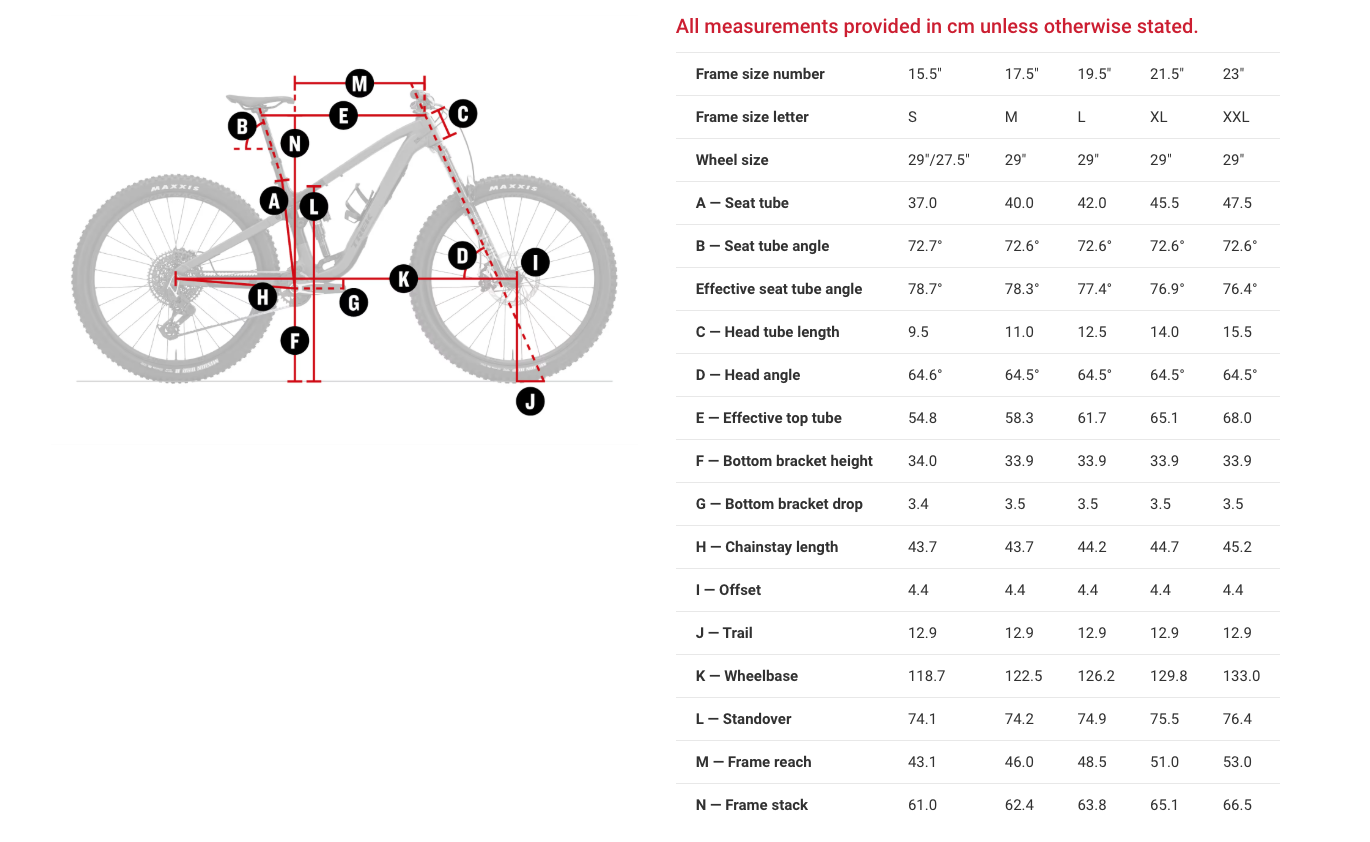 Trek Fuel EX Geometry & Size Chart
 A 150mm travel fork comes as standard on the Fuel EX, though the frame will handle up to 170mm.
2026 Trek Fuel EX price & specifications
While there is a stupendous number of models across the 2026 Trek Fuel lineup, we’ll only see three Fuel EX bikes stocked here in Australia. Prices start at $3,499 AUD for the Fuel EX 5 and go up to a refreshingly not-insane $8,499 AUD for the Fuel EX 9.8 XT Di2. You can get all the specs and pricing info in our first look article.
As mentioned earlier, you will be able to buy a complete Fuel MX or Fuel LX through Trek’s Project One custom bike builder. The prices are significantly higher though, and having to wait up to two months for your new bike will be a turn-off for some.
With that in mind, I’m a bit perplexed why Trek decided against bringing any off-the-shelf Fuel MX models into the country. I don’t know about you, but I feel like a 160/150mm travel trail bike with mixed wheels is what a lot of the market is asking for.
What this means then is that most Aussie riders will likely end up with a stock Fuel EX and then purchasing the necessary parts to customise their bike over time. That’s exactly what I plan on doing, starting out with this reasonably priced Fuel EX 8.
 The Trek Fuel EX 8 sits one step up from the cheapest model. It’s a whole lot of bike for $5K.
Frame | Alpha NEXT Platinum Alloy, ABP Suspension Design, 145mm Travel
Fork | Fox 36 Rhythm, GRIP Damper, 150mm Travel
Shock | Fox Float X, Performance Series, 205x60mm
Wheels | Bontrager Line, Alloy Rims, 30mm Inner Width
Tyres | Bontrager Brevard Pro XR 2.5in Front & Rear
Drivetrain | SRAM Eagle 70 Transmission 1×12 w/30T Crankset & 10-52T Cassette
Brakes | SRAM DB8 4-Piston
Bar | Race Face Turbine, Alloy, 40mm Rise, 780mm Width
Stem | Bontrager Elite, 45mm Length
Grips | Trek Line Comp
Seatpost | Bontrager Line Dropper, 34.9mm Diameter, Travel: 150mm (S), 170mm (M), 200mm (L-XL)
Saddle | Bontrager Verse P3, Cromoly Rails
Claimed Weight | 16.89kg
Confirmed Weight | 16.62kg (Size M, Tubeless)
Price | $4,999 AUD
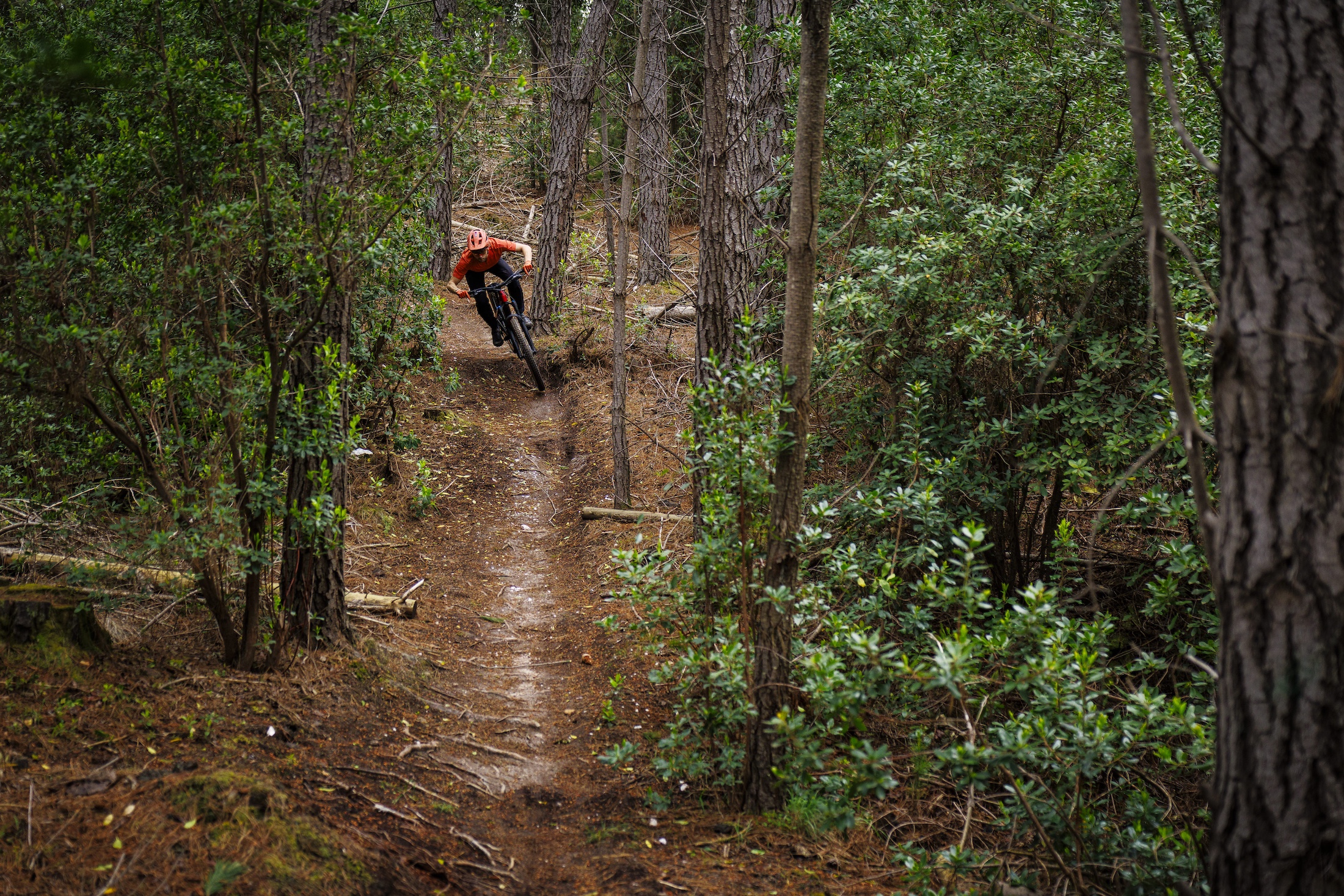 Having ridden most generations of the Fuel EX, we were excited to see what Trek had cooked up with the latest version.
 Wil picked the Medium size to suit his height of 174cm.
Sizing & fit
At 174cm tall, I requested the same Medium size that I ride across all Trek mountain bikes. It’s worth noting that the dimensions have gotten a touch bigger on the Gen 7 Fuel EX, which I expect is partly due to the omission of the M/L size from the range.
Compared to the Gen 6 bike the reach has gotten longer (460 vs 450mm) and the stack is taller (624 vs 617mm). It also has a steeper actual seat angle due to the straight tube. It measures just shy of 80° at my saddle height, which is hella steep! This results in a very centralised seating position that is incredibly stable when you’re scabbling uphill. The steep seat angle is also necessary to ensure things don’t get too slacked out when running the Fuel in its LX configuration with a 170mm travel fork.
To avoid putting too much weight through your wrists on flatter terrain, Trek has spec’d a 40mm rise handlebar. That might sound chopper-esque, but it works together with the rest of the bike’s geometry to provide a comfortable stance that doesn’t make you feel like you’re on your hind legs begging for a treat.
 A longer head tube and 40mm rise bars provide a notably upright riding position.
You get a few headset spacers to play with, and the SRAM MMX mounts make it easy to get the controls dialled in. I don’t mind the new Trek Line grips and I love the fact that they’re made from 80% recycled materials. They have a subtle ergonomic profile and the rubber compound is nice and soft, though the 32mm diameter ended up being just a bit too fat for my paws. After a few rides I swapped them out for a thinner set of Race Face Chester grips.
The Bontrager snub-nose saddle is fine, though I did find my knees would contact the sides when descending with the dropper fully compressed. I don’t expect every rider will encounter this issue, and I was able to adapt to it by not always lowering the post all the way. I’ll also note that there’s sufficient room on this frame for me to squeeze in a 200mm travel dropper, which would likely get the saddle wings out of the knee-zone. Kudos to Trek for making that a possibility, as it’s not always a given on a Medium size frame.
 Setting up the Fox suspension was a cinch thanks to the accurate recommendations from Trek’s online calculator.
Suspension setup
Setting up the suspension on the Fuel EX 8 is made a whole lot easier using Trek’s online calculator. Taking into account your kitted-up riding weight, it provides you with recommended sag, pressures and rebound settings for both the fork and shock.
I found the suggested numbers were close to perfect for my 70kg riding weight. 159psi in the Float X got me to 30% sag, and I set the rebound damping at 8/14 clicks. The back end felt excellent out of the box with the stock 0.2³in volume spacer and the flip chip in the less progressive setting.
Up front, Trek recommends about 10% less pressure in the 36 Rhythm fork than what Fox lists in the setup chart. I gave it a crack at 67psi and it actually performed great with the two factory-fitted volume spacers. I set rebound at 10/24 clicks and ran the blue compression lever about halfway through its range for some hydraulic stability.
 The Fox 36 Rhythm comes with two volume spacers fitted from the factory.
Trek Fuel EX weight
Confirmed weight for our Trek Fuel EX 8 XT test bike is 16.62kg without pedals and the tyres aired up tubeless.
It’s not light by any stretch of the imagination, but it’s true that contemporary trail bikes have been getting heavier in recent years. For proof, here are the claimed weights of the last three generations of Fuel EX 8;
Fuel EX 8 Gen 5 – 13.86kg
Fuel EX 8 Gen 6 – 15.91kg
Fuel EX 8 Gen 7 – 16.89kg
 Tipping the scales at 16.62kg, the Trek Fuel EX 8 is not a light bike.
Of course the Gen 7 bike has more travel and it comes with burlier parts. And while Trek says it’s stripped some weight out of the frame, it’s still on the heavy side. According to the claimed figures you’re looking at 4.6kg for the alloy frame and 3.31kg for the carbon frame, both with a Fox Float X shock.
The SRAM Eagle 70 drivetrain isn’t particularly svelte, and there’s further mass lurking in the Fox 36 Rhythm fork (2.2kg confirmed) and Bontrager Line wheelset (2.27kg confirmed).
Less hefty are the Bontrager Brevard Pro XR tyres, which weigh a confirmed 1,030g each. These have a 60TPI casing and puncture-resistant strips through the sidewalls, giving them a similar construction to a Maxxix EXO tyre. While I suspect that’ll be fine for a lot of Fuel EX 8 customers, I fitted a CushCore Trail insert in the rear wheel to give the alloy rims a fighting chance on our local rock-plagued trails.
 Whipping through pines and berms at the Djuwang Baring MTB trail network in Creswick, Victoria.
What do we dig about the Trek Fuel EX Gen 7?
Having spent the past six months aboard my personal Trek Fuel EX, I was really excited to see how the new Gen 7 version would compare.
The first aspect that stood out during my initial ride was the steeper seat angle and taller front end. This offers a more upright and locked-in climbing posture that is immediately welcome the moment the trail points upwards. With less of your weight cantilevering against the shock, sagging is kept to a minimum. This prevents your energy from being sapped by the suspension, giving the Fuel EX a planted and efficient ride quality.
Indeed it’s a great pedalling bike on the climbs and the flats, with enough anti-squat to keep the shock from being tugged into its travel under chain torque. You do have access to a Firm mode on the Float X shock but I rarely felt need to activate the blue lever. It’s not far off a full lockout so it’s only useful on the road or the absolute smoothest of dirt climbs. Even then, I preferred having the shock wide open since the Firm mode would push more of my bodyweight onto the grips, which wasn’t always comfortable.
 Pedal efficiency is impressive for what is an active and comfortable suspension design.
To bookend the pedalling characteristic of the Fuel EX, it isn’t quite as perky as the Trance X but is notably more stable than the Stumjumper. It’s certainly efficient enough that, for a bike that’s close to 17kg, I’ve been continually surprised by its climbing abilities.
No doubt the relatively light tyres help out a lot here. Bontrager’s 52/60a durometer rubber is far from being the gooiest around, making them pretty quick-rolling. Along with the low gearing from the 30T chainring, you’re able to spin away comfortably on long and steady ascents. There’s still plenty of traction available to deal with trickier sections, since the suspension remains active even while pedalling with vigour. Driving the rear tyre into sharp ledges and chunky step-ups is met with minimal jerking through the chain, allowing you to maintain momentum while remaining seated over lumps and bumps. Even when you do need to get out of the saddle, you’re not penalised since the shock doesn’t slouch into its travel. Indeed, it’s this balance of grip and stability that makes the Fuel EX such an excellent tech climber.
 Balancing grip and stability, the Trek Fuel EX is an incredible technical climber.
EXtra capable
That well-behaved suspension pays dividends as the gradient levels out, the speeds increase, and the terrain gets more interesting. While the back end is active, it’s also decently poppy with enough platform to push against when you’re looking to respond to incoming trail features.
I had been expecting the Fuel EX 8 to feel like a Sherman tank on flowy singletrack, but that hasn’t been the case. Yes, it’s heavy, but a lot of that mass is in the frame, not unlike an e-MTB. This benefits the suspension and makes the wheels seem lighter than they are, encouraging you to whip the bike through twists and turns.
While not quite as playful as the Trance X, overall agility has still surprised and impressed. The riding stance feels strong and assertive with your feet low to the ground, while the compact frame and its low standover allow you to absolutely crank it over from turn-to-turn. It really is a fun bike to corner with, and I found myself swinging my hips out and driving the tyres into the dirt like a corkscrew at every opportunity.
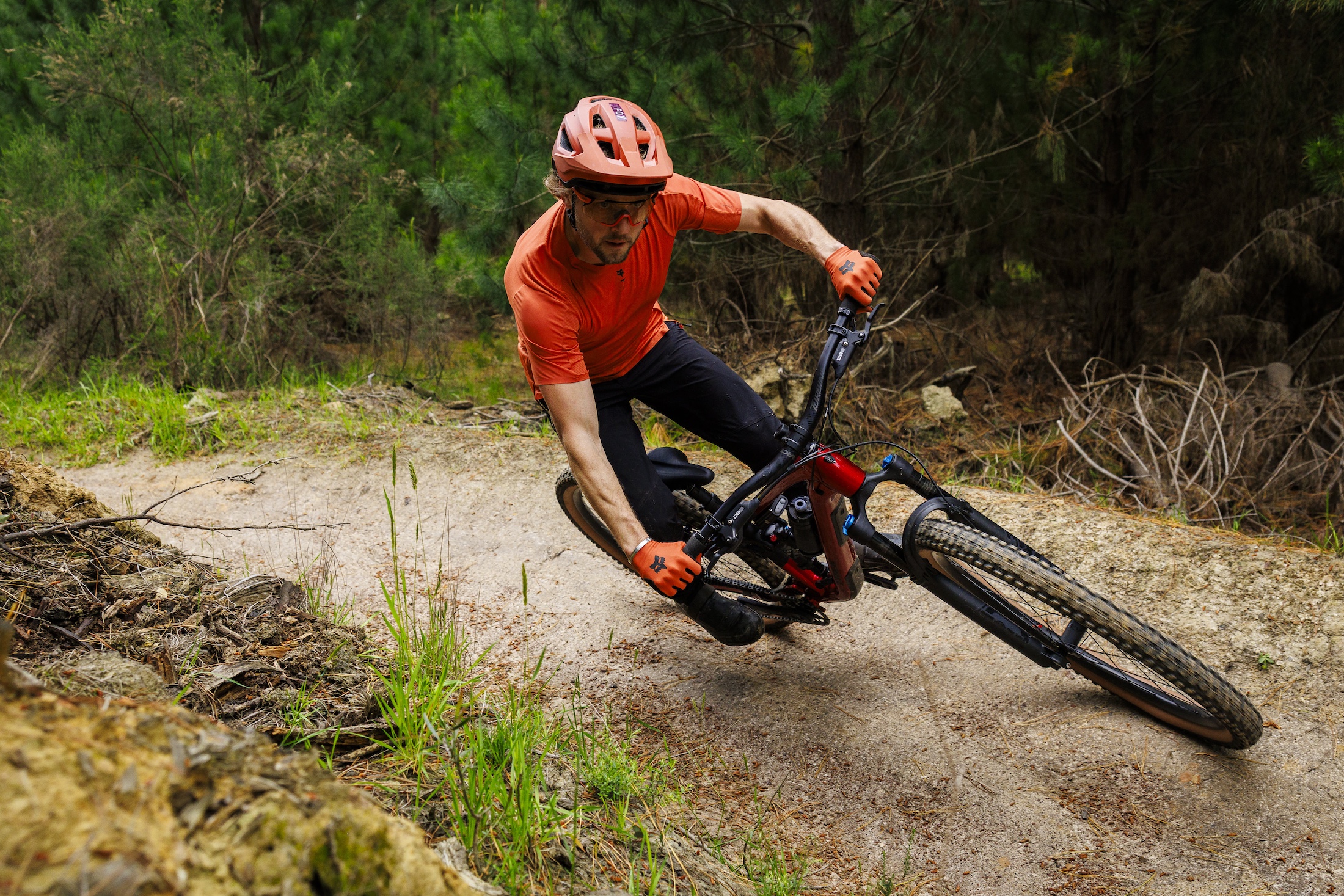 With plenty of traction and an upright stance, the Fuel EX feels planted through the turns.
Open up the brakes and it absolutely rips on the descents too. The suspension is plush and reactive, with the 36 Rhythm being particularly smooth for what is an entry-level Fox fork. Absorbing smaller, rapid-fire hits and bigger smacks alike, the Fuel EX 8 is calmer and produces less feedback than the Trance X. It’s not as plush as the Stumpjumper with its big-volume Genie shock, but it’s still very smooth and controlled.
Combined with the enlarged wheelbase and heavy alloy frame, the Fuel EX 8 stays glued to the ground at higher speeds. Thanks to the ABP platform, the rear suspension stays active under braking without pitching you forward excessively.
I’ve encountered no ugly bottom-outs on harder landings despite mostly riding in the less progressive setting. I did try flipping the chip since it’s so easy to do on the side of the trail, just make sure you have a shock pump as you’ll need 4-5% extra pressure to achieve the same amount of sag. No doubt the additional ramp-up will be appreciated by the big hitters, but I personally preferred the more consistent leverage curve of the stock position.
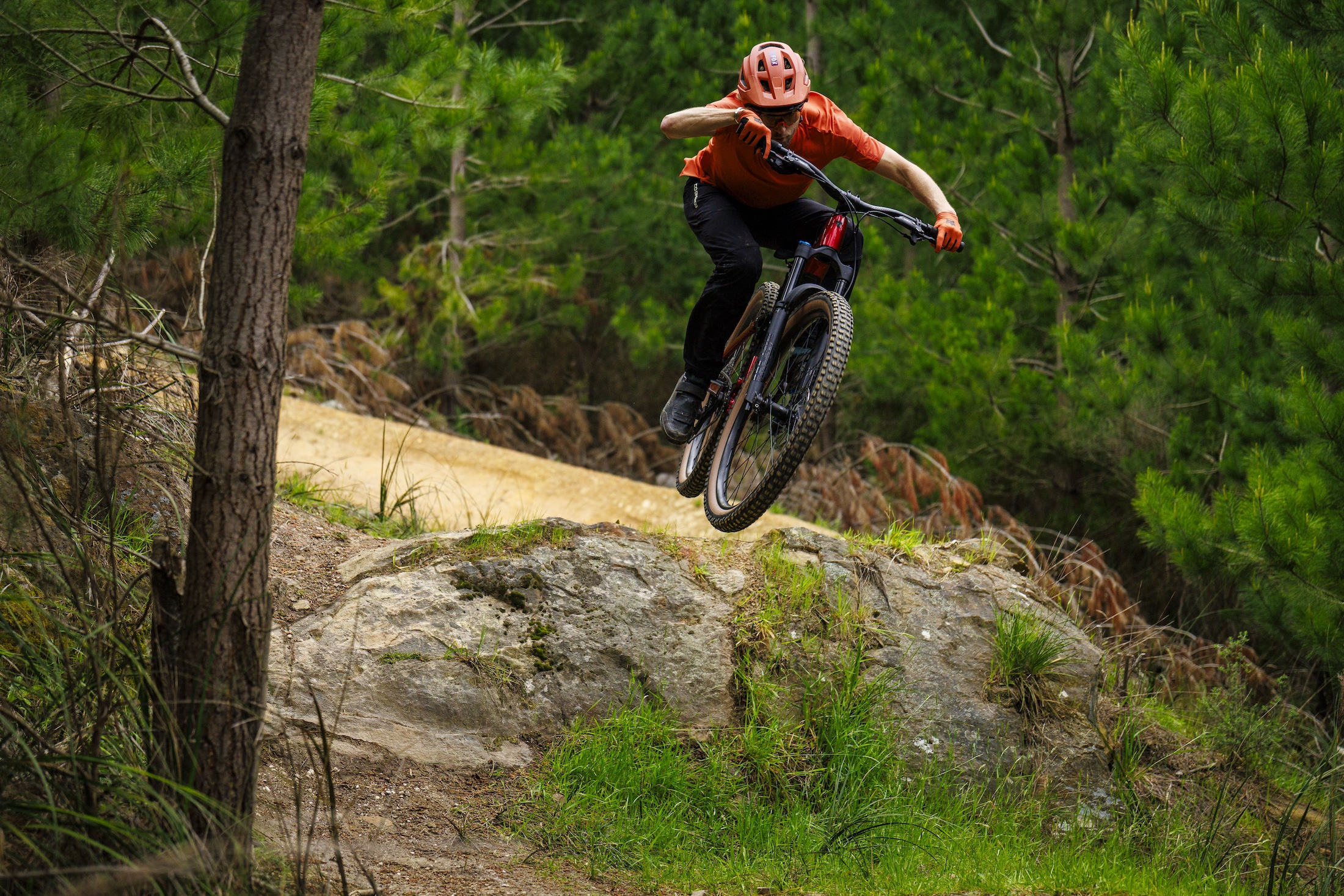 There’s good support through the suspension even with the flip chip in the less progressive setting.
What don’t we like?
Although the weight wasn’t nearly as big of a deal as I was expecting, it was still noticeable when trying to ride fast with pals on lighter bikes. The Trek Fuel EX 8 is clearly on the burlier side of the trail bike spectrum, and there’s no getting around the fact that there’s more inertia pulling against you when you’re hammering uphill or accelerating out of a corner.
That being said, I did survive numerous pedally rides aboard the big red rig. There was one in particular, along the Indigo Epic trail from Beechworth to Yackandandah and back, which ended up being about 70km long. I was pretty cooked by the end, partly from the bike weight. The steep seat angle also became more noticeable during the second half of the ride as my upper body fatigued from the added pressure through my wrists, arms and shoulders. Yes, you can push the saddle backwards on the rails to slacken it out, but I’m a bit limited since the reach and effective top tube length are already on the longer side for my preferences.
Ultimately, if I was looking for a long distance trail partner I’d pick the Top Fuel instead. That bike is considerably lighter and it’s even more efficient. With the ability to extend its travel up to 140/130mm, it’ll handle most trails this side of proper black diamond enduro stuff.
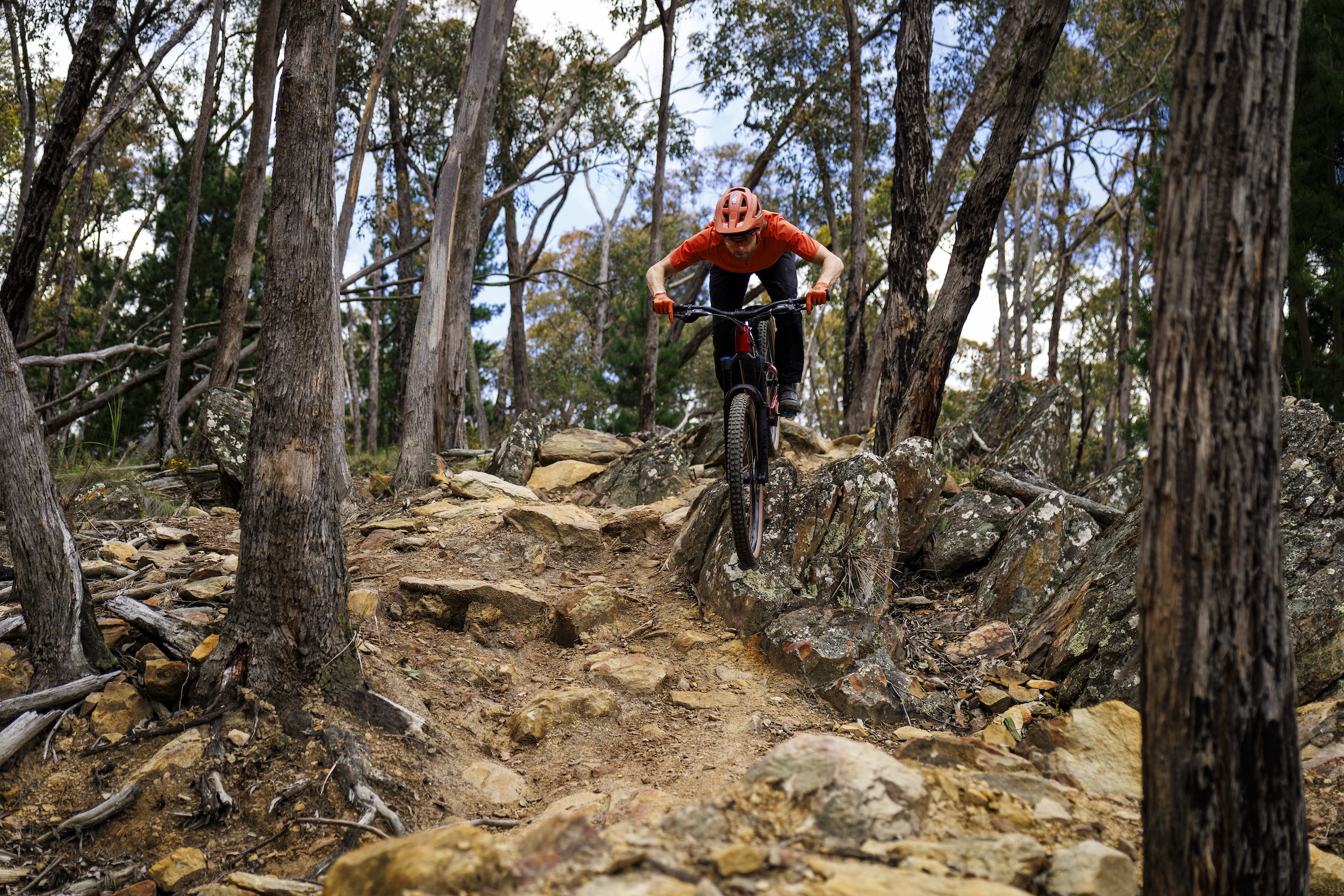 The Fuel EX gobbles up rocky terrain with reassuring calmness.
Adaptable, but not easily adjustable
While it hasn’t bothered me, some folks may be disappointed by the reduced adjustability of the Gen 7 Fuel EX. It’s quite the contrast to its predecessor and other bikes such as the Stumpjumper and Trance X, which have multiple geometry adjustments built into their chassis. Then again, we regularly see feedback from riders who never use touch these widgets, so perhaps Trek is onto something with its simplified approach.
I’ll also note that the progression flip chip does actually impact the dynamic geometry of the bike. Flipping it into the more progressive setting will have it sit a bit lower down on its haunches, useful for those who will be frequently slithering their way down steeper descents.
Changing to the MX linkage and fitting a 27.5in rear wheel may also be a good idea for such endeavours. I had quite a few bum taps from the rear tyre, so I’d be very keen to try out the Fuel MX configuration. Having to invest in a separate rocker link and shock mount means it’s a pricier experiment compared to just flipping a chip, but Trek insists that the trouble the engineers have gone to in order to maintain the proper geometry and suspension kinematic is worth it.


Fuel EX with a bit more
Adding another option into the mix, it is possible to modify the Fuel EX without buying any additional links. Inside the Float X shock are two 2.5mm travel reducers that can be easily removed with a hex key. Taking out these thin orange plastic discs will open up the shock stroke to the full 65mm, increasing rear travel from 145 to 156mm.
After making this change I found I needed about 10psi less pressure in the shock to hit 30% sag. The bike does end up sitting a bit deeper into its travel and lower to the ground, so Trek recommends increasing the fork travel to 160mm if you’re up-stroking the shock. Fuel EX 8 owners could simply buy a longer air shaft from Fox for about $100 AUD, though I was fortunate to already have a 160mm Fox 36 in my workshop. With that plugged in, I now had a 160/156mm travel 29er.
 Our Fuel EX test bike in its 160/156mm travel guise.
I wouldn’t call the extra squish life-changing, but it does result in a floatier ride through the chop and more control on hard landings. The increased shock sag and taller fork also has the effect of clocking your riding stance backwards, dropping your feet further down while bringing up the grips. It makes you feel more planted within the bike’s wheelbase, which is a valuable change for riding steeper and rowdier terrain.
Despite the increase in travel, pedal efficiency was still fine and dandy. The rear suspension is a bit more active around the sag point and you need a little extra effort to preload for jumps, but it only takes a ride to adapt to. Given the improvement to traction and big-hit capability, I think it’s a very worthwhile upgrade for Fuel EX owners who are looking to push the bike further towards enduro territory.
I suspect proper gravity-heads will still lean towards the high pivot Slash, which is optimised around bigger forks and shocks. Still, it’s nice to have another option in the Fuel, especially for lighter riders and those who don’t necessarily need a 38/Zeb on the front of their bike.
 With the option to go up to 170/160mm of travel, the Fuel provides an alternative to the high pivot Slash.
Component highs & lows
Most of the components on our Trek Fuel EX 8 test bike have performed well throughout testing, but there are some shortcomings that I want to touch on.
Unfortunately the fork developed an annoying rattle during the first couple of rides, which sounded like a volume spacer was loose and bouncing around inside the stanchion. Funnily enough, I had exactly the same issue with the 36 Rhythm on a Specialized Levo 4 a couple of months ago.
I sent the fork back to Fox where it was rebuilt and assessed under warranty. While there were no obvious problems, the air spring assembly was updated with new seals. That seems to have fixed it, because the fork has been virtually silent since being refitted. Prospective customers will be happy to know that such an issue would be resolved under warranty, but it’s still frustrating to experience it in the first place on a $5K bike in 2025.
 Despite having an entry level Fox fork and shock, the suspension on the Fuel EX 8 is outstanding.
Noise aside, I have no complaints of the suspension from a performance perspective. Both the fork and shock are supple, responsive and easy to adjust. It says a lot of Trek’s kinematic design and custom shock tune that the suspension works so well despite being entry-level kit.
The SRAM Eagle 70 Transmission also punches above its weight with near-identical shift performance to the higher-end Eagle 90 drivetrain. The shift levers are a bit plastic-y and there’s noticeable chainslap on bigger compressions when the clutch gives way, but the drivetrain has mostly faded into the background thanks to its crisp and reliable shifting.
Likewise, the DB8 brakes carry out their job as intended. Following the initial bleed and piston massage, the lever feel has been satisfyingly solid and hasn’t needed any attention over the past couple of months of riding. Power is sufficient for general trail riding, though the combination of organic pads and thin Centerline rotors meant I was looking for more bite and consistency on extended descents. Heavier riders and those frequenting steep terrain will benefit greatly from upgrading to metal pads and HS2 rotors.
Thin tyres & soft rims
Those same riders will also want to consider changing the Brevard XR tyres. To be fair, these did offer more grip and predictability than I was expecting. The Minion DHR II copycat tread works well, and while the rubber is on the firmer side, I found traction was totally fine in dry and rocky conditions. I haven’t done a lot of wet weather riding with the Fuel EX 8, but I suspect that’s where the rubber’s shortcomings will come to the fore.
The main downside however, is that the XR casing that lacks stability for aggressive riding. Despite using a CushCore insert, the rear tyre has suffered several punctures on the crown and bead. There are numerous plugs currently holding it together, and I get the impression it’s not long for this world.
It’s worth noting that the more expensive Fuel EX 9.8 comes with thicker SE casing tyres that offer full bead-to-bead protection and apex reinforcement. I’d like to see Trek spec’ing those tyres on the Fuel EX 8, though I can see why it doesn’t given that would push the complete bike weight up over the 17kg mark (*gulp*).
Still, it would help to avoid punctures while also protecting the rims. These don’t seem to be all that tough, with the rear wheel already exhibiting several dings. With that in mind, less delicate riders may want to earmark the rims or even the whole wheelset as an area to upgrade in the future.
 Riders who are hard on their gear will want to fit tyres with thicker casings.
Cable noise
The Fuel EX frame itself has presented few concerns throughout testing. Aside from greasing the headset and seatpost after some dusty rides, everything has been tight and mostly quiet.
I did find myself chasing some cable noise early on though. With no fancy wireless bits, there are a few control lines to manage around the head tube. In the process of securing each line I discovered the shift cable had a slack fit where it passes through the rubber port into the frame. Upon discussion with the team at Trek, it turns out that the internal guide tube for the brake hose and shift cable have been oriented the wrong way round from the factory. This means the opening in the rubber port is tight for the brake hose, but a little too big for the shift cable, resulting in some vibration while riding.
We’ve been informed this is only a problem with the alloy frames, but it’s still not ideal. To be fair, the noise isn’t that noticeable, and particularly sensitive riders can either wrap some electrical tape around the shift cable to tighten up the fit, or secure a zip tie around the cable and hose to eliminate any movement.
 A zip tie silenced the cable rattle, but it’s hardly a visually-pleasing solution.
Value for money
Despite the above weak points, I’d say the Trek Fuel EX 8 is still a decent value package.
It is possible to get a Giant Trance X 2 for less money ($4,699 AUD), though it comes with cheaper Shimano MT420 brakes, a Deore drivetrain and an in-line shock. There’s also the Norco Sight A2 ($4,799 AUD), which features a high pivot suspension design that is partly responsible for its porky 17.8kg claimed weight. Whoa!
The Merida One-Forty 700 pushes the price up a bit ($5,399 AUD) while upgrading to a SRAM Eagle 90 drivetrain. It otherwise has the same DB8 brakes, comparable Marzocchi suspension and a similar claimed weight of 16.8kg.
At that point you’re in the zone of the Specialized Stumpjumper 15 EVO Comp Alloy ($5,500), which comes with the same fork, drivetrain and brakes as the Fuel EX 8. However, you do get grippier and tougher tyres as well as the highly tuneable Genie shock.
While most of the above bikes feature some kind of geometry or wheelsize adjustment, none have the same scalability of the Fuel’s modular chassis. That’s undoubtedly one of the strong suits of this bike that will add considerable value for certain riders.
 We recently reviewed the Canyon Spectral AL 6, which comes in at a similar price point to the Trek Fuel EX 8.
Trek Fuel EX vs Canyon Spectral
I’d love to compare the Trek Fuel EX with the Specialized Stumpjumper, but I’m still yet to ride the alloy Stumpy or the latest ‘EVO’ version that comes standard with a 160mm travel fork and piggyback shock.
For now, the bike I’ve ridden recently that competes with the Fuel EX 8 is the Canyon Spectral AL 6. It’s an interesting comparison because Canyon sells bikes direct to consumer that normally results in a better package for the money. In the case of the AL 6, the price ends up at $5,230 AUD after shipping.
I’d say the spec is comparable to the Fuel EX 8, with some caveats. You get a more premium Fox 36 GRIP2 fork, a tougher DT Swiss wheelset and grippier Maxxis Minion DHR II tyres. However, the alloy frame is more basic with no geometry, travel or wheelsize adjustments. Some riders will also be put off by the lack of downtube storage, and it’s worth noting that Canyon doesn’t offer a lifetime frame warranty.
 The Spectral AL is a fun trail bike, but it didn’t quite live up to our expectations.
The simpler and lighter frame does help the Spectral AL 6 come in at a lower weight of 15.08kg, which is a good deal less than the Fuel EX 8. That’s quite noticeable on the trail, especially when climbing. The Spectral AL 6 feels perkier, and it’s also more nimble on shapely singletrack. I loved how fun and involving it was to ride on flowy terrain, where it was easy to pump and generate momentum.
I didn’t love the shock tune on the Spectral AL 6 though. The light compression damping left the back end feeling doughy on technical climbs, and it didn’t hold up and flutter all that well through the chunk.
In comparison, the suspension on the Fuel EX 8 is easily a few steps above. It’s more consistent and supportive, offering a taller ride height that keeps the shock in the sweet spot more of the time. Combined with the steeper effective seat angle, the Fuel EX 8 is a better technical climber than the Spectral AL 6. It’s also smoother and more planted at speed on rough terrain, elevating rider comfort and confidence on the descents.
Factoring in the ability to swap links to change wheelsize and travel, it’s the Fuel EX 8 that I would pick out of these two bikes.
 The Trek Fuel EX Gen 7 (left) and Gen 6 (right).
Is it worth upgrading from a Gen 6 Trek Fuel EX?
That’s a question I’ve been asking myself a lot over the past couple of months. The new Gen 7 Trek Fuel EX is undoubtedly a fantastic trail bike, but I’ve also had some memorable riding experiences on my personal Gen 6 bike throughout the year.
To refresh my mind of the differences I took both bikes out to do some back-to-back testing on the same test loop.
This might seem like an unfair contest given the custom spec of my Fuel EX. It’s got superior suspension with a 160mm travel RockShox Lyrik Ultimate fork and a Super Deluxe shock, more powerful SRAM Maven brakes, lighter Race Face Turbine alloy wheels and stickier Maxxis DH tyres. I’d argue it’s still a relevant comparison however, as I imagine there are plenty Gen 6 owners out there who are considering whether to buy the new Gen 7 bike, or spend some cash on a few choice upgrades instead.
Jumping back on my Gen 6 Fuel EX, the shorter reach and lower stack were immediately apparent. I raised the stem as high as it would go, but that also shortens the effective reach, making it feel more compact overall. It’s still a good climber, though I found myself having to get out of the saddle more often on technical sections.
 The Gen 6 Fuel EX is an excellent trail bike, though there are some notable differences when comparing it to its younger Gen 7 sibling.
Pedal efficiency is otherwise comparable between the two bikes. There’s perhaps a touch more feedback with the Gen 6 Fuel EX, which I’ve mitigated with a 32T chainring and STFU chainguide modules. Combined with the thick DH-casing tyres and silent RockShox suspension, it’s quiet, grippy and beautifully damped across rough terrain. It’s thoroughly capable for a 160/140mm travel bike, with the HBO damping in the shock adding useful big-hit support.
During back-to-back testing I found the slightly shorter wheelbase gave the Gen 6 Fuel EX a bit more spirit through twisty singletrack. If I was to generalise, I’d say it’s a bit more trail-ish. In comparison the Gen 7 bike has more of an enduro flavour, being calmer and more planted as riding speeds increase. I wouldn’t say it’s cumbersome per se, just that it needs a smidge more effort and lean angle to coax it around tighter apexes. And once I tapped into its inherent stability I found I had more confidence to pull for gaps and work the trail, which actually enhanced its agility and playfulness.
Beyond those differences, the Gen 7 Fuel EX has more options when it comes to extending the travel and experimenting with mixed wheels. If that’s of no interest to you, and you already love the fit of your Gen 6 bike, there’ll be little reason to make the switch. But if you value the versatility, increased seatpost insertion and improved frame storage, you’ll likely be able to justify upgrading to the Gen 7 bike.
 The magic of the Fuel EX is its ability to remain playful and efficient, while still eating up the chunk.
Flow’s Verdict
The 7th generation Trek Fuel EX is a shining example of what a modern trail bike can be. It might not be a radical departure from its predecessor, but a whole suite of small improvements have come together to make for an elevated experience both in the workstand and on the dirt.
The suspension is superb, and the geometry is well-balanced for all-around riding. You get tractor-pulling grip and a locked-in riding position on the climbs, with impressive response and control on the descents. The ability to up-stroke the shock and fork allows you to add even more comfort for taming rough trails that’ll be appreciated by riders who aren’t keen on the high pivot Slash.
You will need to invest some cash if you wish to experiment with mixed wheels, since there are fewer adjustments built into the Gen 7 chassis. And while it has supposedly gotten a bit lighter, the frame is still quite heavy. That becomes quite noticeable on longer rides, so I’d recommend the Top Fuel for those who want to cover distance quickly.
If it’s technical terrain you wish to conquer, the Fuel EX 8 is a solid option. Aggressive riders will want to upgrade the tyres, brake pads and rotors, which does impact the overall value proposition. It’s still priced well amongst the competition and it’s arguably more versatile than most of its peers. Factoring in the improvements to the frame and the overall ride quality, the Fuel EX stands as one of the most capable and well-rounded trail bikes currently on the market.
 Trek has been refinining its Fuel platform for many years now, and that’s resulted in one seriously capable and fun bike in the Gen 7 version.
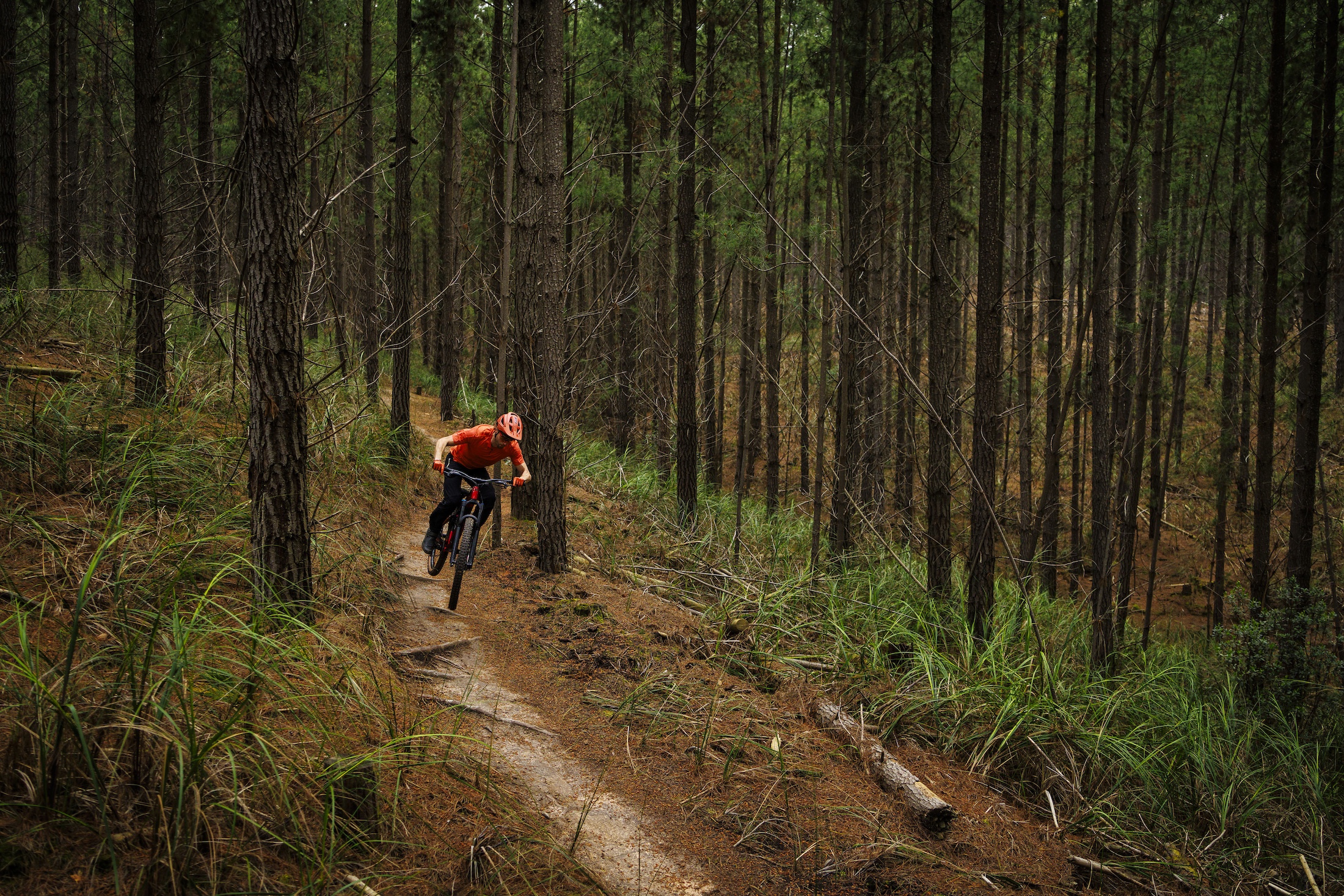 With so much adaptability built into its chassis, we look forward to spending the summer season experimenting with our Fuel EX test bike. Stay tuned!

Hometown
Bendigo, Victoria
Weight65kg
Editorial Guidelines
At Flow Mountain Bike, we’re committed to delivering engaging and trustworthy content, from product reviews to destination showcases, news, interviews, and features. While many of the brands and destinations we cover may advertise with us, our editorial team operates independently, ensuring our content is guided by expertise and passion—not commercial influence. Sponsored content is always clearly disclosed, and we remain dedicated to providing honest and unbiased coverage across everything we publish. For more details, see our Transparency Report.