
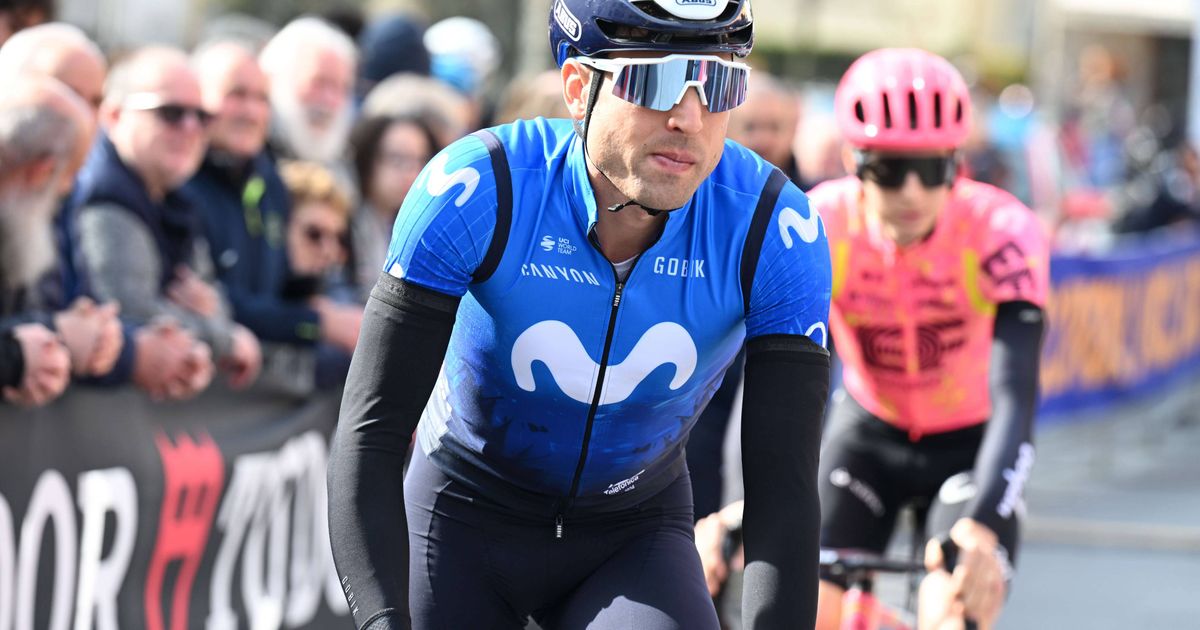
“Regarding the other, I’m aiming to stay in cycling. I don’t want to abandon the world of cycling completely. Sixteen years of professional experience are a valuable asset that shouldn’t be wasted, and I don’t want to waste it. My goal, therefore, is to pass on my experience, especially to young people. I’m laying the groundwork for opening a “studio” to support young people and athletes, helping them experience this sport with professionalism and passion. The announcement will come when everything is ready.”
A season marked by illness and setbacks
Cimolai explained that his original plan was not to retire this year. “I’ll start from the beginning of the season. I started this year with the intention of racing for another year, therefore until 2026, but the reality immediately turned out to be different from my expectations.”
His season was far full of setbacks from the beginning of the year, which prevented him to show his best version. “In Oman, I had a bad flu that left me weakened and forced to race. Then, even though I shouldn’t have, I continued on to the UAE Tour since I was already there. The team involved me at the last minute, and believe me, I gave it my all and played my hardest just to finish it. The same went for a few races after that, including the Strade Bianche and some Northern Classics.”
And then, a serious incident almost cost his arm. “I was supposed to go to the Giro d’Italia , so I went to the Romandie, and then the worst thing happened. I had a serious infection in my arm, following a wound I’d neglected. I’ll just say I had to be hospitalized and nearly had my arm amputated. But the biggest problem, ironically, wasn’t the arm itself, but the massive doses of antibiotics I had to take.”
The aggressive antibiotic treatment that followed took a big toll on his health, ruining the remainder of the season. “They weakened me greatly. For example, I had never had an ear infection in my life, but in a few weeks I had three. These problems prevented me from reaching 100 percent fitness , which is essential for being competitive and having fun, especially at 36 years old.”
After recovering from that issue, a new setback appeared, and that was definitive. “In fact, they were three very tough months. Three months during which I almost stopped running. I went to Livigno, managed to prepare well, and so I did well in some races: Wallonia and Poland. But in Poland, like many others, I contracted Covid severely. Ultimately, this accumulation of physical and, above all, mental difficulties made me realize that my professional journey was over. And I had pledged my loyalty to the team for another year.”
The departure of Fernando Gaviria, whom he was meant to lead out, also played a big role in taking the decision to retire, especially because the Colombian didn’t manage to win a single race in 2025.
“It had a significant impact. It helped enhance my support work. Perhaps with one more victory, things would have changed for me too. However, I’m proud of my commitment and the new role I’ve carved out for myself: being close to young people, helping them grow. But be careful, I don’t want the message to be that I’m done with regrets or excuses . No, that’s simply the reality.”
Family support has been essential throughout his journey, especially from his girlfriend. “I’d already mentioned the possibility of retiring to family and friends. My partner, Alessia, has been my greatest support and my guiding light throughout these years. She ‘s always encouraged me to continue, even in the most difficult moments, like after my experience with Cofidis. I took a lot of risks there. But she was sure another team would call me. Now she’s also happy with my decision… also because she’ll see me at home more often. In fact, if I may say so, I’ve been at home for a month now, and in some ways, life as an athlete was more comfortable!”
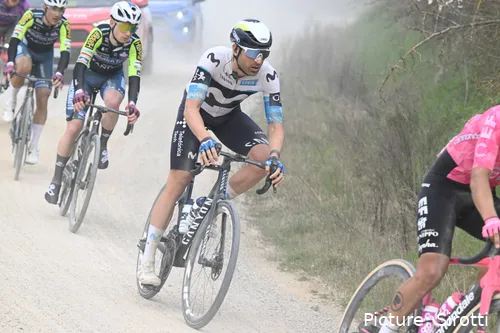
Davide Cimolai has been a very reliable domestique throughout his career
Throwback to 2010
Looking back to his professional debut in Argentina, Cimolai remembers it vividly, and it was not an easy start whatsoever.
“I remember my debut in 2010 at the Tour de San Luis in Argentina. I was with Liquigas. As an amateur, I was used to winning and taking the wind in my face just to sprint . At San Luis, my captain for the sprints was Francesco Chicchi . So I immediately found myself pushing to close in on the breakaway. And pushing to get him ahead in the sprint. However, Vincenzo Nibali was also on the team . It so happened that Vincenzo won the time trial and took the jersey… Even worse for me! Up front right from the start to defend the lead.”
Everything was new for him back in the day. Even the prize money, still paid in cash at the time, offered a surprise. “It was also nice to see how with prize money you could make more than you spent. At the time, I joined a team like Liquigas, but I started with the minimum. I earned very little. Prize money in those years was still in cash, and I came home with quite a few dollars. This was also a surprise, but a nice one!”
As a person and as an athlete, he says he has grown alongside a sport that has itself become more demanding. “Cycling has changed, perhaps in a more interesting way. And with the maturity I have now, with the commitment I’ve put in over the past few years, I realized that before I could have put in more effort. I’m not here to say I would have won more. I’m just saying that back then, things came easier to me. I did my part, with great commitment, but that was it. However, in hindsight, I had another step to take to get to 100 percent. I realized that mentally I was fragile.”
That evolution, he explains, happened progressively, with crucial guidance from Movistar coach, although it might have come a bit too late. “It was gradual, but it was the trainer I had at Movistar, Leonardo Piepoli, who made me understand it. He was really helpful, he helped me mature, he made me see things from a different perspective. Even the training sessions themselves, in short. Analyzing how I had trained in previous years, he clearly told me that I could do more in terms of numbers during preparation.”
What are his best memories?
Among all the races he contested, Milano-Sanremo remains the one that touched him most deeply. “I’ve always dreamed of it. Maybe it’s because I’m Italian, who knows. I remember that, before Covid, when it was still open to sprinters, starting from Milan I couldn’t wait to get to the Poggio, knowing that the dilemma was whether to sprint or push. You understand: I took it for granted that I would get over the Poggio. Today it’s impossible.”
Other races include a Belgian classic and, of course, the best race in the world. “And then the Tour of Flanders also gave me strong emotions. I’ve been lucky enough to race it several times and the atmosphere up there, man, is incredible. And besides, a rider isn’t a true professional if he doesn’t try to do and finish a Tour de France.”
Regarding the Tour, Cimolai clearly remember his first experience (in 2013). “I remember my first Tour very well, also because it was the one where I almost reached the podium in a stage. Maybe it was because I took it lightheartedly and didn’t feel the stress that the Grande Boucle generates. I did it five times, and each time I reached Paris. The emotion of entering the Champs-Elysées has remained the same every year. This is my fondest memory of the Tour.”
Finally, he shared some advice for young riders. “If you want to be a professional, you have to accept it and adapt. At 20-21, you have to be at the top of your game. Before, certain things and certain mentalities were done and had at 20-22, now you have to have them at 15. You have to already have your dream: turning pro. I had it in mind at 18-19. At that age, I had this obsession with racing and becoming a pro. Today, you have to be a little ahead of the curve.”