
Refresh
2025-12-01T20:23:29.337Z
Russia accidentally destroys its last working launchpad
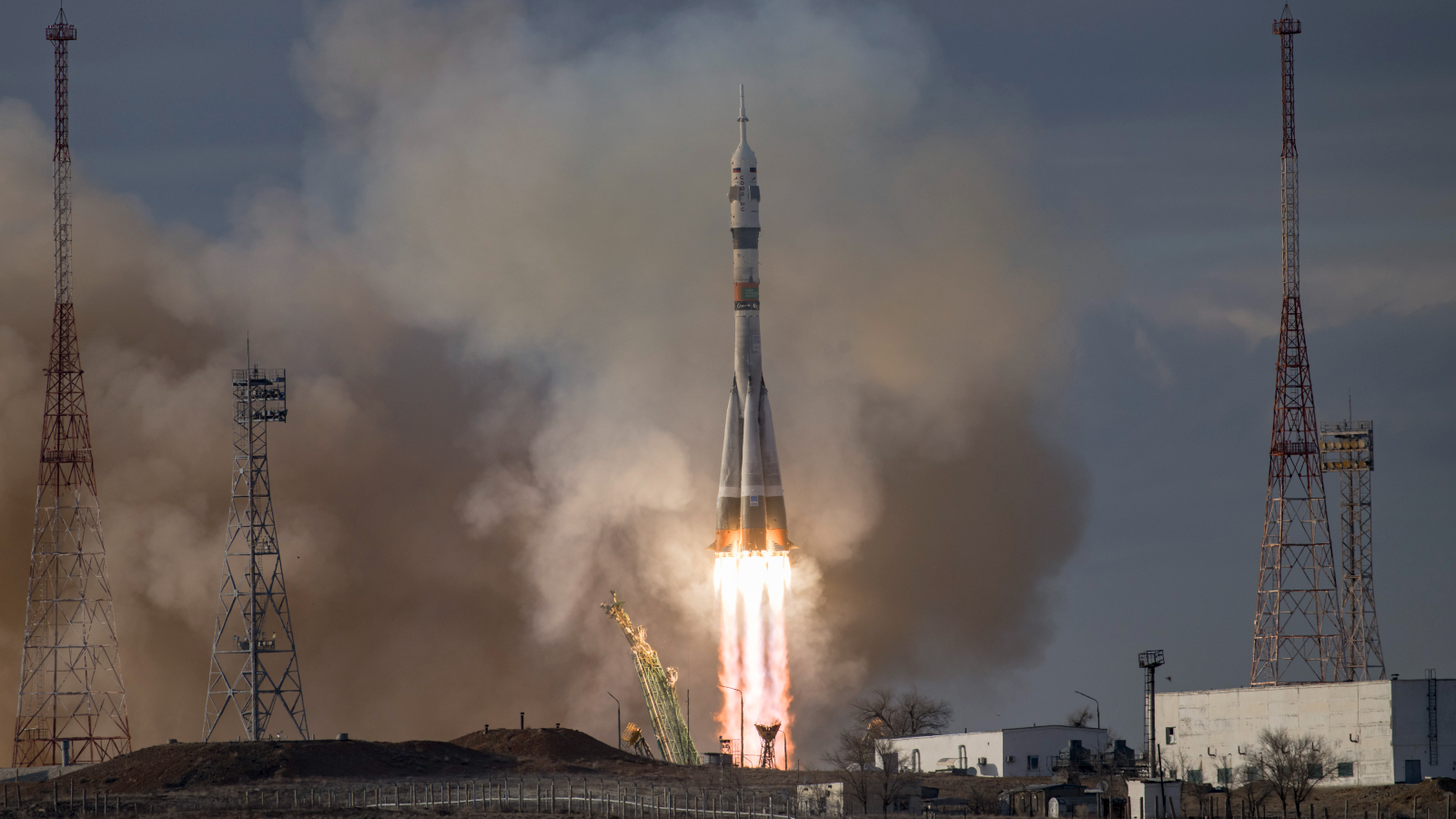
A Russian Soyuz rocket taking off from the Baikonur Cosmodrome in Kazakhstan. The sole working launchpad at the Cosmodrome became nonfunctional recently. (Image credit: Bill Ingalls/NASA via Getty Images)
Tia here with news that Russia has accidentally messed up its sole working launchpad after sending astronauts to the ISS. The launchpad is actually not in Russia proper; it’s the Baikonur Cosmodrome in Kazakhstan, but Russia uses it for all of its Soyuz rocket launches.
Senior writer Harry Baker has the details on why this likely happened and what it means for future Russian space launches.
You can read the whole story here.
2025-12-01T19:13:35.576Z
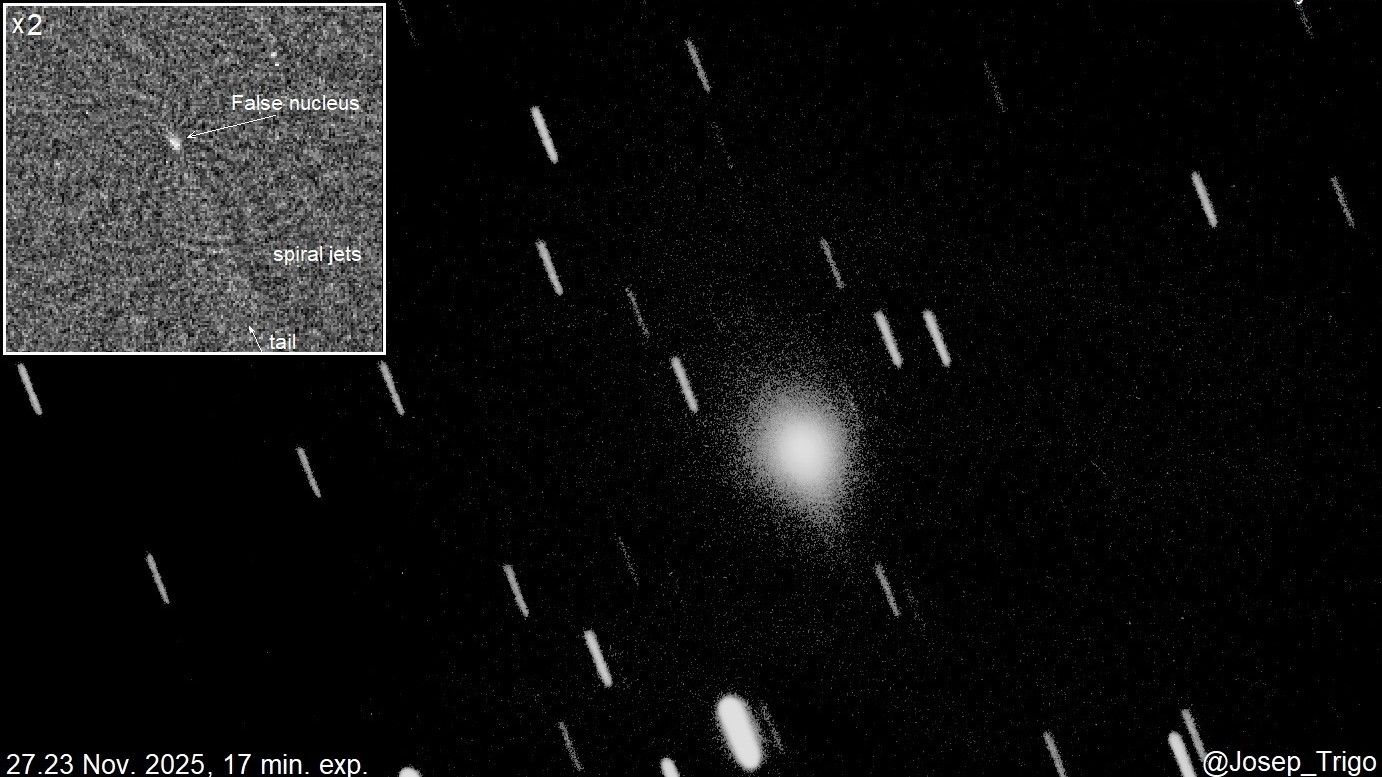
Comet 3I/ATLAS ‘ice volcanoes’
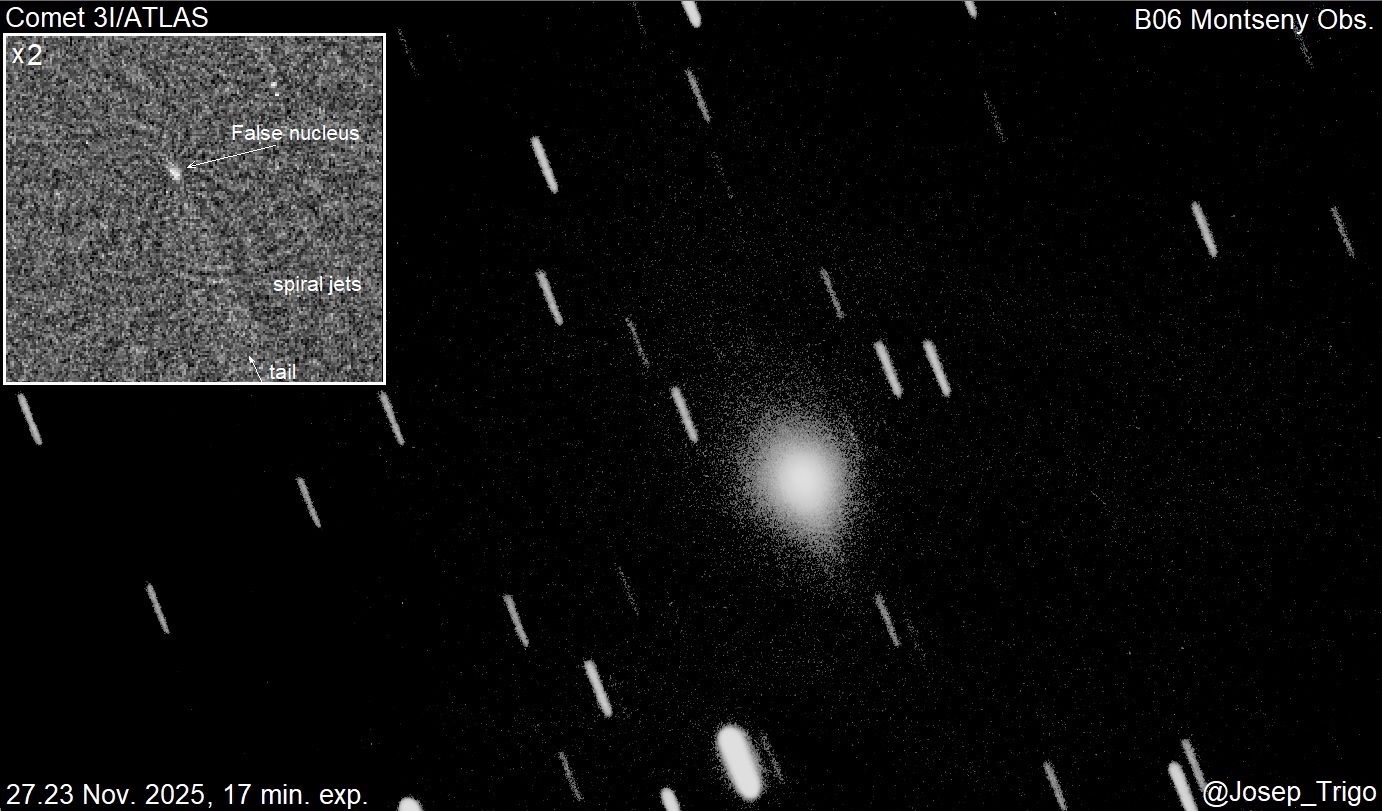
Comet 3I/ATLAS appears to have spiral jets shooting off its surface, which the authors of a new preprint interpret as a kind of cryovolcanism. (Image credit: Josep M. Trigo-Rodríguez/B06 Montseny Observatory)
A series of cryovolcanoes, sometimes nicknamed “ice volcanoes,” erupted on the surface of comet 3I/ATLAS as it approached the sun, preliminary research suggests.
I’ve been speaking to Josep Trigo-Rodríguez, a leading researcher at the Institute of Space Sciences (CSIC/IEEC) in Spain, who has led a preprint study about new observations of our favorite interstellar visitor.
Trigo-Rodríguez and his colleagues found that the comet could be covered in cryovolcanoes, activated by the corrosion of pristine material locked inside its core. The findings, which haven’t yet been peer-reviewed, suggest that comet 3I/ATLAS is similar to icy trans-Neptunian objects — dwarf planets and other objects that orbit the sun beyond Neptune.
Read the full story here.
2025-12-01T18:42:28.295Z
Tip of the iceberg

(Image credit: Sebnem Coskun / Anadolu via Getty Images)
More than 500 scientists have signed an urgent climate declaration stating that our “planet’s future hangs in the balance” and “if we wait, it will be too late” to address climate tipping points, according to the University of Exeter in the UK.
Tipping points are potential “points of no return” within key Earth systems beyond which lasting changes to the environment occur. The new declaration warns that global warming will soon exceed the 1.5 degrees Celsius (2.7 degrees Fahrenheit), which puts us in the “danger zone” of breaching multiple tipping points.
The declaration comes in the wake of an underwhelming COP30 agreement that had no clear mention of fossil fuels in the final text. It was a decade ago at COP21 that world leaders adopted the Paris Agreement, which promised to limit global warming to preferably below 1.5 C and well below 2 C (3.6 F).
This isn’t the first time scientists have issued a stark warning about climate change, and so long as humanity fails to comprehensively address the matter, it won’t be the last.
2025-12-01T18:32:17.386Z
Half the world away

(Image credit: Helen Farr and Erich Fisher)
Over the weekend, Kristina wrote a story about when modern humans arrived in Australia, which has proven to be a real hit with our readers.
New genetics research published in the journal Science Advances concluded that humans began to settle northern Australia by 60,000 years ago, potentially breeding with archaic humans along the way, including the “hobbit” Homo floresiensis.
Humans had to invent and use watercraft in order to reach Australia, so their arrival Down Under was an impressive feat. Researchers have long debated their arrival date, but with the new research, that debate may finally be settled.
Read the full story here.

Patrick Pester
Trending News Writer
2025-12-01T15:58:01.195Z
Clam-plane supernova
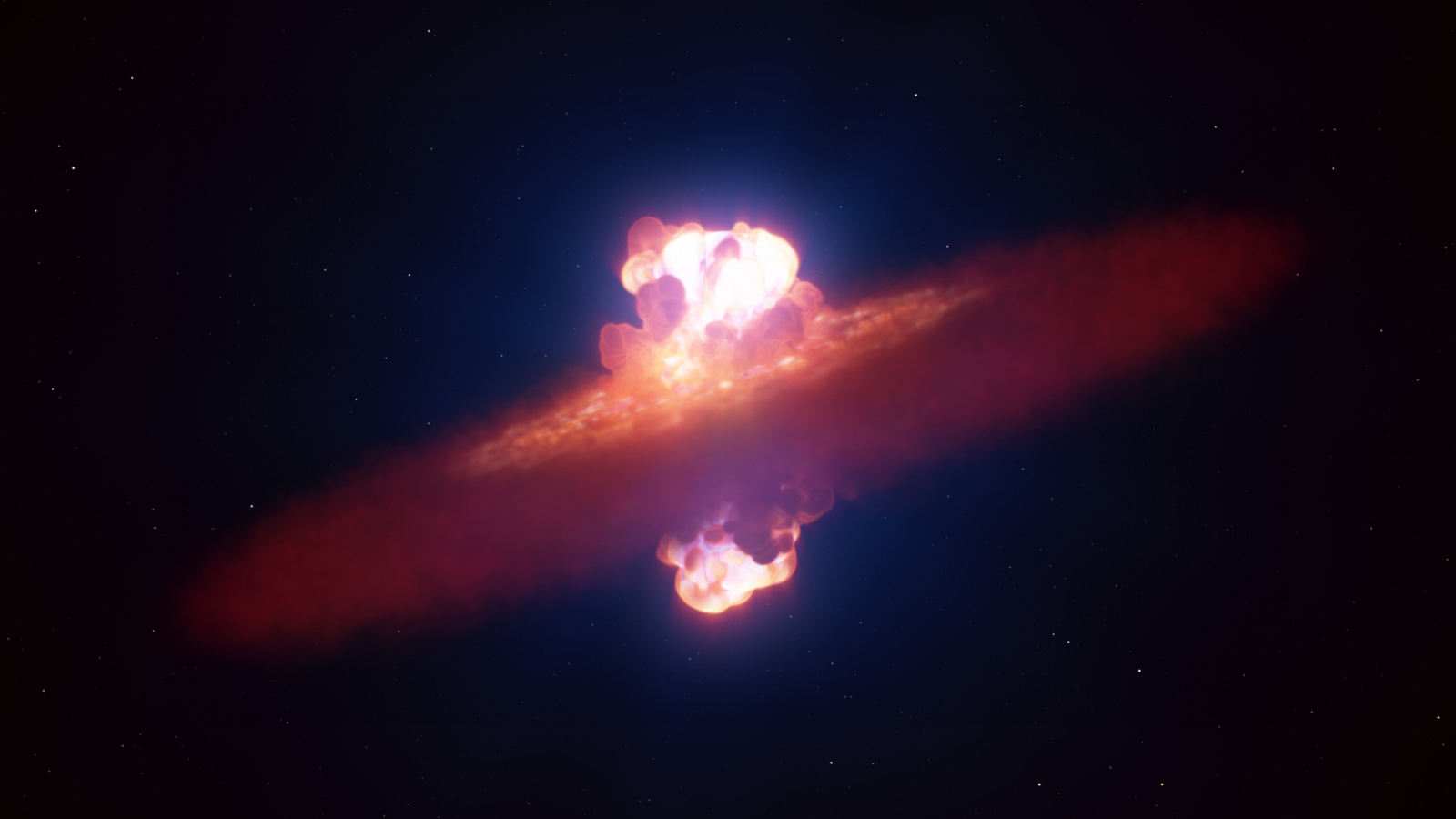
(Image credit: ESO/L. Calçada)
What does a nuclear explosion in space look like? As it turns out, not perfectly spherical, Live Science contributor Shreejaya Karantha writes.
New observations taken by Chile’s Very Large Telescope (VLT) have revealed that, as massive stars run out of fuel to fuse and burst, their first light isn’t emitted in all directions equally, but along a shockwave stretched along one axis, much like a clam.
You can read the full story here.
2025-12-01T15:15:17.699Z
Life in the zone
And while we’re at it, mushrooms aren’t the only form of weird life thriving in Chernobyl’s exclusion zone — there are also worms that appear unscathed by the radiation; the feral descendants of pet dogs; and an endangered species of wild horse whose numbers have exploded.
If that sounds dangerous, only small parts of the zone are dangerous radiation hotspots, and tours through it ran frequently until Russia’s 2022 invasion of Ukraine.
2025-12-01T14:47:39.949Z
Chernobyl mushroom could be feeding on radiation
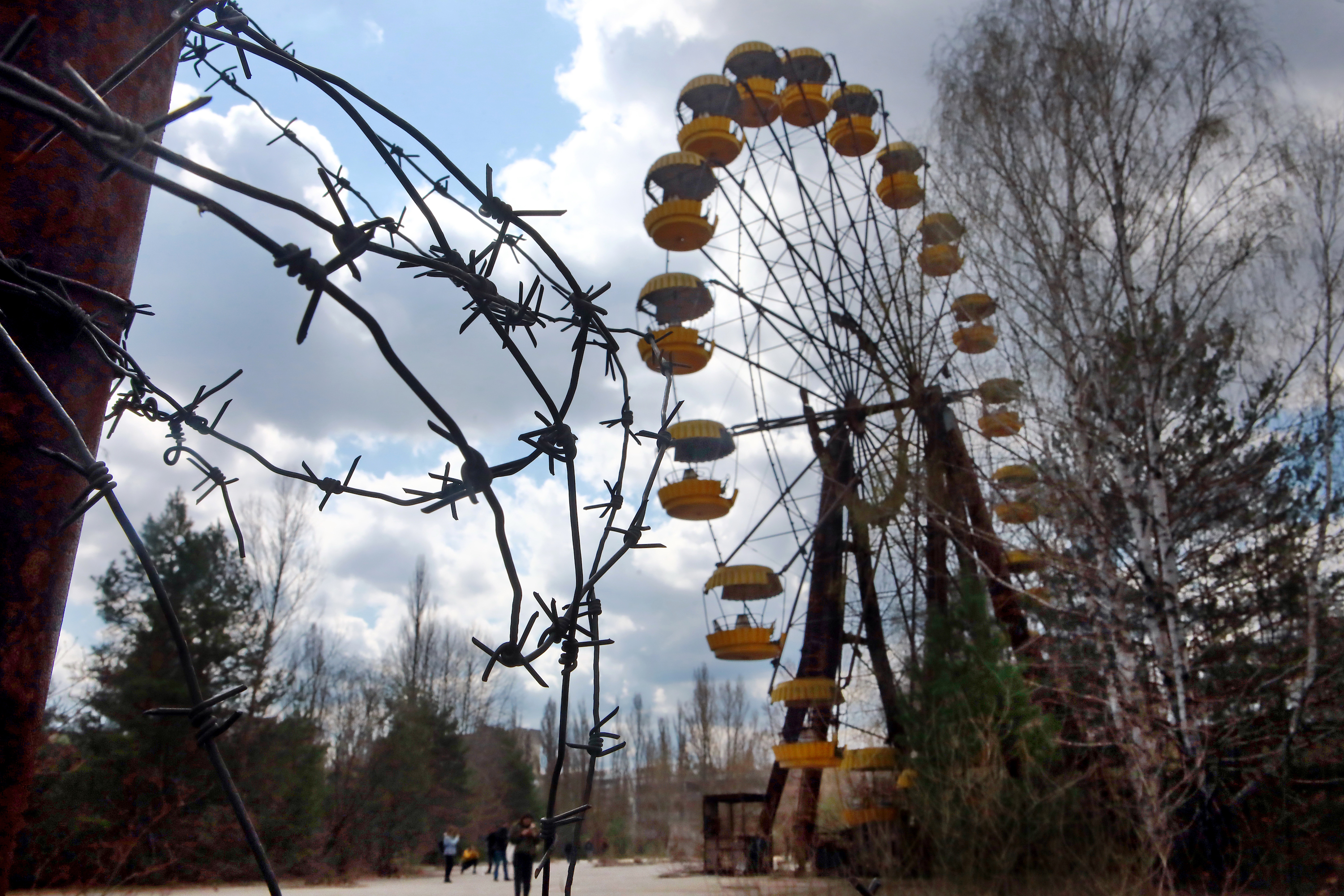
(Image credit: Getty)
Onto terrestrial radiation now, and there are intriguing reports doing the rounds that a fungus may be using the radiation in the Chernobyl exclusion zone as food.
The fungus is called Cladosporium sphaerospermum and the strange process it could be using to mop up Chernobyl’s radiation is called radiosynthesis, which deploys melanin to metabolise ionising radiation, the BBC reports.
The process of radiosynthesis remains hypothetical for the time being, but it could stand as a potential new foundation for life on Earth.
That means that instead of photosynthesis, the fungus may be thriving off the exploded fissile material of Ukraine’s dark star. (Chernobyl is Ukrainian for wormwood, a prophesied star in The Book Of Revelation that falls to Earth to poison the waters).
2025-12-01T13:44:21.297Z
Live Science roundup
2025-12-01T13:39:34.853Z
Solar flares corrupt airplanes
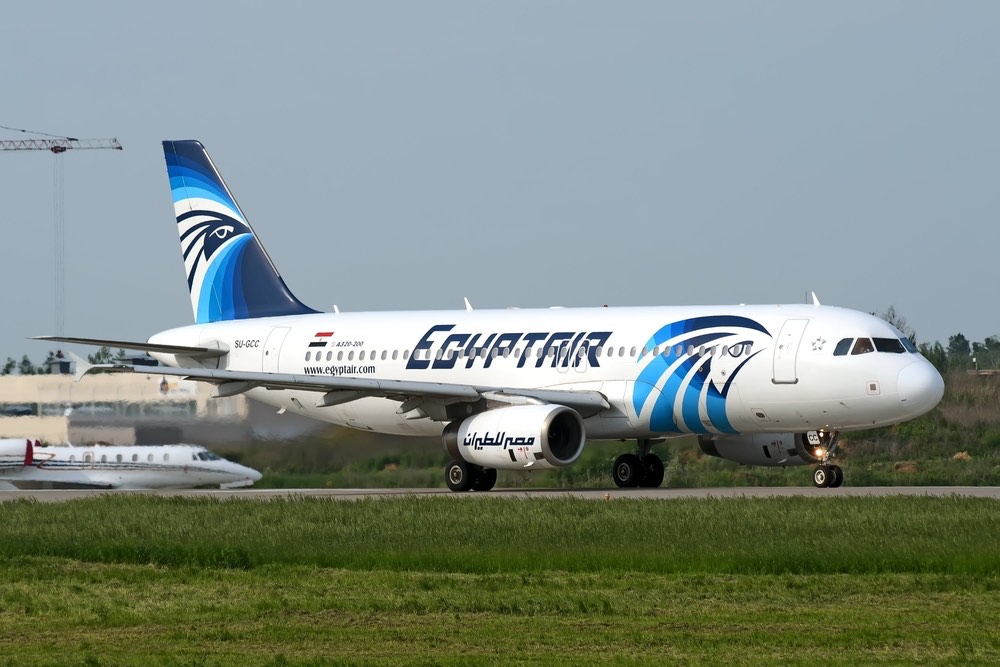
An Egyptair AIrbus A320 SU-GCC (Image credit: vaalaa / Shutterstock.com)
How much disruption can space weather really cause? Surprisingly, the answer is a lot — just ask Airbus.
Solar eruptions can grow to truly catastrophic scales, having the potential to wreak havoc on electrical systems and Earth-orbiting satellites.
Even aircraft aren’t immune from geomagnetic storms, as news broke over the weekend that aircraft manufacturer Airbus has recalled thousands of its A320 passenger jets owing to a fault that enabled intense solar radiation to “corrupt data critical to the functioning of flight controls”, Gizmodo reports.
The A320 is the most delivered jetliner in history, and the recall has severely impacted some airlines such as Colombia’s Avianca, which said the issue had affected 70% of its fleet.
And as solar activity continues to unexpectedly ramp up in its activity for the next few decades, the issues posed by it are only likely to get worse.
2025-12-01T12:36:03.184Z
Good morning, sunshine
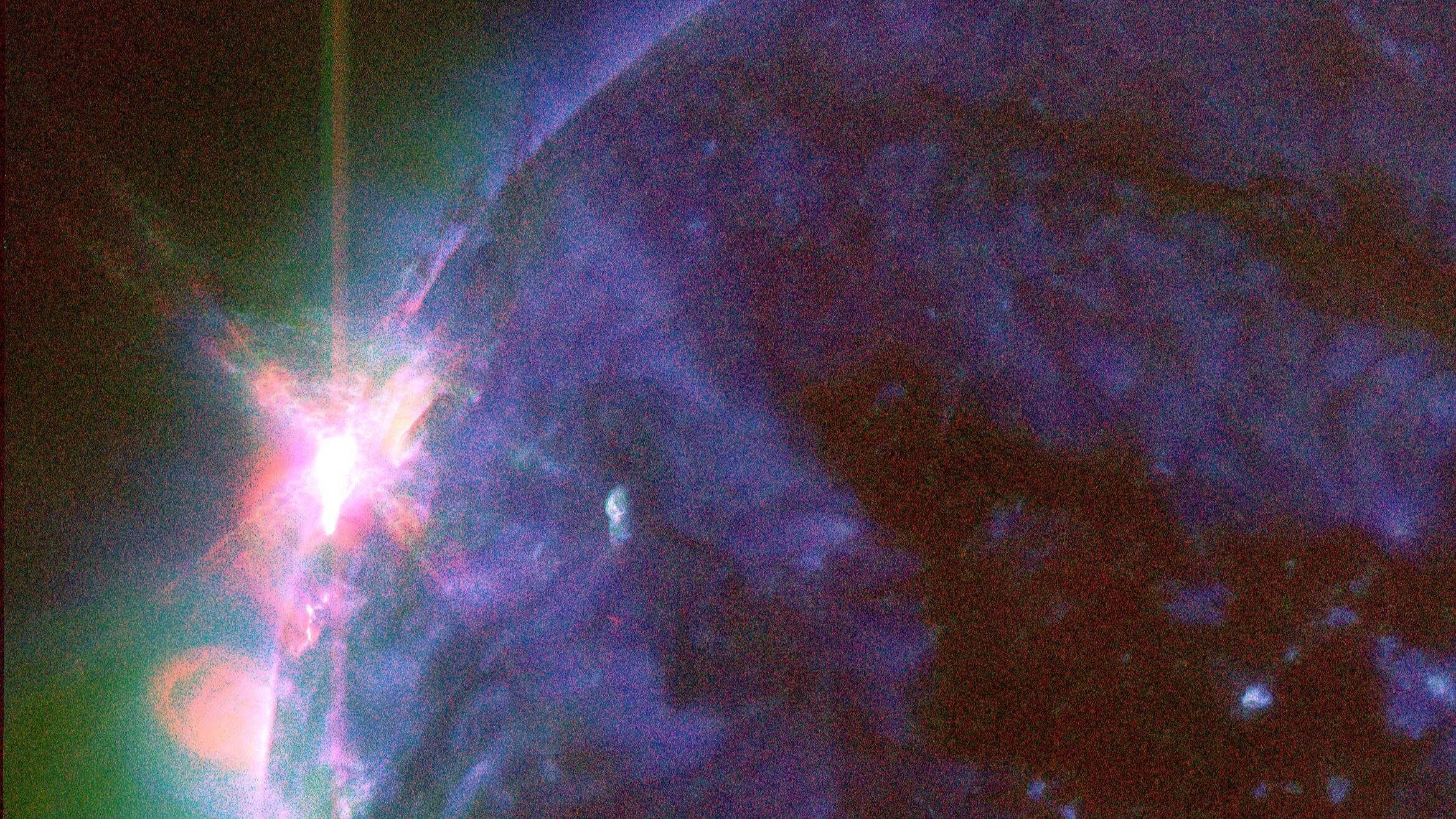
(Image credit: AIA/SDO/NASA)
Welcome back, science fans. We’re here with news of fresh geomagnetic storms, as Earth was hit by one solar flare last night and many more — alongside a coronal mass ejection — appear to be in the offing.
Coronal mass ejections (CMEs) are large, fast-moving clouds of magnetized plasma that occasionally get spat out into space by the sun alongside solar flares — powerful explosions on our star’s surface triggered when solar magnetic loops snap in half like an overstretched elastic band.
Last night’s flare was a surprise, spaceweather.com reports, coming from a new sunspot on the sun’s northern surface that appeared to be harmless until it exploded. The flare ionized the Earth’s atmosphere and caused a radio blackout over Australia.
With multiple more sunspots appearing on the sun’s surface, it could be a busy week for solar storms, potentially bringing more disruption in space and auroras here on Earth.

Ben Turner
Acting Trending News Editor