
Australia lacks secure, onshore computing power capable of training defence algorithms, running classified simulations or supporting the advanced capability agenda under the AUKUS partnership. Addressing this shortfall requires the government and industry to move decisively to establish a sovereign computing zone linked to Northern Australia’s emerging energy capacity, new digital corridors and national fibre upgrades.
In the 21st century, national power is increasingly derived from computing power that can train AI models, power complex simulations and integrate data from sensors into real-time military decision-making. States that control such computing capacity accelerate innovation. States that lack it are at risk of strategic stagnation.
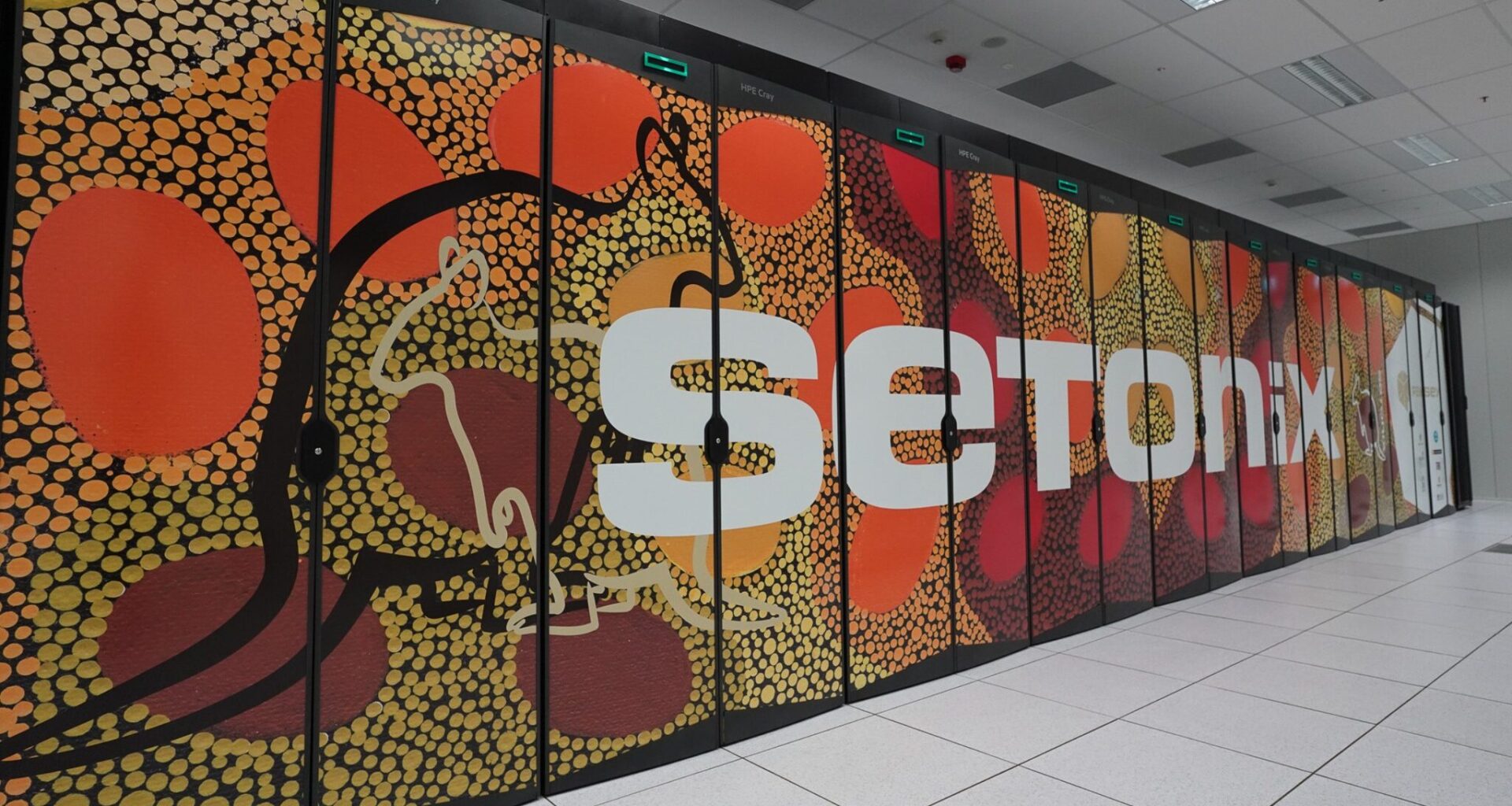
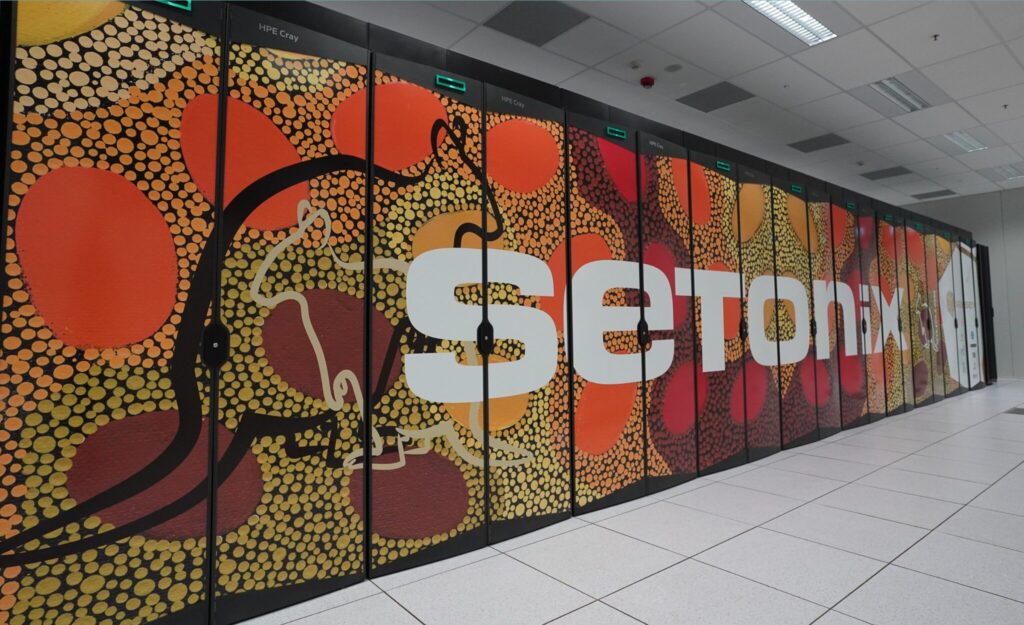
Global developments show how quickly the landscape is shifting. The United States and China lead the world in frontier computing capabilities. Japan, South Korea and Britain have launched major initiatives to build national AI clouds and sovereign high-performance computing facilities. Australia’s domestic position is far more modest. Pawsey Supercomputing Research Centre’s Setonix system, the country’s most powerful machine, ranks 58th in the world in terms of computing speed, with a capacity of 27.15 petaflops. For comparison, the leading system globally, Lawrence Livermore National Laboratory’s El Capitan, is capable of 1,742 petaflops. The scale difference is overwhelming, and Australia feels that strategic gap acutely.
A sovereign computing zone in the Beetaloo and Barkly area in the middle of the Northern Territory offers a credible way to close this gap. It’s one of the few regions in the country where abundant energy, land availability, climate suitability, natural security features and emerging digital corridors converge. Gas from the Beetaloo Basin can provide the firm, continuous power required for high-performance computing. The Barkly renewable precinct has the potential to supply large-scale solar generation that is suited to next-generation computing loads. Together, these energy sources could support an ecosystem underpinned by national research, defence simulation, trilateral collaboration, commercial artificial intelligence development and sovereign surge capacity during crises.
This proposal is far more ambitious than a conventional data centre. It’s the foundation for a national reserve of computing capacity: a secure, government-backed, high-powered asset designed for resilience, sovereignty and collaboration with trusted partners. Such a facility would include isolated secure partitions for classified work; sovereign environments for university and industry research; and reserve capacity available during cyberattacks or global cloud disruptions.
Nonetheless, building infrastructure compatible with exascale computers—the most powerful—is a demanding task. High-performance computing at scale requires integrated power systems, specialised cooling plants, sovereign cyber architecture, trained personnel and robust data-sovereignty frameworks. The physical challenge is illustrated by the experience of Sandia National Laboratories in New Mexico, where, I’ve been told by someone familiar with the incident, engineers had to open the roof during benchmarking tests because the cooling system couldn’t cope with the thermal load. A 10-year development timeline is achievable, but only through deliberate planning, governance and sequencing.
The Northern Territory’s regulatory, social and environmental context also requires careful attention. Land access processes, long-term emissions management for firming gas generation, Indigenous engagement, water requirements and the distribution of local community benefits must be addressed transparently. These issues don’t diminish the strategic logic.
The digital infrastructure situation in the Top End is also more positive than often assumed. Darwin is emerging as a digital gateway to the northern hemisphere. New and upgraded subsea routes, including the Darwin to Jakarta and Singapore corridor, are planned for international connections under the Territory Energy Link program. Additional regional cables now under active development are providing Darwin with levels of redundancy, capacity and latency performance that were previously unimaginable. The Territory Energy Link corridor also incorporates terrestrial fibre, providing a high-quality domestic backbone that supports both energy and data transmission. Telstra’s national fibre upgrade adds further connectivity.
Australia’s fiscal pressures mean that new capabilities cannot rely solely on traditional budget allocations. The long-term financial demands of Australia, Britain and the US—including submarines, missile defence, the energy transition and social policy commitments—limit the scope for direct government expenditure. A sovereign computing zone would require blended finance, with contributions from government, industry, allied partners and institutional investors, such as the superannuation sector.
Australia already has the institutional mechanisms in place to support such an approach. The Northern Australia Infrastructure Facility can finance enabling infrastructure across energy, transmission, fibre and storage. The Clean Energy Finance Corporation and the Australian Renewable Energy Agency can support renewable-integrated high-demand loads. Export Finance Australia can co-finance strategically aligned projects under the US–Australia Critical Minerals and Clean Energy Framework, as well as future trilateral capability cooperation. Allied partners, including Japan, South Korea, the US and Britain, have investment agencies already active in Australian strategic industries.
A public–private partnership model similar to that used for the National Broadband Network could also be employed, with sovereign partitions controlled by the federal government and commercial infrastructure funded by private capital. Australia’s superannuation pool, now exceeding $3.5 trillion, has both the scale and appetite for long-term strategic infrastructure investments.
A sovereign computing zone in the Beetaloo and Barkly corridor would reinforce Australia’s national strategy. It would harden defence posture by providing secure, onshore capacity for advanced capabilities. It’d accelerate national competitiveness by giving industry and researchers access to frontier-class systems. And it’d strengthen sovereignty by ensuring that Australia’s most critical digital infrastructure is powered by Australian energy, connected through Australian cables and protected by Australian law.
If the Northern Territory option doesn’t advance, the strategic case remains. The Pilbara, North Queensland or Tasmania could also host sovereign computing infrastructure if energy, land and cable capacity align. The Northern Territory is the strongest candidate today, but not the only one.