
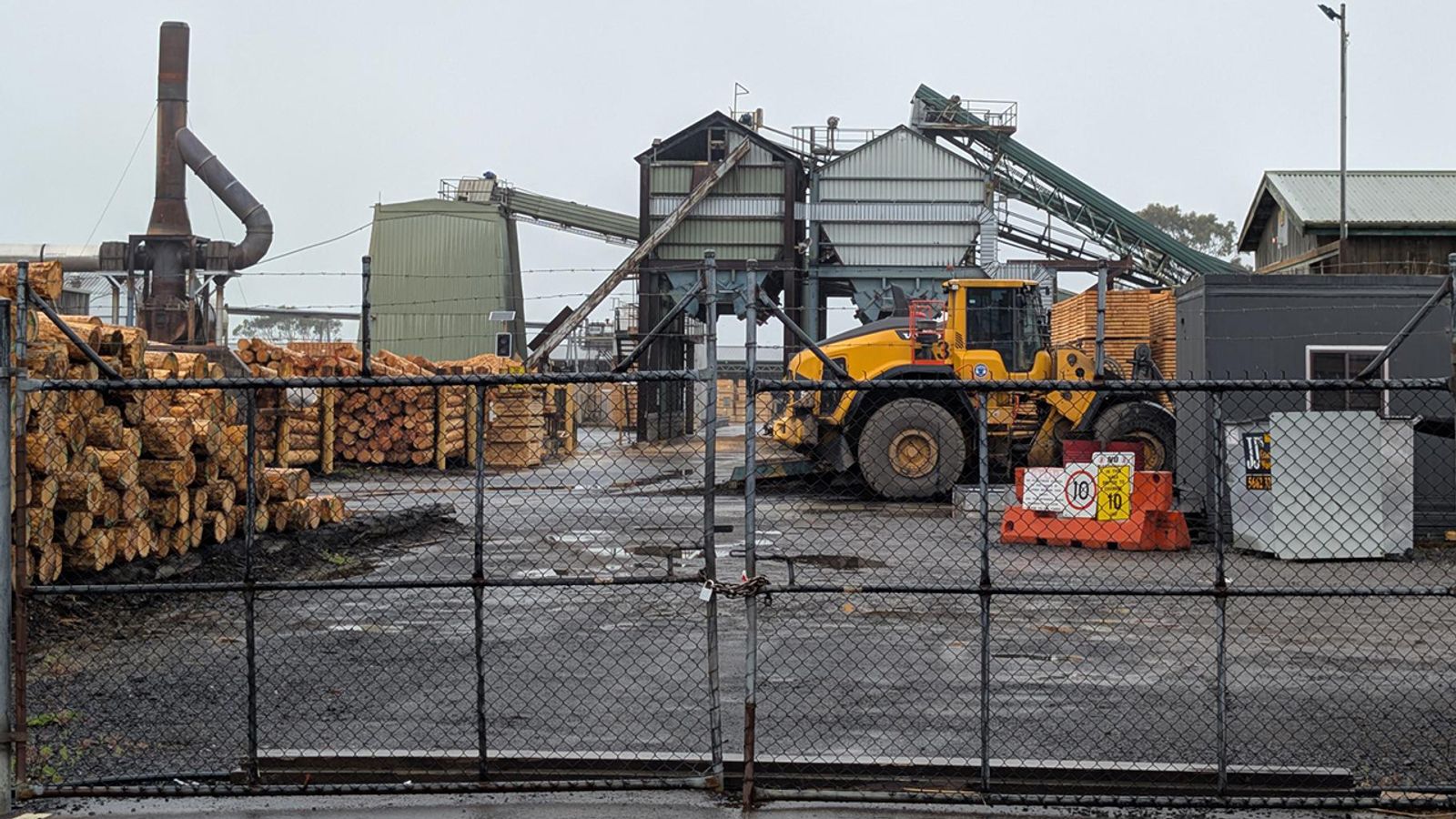
On November 18, Associated Kiln Driers (AKD) suddenly announced the closure of its sawmill in the small town of Yarram, in Gippsland. The facility’s 73 workers were given no forewarning of the shutdown, arriving at work on the Tuesday morning, only to be told they would be made redundant, effective immediately.
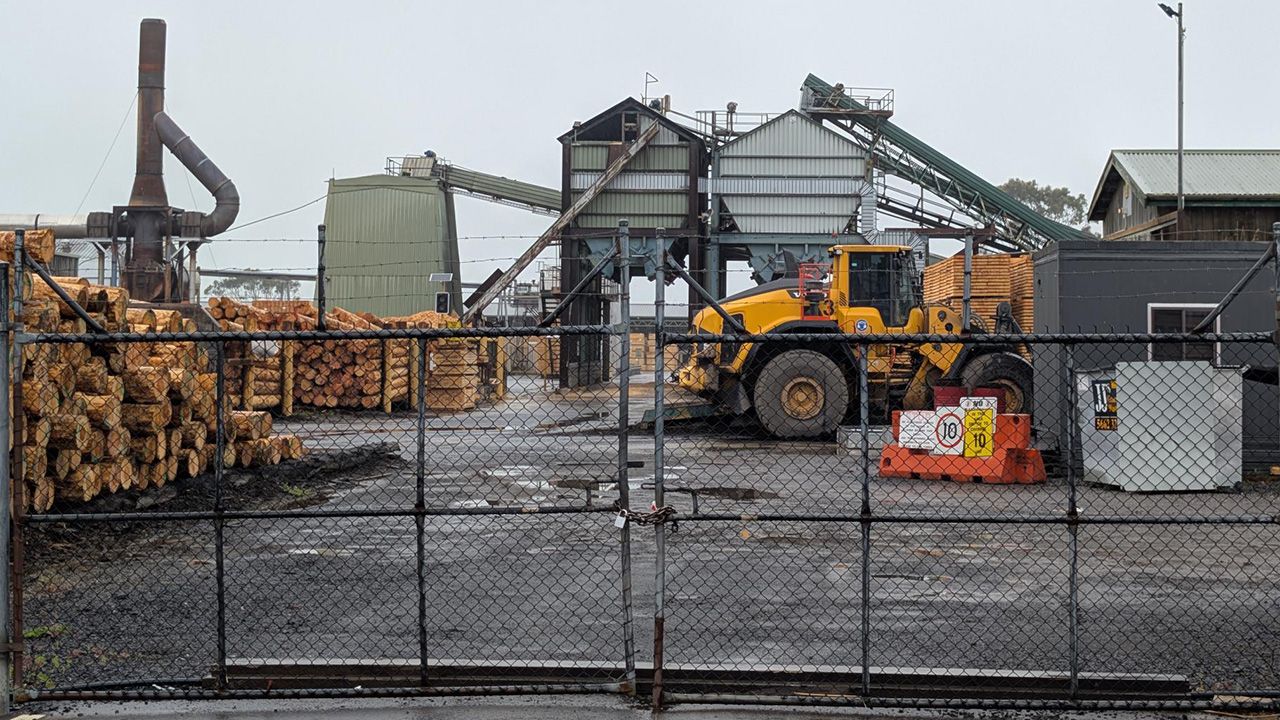
Workers were told they would receive just nine days of paid leave, until November 28, then redundancy payments. Reportedly, the company has imposed a gag order, telling workers these meagre payments could be withheld if they speak to the media.
The Yarram sawmill, which cut softwood for products like pallets and fencing, has been operating since 1996, passing through several different corporate owners before AKD acquired it in 2018.
No clear explanation has been given for the sudden shutdown of the sawmill. The 2023 closure of the Opal paper mill an hour away in Maryvale, which had been purchasing wood chips from the Yarram plant may well have contributed.
AKD said in a media release the Yarram sawmill’s closure was part of a restructuring operation at the company. “Following an organisational review,” the company had decided that, because of “challenging market conditions,” “the prolonged slowdown in housing construction across the country” and “increasing operating costs,” Yarram’s operations had become “unsustainable.”
Yarram sawmill workers and local residents told World Socialist Web Site reporters they had been blindsided by the sudden closure of the plant, which had been training new staff, had recently been upgraded, and appeared to be in full operation.
One local said the company had “been planning it for sure. They were really holding it close to their chest, because everyone was in the dark.”
AKD told workers they could perhaps find employment at its four other facilities where it employs over 900 workers. But there is no guarantee, and even if workers are offered such positions, the nearest AKD mill is in Colac, more than four hours’ drive away, meaning they would be forced to pick up and move their whole family, without warning. AKD’s other locations are even further afield, located in Tumut and Oberon in New South Wales, and Caboolture in Queensland.
The closure of the Yarram sawmill, the second largest employer—after supermarket chain Woolworths—in the town of over 2,000 people, threatens to cascade through the local district, adding to the ongoing employment crisis in the Gippsland region.
Although it has virtually no members at the sawmill, the Timber, Furnishing and Textiles Union (TFTU) bureaucracy immediately arrived on the scene to help the company complete the shutdown as smoothly as possible. The TFTU was previously the manufacturing division of the Construction, Forestry and Maritime Employees Union (CFMEU), but, with the help of the federal Labor government, split from the building union earlier this year after a protracted legal battle.
TFTU national secretary Michael O’Connor said the union was “doing everything we can to see if we can place [Yarram workers] in other mills. We’ve had at least one mill offer work.”
By volunteering its services as a de facto job placement agency, the TFTU is sending workers a clear message that nothing can be done to prevent the closure of the Yarram sawmill, the destruction of 73 jobs and the enormous flow-on effect it will have on the town.
As is the case for AKD itself, the TFTU leadership’s main concern is not for the sacked workers, but to prevent any opposition to the closure, and especially any broader ramifications for the company’s other facilities, including its largest in Colac, where the TFTU does have coverage.
The TFTU is using a tactic practised and perfected over decades by the union apparatus to impose the “orderly closure” of factories and even entire industries. Workers are isolated from the rest of the working class, fed fairy tales that they will be looked after through union-management “redeployment” programs and, above all, told that a fight to defend their jobs is impossible.


The “orderly closure” operation at Yarram is just the sharpest expression of what the TFTU bureaucracy is carrying out more broadly in response to growing concerns over the future of the forestry industry. The union is promoting illusions that the federal Labor government’s Timber Fibre Strategy—jointly endorsed by the TFTU and Forestry industry representatives—will protect and even create jobs.
The shutdown and destruction of jobs in Yarram can and must be fought, but it will require a fight to mobilise the support of workers at the other AKD facilities in Colac, Caboolture, Tumut and Oberon, throughout the timber industry and more broadly.
The material basis for this support is that the sudden Yarram closure is not a unique phenomenon, but part of a global attack on the working class. It is a reminder that, under capitalism, no worker is safe from being thrown on the scrapheap without notice, according to the profit imperatives of corporations and their shareholders.
This cannot be fought through the trade unions, which not only defend the capitalist profit system, but are an integral part of it, serving as an industrial police force to impose the attacks on jobs, wages and conditions demanded by big business and governments.
Instead, new organisations must be built—rank-and-file committees, democratically run by workers and totally independent of the unions and Labor. The urgent task of such committees in Yarram and at AKD’s other facilities is to lead a political and industrial fight to demand the reopening of the sawmill and the restoration of all jobs. If the company claims this is impossible, then the facility should be placed under public ownership and democratic workers’ control.
The sudden shutdown of the Yarram sawmill and destruction of 73 jobs is one stark expression of the domination, under capitalism, of corporate profits over workers’ needs. The fight against this and other attacks on jobs, wages and conditions, must be connected with a broader struggle by the working class for a political alternative.
Contact the Socialist Equality Party to enquire about forming a rank-and-file committee in your workplace or community.
Sign up for more information about how to join or build a rank-and-file committee in your workplace