
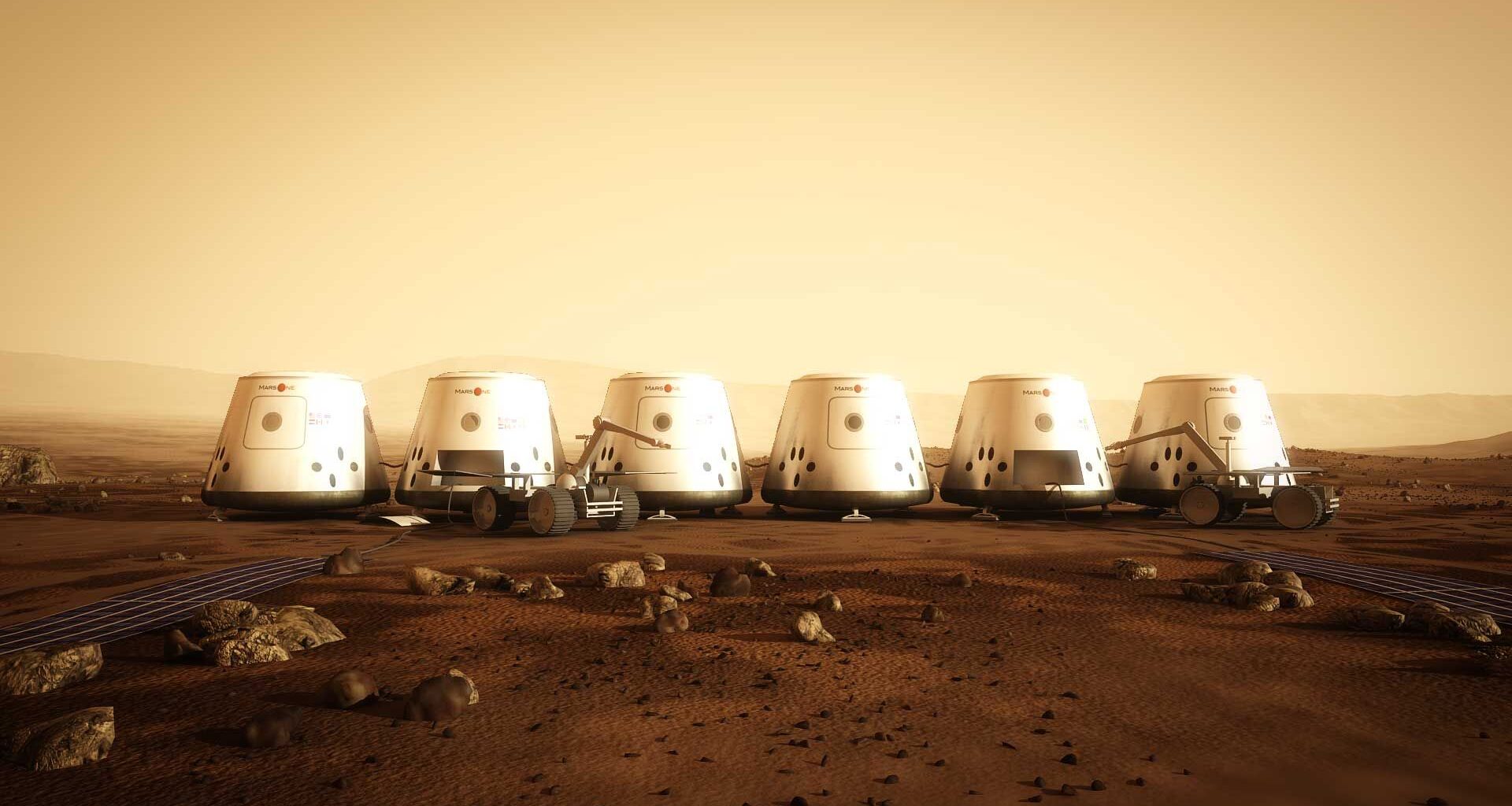
Settling Mars has been a hot topic for years due to its close proximity and the similarities it shares with Earth like an atmosphere and water. Even NASA has set its sights on sending humans to Mars some time in the 2030s.
However, spaceflight is expensive, and getting people to a different world will carry a heavy price tag. Plus, if we’re able to send people to Mars, they’ll need tools and a place to stay. Sending such things over in a spacecraft would only add to the cost (by quite a bit, too).
So, rather than bring everything from Earth, scientists are exploring a different avenue of developing materials on Mars. New research from the Polytechnic University of Milan in Italy proposes a novel method — grow the materials on Mars itself. Using bacteria.
You may like
Building with bacteria
The idea of using found materials on missions to other planets — instead of just bringing everything with you from Earth — is called in-situ resource utilization (ISRU). “Harnessing local materials is the key to unlocking sustainable human presence on Mars,” according to a statement.
The research proposes that biomineralization, a process that allows living organisms to produce minerals, could be used to create building materials once people get to Mars.
The two bacteriums that the paper singles out are Sporosarcina pasteurii and Chroococcidiopsis. By pairing these bacteriums together to create a “co-culture,” the researchers think it may be possible to create a type of binding element that could be mixed in with regolith (rocks and dust) on the surface Mars.
“Sporosarcina secretes natural polymers that nurture mineral growth and strengthen regolith, turning loose soil into solid, concrete-like material,” the spokesperson writes. “We envision this bacterial co-culture mixed with Martian regolith as feedstock for 3D printing on Mars.”
Growing crops with bacteria
This process may allow future Mars settlers to grow the building materials they need to survive in the harsh environment. But the researchers envision more uses for the “microbial partnership” beyond Martian construction.
“Chroococcidiopsis, with its ability to produce oxygen, could support not just habitat integrity but also the life-support systems for astronauts,” the spokesperson wrote.
“Over longer timescales, the ammonia produced as a metabolic byproduct of Sporosarcina pasteurii might be used to develop closed-loop agricultural systems and potentially help in Mars’ terraforming efforts,” they wrote.
The paper was published Dec. 2, 2025 in Frontiers.