
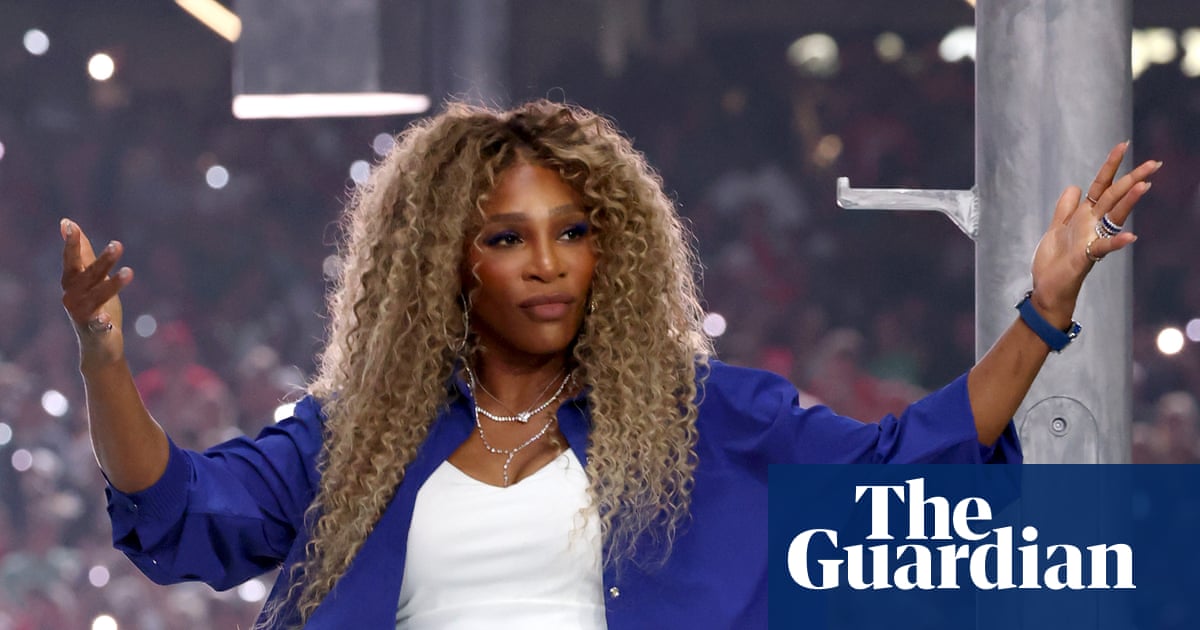
Serena Williams has taken the procedural move required of any player contemplating a competitive comeback, after the 23-time grand slam singles champion re-entered the International Tennis Integrity Agency’s (ITIA) registered testing pool for the first time since 2022.
Williams, 44, has not played an official match since her run to the third round of the US Open more than three years ago. Although she described her departure at the time as “evolving away” from the sport rather than a hard retirement, she filed the paperwork with the ITIA that September that exempted her from the sport’s stringent whereabouts requirements. To return to competition, however, players must make themselves available for out-of-competition testing for six months before they are allowed to enter an event.
Williams’s name appeared on the agency’s updated testing-pool list dated 6 October. An ITIA spokesperson confirmed to the Guardian on Tuesday that Williams had requested reinstatement, while emphasizing that a place on the list is not itself evidence of a comeback.
“Serena Williams is back on the Registered Testing Pool list,” an ITIA spokesperson said, noting that athletes returning from retirement “need to make themselves available for testing for six months before they can compete again”, in line with World Anti-Doping Agency (Wada) regulations.
Later Tuesday, Williams publicly disputed that her inclusion in the pool signaled any plans to return. “Omg yall I’m NOT coming back,” she wrote on X. “This wildfire is crazy.”
A representative for Williams did not immediately respond to questions from the Guardian about her intentions.
The ITIA’s registered pool does not include every active player; it is largely reserved for top-ranked singles competitors, high-level doubles and wheelchair athletes, and pros coming back after extended absences.
Rumors about a possible cameo appearance at the US Open circulated quietly during this year’s tournament, particularly around the mixed doubles event, which has evolved into a two-day showcase packed with star wildcards. But because Williams remained classified as retired at the time, she was not eligible to enter.
People familiar with the process have told the Guardian that Williams explored a return earlier than this autumn. One attempt to rejoin the testing pool was made in August, just before the US Open, most likely with the hope of playing doubles alongside her sister Venus. Those plans dissipated once it became clear that the six-month testing window could not be waived, a restriction that blocked Andy Roddick from a similar last-minute doubles cameo in 2014.
Venus Williams, 45, never formally retired and therefore avoided the same procedural hurdles. She returned this summer after a 16-month break, earning a singles win in Washington, pushing No 11 seed Karolína Muchová to a deciding set in New York and reaching the US Open doubles quarter-finals with Leylah Fernandez. She is expected to resume her schedule in Auckland early next season.
Serena’s reappearance on the ITIA documents does not guarantee a comeback, but it does restore her eligibility timeline. If she remains in the pool without interruption, she could enter tournaments as early as mid-2026. Whether she intends to contest singles again, reunite with Venus in doubles, or simply preserve the option to do so remains uncertain.