
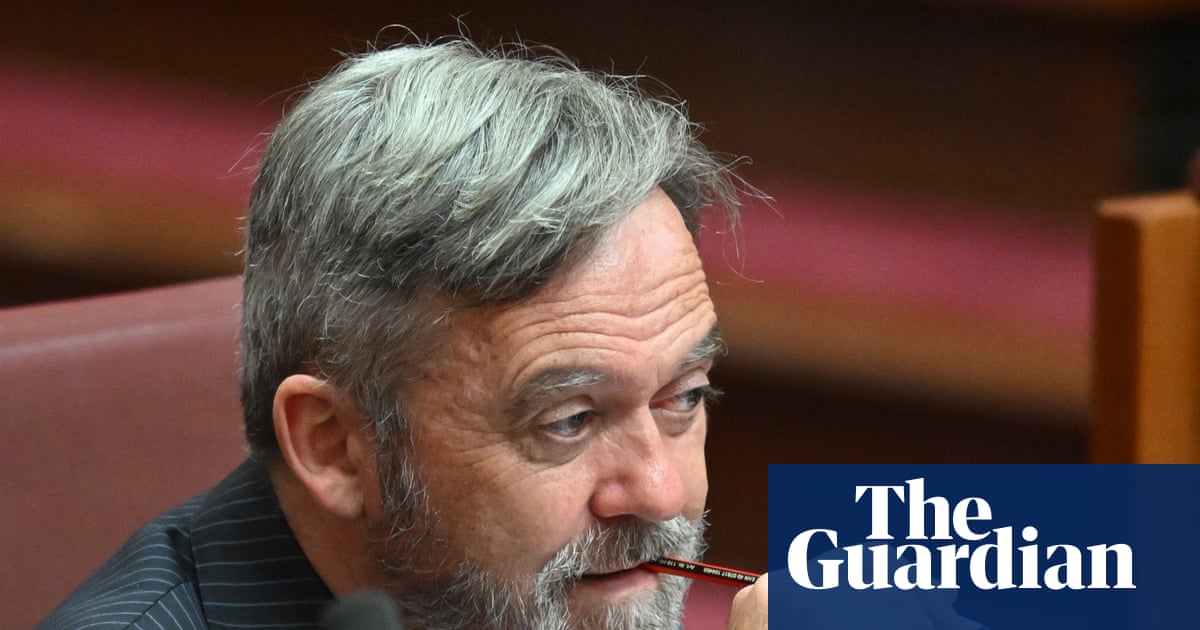
A Liberal senator has condemned the “inflammatory and irresponsible” language being deployed in the debate over immigration levels, challenging colleagues to approach the policy in a “respectful and honest way” or risk backlash from voters.
The South Australian backbencher Andrew McLachlan said the repeated use of the phrase “mass” migration to describe the rate of immigration was not only “technically inaccurate” but “extremely unhelpful”.
The comments highlight a growing anxiety among some Liberal MPs as the Coalition prepares to debate the “principles” that will underpin its immigration policy, which threatens to exacerbate the internal divisions that flared during the bruising fight over net zero emissions policy.
One point of angst is the term “mass” migration, which has emerged as a popular slogan for rightwing figures who want Australia’s immigration levels slashed.
The Liberal senator Jacinta Nampijinpa Price, former prime minister Tony Abbott, rightwing lobby group Advance, conservative thinktank the Institute of Public Affairs and One Nation have all used the phrase to suggest Australia’s immigration rate was out of control.
Sign up: AU Breaking News email
Price – who was sacked from the shadow ministry after the fallout from her comments about Indian migrants – used the phrase again on Tuesday during a back-and-forth with ABC executives at Senate estimates, saying: “It’s utterly ridiculous to be painted as a racist when addressing an issue of mass migration in this country that is of concern.”
The basis for the “mass” migration argument has been rejected, including by the Australian Bureau of Statistics, which issued a rare public statement in August to call out the misuse of overseas arrivals data to advance the unfounded claim.
Without singling out particular colleagues or organisations, McLachlan condemned the use of the phrase as he warned the Coalition risked a backlash from multicultural communities if it didn’t conduct the debate sensitively.
“The continued use of the term ‘mass migration’ by some is not only technically inaccurate but also extremely unhelpful to the tone of the discussion. The term can be used to disguise more dangerous sentiments,” he told Guardian Australia.
“Its use in this debate is irresponsible and inflammatory. Every member and senator has a duty to lead public opinion, not to merely reflect the divisive sentiments of the very few.
“The many wonderful communities that make up modern Australia will be disappointed with us should we fail to debate this topic in a respectful and honest way befitting a party that aspires to government.”
Guardian Australia contacted Price’s office for comment but did not receive a response.
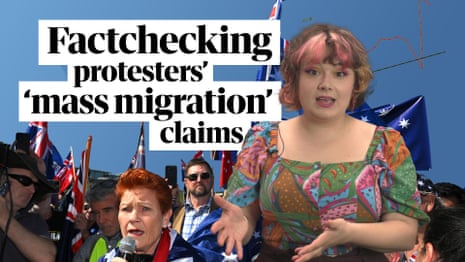 Factchecking protesters’ claims of ‘mass migration’ into Australia – video
McLachlan was last week involved in a tense closed-door debate with Coalition colleagues about its position on a One Nation motion that blamed, in part, “mass” migration for the housing crisis.
The Coalition ultimately voted against the Senate motion and also confirmed its opposition to a separate One Nation bill that proposed a plebiscite on support for a “zero net migration policy” for five years, distancing itself from Pauline Hanson’s far-right party.
But as Hanson’s rise in the polls coincides with a drop in the Coalition vote, the opposition leader, Sussan Ley, is facing internal pressure to commit to steep cuts to immigration levels to help win back rightwing voters.
skip past newsletter promotion
Sign up to Breaking News Australia
Get the most important news as it breaks
Privacy Notice: Newsletters may contain information about charities, online ads, and content funded by outside parties. If you do not have an account, we will create a guest account for you on theguardian.com to send you this newsletter. You can complete full registration at any time. For more information about how we use your data see our Privacy Policy. We use Google reCaptcha to protect our website and the Google Privacy Policy and Terms of Service apply.
after newsletter promotion
That includes pressure from future leadership contender Andrew Hastie, who quit Ley’s frontbench in October to campaign for lower immigration.
After Hastie’s claim that immigration levels were making Australians “feel like strangers in our own home”, Ley emphasised that poor planning from governments – not migrants – was to blame for societal problems such as housing shortages and traffic congestion.
Hastie’s replacement as the shadow home affairs minister, Jonathon Duniam, and the shadow immigration minister, Paul Scarr, have been tasked with devising “principles” to underpin the opposition’s immigration policy, which are expected to be unveiled before Christmas.
The opposition will not immediately commit to a figure for net overseas migration, although Ley has said the numbers are too high.
The rate of net overseas migration is forecast to reach 260,000 this financial year, down from a post-pandemic peak of 556,000 in the 12 months to September 2023.
Before a formal debate on the “principles”, senior Liberals are pushing various positions, publicly and privately, in an attempt to influence colleagues.
In an email to supporters, Andrew Bragg, the shadow housing minister and a moderate Liberal powerbroker, warned that cutting migration would not “fix” the housing crisis.
“The increased demand from Labor’s reckless migration programme has been damaging but it is not the major driver,” he said. “The major driver of the housing crisis is a collapse in housing supply.”
In a separate intervention the shadow foreign affairs minister, Michaelia Cash, a leading conservative, used Instagram to promote an Australia-first immigration policy.
“The Coalition’s immigration settings will put Australia, and our capacity to take in migrants while preserving our way of life, first,” read the post, which featured the word “first” in larger, bold letters and an image of people waving Australian flags.