
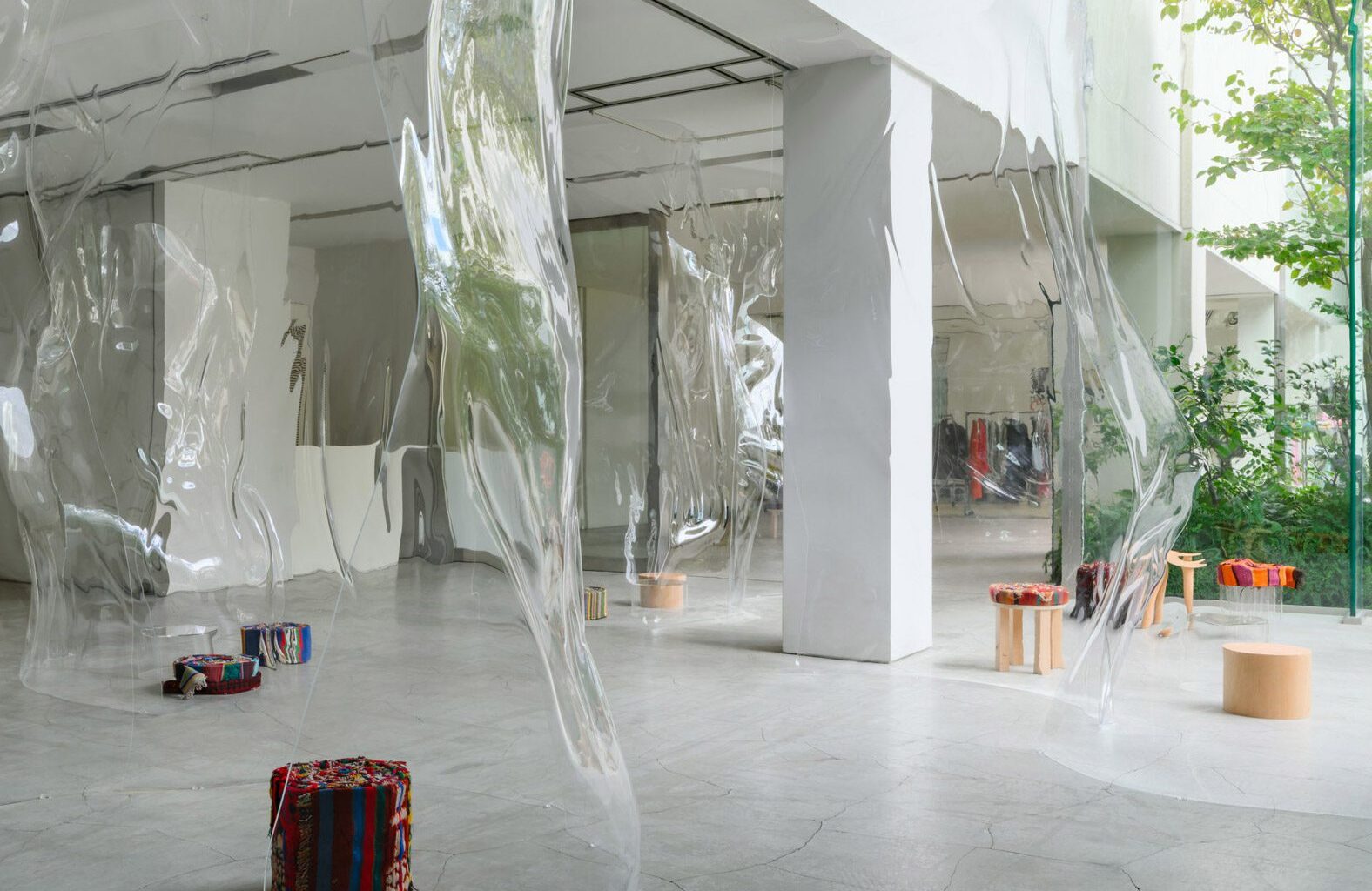
Architect Ichio Matsuzawa has designed the pop-up AWT Bar for the annual Art Week Tokyo, using transparent acrylic sheets that were heated and turned into three-dimensional walls.
The bar, located in Tokyo’s central Aoyama area, featured see-through walls that resembled sheets of water cascading down from the ceiling.
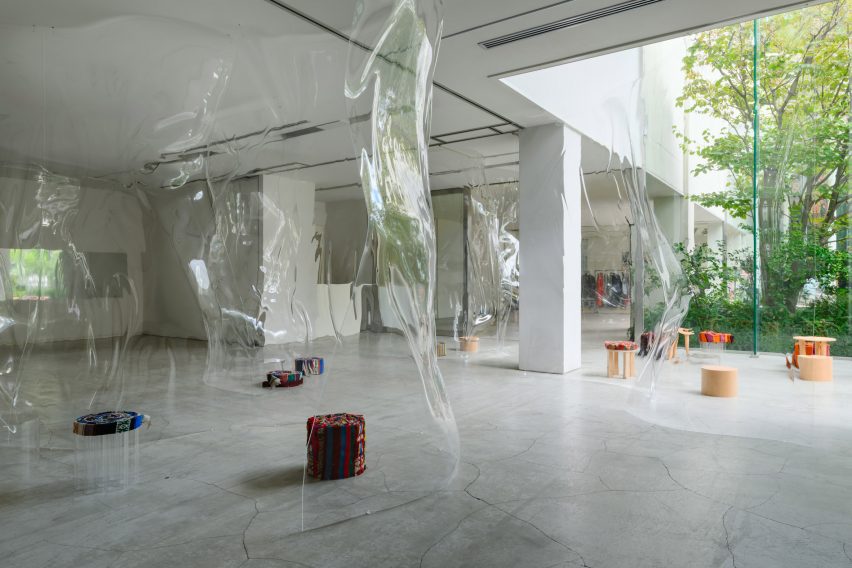 The interior of AWT Bar featured transparent walls
Matsuzawa chose to work with the transparent shapes because he wanted the space to have a unique feel, he told Dezeen.
“The concept is to create a one-of-a-kind space in each moment through constantly changing reflections and distortions produced by transparent, warped partitions,” the architect said.
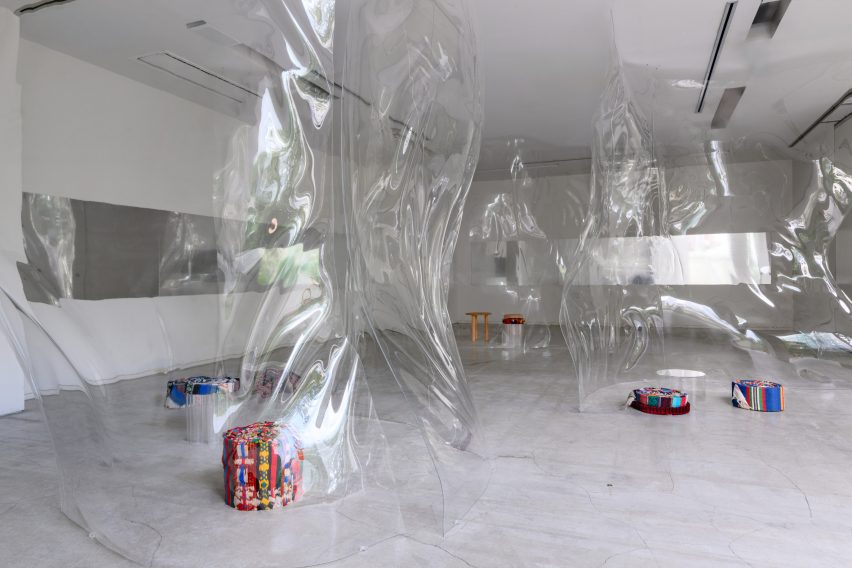 The pop-up bar was located in Aoyama, Tokyo
To construct the sheer walls, he used three-millimetre-thick, highly transparent acrylic glass.
“Because it has a light transmittance of 94 per cent, the material is almost completely transparent,” Matsuzawa explained.
“In addition, it can be thermoformed, and even thin acrylic sheets possess sufficient structural performance to stand on their own.”
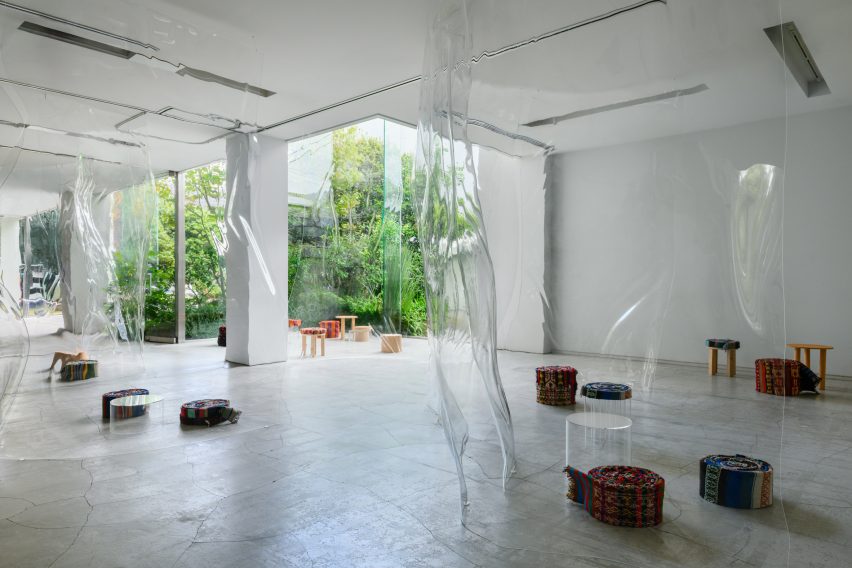 Acrylic sheets were heat-treated to form shapes that could stand by themselves
The architect heated the acrylic, turning it into three-dimensional shapes that can stand upright by themselves and through which visitors to the bar could see the whole space, in a slightly distorted version.
“In this work, the acrylic is not the main character; rather, the reflected environments and the people within them take centre stage,” Matsuzawa said.
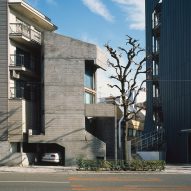
Kazuyo Sejima presents compact Tokyo homes that “show how cities and buildings grow together”
Matsuzawa also designed the furniture inside the bar, which was made from colourful rugs that had been rolled up to form seats, creating a playful contrast to the sculptural sheer walls.
“By wrapping a handmade carpet from Central Asia, it was turned into a chair,” he explained.
“I found it interesting to use a tactile, material-rich fabric in contrast to the transparent acrylic. I also felt that it would create a more welcoming atmosphere, rather than an inorganic one.”
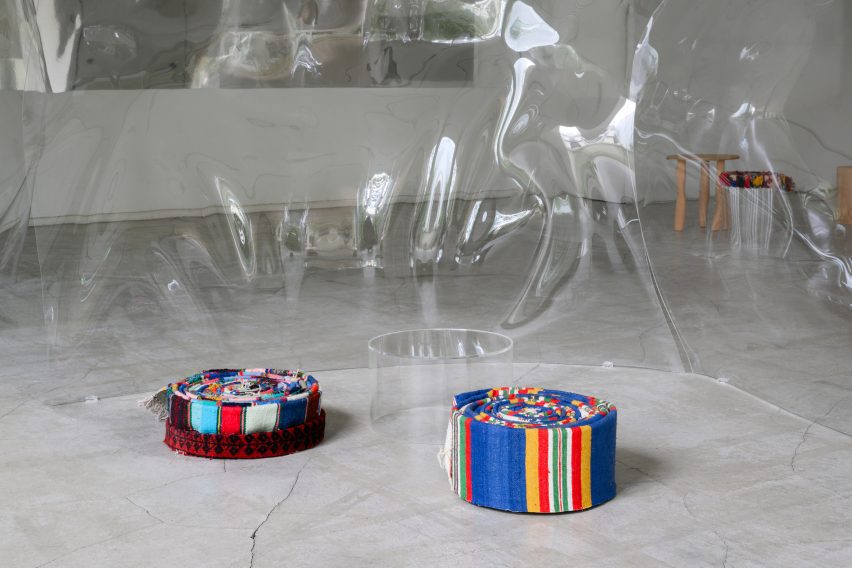 Ichio Matsuzawa also designed furniture from rugs
The overall space, which Matsuzawa described as a “continuously transforming environment”, also changed over the course of the day as the light reflected the acrylic sheets from different angles.
Sound installations and live performances, as well as a specially designed food and drink menu, contributed to the ever-changing feel of the space.
“We received feedback that the installation gives a completely different impression between day and night,” the architect said. “Combined with the sound installation, people told us it created a very enchanting experience.”
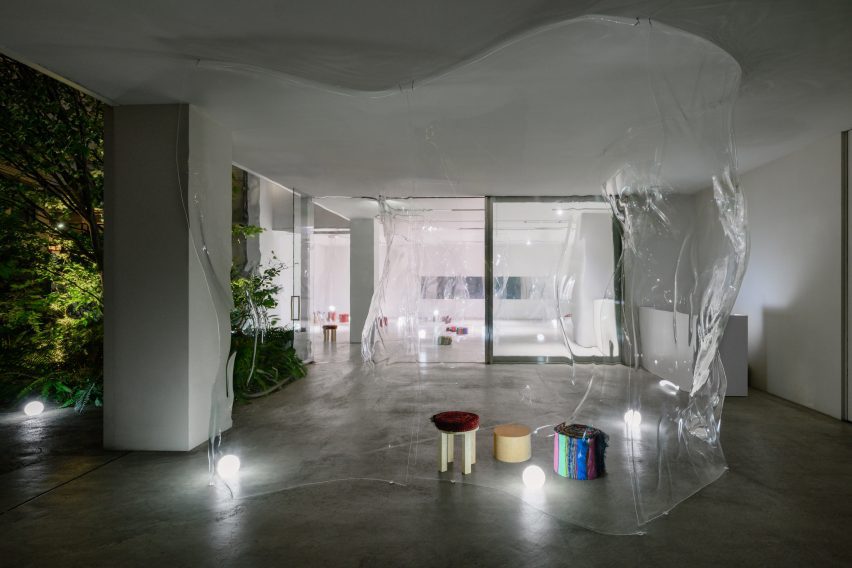 The installation had a different impact in the evenings
Also during this year’s edition of Art Week Tokyo (AWT), architect Kazuyo Sejima showcased striking post-war buildings in the city for the Tokyo House Tour.
Designart Tokyo, meanwhile, which took place around the same time, showcased a number of exciting projects by upcoming and established Japanese designers.
The photography is courtesy of AWT.
Art Week Tokyo took place across Tokyo from 5 to 9 November. See Dezeen Events Guide for an up-to-date list of architecture and design events taking place around the world.