
OITA, Japan – As the “hikikomori” phenomenon increasingly intersects with Japan’s rapidly aging society, support organizations are introducing new tools to help socially withdrawn individuals calculate assets, understand pension systems, and create long-term financial plans for them.
With an estimated 1.46 million hikikomori reclusive people nationwide, workshops and informational booklets are spreading across the country to teach them how to manage living expenses after parents pass away.
One expert stressed the importance of confronting the numbers directly: “We want them to specifically calculate assets and future income and expenses.”
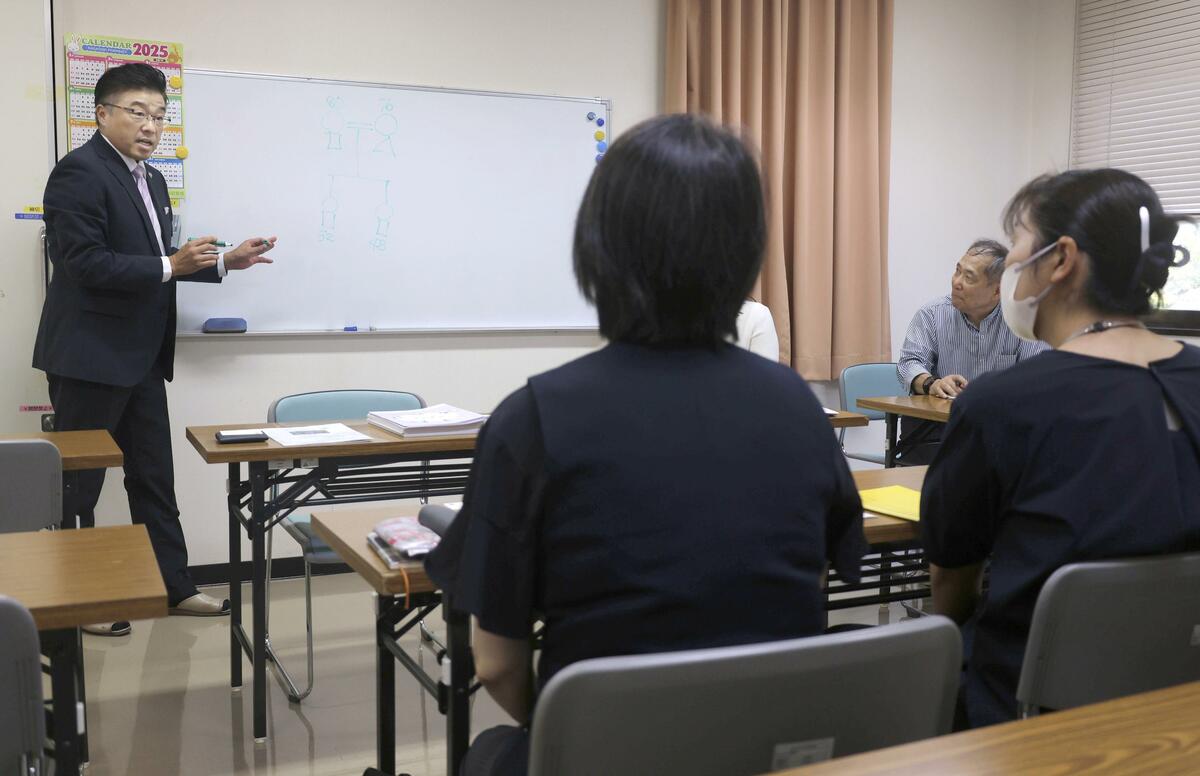
At a study session in early September hosted by the Oita Step Association, a family support group in Oita, southwestern Japan, a life insurance company representative warned that receiving a large lump sum inheritance can lead to overspending.
The employee explained management methods and recommended products that provide fixed monthly payments from insurance proceeds — an approach meant to help socially withdrawn adults access funds steadily after losing parental support.
Among the attendees was a woman in her 70s whose autistic son has been socially withdrawn for nearly 20 years. She watches her bank balance shrink each time she checks it.
Even when she accounts for her son’s disability pension, she finds herself too afraid to calculate their long-term needs. Eyes cast downwards, she wonders, “How long will it last after I’m gone?”
The concern reflects the severity of the “80-50 problem,” in which parents in their 80s continue caring for reclusive children in their 50s.
Psychiatrist Tamaki Saito, 64, cautions that forcing socially withdrawn individuals to work outside the home can cause trauma and backfire. Instead, he encourages parents and children to discuss financial realities together.
“Rather than just saying ‘get a job,’ showing concrete figures makes the child feel they are being taken seriously,” he explains. “It provides reassurance and can be a first step toward social participation.”
In 2018, a Saitama-based NPO organizing families of hikikomori published a booklet that outlines methods for calculating assets likely to remain after parents die and introduces systems such as disability pensions.
Representative director Yurie Taguchi, 76, whose second son is a hikikomori, says that planning for the period after her own death eased her anxiety.
“Once you have a financial plan in place, parents can interact with their children more calmly,” said Taguchi, who also holds study sessions.
Financial planner Masako Hatanaka, 62, has long supported families of socially withdrawn individuals by guiding them through step-by-step household financial planning. She begins by having families list all assets and liabilities — savings, real estate, and any outstanding loans — to determine what can be left behind.
When a substantial portion of inheritance is intended for the socially withdrawn child, she notes, ensuring the understanding of other siblings is essential to avoid conflicts over inheritance.
In the next step, Hatanaka suggests a living budget be mapped out for the child — relying on a combination of inheritance and the child’s future pension income in many cases.
Welfare is an option, though it becomes unavailable when savings exceed certain limits. The plan becomes more robust, she says, when the child can prepare simple meals to reduce expenses or work even limited hours to supplement income.
“Many parents avoid facing reality, but it’s crucial to prepare for this while they are still healthy,” she emphasizes.