
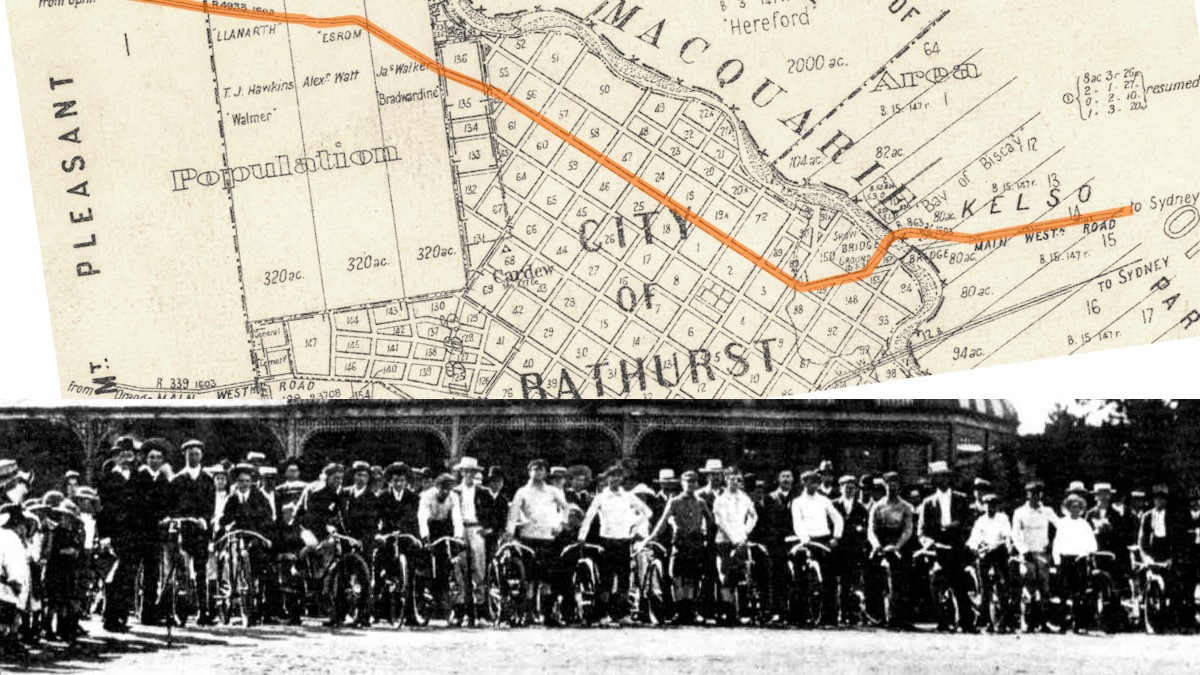
WHEN you think of awesome public road tracks, Bathurst’s legendary Mount Panorama Circuit springs to mind, but it was far from the first street track through Australia’s oldest inland settlement.
We have previously covered the Vale Circuit, which ran parallel to Conrod Straight between 1931 and 1937, with a setup so wild that the neighbouring scenic drive was commissioned for motorsport use from 1938 to the present day.
However, the Vale Circuit was far from Bathurst’s first road course, with the very first official race on public streets actually dating back to 1905, and incredibly, right through the heart of town.
Motorcycles and Bicycles
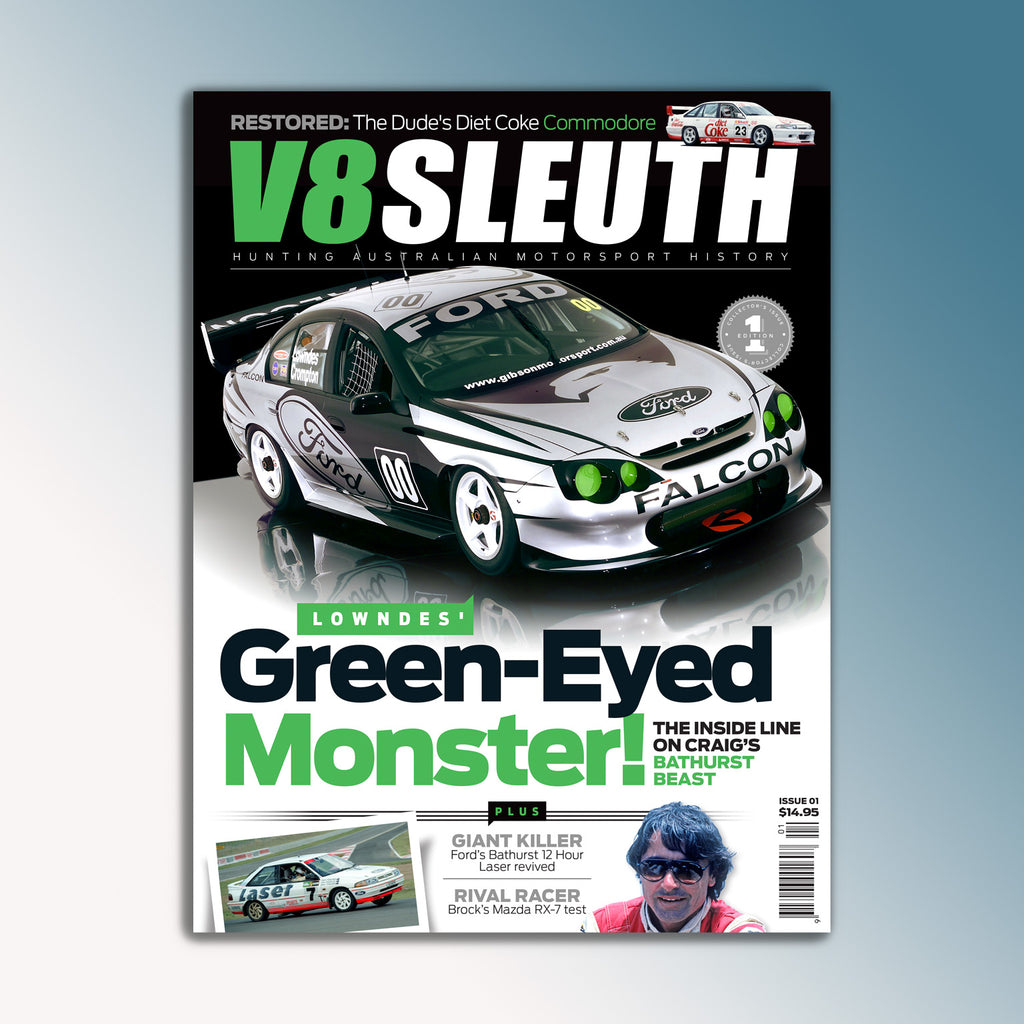
In the earliest days of motorsport in Australia, motorcycle competitions often splintered off from bicycle racing.
Rather than specialist motorcycles, bicycles were often fitted with rudimentary engines, with all-encompassing two-wheel clubs overseeing aspects of human- and internal-combustion-powered competition, as cars at the time were expensive and, frankly, an oddity.
The first recorded road race in Bathurst took place on Wednesday, December 6th, 1905, under the auspices of the newly formed Bathurst Cycling and Motoring Club.
As with other pioneering events, about a month out from the race, the Secretary of the meet wrote to the council requesting sanction, which was granted on the understanding that competitors would stick to 10mph (16km/h) through the town’s residential areas.
Two events took place on the day; the first was a three-lap motorcycle race, won by H.F.M. Douglas in 70 minutes, aided by a 20-minute handicap, with D. Douglas and P. Cortis finishing second and third.
Of the seven starters, there were only three finishers.
Afterwards, a bicycle race was run over one lap of the same track, which was described as starting in Durham Street, via Esrom and Eglington, returning through Kelso, at a distance of about 11 miles (17.7km), although pre-event reporting noted an anticlockwise direction of travel.
However, post-race controversy somewhat marred proceedings.
For starters, the Bathurst Cycle and Motor Club incurred the displeasure of the League of Wheelmen for receiving handicap advice directly from the solely motorsport-oriented Pioneer Motor Cycling Club, rather than going through the governing body, with the initial handicaps somewhat unrealistic.
Also, after finishing second in the race, Douglas Douglas pleaded guilty in Bathurst Police Court to the charge of Furious Motoring, after being nabbed at a speed exceeding the 10-mile-per-hour speed limit in the municipality during a practice run.
He was fined 2s6d, with 6s in costs ($0.65), which, inflation-adjusted to current values, comes in at over $50.
Fast-paced motorsport was ready to take over Bathurst, but the establishment still had a way to catch up.
Pressure from the police and, frankly, the impracticality of running at the speed limit on open roads in the borough of the town amid everyday traffic led motorsport to move further afield in the future.
The next road racing in the region kicked off at Yetholme in 1914, where the very first Australian Motorcycle Grand Prix was contested; its second running in 1915 was hampered by snow.
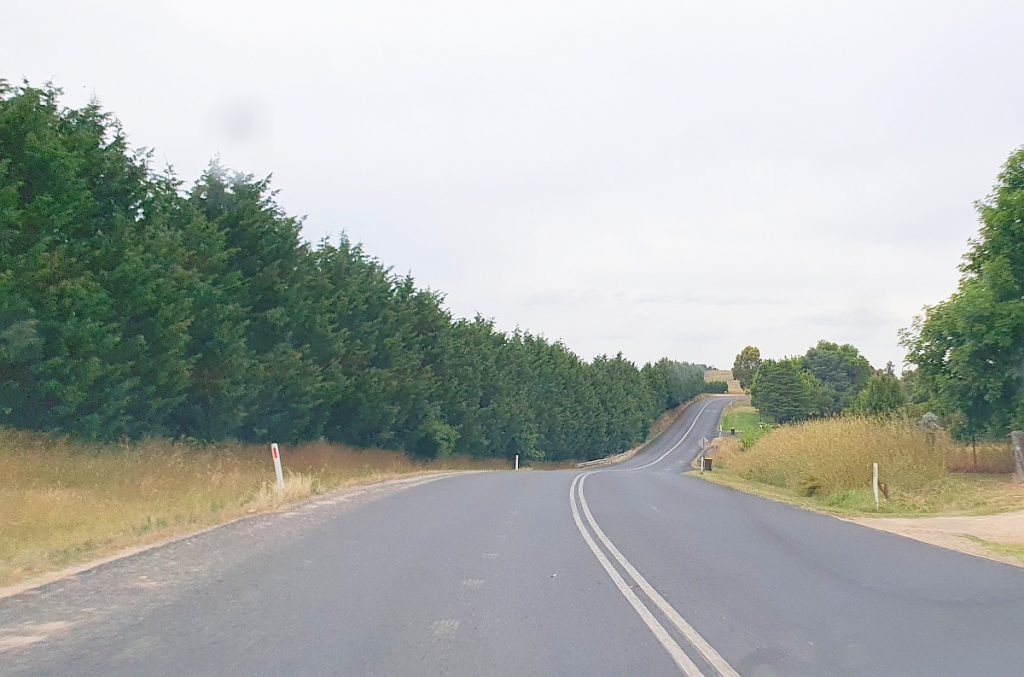 The circuit today. Pic: Mark Walker
Today
If you have ever visited Bathurst, you have most probably driven at least a portion of the city’s first street circuit.
The route known today as the 11-mile track, or Esrom Circuit, began on Durham Street and extends along a stretch of the Great Western Highway.
The route then travelled north-west, ignoring the modern left turn for highway traffic, and continuing on past the Bathurst Hospital and the Simplot factory, which churns out the nation’s supply of Chiko rolls.
It’s here that the passage morphs into Eglington Road and commences some gently sweeping corners through the various elevation changes, before arriving at a hard right-hand turn at the modern-day Rankens Bridge, which traverses the Macquarie River.
The road then goes straight ahead up the hill through the Eglington suburb, before the circuit turns right.
Now known as the Eleven Mile Drive with a hat tip to the original loop, the track plunged down to the causeway at Saltram Creek.
Eleven Mile Drive, above, is a classic semi-rural road – now paved, it features rise and fall, sweeping bends and long straights, past Bathurst’s modern-day thoroughbred racetrack, Tyres Park Racecourse, mostly with an excellent vista back to Mount Panorama.
The circuit then turned right at Sofala Road/Gilmour Street, before blasting back through Kelso to the modern highway.
This length of road was later used for another motorcycle road course in the 1920s.
The one significant deviation that motorists cannot recreate these days is the original passage back over the Macquarie River, which curved away from the main road via the Denison Bridge.
Constructed in 1870, the bridge was replaced by the current Evans Bridge for vehicular traffic in the early 1990s, with the original structure cordoned off for pedestrian use and entered onto the New South Wales State Heritage Register in 2003.
Before the final turn onto Durham Street, the circuit passed both the Showgrounds and, a little further to the south, the Sportsground, with both venues figuring prominently in the future of motorsport in Bathurst.
Notably, in varying configurations, the circuit has continued to be utilised by bicycle competitions over the ensuing 117 years, including the Bathurst Wallabies Triathlon Club in contemporary times.
While texts on the early days of the sport in Bathurst have overlooked this circuit, it is an important first step in the town’s fascination with motorsport, and one that truly included the city centre.