
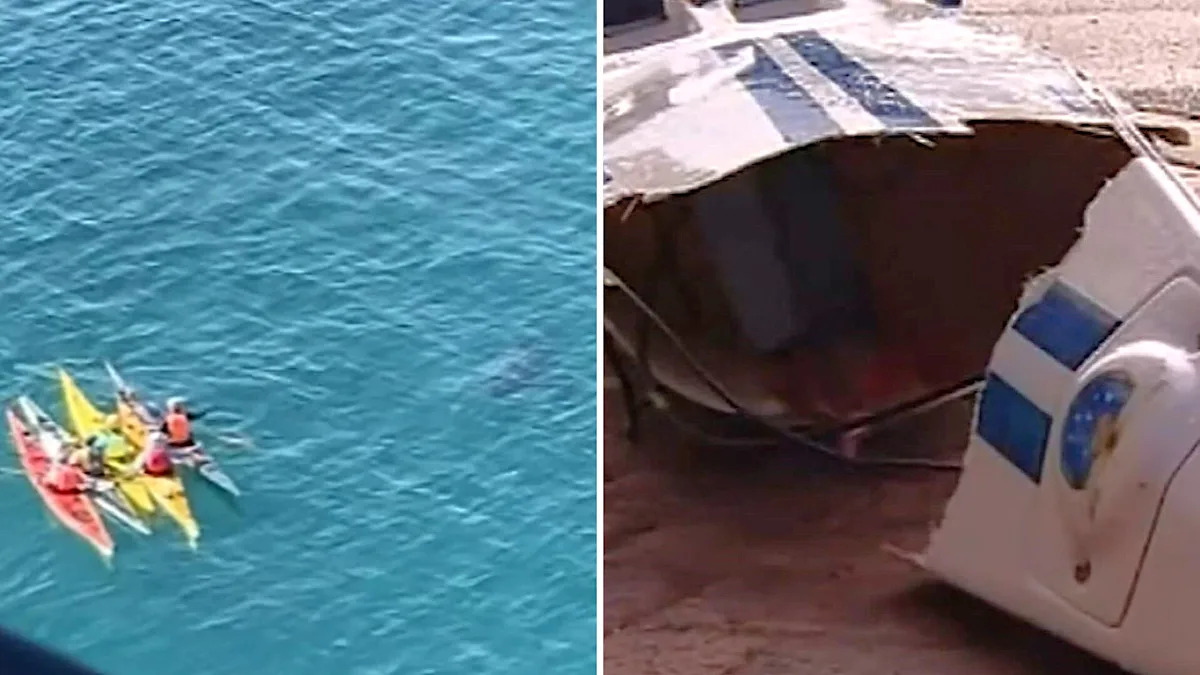
A group of kayakers off the coast of Australia endured a terrifying ordeal after a massive great white shark circled them for roughly 15 minutes — their second shark encounter that week.
What happened?
A TikTok report from 9News Perth (@9newsperth) showed footage of the kayakers drifting in open water while a great white shark circled them.
The five kayakers stayed huddled together as they waited for help. Rescue crews eventually helped chase the shark off before bringing the kayakers back to shore.
The report noted these same kayakers were circled by another shark just days before. Officials issued warnings and closed sections of the coastline as other shark sightings had increased, with 11 spotted off the coast in only a week.
Why is this encounter concerning?
Shark encounters with humans often occur because of disrupted habitats, shifting food availability, increasing ocean temperatures, and booming coastal recreation.
As rising global temperatures reshape marine ecosystems, prey species can adapt their behaviors to survive, sometimes forcing predators closer to humans.
As one commenter on 9News Perth observed, “This just in: hungry animals forced closer to shore as humans trawl and rob the ocean of all nutrients and food.”
Human population growth, expanding tourism, and habitat pressure are putting people and marine animals into closer contact.
While wild animals aren’t always necessarily aggressive, human-wildlife encounters are becoming more common and riskier — as the BBC observed, this could lead to more wild animals attacking humans.
This isn’t just a danger for kayakers and swimmers. When marine ecosystems are thrown off balance, coastal communities can see declining fish stocks, reduced tourism revenue, and weakened natural protections that healthy oceans and shorelines normally provide.
Conservation efforts, from restoring coral reefs to building wildlife corridors, can help rebuild ecosystems and reduce dangerous encounters.
What’s being done about shark-human encounters?
Local authorities are monitoring shark sightings and issuing warnings to protect the public, even closing beaches when necessary.
Marine researchers continue tracking great white shark movements to understand changing patterns and identify hotspots before dangerous encounters occur.
Communities can also help by supporting conservation policies that protect marine habitats, reducing pollution and runoff to better protect our waterways, and following local safety guidelines when venturing into wild spaces.
Protecting ocean ecosystems is ultimately necessary for protecting ourselves. Healthier waters support more stable food chains, which keep predators where they belong and make coastal communities safer.

��
Get TCD’s free newsletters for easy tips to save more, waste less, and make smarter choices — and earn up to $5,000 toward clean upgrades in TCD’s exclusive Rewards Club.