
Becoming a mum is supposed to be a joyous occasion, but sadly for many women, the injuries they sustain giving birth cause serious physical and psychological issues. News surveys found delays in getting a timely diagnosis are compounding the problems. Those who struggle to get a diagnosis are 2.4 times more likely to experience suicidal thoughts. Here’s National Health Equity reporter, Caitlyn Gribbin.
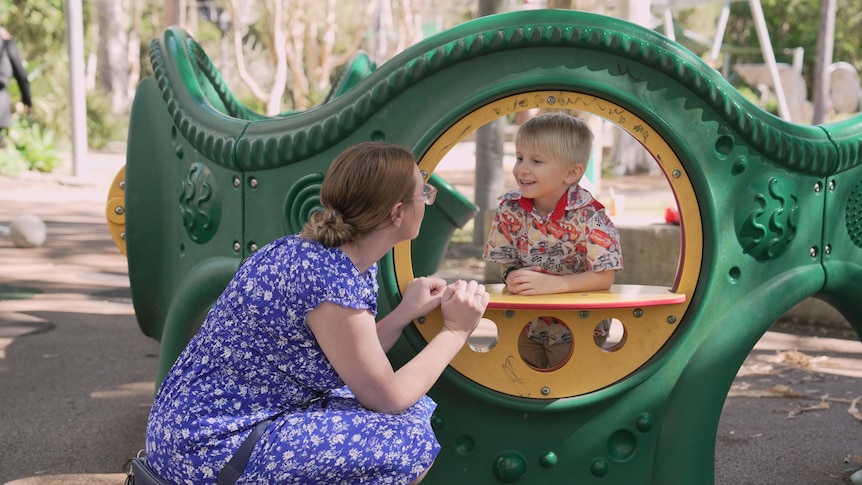
Caitlyn Gribbin: Kristy Keefe is soaking up the special moments with her dinosaur-loving son. Riley is six years old and the Brisbane mum’s second child.
Kristy Keefe: I absolutely love motherhood. I feel like I was made to be a mother.
Caitlyn Gribbin: But in the months following Riley’s birth, things were very different. He was unexpectedly born at home and a medical emergency followed.
Kristy Keefe: They found out that I had a fourth-degree tear because of my placenta being stuck. I was hemorrhaging quite bad.
Caitlyn Gribbin: The birth injury led to incontinence, triggering feelings of dread and isolation for Kristy Keefe.
Kristy Keefe: Really anxious. I didn’t want to be left alone with my baby. And I had times where I thought about ending my life.
Caitlyn Gribbin: It’s been more than a year since a landmark inquiry in New South Wales heard traumatic birth experiences, including pelvic floor damage and incontinence, can have tragic mental health consequences. Now, a new survey from advocacy group Birth Trauma Australia finds the longer it takes to diagnose those injuries, the more catastrophic the consequences. Chief Executive, Amy Dawes.
Amy Dawes: We found that women that had struggled to get a diagnosis, they were 2.4 times more likely to experience suicidal thoughts. I have heard firsthand accounts of women sharing their experiences of being in a really dark place and struggling to get care.
Nisha Khot: It is a complete disaster. I mean, it’s just a sign that we have failed women.
Caitlyn Gribbin: Nisha Khot is president-elect of the Royal Australian and New Zealand College of Obstetricians and Gynaecologists. She points to Australian Institute of Health and Welfare Research showing suicide is one of the leading causes of maternal death during pregnancy and up to six weeks after pregnancy. And while it’s not known if those women were suffering from birth trauma, the obstetrician believes they are intertwined.
Nisha Khot: If you have physical trauma and you’re struggling with your body functions, that is going to affect you psychologically as well. That has such huge implications for you to be able to just lead a normal life. You can’t do any of these things because of your incontinence. That is bound to have a huge impact on your mental well-being. How could it not?
Caitlyn Gribbin: State governments in New South Wales, Victoria, Queensland and Western Australia say they’re spending new money on perinatal mental health care and birth trauma policies. Advocates say it’s positive to see more investment and education of health care workers, but more is needed.
Kristy Keefe: You love cuddles, don’t you? Yeah, and mum, look! Yeah!
Caitlyn Gribbin: And after her struggle to get help in the public health system, Kristy Keefe agrees.
Kristy Keefe: If I didn’t go and get that help and pay all that money to go and see that private gynaecologist, that maybe I wouldn’t be here today.
Sabra Lane: Brisbane mum, Kristy Keefe, ending Caitlyn Gribbin’s report. And if this story has raised concerns for you or anyone you know, you can call Lifeline on 13 11 14.