
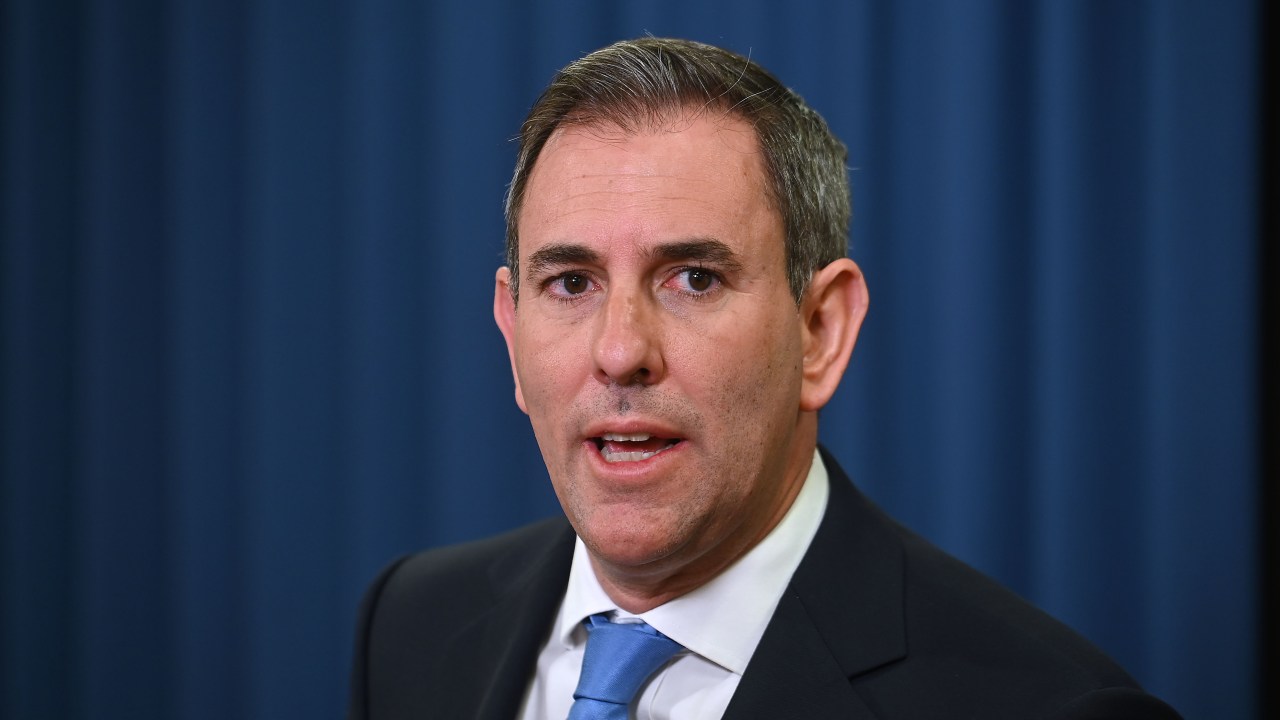
The Albanese government’s spending is growing faster than the economy as a whole, prompting warnings that the Reserve Bank will raise interest rates.
Newly released data from the Australian Bureau of Statistics showed gross domestic product grew 0.4 per cent in the September quarter and 2.1 per cent across the preceding year.
But in its own budget in May, the Albanese government’s spending outgrew this figure as Treasurer Jim Chalmers oversaw 2.6 per cent bump in government expenditure.
This has triggered warnings from shadow treasurer Ted O’Brien and the Reserve Bank that Australians could be left to pay for it.
Mr O’Brien told Sky News Business Weekend the latest figures were “bad news” for households.
“We really just see again that habit of the government of getting bigger becoming more and more prominent,” Mr O’Brien told Sky News Business Editor Ross Greenwood.
“Here we have a government whose spending is growing faster than the economy itself.
“And that’s bad news because it just means interest rates will be higher for longer. It means real incomes will be lower for longer. That’s the implication here.”
Mr O’Brien said the government needs to reel back public spending and allow the private sector to fuel the growth of the nation’s economy.
“The last thing a government should be doing is pouring in more money and really representing almost half of total demand,” he said.
“That’s not what the government should be doing. This is the time where the government should be taking a back step.”
It comes after Reserve Bank Governor Michele Bullock on Wednesday warned if inflation remained persistent it would have “implications for the future of monetary policy” and admitted it failed in containing inflation within its 2-3 per cent target band.
“Inflation has been out of target for a number of years, that is very, very true,” Ms Bullock told a Senate Estimates hearing.
“That is why the board has always said they want to get it back, but they want to get it back in a reasonable time and the reason for that is inflation expectations.
“That is the whole purpose of the board: to try and bring it back sustainably. Have we done it yet? No, we haven’t done it yet. So we need to keep working on this.”
Money markets are forecasting there to be a rate rise in September next year in a shock blow to mortgage holders desperate for more rate relief.
The opposition has blamed this on Labor’s large public spending and its economic policy.
Asked how he would describe the approach taken by the Treasurer and Labor’s economic policies over the past few years, Mr O’Brien questioned how Mr Chalmers was delivering Labor’s ideas.
“I’d probably describe it as an enormous word salad,” Mr O’Brien said.
“In the budgets, they are meant to have a very clearly enunciated strategy, but there’s not one numeral in their existing strategy.
“It’s all words and it’s all driven by polling, but as anyone who does the budgeting at home knows, as anyone who runs a small business knows, it comes down to numbers.
“This government (and) this treasurer is purely focused on the rhetoric.”
The attack follows inflation lifting 3.8 per cent in the 12 months to October while electricity prices jumped more than 37 per cent.