
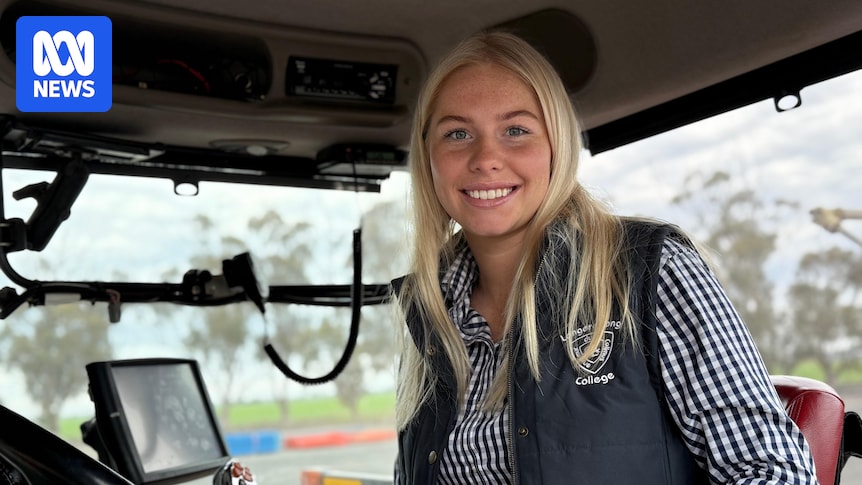
Not all that long ago, mixed farming was standard practice on broadacre properties across Australia.
Most farmers ran sheep alongside their crops, as their families had done for more than a century.
But in recent decades, there has been a huge move away from sheep, in favour of more profitable cropping.
Since 1990, the national sheep flock has declined from 170 million to 74 million today, a drop of almost 100 million in three decades.
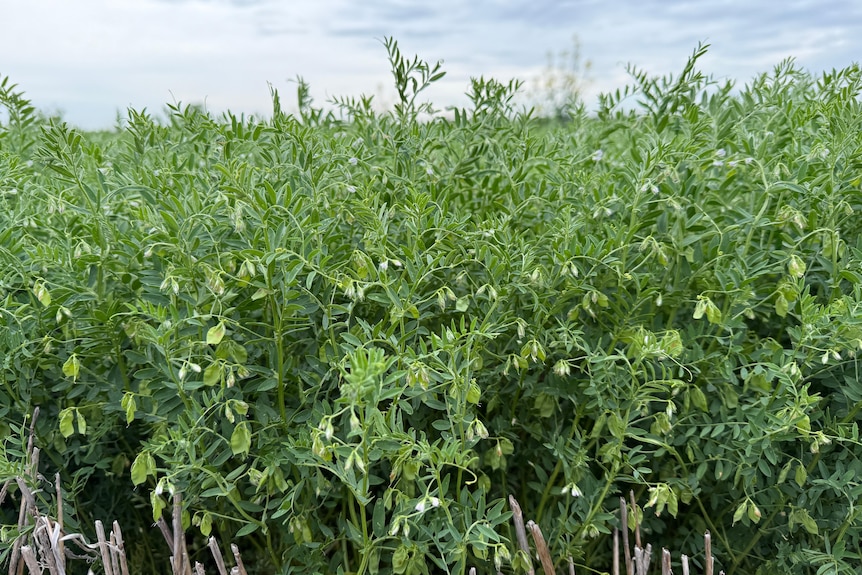
Profitable crops such as lentils have accelerated the transition from sheep. (ABC Rural: Angus Verley)
Less work, more money
Tim Rethus’s family has farmed near Horsham, Victoria, since the 1940s, and he has not had a single sheep on his property for 25 years.
He said it did not make financial sense to keep running sheep on prime cropping country.
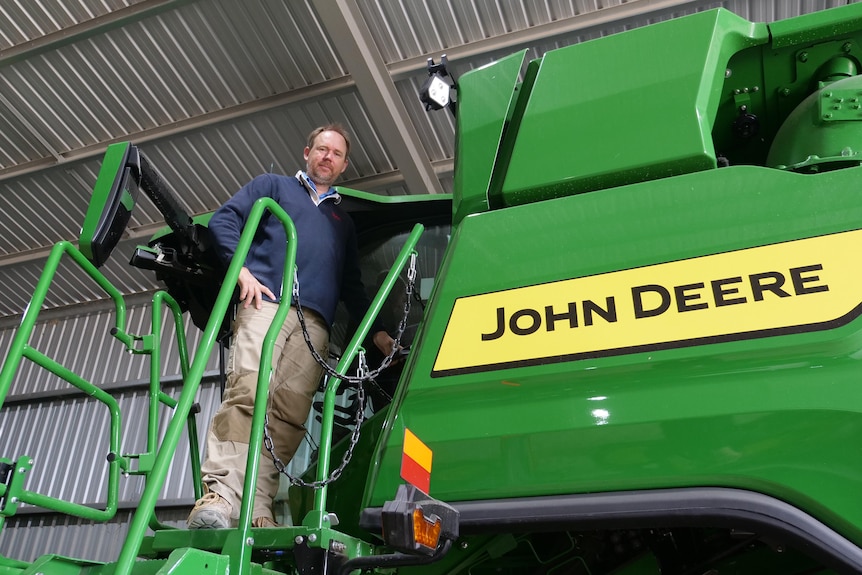
Tim Rethus runs modern machinery on his large-scale cropping operation. (ABC Rural: Angus Verley)
“Sixty bales of wool in the 90s was worth one paddock of wheat in profit,” Mr Rethus said.
“It was a lot of work for very small gain, probably splitting the labour half-half [between sheep and crops], but not getting anywhere near the return.”
Mr Rethus invested in the latest cropping technology and his sheds are brimming with modern machinery worth millions of dollars.
“All the [cropping] equipment is slowly getting closer to automation,” he said.
“They’re adding things onto machines to take away some of the human interventions required and turning the operator into more of a supervisor.”
Sheep just a sideline
At nearby Natimuk, 19-year-old Olivia Sudholz does not mind working with livestock, but her family’s farm has gone from strength to strength off the back of crops, not sheep.
The Sudholz enterprise was once largely a sheep operation, but now, sheep make up only about 10 per cent of the business.
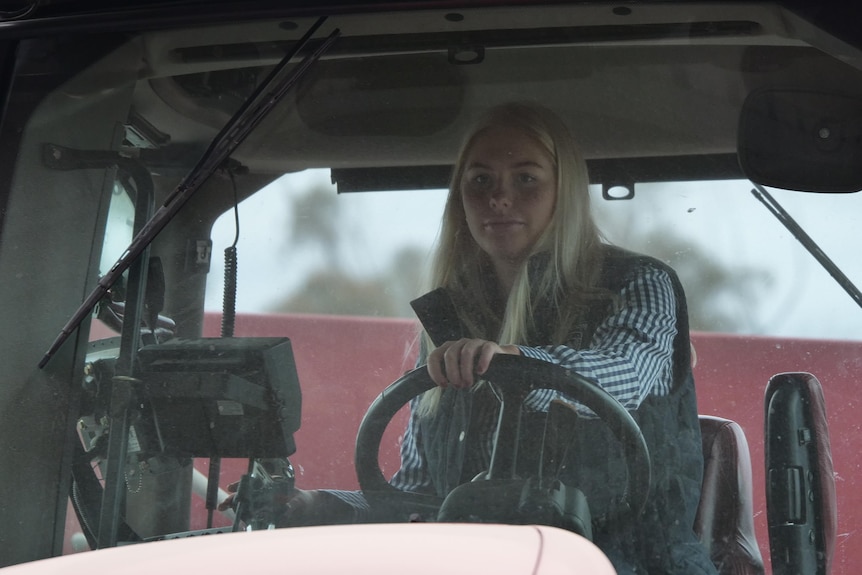
Olivia Sudholz will spend plenty of time in the tractor this harvest. (ABC Rural: Angus Verley)
“I think we might have less sheep in the future. My father is very interested in expanding our … cropping,” she said.
Ms Sudholz has a keen interest in the business of farming and says she is willing to change with the times.
“If your father and grandfather have been running livestock for most of their life and you’ve decided to change, that’s OK,” she said.
“You have to do what the business really needs sometimes.”
A different approach
Not all farmers are giving up on sheep.
Trent Carter, who farms at Marnoo in Victoria’s east Wimmera, is as committed as ever to sheep.
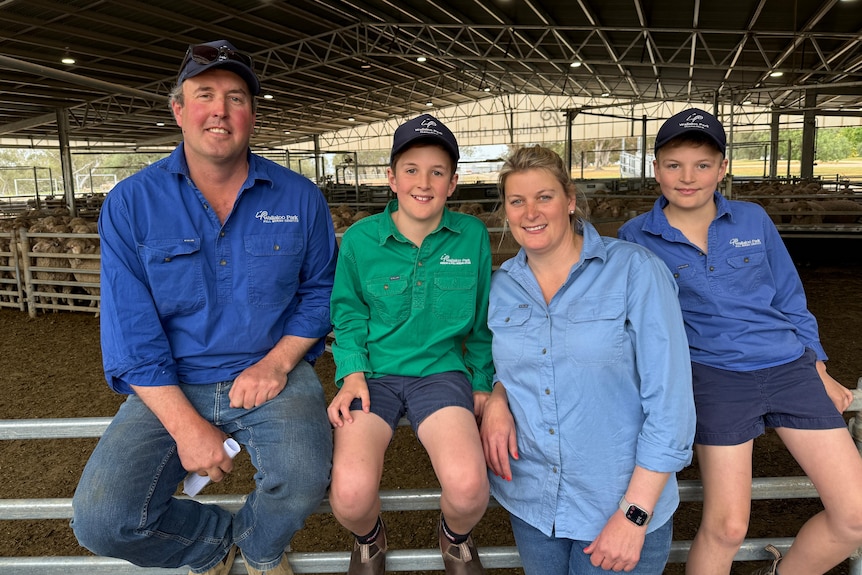
The Carter family has invested heavily in sheep-handling infrastructure. (ABC Rural: Angus Verley)
He grows about 2,400 hectares of harvestable crops and uses the rest of his 3,400-hectare farm to run sheep and grow fodder to feed them.
Mr Carter said his Merino enterprises and cropping operation complemented each other.
“In this area it’s absolutely fantastic having a dual income stream, [so] sheep are always going to have a place here on this property,” he said.
Mr Carter said some people were deterred from running sheep because of the labour involved, but he believes investment in shearing sheds, yards and handling equipment was needed.
“There’s no difference from a decent set of yards to a decent tractor, it’s enticing that younger generation to work in your industry,” he said.
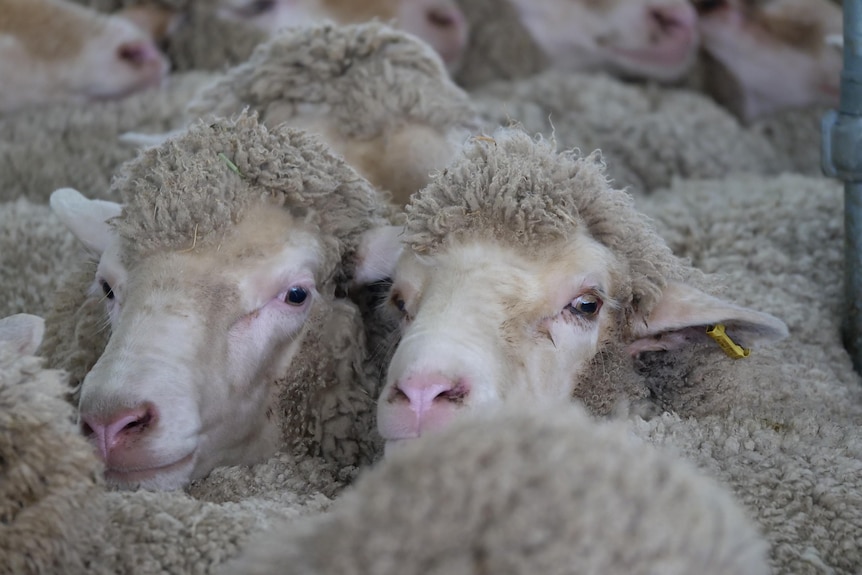
Sheep are an important part of the Carter family’s operation. (ABC Rural: Angus Verley)
A common anecdote about the next generation of farmers is that they would prefer to drive machinery than work in a shearing shed.
But that is not the case for everyone.
Oliver Moore, who studies at Longerenong Agricultural College and works on his family farm, wants to make sheep a bigger part of their business.
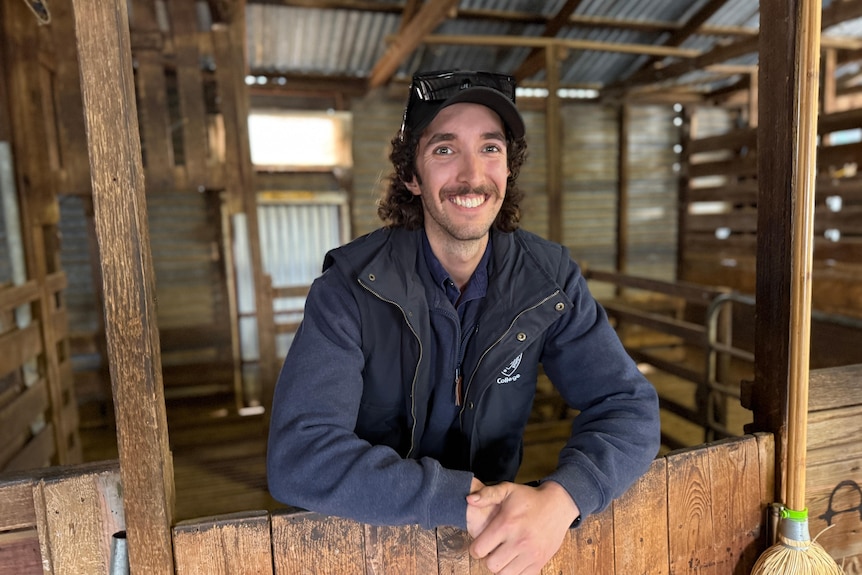
Oliver Moore enjoys working with sheep, but says many of his classmates do not. (ABC Rural: Angus Verley)
He said he enjoyed all aspects of running sheep.
“It gives a bit of diversity for an income and you’re doing something different every day,” he said.
“I love roustabouting, helping out the shearers, sweeping the wool, picking up the fleeces and do a bit of skirting of the fleeces as well,” he said.
He acknowledged many of his Longerenong classmates did not feel the same way.
“I don’t know too many people who like sheep,” he said.
“But I’m thinking livestock will play a key part in this farm.”