
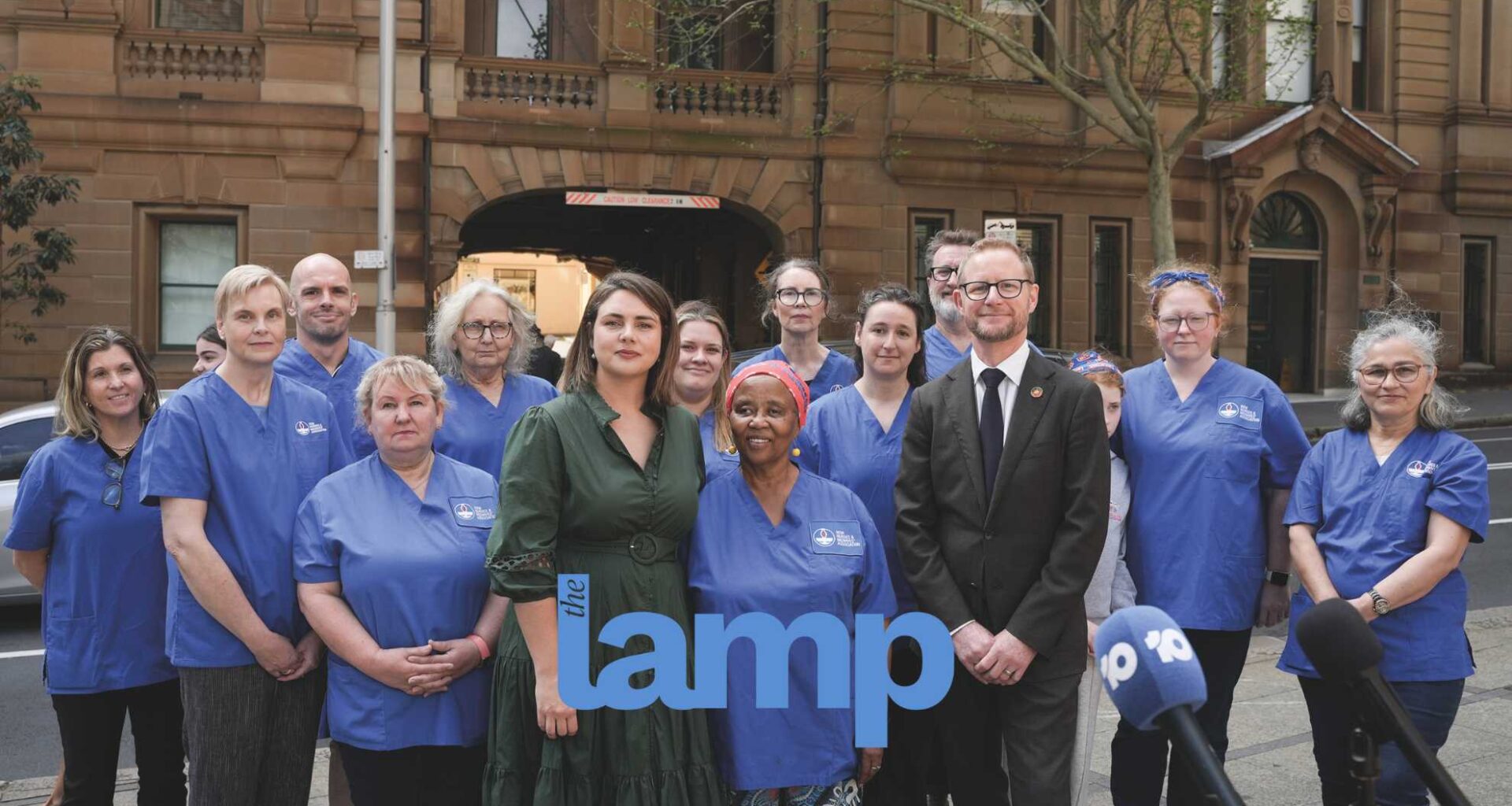
The NSW Industrial Relations Commission (IRC) has heard all the evidence in our landmark work value case for a 35 per cent pay increase over three years and will hand down a decision in 2026.
On 7 November the IRC finished hearing evidence in the NSWNMA’s historic Special Case – one of the biggest legal cases in NSW industrial relations in decades.
Final submissions from legal teams representing the Union and NSW Health were due in early December.
The case is being heard by two Judges and one Commissioner, referred to as the ‘Full Bench’.
NSWNMA General Secretary, Shaye Candish, said there is no decision deadline but “given the importance of the case the Full Bench is expected to take some time to consider all the evidence put before them.”
A similar case prosecuted by the Fire Brigade Employees Union required five months between the ending of the hearings and the decision. The Association’s legal team compiled more than 17,400 pages of evidence, including statements from a dozen experts and academics and 39 witness statements from nurses and midwives.
The Ministry of Health’s evidence totalled about 6000 pages. The NSWNMA presented compelling evidence of:
the gendered undervaluation of nurses and midwives’ work
the work value increase over the past 16 years
the impacts of productivity and inflation
recruitment and retention across the Public Health System.
Members will not need to vote to accept the IRC’s Special Case decision. Once a decision is handed down, any updated wage rates and clauses will be put into the new Award which will cover three years – 2024/25, 2025/26 and 2026/27.
Shaye said the NSWNMA had thrown everything at the legal case, after being unable to resolve its pay dispute by negotiation.
“It’s disappointing we weren’t able to settle our pay claim out of the courts, after almost two years of campaigning for a decent pay offer for our members,” she said.
“We put the best possible case forward to deliver public sector nurses and midwives across NSW the recognition, pay, and conditions they rightly deserve.
“In order to boost recruitment and retention and reduce workforce shortages, nurses and midwives must receive a competitive wage that addresses the wage stagnation our members have experienced under the previous Coalition government’s wages policy.
What experts told the IRC
Adjunct Professor Debora Picone AO – former NSW Health Director-General and former NSWNA President (1987-1992)
“Over the past decade, NSW nurses have faced mounting pressures as healthcare demand outpaced staffing growth. An ageing population with more chronic illness has increased patient acuity and hospital admissions. Yet, resourcing has struggled to keep up.”
Professor Rae Cooper AO – University of Sydney Business School
“Feminised frontline sector including nursing (and) midwifery, are essential for the functioning of the national economy and the wellbeing of our communities.”
Professor Caroline Homer AO – Burnet Institute
“The increased amount of screening (for perinatal mental health and domestic violence) increases the emotional work for midwives. It is tiring asking difficult screening questions all day long and responding to the challenging situation that many women are facing.”
Dr Zachary Byfield – Australian College of Nursing
““The move to skills that involve putting things in people’s bodies and taking them back out was a real change in the work of ENs. ENs now can insert and remove invasive devices such as nasogastric tubes and do venipuncture. In 2025 these are now fundamental parts of the EN role and training.”