
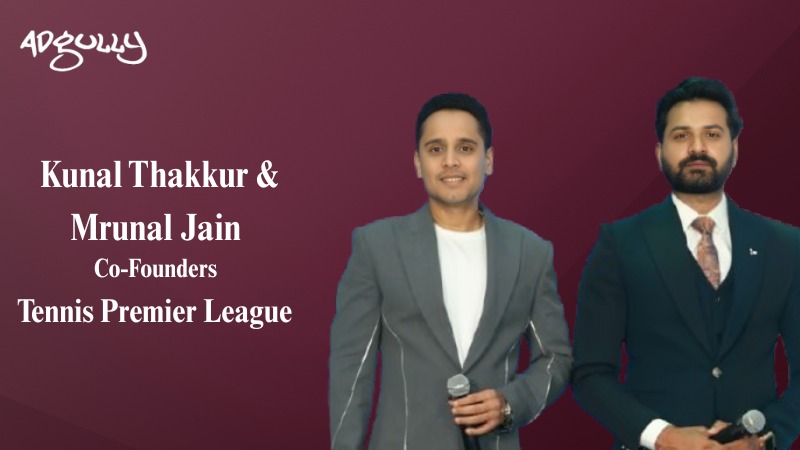
The Tennis Premier League (TPL) has travelled a long way from its Mumbai-centric debut in 2018 to its position today as one of India’s fastest-growing, format-driven sporting properties. Built on the vision of making tennis faster, sharper and more accessible, the league has expanded across cities, attracted top Indian and international talent, and pulled in a widening roster of broadcasters and brands. As TPL enters its sixth season with rising expectations and a maturing ecosystem, co-founders Kunal Thakkur and Mrunal Jain reflect on the journey so far, the challenges and breakthroughs, and what lies ahead for the league’s next phase of growth.
Where would you place the journey of TPL today? From launching a new league in 2018 to becoming an established property with rising expectations in Season 6, how has the arc unfolded?
We started in 2018, and because I run academies in Mumbai, we noticed that many players were taking up badminton. That made us ask: why not create a league for tennis to help grow the sport’s popularity? We worked backwards from that idea and realised a standard tennis match runs for nearly four hours. Sports like cricket and kabaddi have surged because of their fast-paced formats, so we decided to adopt a shorter, more viewer-friendly structure as well.
We launched with a 20-point format showcasing different games and different players. The purpose was to present the variety of tennis formats played in India. That’s how Season 1 began, airing on Sony LIV and featuring only Mumbai-based players.
Season 2 took place in 2019 with players from across India, and 2020 had no season due to COVID. We returned in 2021 with Season 4, featuring all the top Indian players, and audiences really embraced the shorter format. Our team owners also stayed consistent—names like Rahul Pater Singh—and later we had Sonali Bendre and Leander Paes involved from what we call Season Zero. In Season 4, we added international players, including several ranked within the top 100, and brought in Goran Ivanisevic as a mentor.
Season 5 took us to Pune’s Balewadi Stadium, where we clearly saw talent growing. Season 6 moved to CCI and drew players from outside India as well, starting with eight players, all ranked around 100.
As we grew, more corporates and brands came onboard. Clear Water and Yonex have been partners since day one, and later companies like Jeep, Ola, and hospitality brands such as Sofitel joined us.
Our broadcast footprint expanded significantly. We’ve had Sony as a strong partner for six years, and we also added international broadcasters such as Willow in the US, Inverle in the UK, and homegrown platforms like Unbeaten Sports. We worked with JioCinema and Sports18 as well. Broadcasting has grown tremendously.
From starting in metros, we are now reaching Tier 1 and Tier 2 cities—one of our biggest achievements. Our vision has always been long-term. Many leagues last only one or two seasons, but we were clear from the beginning about how we wanted the league to grow. Sports take time to build, and we already have the next five years mapped out.
On broadcasting and revenue: what growth have you seen and how are international partners contributing?
In terms of revenue from broadcasting or viewership, we typically can’t disclose exact numbers, but we can share broad indicators. Except for the IPL, few leagues in India generate significant broadcast revenue. That said, our international broadcasters do pay us meaningful amounts.
On viewership, TV and OTT audiences grew from 3.9 million in Season 5 to 7.2 million in Season 6. Social media, which is growing rapidly, jumped from 47.9 million to 106 million impressions.
Tennis is often perceived as an elite sport. What role is TPL playing in breaking that perception?
It’s a myth that tennis is an expensive sport. These days, badminton shuttlecocks can be more expensive than tennis balls, and tennis remains relatively accessible. We see strong tennis development in Tier 2 cities like Sholapur, Nanded, and Anand, and the sport is poised for significant growth in India.
If cricket’s participation level is at 100, I would place tennis at about 5 today—but it will definitely rise to 20–25 over the next ten years. More children are choosing tennis as a career, which is driving momentum.
Why is TPL seeing such strong participation from smaller cities? Is marketing driving this?
It’s not primarily marketing. A major reason is the support we receive from state associations that facilitate wider participation. We’ve partnered with the Delhi Lawn Tennis Association, Maharashtra State Lawn Tennis Association, Gujarat State Tennis Association, and several others.
Our marketing is largely digital because our target audience is Gen Z, followed by print and outdoor. In metro cities, we focus on outdoor promotions and then adapt our strategy for Tier 2 markets.
Where do you see government collaboration shaping TPL’s future?
We collaborated on the “Race to Gold” initiative with Gujarat, linked to the Olympics. We had a very productive meeting with Mr. Mansukh Mandaviya, and the Gujarat government has shown strong interest. The vision is to help India win an Olympic medal in tennis.
We sponsor U10, U12, and U14 players, and we have a clear roadmap through 2036. With support from AITA and various state associations, progress has been steady and encouraging.
How are brands using TPL? What is your content-first sponsorship model?
Our content-first approach is what helped us bring in partners like Jeep, Ola, and our apparel and water sponsors. We’re also in discussions with several automobile brands.
We structure sponsorships around a content plan rather than just basic branding. This ensures brands receive continuous presence throughout the year—360-degree visibility through content, on-ground activations, promotions, inventory, and a comprehensive annual engagement model.
Has TPL identified a breakout star yet?
I wouldn’t say we have a single breakout star, but we have supported players like Rutuja, Ankita Raina, Sumit Nagal, and others by securing sponsorships for them. Through our partnerships, we help cover physiotherapy, conditioning, and travel expenses from within our ecosystem.