
FORWARDS (14)
Tony Amonte
David Backes
Bill Guerin
Brett Hull
Patrick Kane
Phil Kessel
John LeClair
Mike Modano
T.J. Oshie
Zach Parise
Joe Pavelski
Jeremy Roenick
Keith Tkachuk
James van Riemsdyk
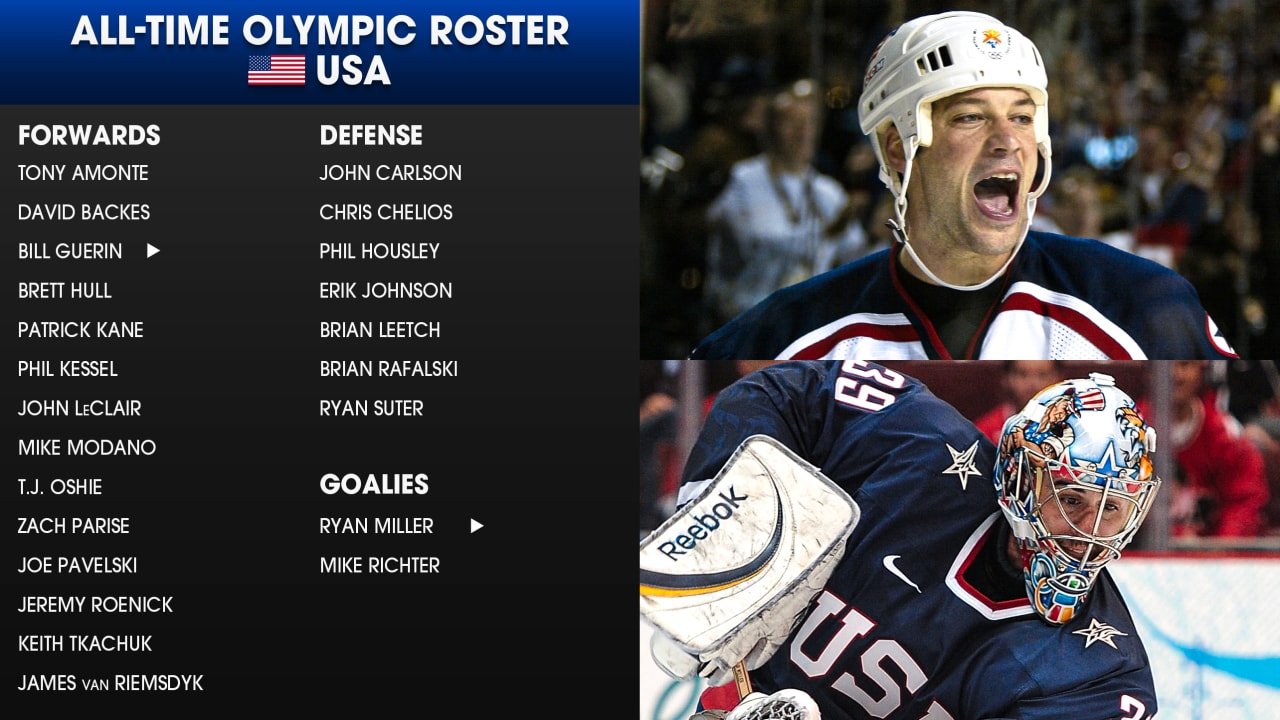
The core of the post-1980 “Miracle on Ice” generation of USA Hockey stars is in this forward group with Amonte, Guerin, Hull, LeClair, Modano, Roenick and Tkachuk. Each played in multiple Olympics. Together they brought the U.S. back to international prominence in the 1996 World Cup of Hockey and were the best forwards at the 2002 Salt Lake Olympics, when the U.S. took home the silver after losing 5-2 to Canada in the gold-medal game. Hull had 11 points (five goals, six assists) in 10 Olympic games between 1998 and 2002. Guerin played in 1998, 2002 and 2006, and had eight points, including four goals in 2002. Modano also played in three Olympics; he had six assists in 2002, when LeClair led the U.S. with six goals. Tkachuk was the dominant power forward in 1998, 2002 and 2006. Amonte had four points (two goals, two assists) and Roenick had five (one goal, four assists) in 2002. The next generation came along in 2010 led up front by Backes, Kane, Kessel, Parise and Pavelski. They were the dominant forwards on the 2010 Olympic team that also lost to Canada in the gold-medal game in overtime after Parise’s game-tying goal in the last minute of regulation. Parise had eight points, including four goals; Kane had three goals. In 2014, they were joined by Oshie and van Riemsdyk. Kessel was named the best forward with eight points, including five goals. Van Riemsdyk had seven points, including a team-high six assists. Backes had three goals. Kane had four assists. Oshie starred in the shootout win against Russia, earning the nickname “T.J. Sochi.” There were many debates about where Pat LaFontaine fits, but he was left off because he only played in the Olympics once with NHL players, in 1998, when he had one goal in four games. Doug Weight played in three Olympics but did not score a goal. — Rosen