
This year brought its fair share of over-the-top architecture projects. Top-of-the-list is Saudi Arabia’s Shebara Resort, a net-zero facility with stainless steel pod villas.

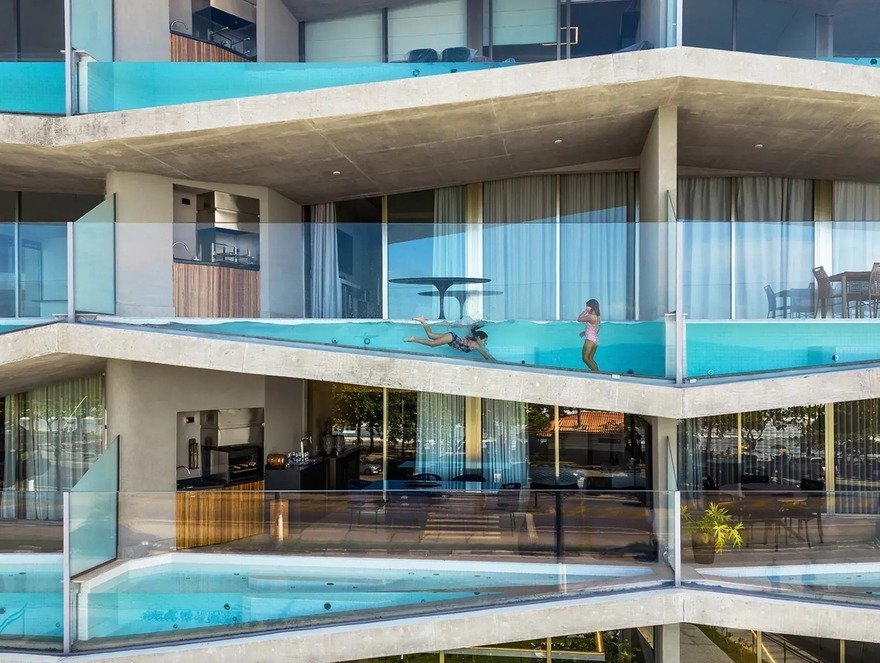
In Brazil, this VIW Building is also for people that want to be near the water. The apartments all have in-balcony swimming pools.
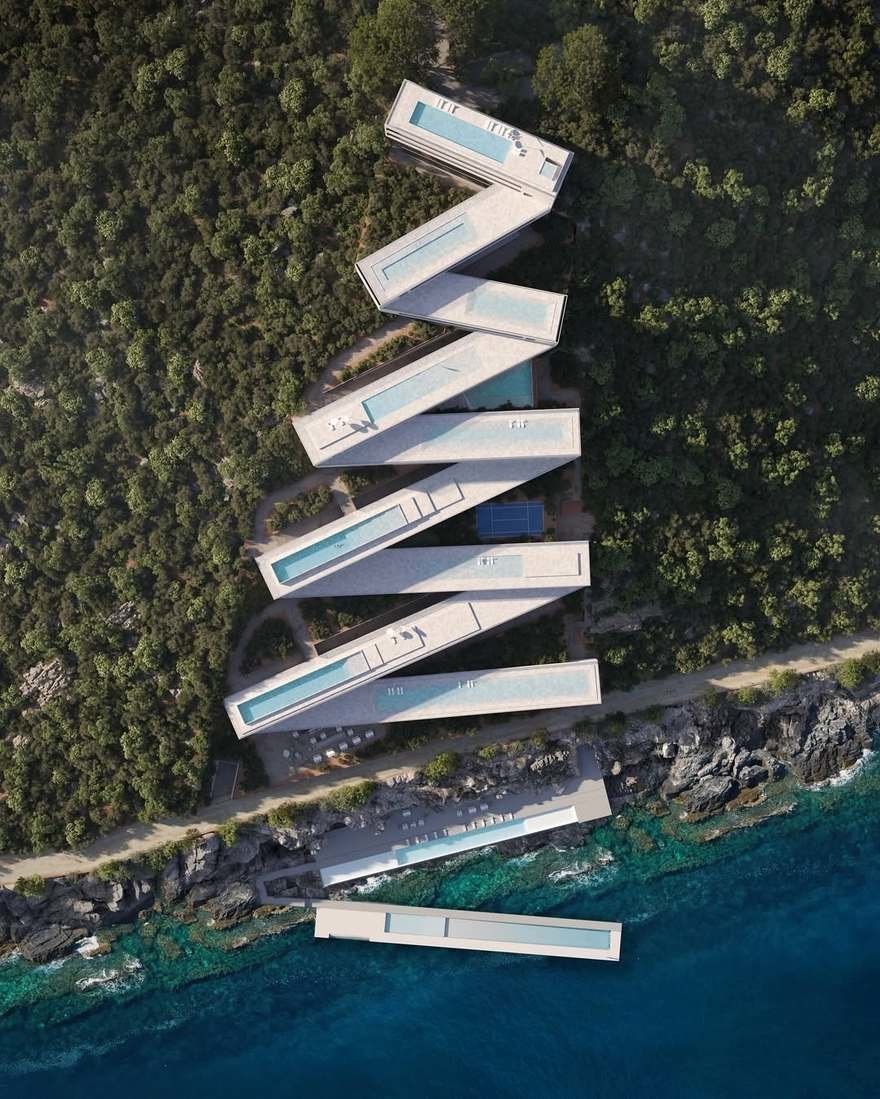
In Albania, Dutch firm JA Joubert Architecture and local firm UNS Architects teamed up on this Zig-Zag resort. The idea was to work with challenging terrain, rather than against it, while providing spectacular views to guests.
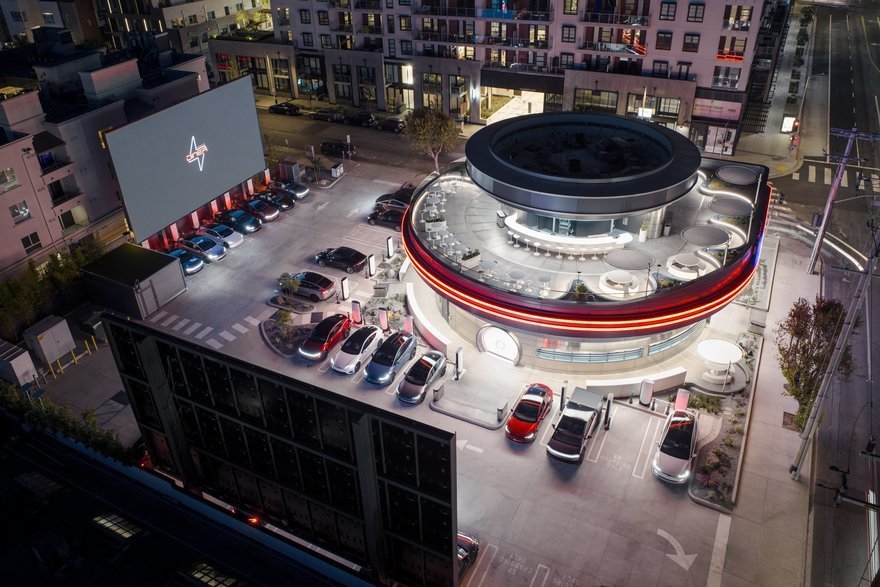
And this year saw the debut of this retro-futuristic building in Los Angeles. The Tesla Diner is an eatery, entertainment complex and the world’s largest Supercharging station.
Over in Milan stands San Siro, Italy’s largest stadium. Fans access the structure via helical walkways, and when a match lets out, it looks as if the towers are rotating:
Of course, the biggest problem architecture could help solve has nothing to do with fancy resorts and buildings. As the global housing crisis continues, Boxabl unveiled their Baby Box, a $20,000 unfolding tiny home.
In the Netherlands, Rotterdam is planning to build floating neighborhoods in response to the housing crunch.

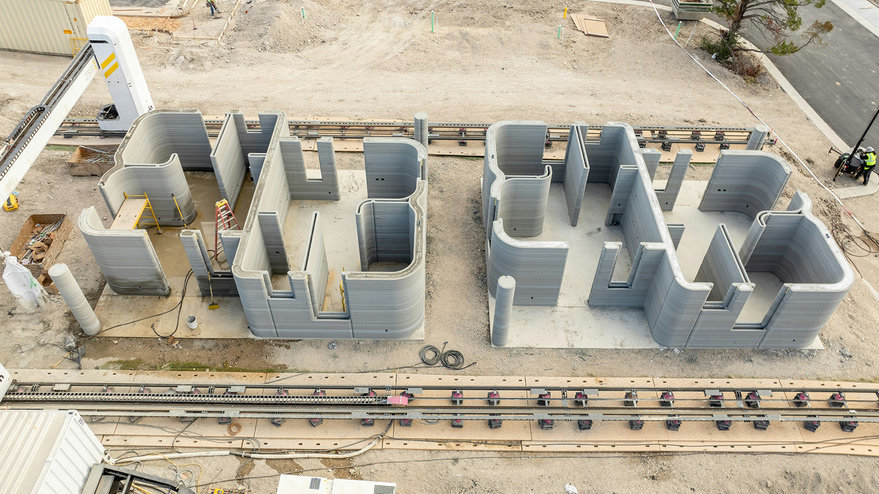
And in Texas, Icon is attempting to provide affordable housing with their 3D-printed homes.
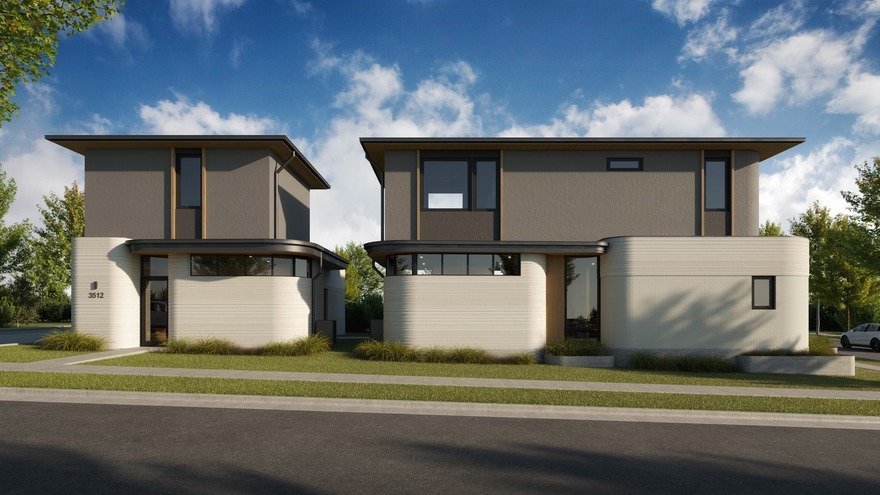
The company is also 3D printing houses for the homeless.
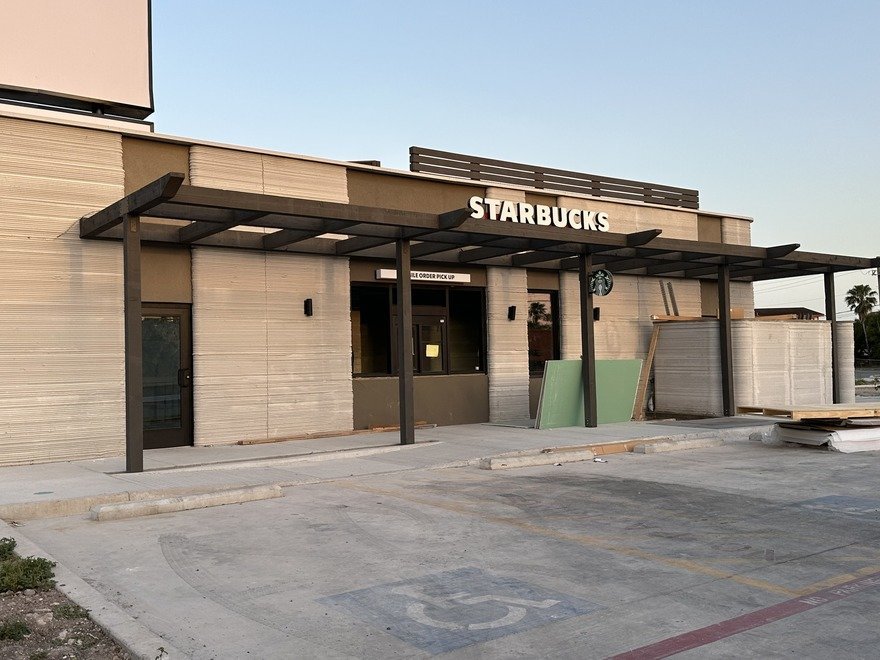
Also in Texas, which seems to be a hotspot for 3D-printed structures, German company Peri 3D has 3D-printed a Starbucks.
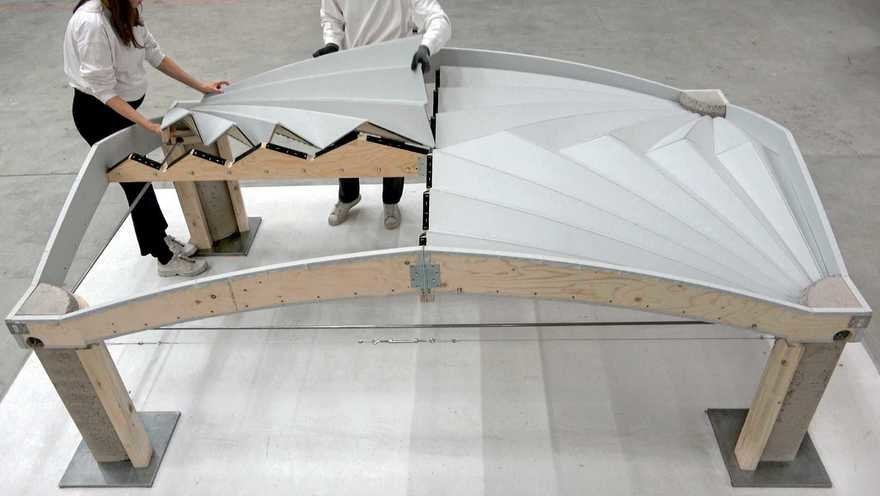
Meanwhile, researchers continue to find ways to execute conventional construction more efficiently. Lotte Scheder-Bieschin, a PhD student of Architecture at ETH Zurich, designed a brilliant, reusable folding formwork system called the Unfold Form. It can be used to build vaulted concrete structures that use less concrete and far less steel than conventional structures.
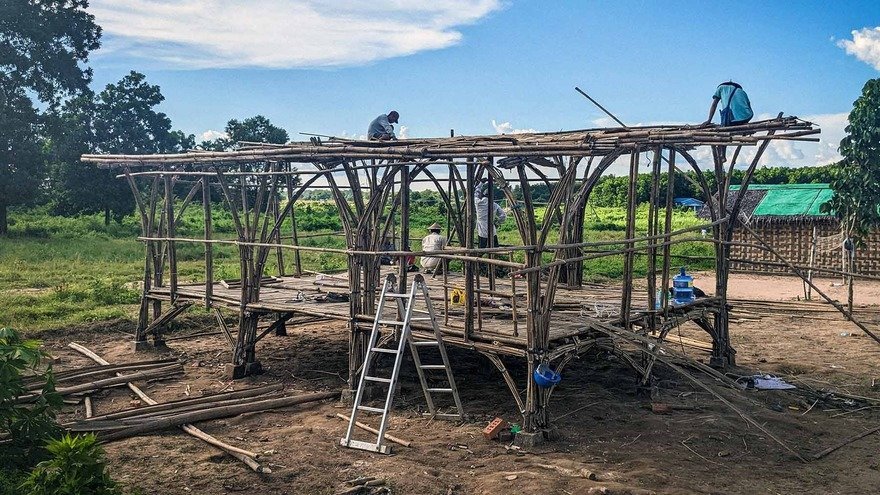
Over in Myanmar, bamboo is a lot easier to come by than concrete. Yangon-based architecture firm Blue Temple developed an economical system for building houses by bundling together thin pieces of bamboo. The initiative is called Housing NOW.
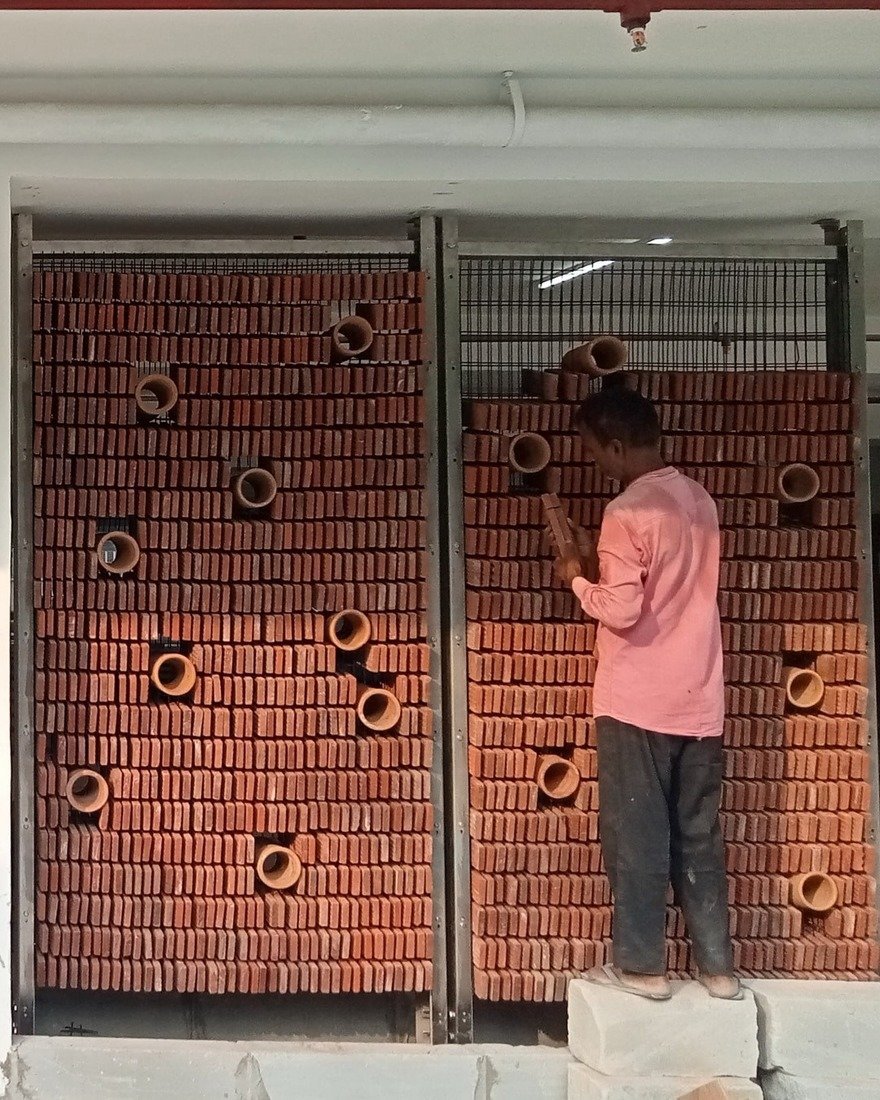
And in sweltering India, architect Monish Siripurapu developed a passive cooling system for buildings called CoolAnt. It uses terracotta and water as low-tech air conditioning.
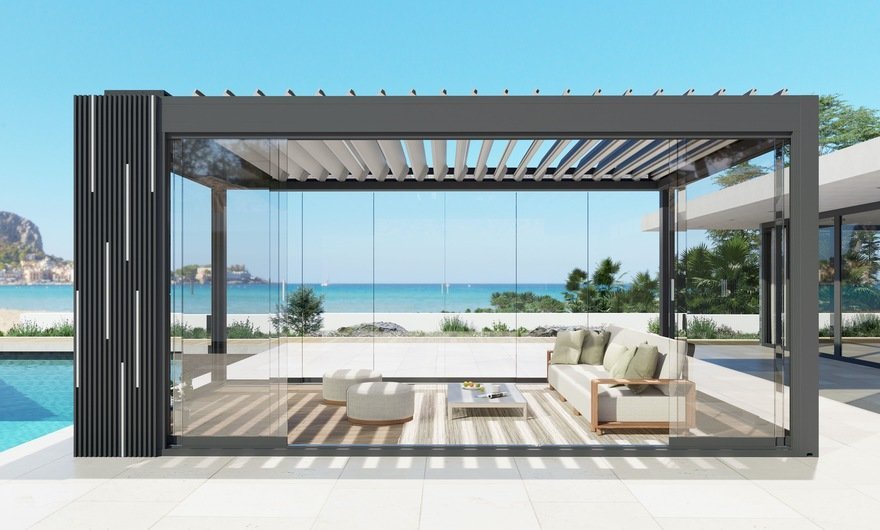
In China, a company called Ombra is building pergolas that are cooled by the sun. The roofs are covered in solar panels that power the HVAC.
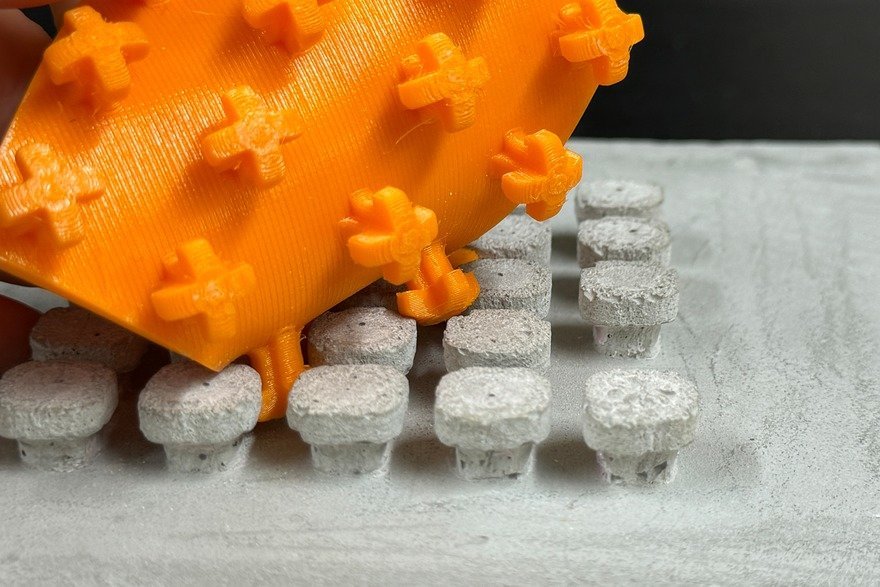
In Austria, researchers at the Graz University of Technology are looking into alternative wall- and floor-installation (and de-installation) methods. Their ReCon Project proposes a hook-and-loop fastening system for wall and floor surfaces.
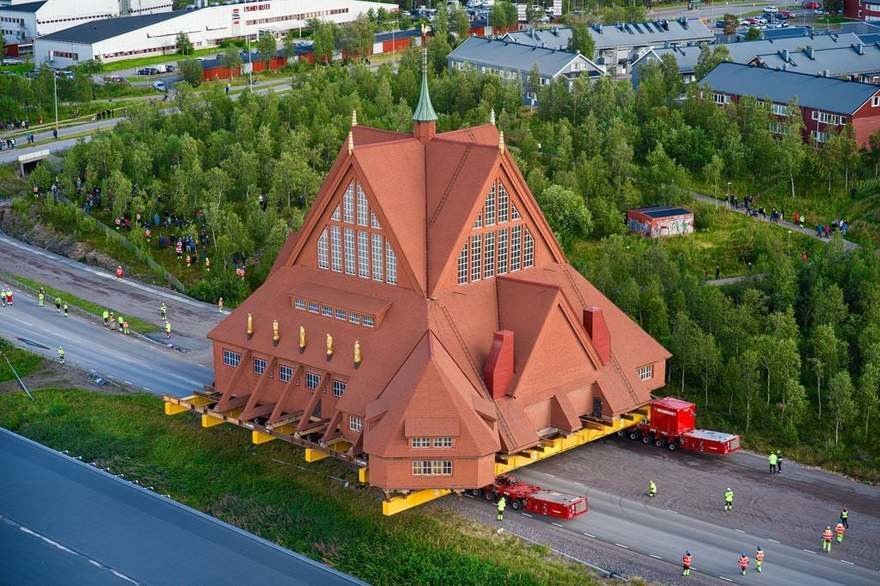
In Sweden, Kiruna Church is one of the country’s largest wooden structures. It was also in danger of being swallowed up by the earth, thanks to nearby mining activity. Thus Dutch engineering firm Mammoet was hired to move the entire building, intact, to a new location.
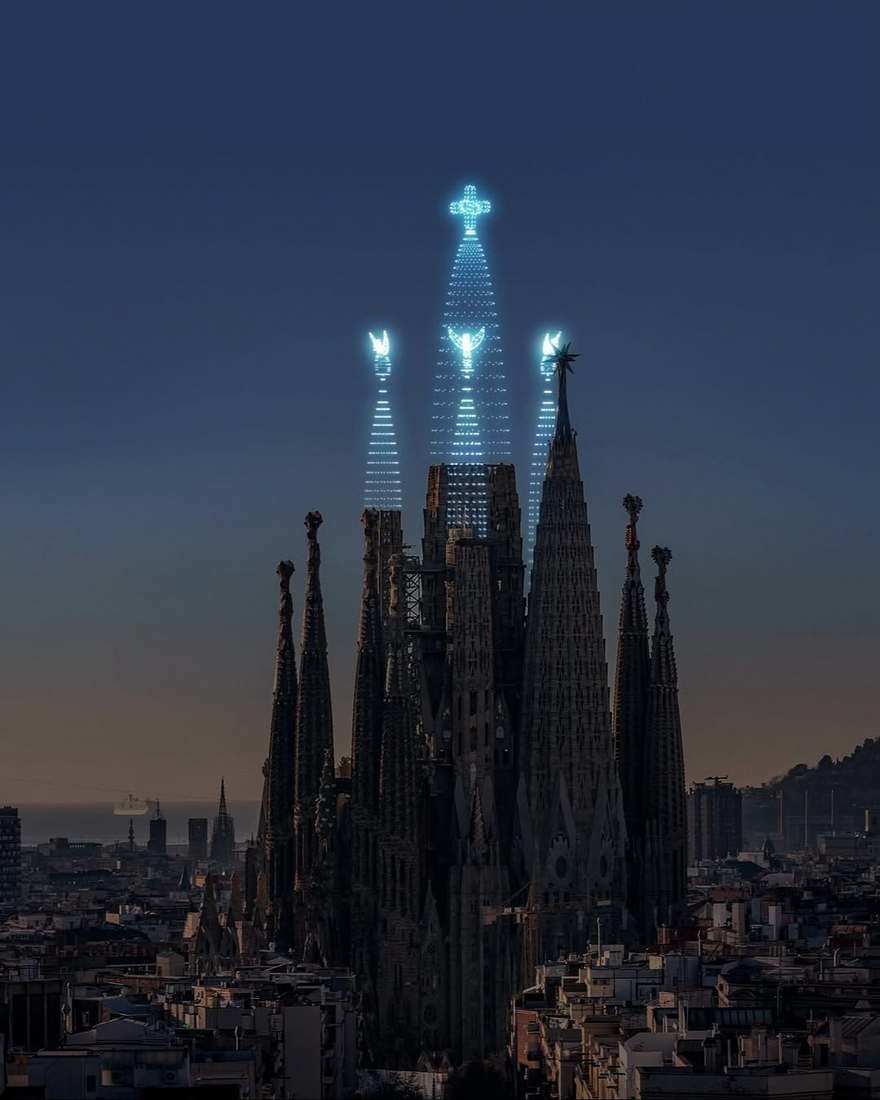
Some architectural landmarks have sustained damage over the centuries, and others were never completed. Thus Dutch creative team Studio Drift collaborated with drone show company Drone Stories to visually complete structures like the Colosseum and the Sagrada Familia.
Lastly and sadly, Los Angeles lost a lot of homes this year during the wildfires. We looked at the architecture choices that allowed surviving houses to remain unscathed, even as the ones next door burned down.