
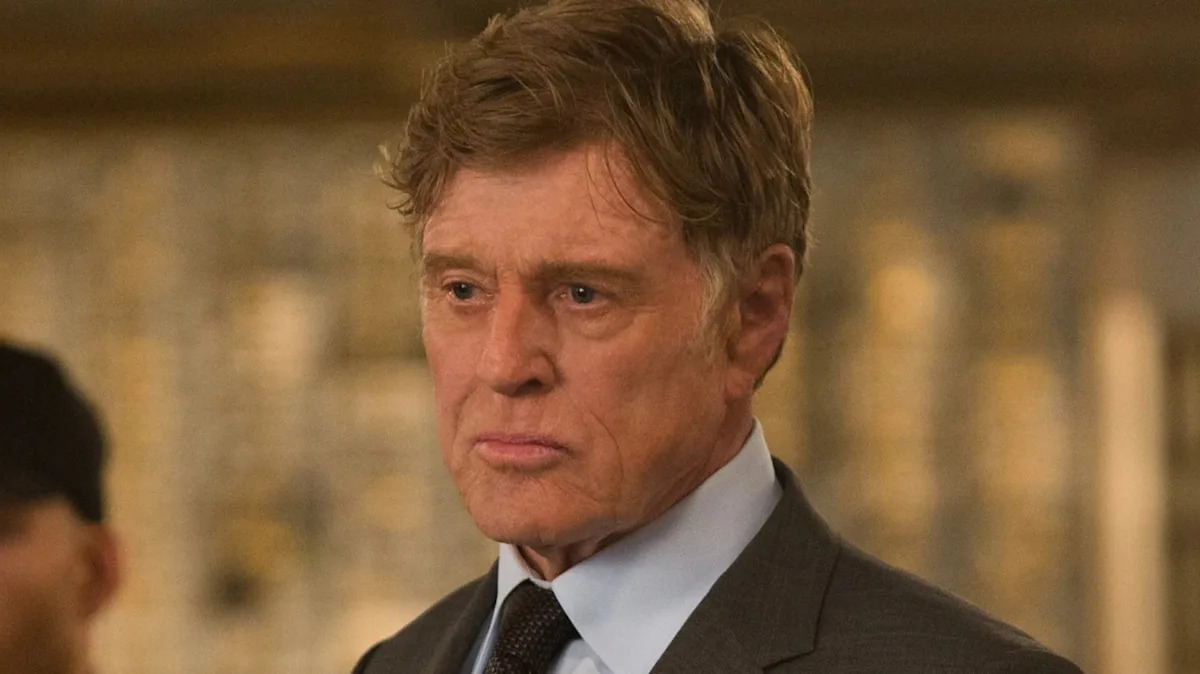
“Captain America: The Winter Soldier” is the best movie about Chris Evans’ patriotic superhero to date. The Joe and Anthony Russo-directed actioner is gritty, intense, and fueled by a distrust of the state, making it one of the Marvel Cinematic Universe’s more thought-provoking efforts. Every character is untrustworthy and potentially in on a Hydra-orchestrated conspiracy that’s infiltrated S.H.I.E.L.D., with Robert Redford’s corrupt politician, Alexander Pierce, pulling the strings.
Redford’s Marvel role feels like a throwback to his work in 1970s conspiracy thrillers, which was by design. While making the film, the Russos were inspired by Sydney Pollack’s “Three Days of the Condor,” a 1975 thriller that’s often listed among the best spy movies of all time. In it, Redford plays Joseph Turner, a CIA analyst who finds himself being targeted by assassins — and his own side might be involved. In a 2014 interview with Fandango, Joe Russo stated that he and his brother referred to their movie as “Three Days of Captain America,” adding, “We owe a great creative debt to ‘Three Days of [the] Condor.'”
Like Redford’s character in “Three Days of the Condor,” Cap’s adventure sees him have to fight danger at every turn while unraveling a shady political mystery. He also teams up with Black Widow (Scarlett Johansson), which is kinda similar to a “Condor” storyline involving Joseph finding an ally in Kathy Hale (Faye Dunaway) after taking her hostage. That said, there’s so much more to Pollack’s paranoid thriller than being the movie that inspired “Captain America: The Winter Soldier.”
Read more: 12 Plot Holes That Completely Ruined Movies
Three Days of the Condor is a paranoid masterpiece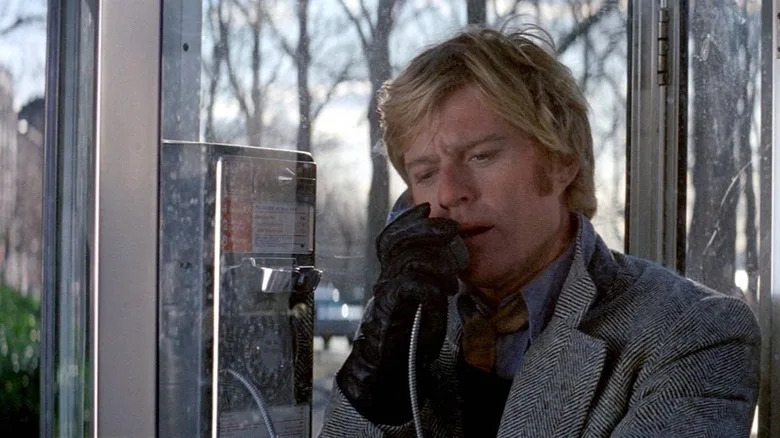
Joseph Turner talking on a payphone in Three Days of the Condor – Paramount Pictures
“Three Days of the Condor” was released in the wake of the Watergate scandal, which, to quickly summarize, saw multiple government employees get sent to prison for spying on the Democratic Party. The Republican President Richard Nixon was accused of covering up the conspiracy afterward, eventually leading to his resignation. Sydney Pollack’s film channels the socio-political anxieties that stemmed from the scandal while, at the same time, telling a compelling mystery story that’s drenched in suspense and paranoia.
Political relevancy is cool and all, but “Three Days of the Condor” also scores points for highlighting the unglamorous side of government agencies. Robert Redford’s CIA analyst isn’t a James Bond or Jason Bourne type of spy. Instead, he spends his working days reading books to find information that will aid the United States’ intelligence efforts. Joseph can handle himself in a fight, sure, but he’s an underdog who survives by being desperate and resourceful. By contrast, Max von Sydow as the film’s villain Joubert — a terrifying, yet oddly charming, hitman-for-hire who’s beyond menacing — is very competent in the act of killing.
More than anything, “Three Days of the Condor” is a masterclass in creating tension, paranoia, and unease. Much of the story takes place in broad daylight, so postal workers and other seemingly normal people are portrayed as potential threats to Joseph’s well-being. You really get the impression that the whole world is out to get our hero, and not knowing who to trust only adds to the sense of terror and dread. Being paranoid has never felt so good, which is a testament to the power of “Three Days of the Condor.”
If you’re looking for the easiest way to keep up with all the major movie and TV news, why not sign up to our free newsletter? You can also add us as a preferred search source on Google.
Read the original article on SlashFilm.