
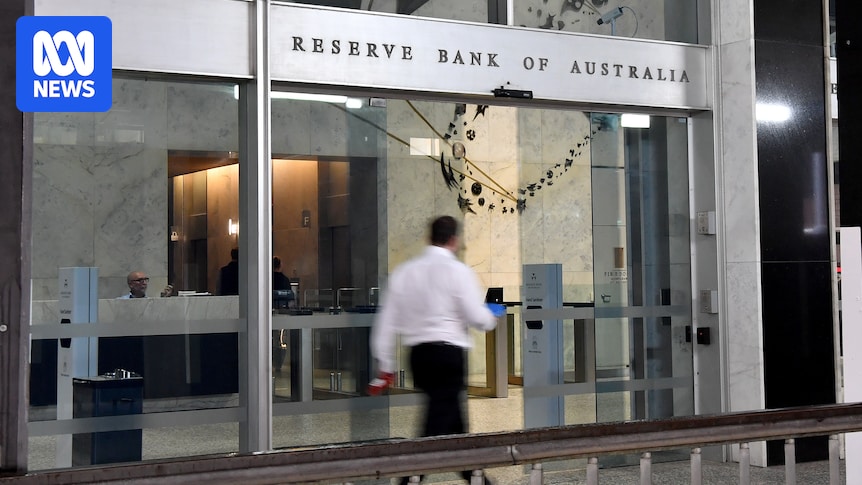
The Reserve Bank of Australia (RBA) has left interest rates on hold at 3.6 per cent, with the central bank’s governor saying the board was prepared to lift rates if necessary next year.
It comes after recent data showed headline inflation picked up in October to 3.8 per cent, from 3.6 per cent in September.
In a statement on Tuesday, the RBA board said it was willing to be patient before moving rates again.
The decision to keep rates steady was unanimous.
RBA governor Michele Bullock said the prospect of a rate cut was not discussed at the December meeting, but the prospect of future rate hikes, and when they may be necessary, was discussed “quite a lot”.
“If inflation continues to be persistent and looks like it is not coming back down towards the target, then I think that does raise questions about how tight financial conditions are and the board might have to consider whether or not it’s appropriate to keep interest rates where they are or in fact at some point raise them,” Ms Bullock said.
“But I wouldn’t put a timing on that. It’s going to be a meeting-by-meeting decision.”Inflation kills rate cut hopes
In its post-meeting statement, the RBA board said recent data suggested “the risks to inflation have tilted to the upside, but it will take a little longer to assess the persistence of inflationary pressures”.
“The board’s judgement is that some of the recent increase in underlying inflation was due to temporary factors and there is uncertainty about how much signal to take from the monthly CPI data given it is a new data series.”
The decision to keep interest rates on hold was the RBA board’s final interest rate decision for 2025.
Its next meeting will not take place until February 2-3, so interest rates will remain at 3.6 per cent for the next two months at least.
What do economists say?
Callam Pickering, APAC economist at global job site Indeed, said hopefully the RBA’s cautiousness would not allow the inflation problem “to once again spiral out of control”.
“A weak economy, a softer job market and high inflation will give the RBA plenty to think about over the Christmas break,” he said.
Buying a home has never been harder
“Inflation is clearly too high, already materially above the bank’s November forecasts, but the economy remains weak and the job market continues to slow.
“Geopolitical uncertainty also bubbles along in the background, largely ignored by financial markets, but still potentially impacting economic conditions.”
Nerida Conisbee, Ray White Group chief economist, said high housing costs were keeping overall inflation elevated, and it was creating a policy headache for the RBA.
“The challenge for policymakers is that the most stubborn sources of inflation are now the least responsive to interest rate increases,” she said.
“Rents remain high due to a lack of rental housing. Construction costs are easing only gradually as labour and materials constraints continue to affect new housing delivery.
“Utilities and insurance, which have been major contributors to household cost pressures, are driven largely by structural and regulatory factors, not consumer demand.
“This creates a policy paradox.
“Keeping rates high weighs on household spending and business investment, helping slow demand.
“But these same restrictive conditions are holding back residential construction and discouraging new rental supply, reinforcing the very housing inflation the RBA is trying to control.”
Federal Treasurer Jim Chalmers said the pick-up in inflation recently was partly due to temporary factors and was “something we’ve seen in many parts of the world”.
“While millions of Australians would have preferred more rate relief, this decision was widely anticipated by economists and markets,” he said.
Wrong to think RBA board has ‘no appetite’ to lift rates, governor says
In her post-meeting press conference, Ms Bullock said board members were not exactly comfortable with the recent rise in inflation in Australia.
She said it would be wrong to think that they had no appetite to lift rates, but they had opted to keep rates steady over the summer.
“The board will do what it thinks it needs to do to get inflation back to 2.5 per cent,” Ms Bullock said.
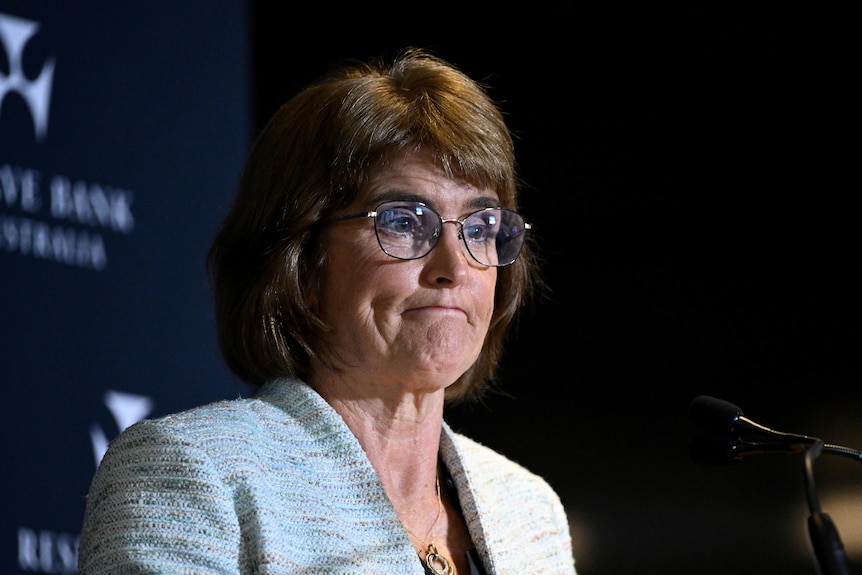
Michele Bullock says it is wrong to think that the RBA Board has no appetite to lift rates. (AAP: Dan Himbrechts)
“And it’s uncomfortable. The conversation we had today, they are uncomfortable where it is.
“If you look back six or seven months ago, things looked to be travelling in the right direction. It looked like it was appropriate [to cut rates then].
“[But] data changes, circumstances change, a lot of the risk that people are really worried about, in terms of the world economy, has abated.
“And so when things change, you have to change your view. And it’s appropriate that the board, I think, is agile and nimble.”
Why Michele Bullock is relieved she’s keeping rates on hold
EY chief economist Cherelle Murphy said the market had been expecting a change in the RBA’s tone compared to its previous meeting in November, when its tone was still quite dovish, and that was delivered today.
“The economy appears to be operating at, or maybe even above, its capacity and so the Reserve Bank cannot provide any more stimulus with it generating unwanted inflation,” she said.
“At worst, the economy could already be operating with domestic demand at a level, and with interest rates, that are encouraging inflation.
“In light of changing dynamics, the Reserve Bank is being rightly cautious, but any continuation of recent inflation changes and upgraded inflation forecasts will likely come with tighter monetary policy in 2026.”