
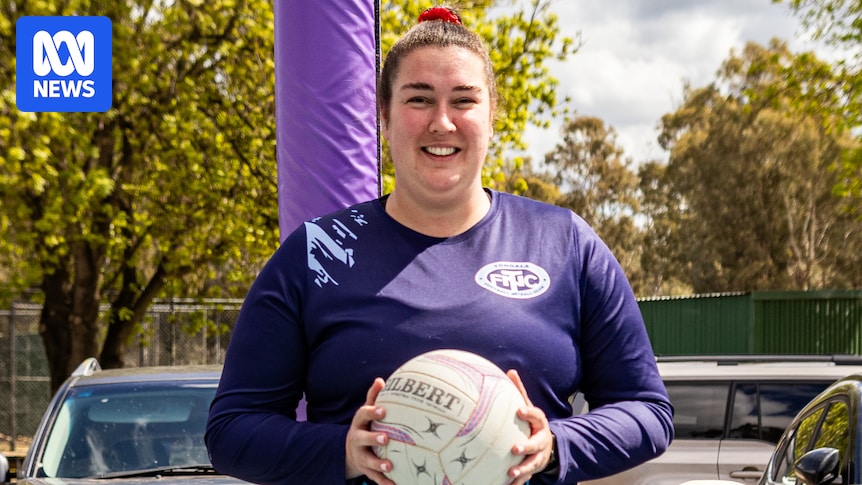
The goal circle is where Amelia “Milly” Brock has always felt sure of herself. Calm. Certain. Unshakeable under the post.
She’s 194 centimetres tall, with a release so smooth it frustrates defenders and quiets crowds.
Milly spent years in the semi-elite Victorian Netball League — most recently as the starting goal shooter for the Bendigo Strikers during their inaugural championship season in 2024.
She’s the player teammates trust with the after-the-siren shot, the one composed under pressure.
But in January, just as pre-season was heating up for the Strikers and her grassroots club Tongala in the Goulburn Valley, something shifted.
Words tangled and energy drained. A feeling she couldn’t explain crept in.
Within days, she was in a fight she knew too well. Anti-NMDA receptor encephalitis — a condition so rare it affects fewer than one in a million — was back.
It was her second episode in five years.
Inside the darkness
One morning in early January, the childcare worker arrived at work three hours early. She couldn’t explain why. She was anxious and disoriented, but trying to carry on.
Her colleagues — who loved her — could see something was deeply off and encouraged her to go to the hospital.
Tests in Echuca showed something was wrong. Worse: it looked familiar.
Anti-NMDA receptor encephalitis is an autoimmune condition where the body attacks receptors in the brain that control speech, memory, movement and behaviour. When that happens, the brain begins to shut down. Words slip away. Awareness fades.
That night, Milly was flown to Melbourne.
“All I remember is being starving,” she says.
“The guy on the plane gave me his muesli bar. Then [I remember] nothing, really.”
At Northern Hospital, she came under the care of neurologist Matthew Ligtermoet, who treated her during her first episode in 2020.
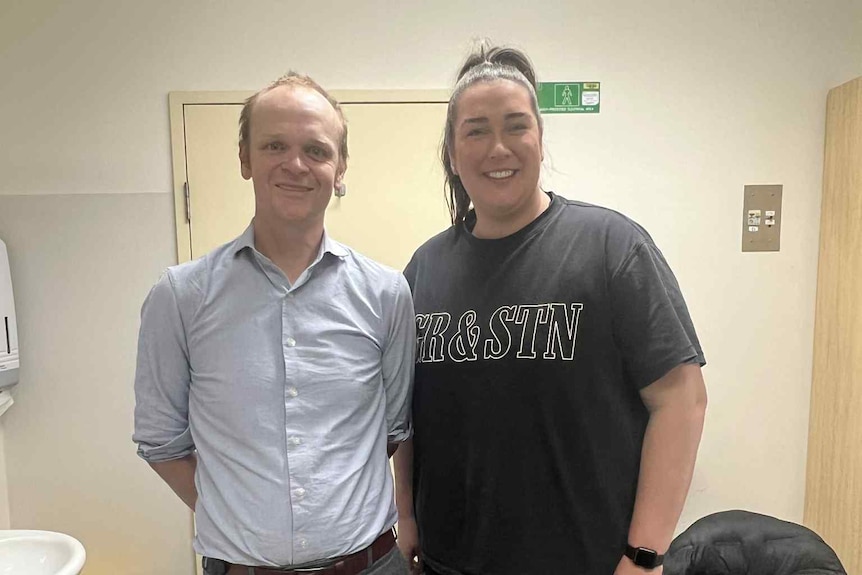
Milly with neurologist Matthew Ligtermoet. (Supplied: Milly Brock)
Dr Ligtermoet says the illness can escalate fast but is often treatable if caught early because “the brain isn’t destroyed — it just stops working properly for a while”.
For the next month, Milly remembers almost nothing.
“I was catatonic. Eyes open, no-one home,” she says.
She had hallucinations, seizures and violent confusion. She stopped speaking. She scrawled “help me” on the walls.
Milly lost the ability to swallow and, at times, walk.
Security guards were stationed outside her room to stop her from wandering or hurting herself.
Her mum, Jennine, cried on the drive home from the hospital every night.
Her dad Darren and partner Ellie Wright sat by her bed through two weeks of silence and became the link between Milly and loved ones waiting for news.
Her sister Rosie, a nurse herself in Melbourne, sat for hours with her.
“Milly was critically unwell,” Dr Ligtermoet says.
The first time around, in 2020, Milly’s family had to fight to be believed.
“Mum knew something wasn’t right,” Milly says.
“If she hadn’t pushed for answers, I don’t think I’d be here.”
This time, they already knew what they were fighting.
The town steps in
Back in Echuca and Tongala, her workplace and her netball club moved fast.
Her childcare centre set up a GoFundMe that raised nearly $19,000 to cover rent and bills.
The football/netball club ran a barbecue fundraiser and added another $4,000.
“That money went to me and Ellie,” Milly says.
“Fuel. Food. Hotel stays near the hospital. I’m still not working full-time so I’m still using it now.”
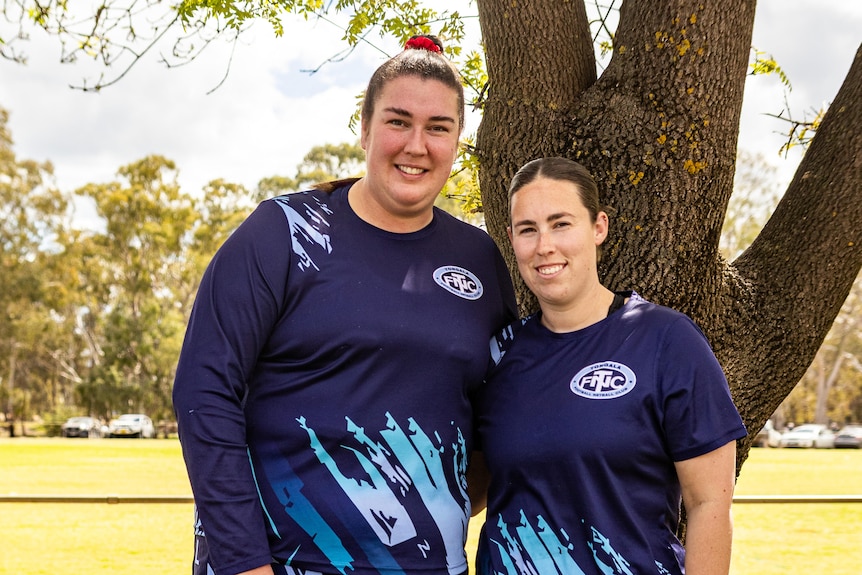
Milly with her fiancée Ellie Wright, who was by her side through the highs and lows of her battle with encephalitis. (Supplied: Little Robyn Photography)
She didn’t see most of it happen at the time.
“I was completely out of it,” she says.
“But when I came back and realised what people had done … it still knocks me around.”
It meant her family could sit beside her bed without watching the clock or the bank balance.
Milly spent the first weeks of 2025 at Northern Hospital. She couldn’t speak, swallow or walk.
Once she stabilised, she was transferred to the Royal Talbot Rehabilitation Centre in early March.
There, the outside world disappeared. No visitors. No colour. No books or TV. Just quiet walls and slow progress.
“When I left in May, I couldn’t even say the alphabet,” she says.
“That was my job each day. Try to get the alphabet back.”
Speech returned in fragments. Her Tongala teammates still call her early stutters “glitches”. She laughs now. Back then, every syllable was a win.
Then came a moment no-one expected.
The shot that stayed
Before she could speak properly again, she could still shoot a Gilbert.
Her mum brought her a netball to rehab. Even after weeks incapacitated, her body rose naturally into its familiar shape. The release was effortless. Her shot was still there.
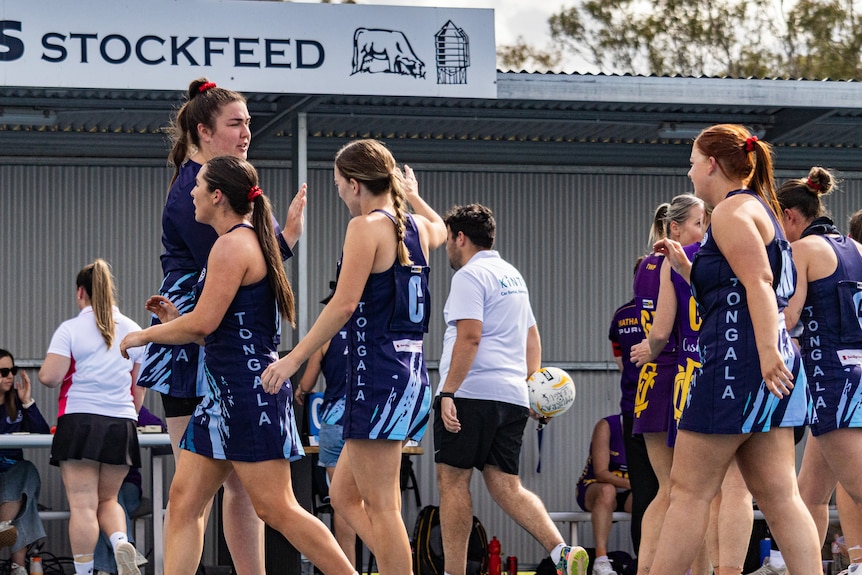
Tongala’s A grade side gathers before the preliminary final, with Milly’s experience helping to steady the group. (Supplied: Little Robyn Photography)
“Mum said, ‘You might not know the alphabet or remember your name, but you can shoot a netball’,” Milly says.
The physios paused. Her mum cried. But it made sense to Dr Ligtermoet — because treatment started quickly, nothing in her brain had been permanently damaged.
He explains that in anti-NMDA receptor encephalitis, skills and movement can “come back online” once the immune system stops attacking the brain.
By June, Milly was well enough to attend a club function back in ‘Tonny’, as Tongala is affectionately known.
On the dancefloor, her teammate and close friend Tiff Bartram grabbed her hand and said, “Two months ago, you couldn’t even talk and now you’re here remembering every lyric of this song.”
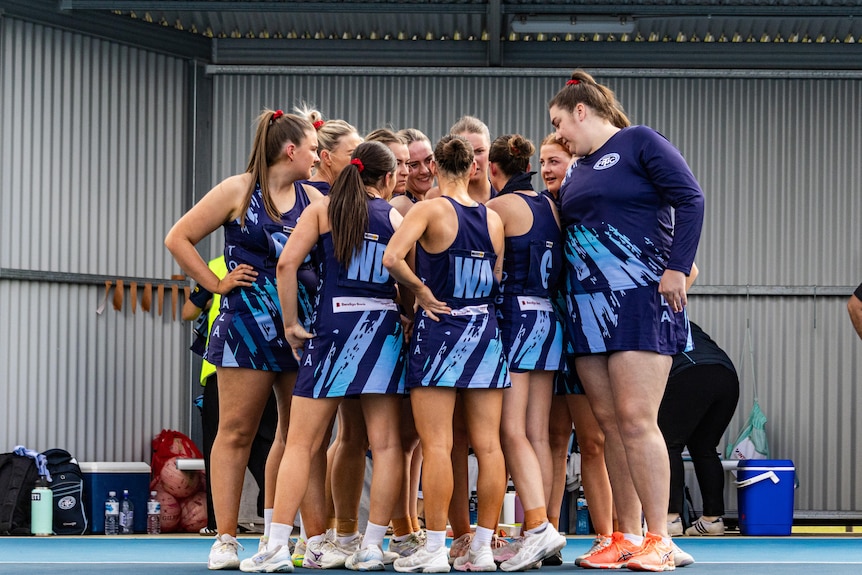
Milly and her teammates gather before a game. (Supplied: Little Robyn Photography)
By July, Milly was ready to pull the dress back on; the ‘two blues’ of Tongala.
She had signed on to co-coach A grade in late 2024 but never made it to round 1. The illness got there first.
So when she finally returned, it made sense to start where she belonged — in A grade.
On July 12 in Barooga, Milly ran onto the court. The roar that met her was as loud as any final.
Her partner Ellie was there. Grace Hammond, her co-coach and close friend, was barely holding it together as she paired with Milly in the goal circle.
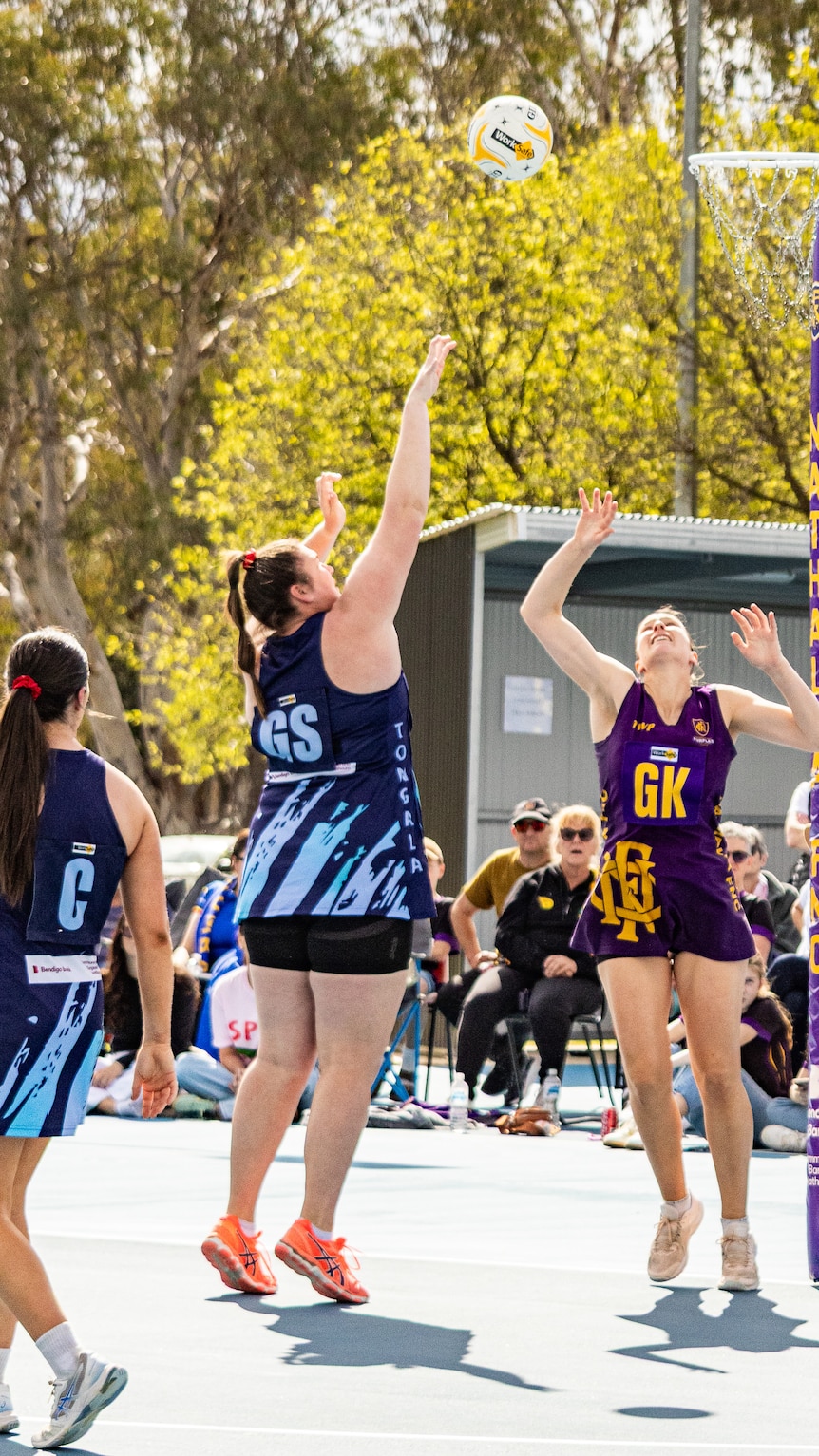
A trademark composed shot from Milly. (Supplied: Little Robyn Photography)
And because she’d missed most of the early season, Milly was still eligible for B grade too — easing back, building up, one quarter at a time.
Then came another moment few could have predicted.
Eight months after she couldn’t walk or talk, Milly played in the Murray Football Netball League’s B grade grand final and helped Tongala win a premiership.
“It didn’t matter what grade it was. That medal wasn’t about netball. It was proof. Proof I got back,” she says.
Looking forward
Autoimmune encephalitis doesn’t vanish. It quietens. It can return. And when it’s treated, it leaves a shadow.
Milly now goes to hospital every six months for treatment to reduce the risk of relapse.
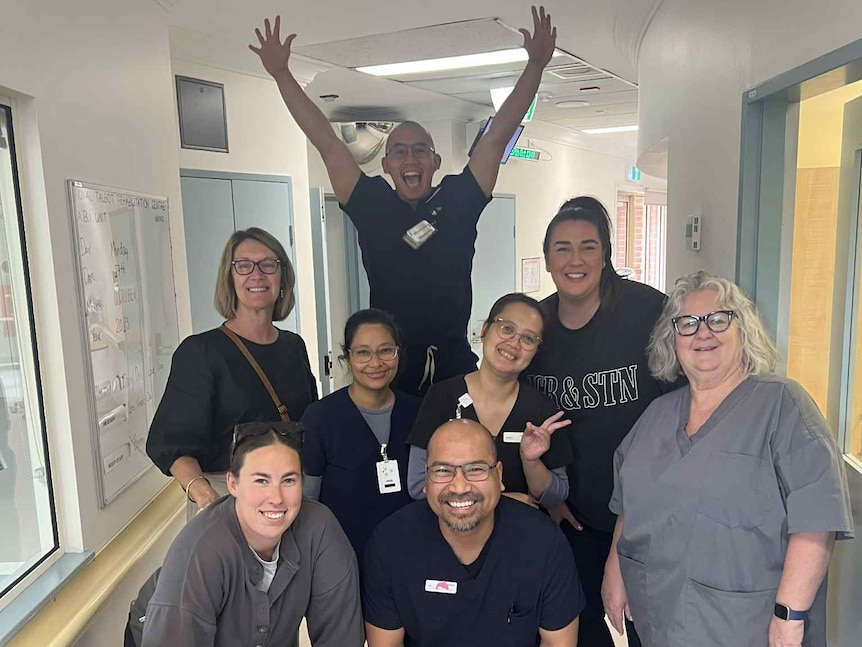
Milly, her fiancée Ellie, and mum Jennine, with nurses from Northern Health’s neurology ward, where Milly spent four months recovering from encephalitis earlier this year. (Supplied: Milly Brock)
“It’s scary,” she says.
“Will it beat me next time? Will it be worse? I don’t want to put my family or Ellie through that again.”
Dr Ligtermoet says relapse is possible and ongoing monitoring matters.
For now, Milly’s content. She’s not chasing elite netball dreams. She’s happy at home. Mowing lawns. Going to the shops. Planning a wedding after Ellie proposed in October.
As dramatic as the premiership was — to go from hospital bed to a flag in eight months — Milly’s comeback wasn’t made in one big moment. It was pieced together in smaller ones.
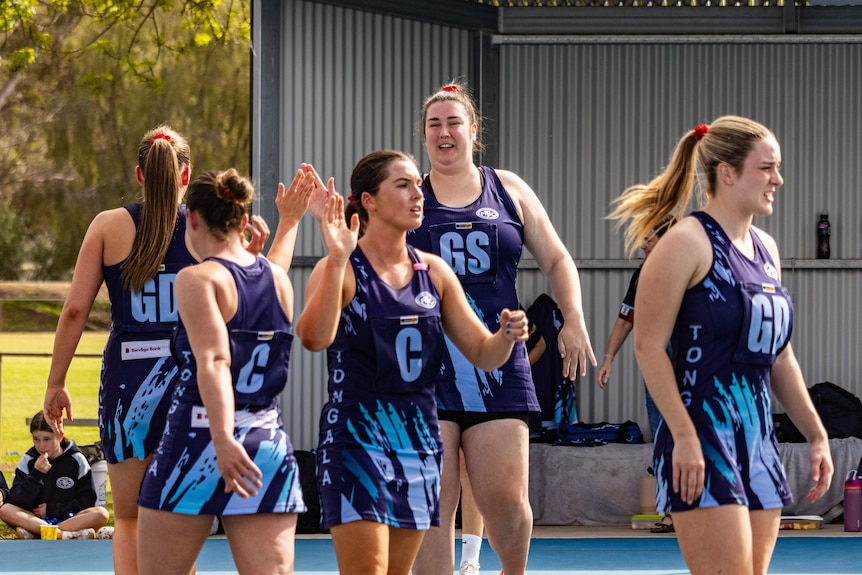
Milly with her Tongala teammates, celebrating the unity that carried them through finals. (Supplied: Little Robyn Photography)
The first syllable. The first step. The first dance. The first goal. Her body remembered what her brain forgot.
The court didn’t care about hospital charts or lost time. It didn’t judge her for walking back slowly. It just offered its familiar lines.
And when she finally stepped back inside that circle — the shot was still there. So was she.
Erin Delahunty is a freelance sports and feature writer.