

Frozen F1 races show that weather can become a true adversary, even for the most experienced champions.
Even though F1 has never raced in the snow, some icy events have left a mark. During these cold Grand Prix, drivers had to cope with freezing temperatures, which made tire grip and car stability much more difficult.
The extreme cold of Montreal at the 1978 Canadian GP
The record for coldest races goes to the 1978 Canadian GP. Temperatures dropped to 4°C during the race. Drivers had to manage minimal grip on tires designed to heat up quickly. Gilles Villeneuve won the race despite the intense cold, and drivers even wore parkas on the podium to stay warm. Since then, the Canadian GP has been scheduled in June to avoid such frozen F1 races.
Spa under 8°C during the 2014 Belgian GP
The Spa-Francorchamps is famous for its hills and unpredictable weather. In 2014, temperatures fell to 8°C over the race weekend. Teams had to adjust tire pressures and monitor icy patches, especially in shaded areas of the circuit. This F1 GP reminded everyone that even in summer, the Ardennes can present challenging frozen racing conditions.
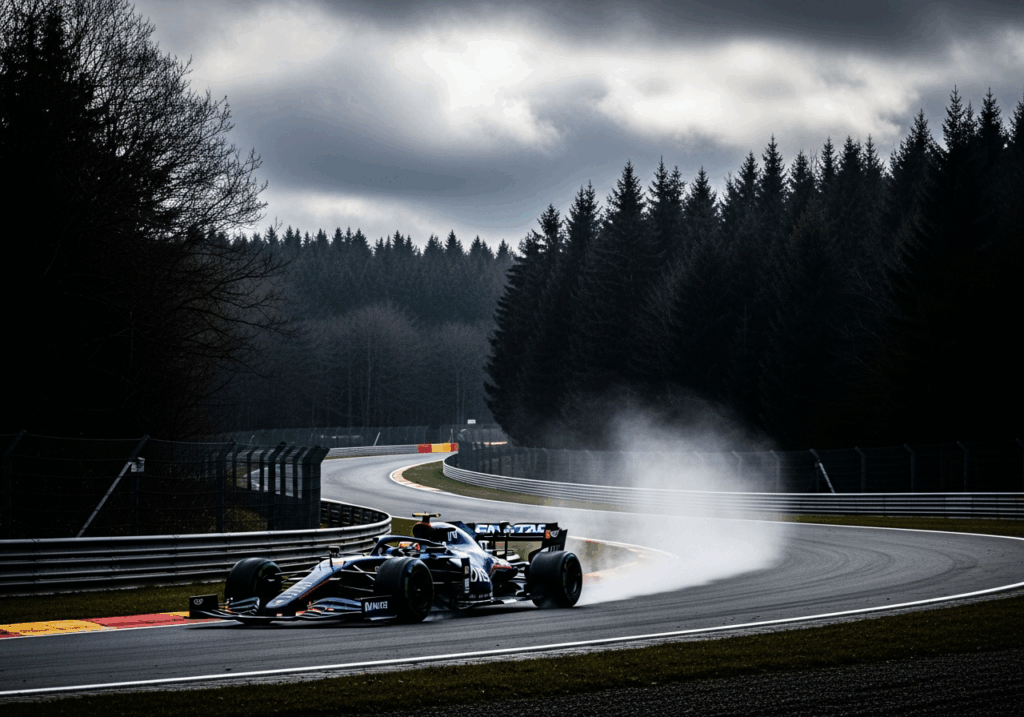
2016 Canadian GP, freezing Montreal despite summer
In 2016, the Canadian GP again surprised with cold, with minimum temperatures of 11°C. Tires struggled to reach their optimal operating window, and F1 drivers had to adapt their driving style. Cold races like this show how temperature directly affects strategy and safety during a GP. Even in June, weather surprises are never far away.
Nurburgring in 2020, one of the frozen races in F1
The 2020 Eifel GP took place in October at the Nurburgring, a region known for unpredictable weather. Temperatures dropped to 9°C, further complicating tire heat generation. Drivers had to stay focused on every corner to avoid losing grip. This F1 GP highlighted how weather conditions can turn a legendary circuit into a true challenge for everyone.
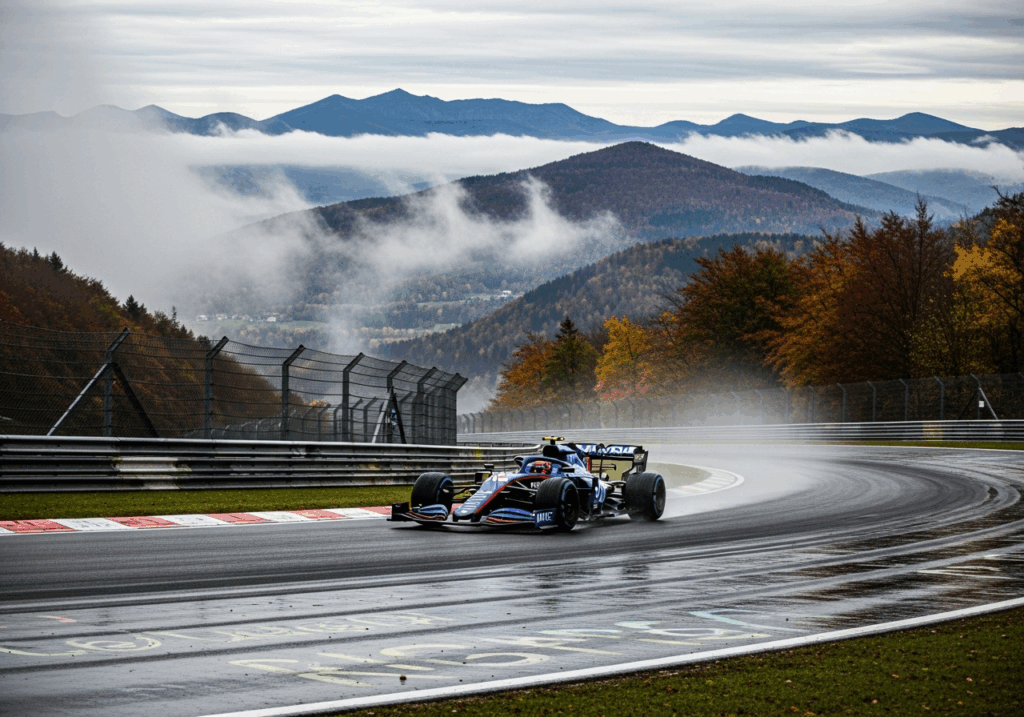
Frozen races at the 2023 Las Vegas F1 GP
The inaugural 2023 Las Vegas GP was announced as potentially the coldest event, especially since the race would start at 10 p.m. In the end, temperatures stayed around 15°C, slightly higher than expected. Even so, driving on freshly laid asphalt with slick tires remains a challenge. Frozen F1 races are therefore not limited to historical northern or Belgian events.
These GPs remind us that weather is a full-fledged actor in the spectacle. Drivers never fully control it, and each degree matters for grip and performance. Frozen races add extra stress but also highlight the endurance and talent of the F1 champions.