
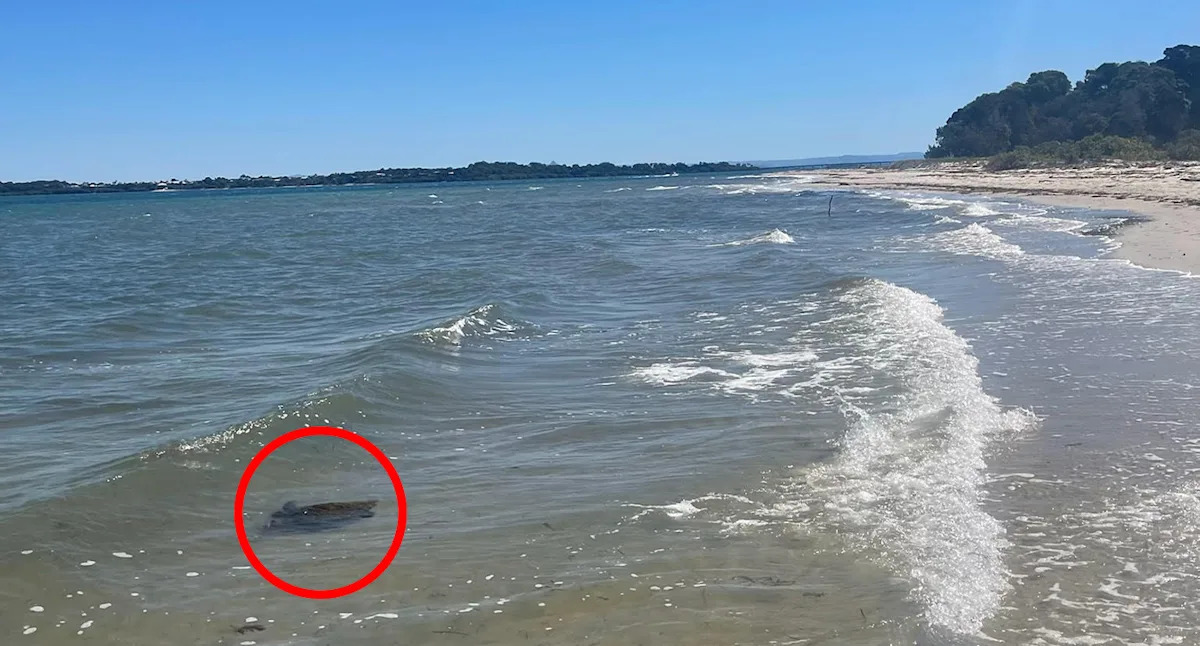
Locals across one of Australia’s most idyllic coastal regions are concerned about a strange phenomenon being reported on its beaches. Central to the issue are the green sea turtles around Queensland’s Moreton Bay that are being found washed up dead, caked in barnacles and moss, often with concave stomachs.
“Moss is a real indicator of how slow they are, because a rolling stone doesn’t gather moss,” Diane Oxenford from Bribie Island Turtle Trackers told Yahoo News.
Over the last three months, she’s responded to approximately 15 green sea turtle strandings around the island, located just 70km north of Brisbane, and other rescuers in the wider Moreton Bay region have reported similar problems.
Adding to their worries is that many of the impacted animals are only around 10 to 15 years old, at least a decade away from reaching sexual maturity and being able to breed.
“Older turtles have had the chance to develop immunity — but like [human] children — the juveniles haven’t developed the immunity that adults have to resist pollutants,” she told Yahoo News.
“They’re just so sick — their tummies should be nice and plump, but they’re concave, and their shell is mostly covered in barnacles, parasites and moss.”
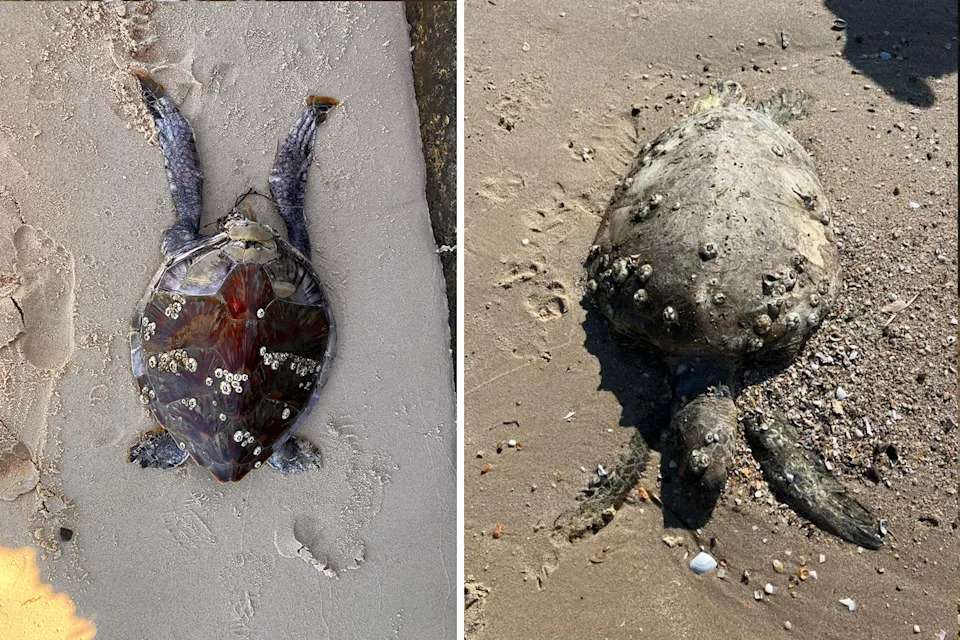
Barnacles attached to these turtles that washed up dead around Moreton Bay are a sign of poor health. Source: Diane Oxenford
Many turtle rescuers believe poor water quality is contributing to turtle deaths, and they fear the problem will get worse if the natural coastline continues to be replaced by new housing.
Oxenford thinks increased development is a key contributor because it has resulted in the destruction of the natural wetlands that would ordinarily act as filtration systems.
Similar water quality loss was noted after the shellfish reefs that were once abundant around Australia’s south coast were destroyed early last century.
Scale of turtle strandings remains unclear
The severity of the stranding problem remains unclear.
Globally, green sea turtle numbers have rebounded, and Queensland’s environment department (DETSI) maintains that in general, marine turtle populations remain “healthy” in the state’s southeast, noting most are “protected” in marine parks.
It has released figures to Yahoo News that indicate no significant increase in marine turtle incidents in 2025, over the peak stranding months of September and October, when compared to previous years.
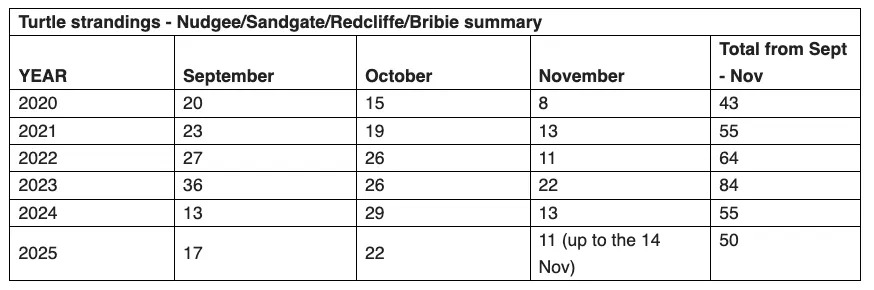
Turtle stranding numbers that have been confirmed by DETSI in Nudgee, Sandgate, Redcliffe and Bribie Island. The data is subject to change based on additional reports that are received and verified. Source: DETSI
But, the results are only until November 14, and it’s understood that they may not yet include all incidents recorded by rescue volunteers.
An official spike in marine turtle strandings occurred in 2023, and this has been linked to flooding the previous year.
A DETSI spokesperson told Yahoo its priority is to “protect and preserve turtle populations” for “current and future generations.
“We will continue to monitor turtle populations in the region,” it said, noting that work has commenced on a $35 million project to install specialist stormwater filtration devices across Moreton Bay to help improve water quality.
Concern for Queensland’s valuable tourism sector
Should turtle strandings escalate over the coming years, then the Queensland Conservation Council has warned that the impact won’t just be bad for the environment.
Its nature campaigner, Natalie Frost, noted that most of the advertisements used to promote the $31 billion sector to international visitors focus on the state’s natural wonders, including sea turtles.
“Nature is the main reason people come to Queensland… and the last thing people want to see is a dead green turtle wash ashore,” she told Yahoo News.
“People enjoy being able to go surfing and swimming in the ocean, and it’s a really special experience seeing a little turtle pop up, but it’s really concerning that over the last couple of months we’ve seen so many dead turtles washing up.”
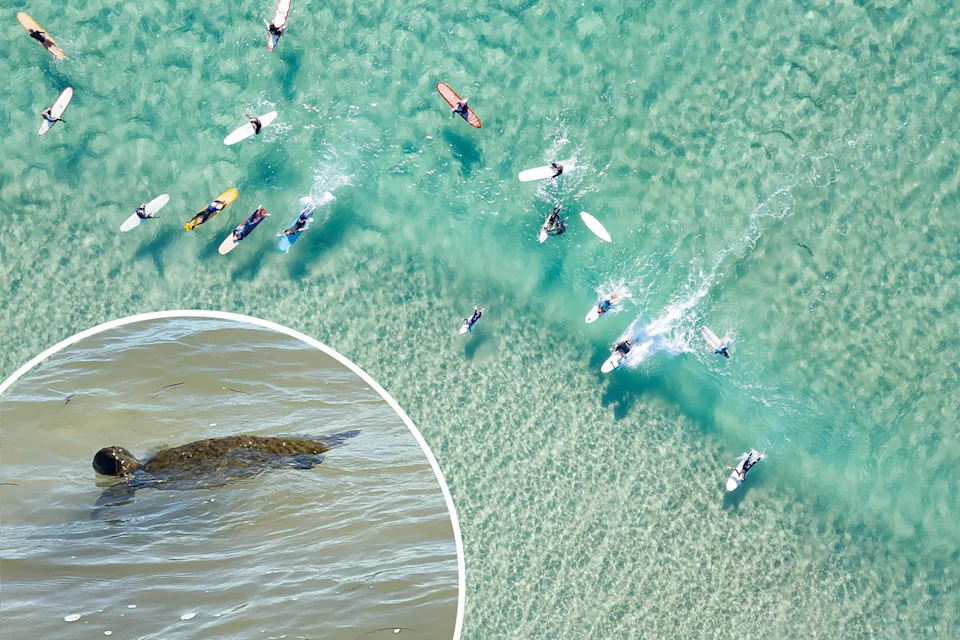
Conservationists have warned the last thing tourists want to see is increased numbers of dead turtles on beaches. Source: Getty
New report reveals state of Moreton Bay waters
New data confirms there are some ongoing problems with water quality around Moreton Bay, which is home to an estimated 20,000 sea turtles.
The biennial Healthy Lands and Water Report Card highlights that phosphorus and “high levels of algal growth” are contributing to a reduction in water quality.
While it still gives the area an overall rating of “very good”, it notes that southern Moreton Bay and eastern Moreton Bay worsened in condition this year.
One key contributing issue is that seagrass beds have “significantly declined”, with the flooding event in 2022 having a major impact on their health.
The research also highlighted that mud has been encroaching on previously sandy habitats since 1998.
Waters off Adelaide have suffered their worst algal bloom on record this year, and the report warns that there is an increased risk in South East Queensland as well, due to a trend towards warming waters coupled with catchment-derived sediments and associated nutrients, including agriculture, construction site runoff, stormwater, and treated wastewater.
‘It’s all connected’, marine researcher warns
Queensland Conservation Council has also seized upon clearing around riparian zones — areas around rivers and creeks, with the report card revealing that a staggering 387 hectares of this vegetation was destroyed between 2018 and 2023.
“[This] increases sediment runoff, lowers river resilience to floods and ultimately puts greater pressure on precious marine animals like turtles and dugongs in Moreton Bay,” Frost said.
“With land use pressures set to continue in SEQ, it is crucial that these areas of riparian vegetation are protected.”
Last month, Associate Professor Kathy Townsend, a marine researcher at the University of the Sunshine Coast, warned that problems with water quality were all contributing to the problem, but the “elephant in the room” was climate change.
“It’s all connected, climate change, pollution and habitat loss,” she said.
“Sea turtles are telling us what’s happening in our oceans. Their decline is a reflection of the wider environmental crisis with water quality.”
Love Australia’s weird and wonderful environment? 🐊🦘😳 Get our new newsletter showcasing the week’s best stories.
