
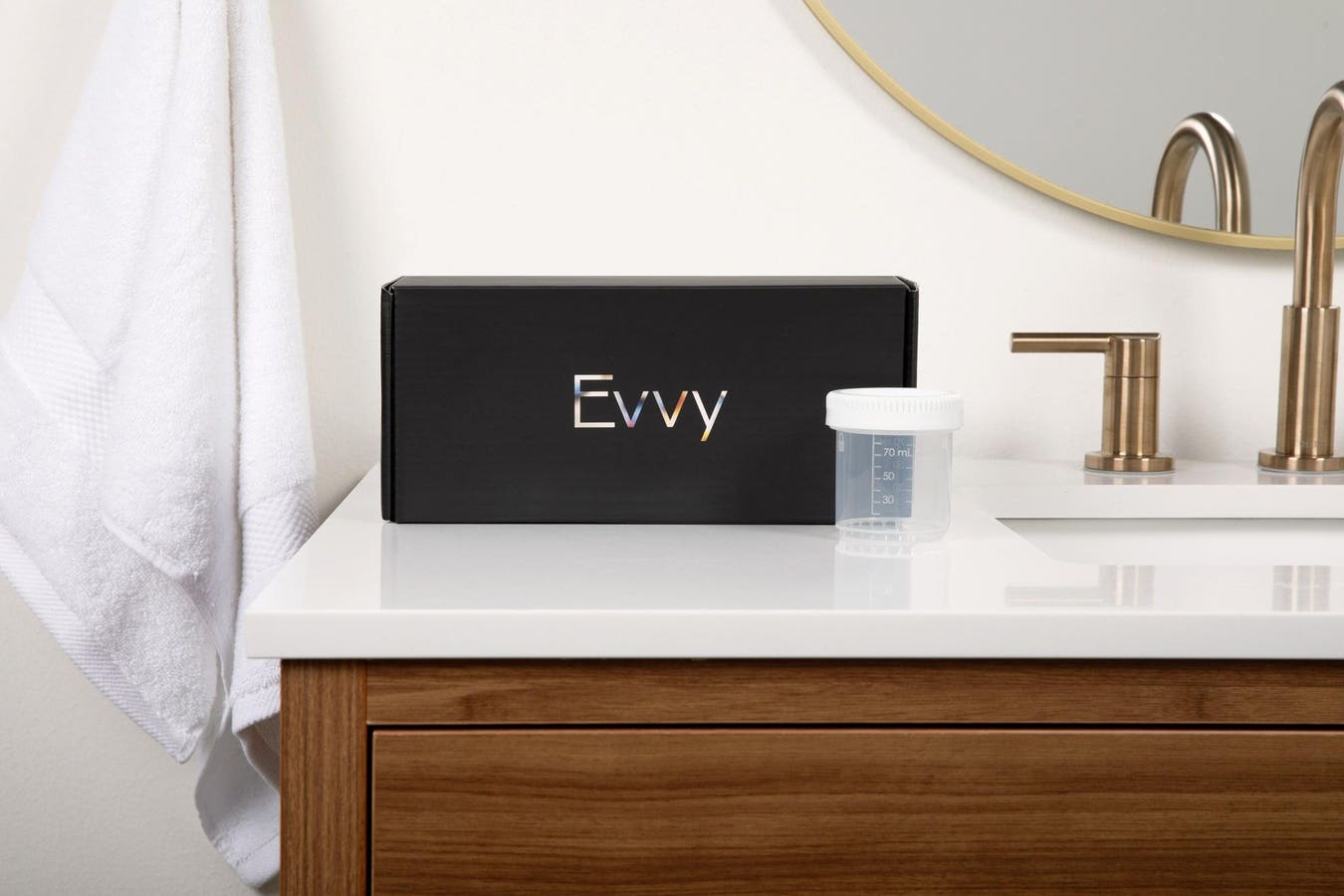
Evvy’s At Home UTI Diagnostic Kit
Evvy uses advanced microbiome and PCR diagnostics to improve care for BV, UTIs, fertility, and vaginal health.
Women who struggle with urinary tract infections that keep coming back, stubborn bacterial vaginosis, or persistent vaginal discomfort know the cycle all too well: a short appointment, a limited test, another round of antibiotics, and reassurance that “everything looks normal.” For millions of women, the issue isn’t their bodies—it’s a diagnostic system stuck in decades-old tools.
Evvy, cofounded by Priyanka Jain, is focused on vaginal healthcare and is working to change that system by uncovering what standard testing often misses, using an extensive dataset of vaginal microbiome samples.
Today, Evvy launched its UTI+ Test, an at-home urine test that uses PCR technology to detect 12 uropathogens and seven antibiotic-resistance markers, delivering results within one business day. It aims to give women faster, clearer insight into infections that represent a $10.4 billion global market today and are projected to reach $15 billion by 2032.
The Scale Of BV And UTI Problems
Evvy’s founding team: Laine Bruzek, Chief Marketing Officer; Priyanka Jain, CEO, Pita Navarro, Chief Scientific Officer
NERO MEDIA
Bacterial vaginosis and urinary tract infections are among the most common reasons women seek medical care. Yet the diagnostic tools remain outdated. The prescription drug market for bacterial vaginosis is forecast to more than double over the next decade, increasing from $1.1 billion in 2023 to an estimated $2.5 billion by 2033. UTIs drive millions of clinical visits each year and absorb billions in treatment costs—yet nearly half of women receive antibiotics that are not considered first-line therapy.
Part of the challenge is that standard urine cultures miss up to 50% to 70% of pathogens in women with symptoms. Vaginal testing, meanwhile, still often relies on a clinician’s visual reading under a microscope or a “whiff test”—using your nose to notice an odor.
“The whole system does not want women to have more agency, more information, and it’s wild how much inertia there is to fight against,” explained Jain, Evvy’s CEO. “It shows why women have gone so long without real answers.”
Evvy has raised $19 million in funding, backed by General Catalyst and Left Lane Capital. “Evvy’s groundbreaking platform is changing the way we understand and care for the female body,” said Laura Sillman, VP at Left Lane Capital.
How Evvy’s Model Improves Vaginal And UTI Care
Evvy at-home sample collection tube
Evvy uses advanced microbiome and PCR diagnostics to improve care for BV UTIs, fertility, and vaginal health.
Evvy’s founding thesis is straightforward: Women have been underserved because medicine has lacked high-resolution tools to understand the vaginal and urinary microbiomes. Evvy can detect more than 700 bacteria and fungi from a single swab, offering a level of detail that older methods cannot approach. A peer-reviewed validation found that Evvy reached 93.1% sensitivity and 90% specificity.
Evvy’s at-home vaginal test has become core to its clinical research, including a published outcomes study that found 75.5% of users experienced symptom relief after personalized treatment guided by microbiome results, with far lower return-of-symptom rates than with standard care.
Today, Evvy has expanded beyond vaginal testing with the launch of UTI+, a PCR-based urine test that identifies 12 pathogens and seven antibiotic-resistance markers. The test offers a one-business-day turnaround and enables targeted treatment within 24 hours—an essential shift from slow cultures and empiric antibiotic prescribing.
The Barriers In Women’s Health CareClinical Inertia In Women’s Health Testing
Evvy’s work also exposes deeper structural challenges. Traditional diagnostics were not designed to distinguish between mixed infections, antibiotic-resistance markers, or subtle microbiome shifts that can trigger ongoing symptoms. Clinicians often lack tools that go beyond broad categories like “BV-positive” or “UTI-negative.”
Changing that ecosystem requires research, which Evvy has aggressively pursued. The company has ongoing clinical trials in BV, UTIs, fertility, IVF outcomes, and menopause-related vaginal changes. Its scientific advisory relationships span leading academic and clinical institutions. More than 2,000 healthcare providers have interacted with or referred patients to Evvy.
Still, early skepticism was real. Some clinicians were concerned that giving women detailed microbial data would overwhelm them. Evvy found the opposite: Clarity reduces anxiety. Most patients want more information about their bodies, not less.
Educating Payors And Policymakers: Access And Reimbursement
Today, Evvy remains a cash-pay service, not because of strategy but because insurers are reluctant to reimburse more advanced diagnostics. Legacy methods like microscopy or the whiff test cost very little, and payors have not yet adapted to microbiome science.
Evvy is working to change that through clinical trials that link microbiome profiles to high-cost issues such as unsuccessful IVF cycles, preterm birth risk, and persistent vaginal symptoms that often lead to repeated visits and antibiotic courses. Demonstrating cost savings and clinical impact will be essential to shifting coverage.
Navigating Algorithm Bias In Women’s Health
Digital platforms present another challenge uniquely familiar to women’s health companies. Content containing medically accurate phrases like “vaginal health,” “BV symptoms,” or “UTI testing” can be flagged or down-ranked by social media and search algorithms, limiting reach.
This environment makes community-building and education difficult. Yet it also reinforces why direct-to-consumer access matters: Women are seeking answers outside traditional medical systems, and they want tools that offer clarity rather than more ambiguity.
Evvy’s Patient-First Care Approach
What distinguishes Evvy is not only advanced testing, but how results translate into care. Evvy pairs test findings with personalized treatment plans by doctors designed to address the root cause of symptoms and prevent recurrence. The company provides follow-up guidance and care pathways tailored to an individual’s microbial profile.
“We fix the symptom, we fix the problem, and we make sure it doesn’t come back,” Jain said. “And we do all of that while giving women a good experience where they feel understood and listened to.”
The company’s patient-centered approach is reflected in a striking metric: 98% of users consent to participate in research, which strengthens the data available to improve women’s health outcomes.
“Through this strategic partnership with Evvy, we aim to create a patient-first experience that helps women more conveniently access the treatments they need for their health,” noted Elizabeth Stephens, director, Women’s Health Strategy, Advocacy, and Partnerships at Organon.
A New Standard For Vaginal And UTI Care And BeyondEvvy’s Expanding Role In Fertility And Menopause
Beyond UTIs and BV, Evvy is exploring how the vaginal microbiome affects fertility and pregnancy. Early research shows connections between microbiome imbalances and inflammation that can affect implantation. Evvy is working with fertility clinics to explore how microbiome-guided care might improve IVF outcomes.
The company is also developing approaches for menopause, when estrogen decline reshapes the vaginal microbiome and increases susceptibility to infection and irritation. Evvy is studying how personalized hormonal and microbiome treatments may better support midlife health.
How Precision Tools Improve Women’s UTI And BV Care
Evvy’s work is part of a broader shift in women’s health toward tools that offer specificity rather than broad categories, answers rather than assumptions, and prevention rather than repeated cycles of treatment. The December launch of UTI+ signals how far the company has come and how much opportunity lies ahead.
As the medical field continues to recognize the importance of the vaginal and urinary microbiomes, Evvy’s data-driven model offers a path toward care that is faster, more accurate, and more aligned with women’s lived experiences. For many, it may finally provide the clarity they have long been denied, setting a new bar for vaginal microbiome and UTI diagnostic care.