
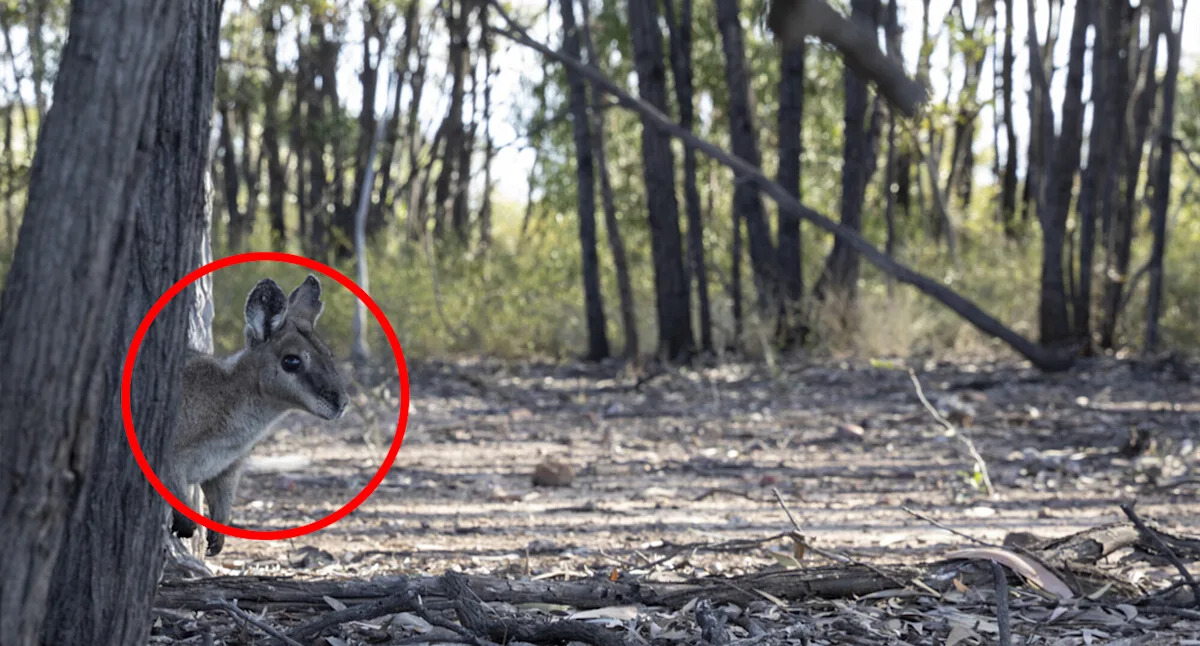
For close to 40 years, Australians had mistakenly believed one of their cutest wallaby species was likely extinct. The error was understandable – the bridled nailtail wallabies that were once common across the country’s east had vanished.
Its habitat had been destroyed, and feral cats and foxes ravaged the survivors, while other species like the Toolache wallaby and Tasmanian tiger had already been wiped out.
Then in 1973, a remnant population was discovered at Taunton National Park, inland from the Queensland town of Rockhampton.
But rediscovering the species was only the beginning of the response, for the last 50 years, the goal has been building up numbers of the endangered species so it’s not lost again.
This week, Bush Heritage Australia announced it had bought a mammoth 1,207-hectare patch of rare habitat to support its future.
The non-profit’s ecologist, Dr Stephen Kearney, describes the landscape as “harsh” but perfect for the bridled nailtail wallabies.
The ground is still speckled with Sclerolaena, a native shrub that humans despise because its spikes get caught in socks and scratch skin, but wallabies love because its succulent leaves are full of water.
“Having intact habitat out here is pretty special,” he told Yahoo News.
‘Visionary’ farmer protected lands being bulldozed by others
The newly acquired Avocet Nature Refuge and Taunton National Park are within the sprawling Brigalow Belt.
The region’s woodlands, which once extended through Queensland and NSW, have been so laboriously decimated for cattle farming that only five per cent remain and, worryingly, just two per cent of this habitat is protected.
After the bridled nailtail wallabies were rediscovered, small populations were translocated to two other sites to establish new colonies.
One of them was Avocet Nature Refuge, where a forward-thinking farmer had protected parcels of his property for nature, and today it’s home not only to the wallabies but also koalas.
“He was quite a visionary, but also unusual for cattle graziers, in that he saw the value in putting a covenant on part of his property to give it extra protection in 1999,” Dr Kearney said.
Today, there are believed to be roughly 100 on the property and 1,500 in the wild.
Now that Bush Heritage Australia has acquired Avocet Nature Refuge, the costs of maintaining it into the future are piling up.
Over $1 million has been raised, but it has the goal of getting to $1.4 million to protect the property, and others like it, into the future.
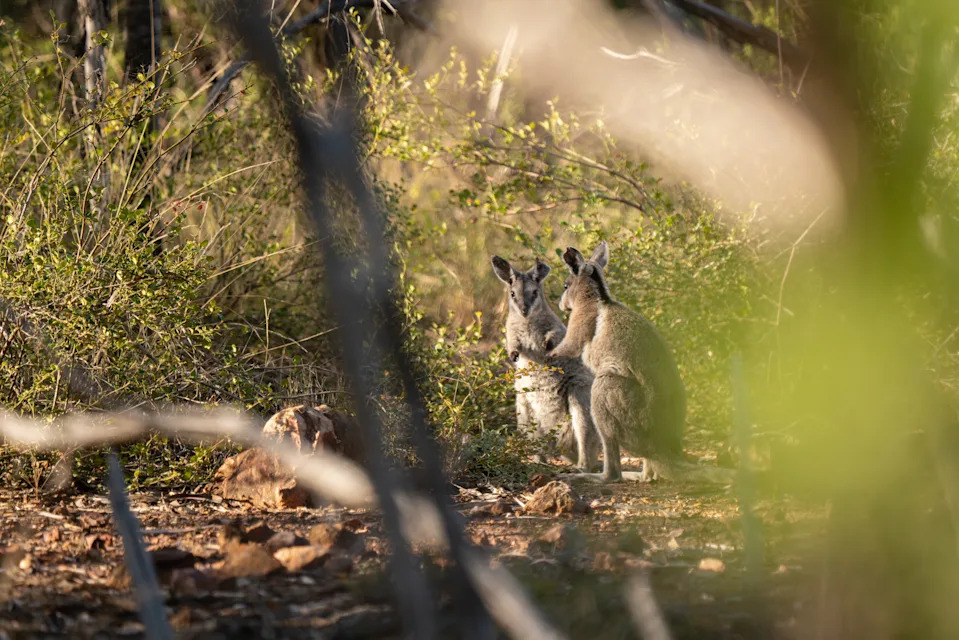
Two wallabies on the Avocet Nature Refuge in Queensland. Source: Grassland Films
How evolution proved no match for invasion
The species is largely solitary, can grow up to 1 metre in length, and is known for the thick black stripe that runs across its body, and the nail at the end of the tail.
Originally, they had few predators, with eagles likely posing the greatest danger.
Like many native animals, including the bush stone-curlew, there was no need to develop complex protection strategies.
“There’s the concept of flight, fight or freeze – and they are usually a freezer when they think they’re under attack,” Dr Kearney said.
“That was probably because predators from the sky wouldn’t see them, and it was probably a good evolutionary mechanism.”
Today, the 4 to 8kg wallabies are no match for the cats and foxes that have invaded Australia, which see them as an easy meal.
What’s keeping the species alive on the property, and Bush Heritage Australia’s adjoining 594-hectare Goonderoo Reserve, is ongoing invasive predator and fire management and habitat restoration.
As technology rapidly advances, it’s hoped the species can be protected in this stronghold well into the future.
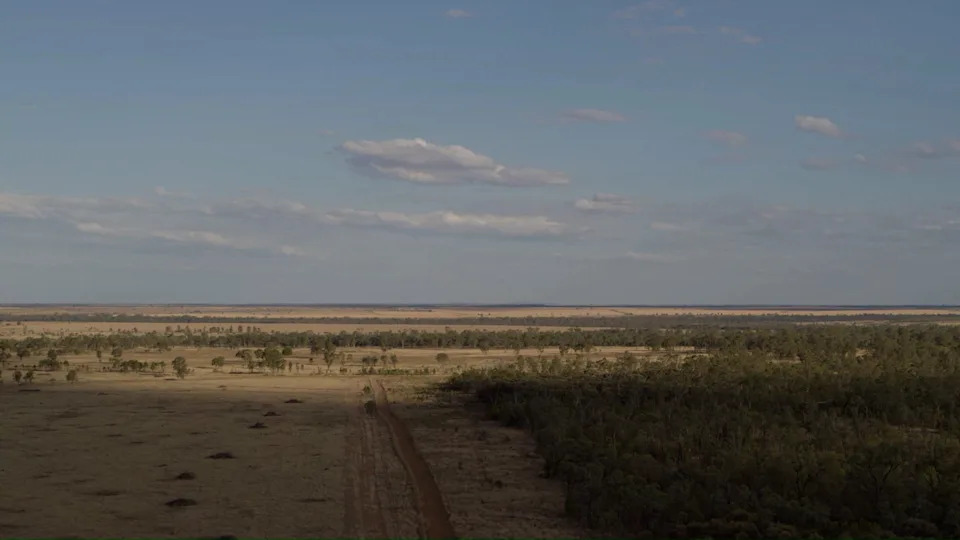
The Avocet Nature Refuge retains important patches of woodland. Source: Bush Heritage Australia
Love Australia’s weird and wonderful environment? 🐊🦘😳 Get our new newsletter showcasing the week’s best stories.
