
Australia has been warned that the country is entering a new and far more serious strategic era in the AUKUS plan as the US looks to embed combat-ready infrastructure on Australian soil.
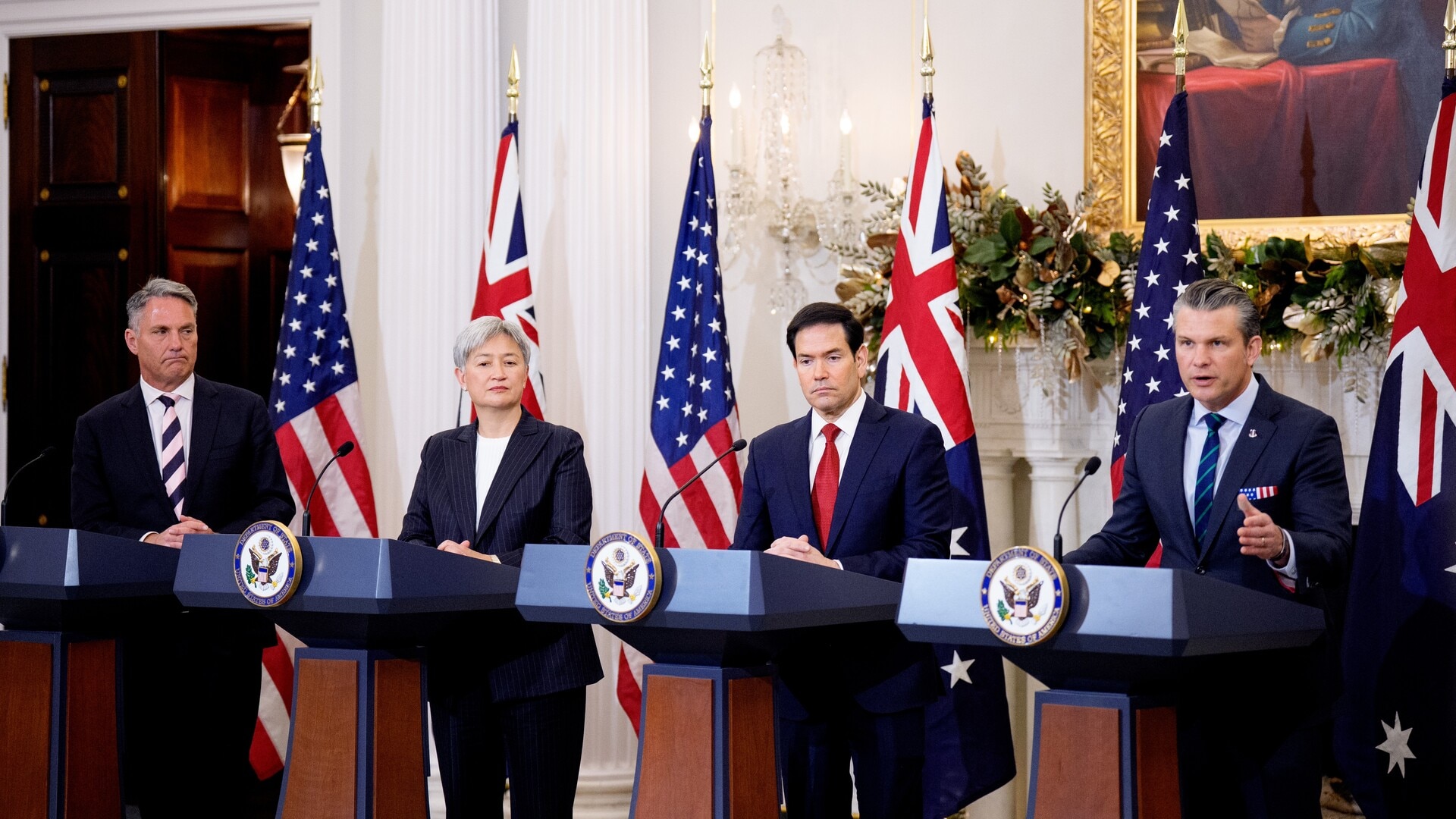
Defence Minister Richard Marles met his counterparts in Washington this week about AUKUS, and said all sides were “focused on delivery” now formal reviews of the plan had concluded.
Former Home Affairs Secretary Mike Pezzullo told Sky News Australia on Friday that for American officials, Australia’s growing strategic value has less to do with the size of its defence force and far more to do with geography.
“What matters to them is access to geography,” he said, adding that Australia is offering something now that goes well beyond traditional intelligence sites.
He described the shift as profound.
“It’s not defence spending; it’s access to territory. And that is a revolution in Australian strategic policy.”
Mr Pezzullo argued that Australia is now hosting, or preparing to host, infrastructure that moves beyond surveillance and communications – and moving directly into supporting US combat operations.
That move is “more like what we did in 1942 to support General MacArthur,” he said referencing when Australia handed over operational control of Australian forces, transforming Australia into a vital American logistics hub.
That includes airfields, ports, bunkers, warehouses, refuelling hubs and the future home of American nuclear submarines.
“That typically has not been at the centre of Australian policy,” he said.
“In fact, it’s been contrary to Australian policy… until the Abbott government signed the Forced Posture Treaty in 2014.”
The new arrangement, he said, represents a fundamental re-balancing between the allies.
Discussing the state of the alliance, Mr Pezzullo said Australia remained in Washington’s good books – despite the Trump administration last week pressuring allies to lift spending and take on more responsibility.
Mr Pezzullo argued the relationship with the US is stable and being handled effectively, but the costs and risks tied to AUKUS have not been explained clearly to the public.
“I think the alliance has been managed quite well,” he said.
“The question that we’ll come to in a moment is at what cost? In other words, what investments are we putting on the table and what risks and liabilities do they bring with them?”
His comments come as Mr Marles insists AUKUS is on schedule, despite delays across US and UK nuclear-submarine programs.
Australia is opening its territory in a way that gives the United States greater operational reach into the Indo-Pacific, while Washington applies pressure on Europe and NATO partners to increase their own spending.
The Trump administration continues to argue that the US should not shoulder the burden of maintaining global stability unless others lift their contributions.
Mr Pezzullo said that language is now embedded in America’s national security thinking.
He pointed to the administration’s newly released national security strategy, which includes lines rarely seen in an official document.
“Europe has been overwhelmed by immigrants and Europe is at risk of civilisation erasure,” he said, paraphrasing the document.
“There’s a phrase in there… about not holding up the world order like Atlas holding up the Earth.”
Mr Pezzullo also noted the contradiction at the heart of President Trump’s foreign policy – a leader who champions “America First” yet invests significant energy in global diplomacy.
“He has been an interventionist president… by pursuing these peace initiatives,” Mr Pezzullo said, pointing to efforts in Gaza and pressure on Ukraine’s leadership.
But he said the president avoids major deployments of US forces.
“He’s actually not committed US combat forces,” he said, with only limited exceptions.
For Australian policymakers, the challenge now is to fully explain what AUKUS actually means.
Besides the long-term plan for nuclear-powered submarines, officials in all three nations admit the timelines rely on major improvements in US and UK shipbuilding.
The AUKUS review led by US Under Secretary of Defense Elbridge Colby highlighted those challenges, though the recommendations remain confidential.
Mr Pezzullo cautioned that while the alliance is strong, Australians must understand what the new arrangements entail.
“We need to get in front of the Australian people what this trade-off actually entails,” he said.
Australia has already committed US$3 billion to help expand American submarine construction.
Mr Marles has rejected claims the timeline is slipping, saying the US shipyard he visited this week shows “an increase in production rates”.
But Mr Pezzullo says the deeper strategic shift – the embedding of US forces and capability on Australian soil – is the real transformation.