
Doctors’ strikes could cause the NHS to collapse over Christmas as a “tidal wave of flu tears through our hospitals”, Wes Streeting has warned.
The health service said it was facing a “worst-case scenario” this month due to an “unprecedented wave of superflu” that threatens to overwhelm hospitals at the same time as the strike.
The number of people admitted to hospital with flu rose by 55 per cent last week to an average of 2,660 each day, the highest on record for this time of year.
Writing for The Times, Streeting, the health secretary, said the number of people in hospital could “triple by the peak of the pressures” and that it will be the most challenging winter for the NHS since the pandemic.
Flu cases are climbing sharply before a planned five-day strike by resident doctors, formerly known as junior doctors, which will start on Wednesday.
Some hospitals have reinstated Covid-era mask mandates for staff, patients and visitors to help control the spread of flu.
• Should I be wearing a mask if I have the flu? What the science says
Streeting said: “The whole NHS team is working around the clock to keep the show on the road. But it’s an incredibly precarious situation, and Christmas strikes could be the Jenga piece that collapses the tower.”
The British Medical Association is asking its members to vote on whether the five-day strike should be called off, after receiving a new offer from Streeting.
The deal would introduce reforms to end “bottlenecks” in training, including emergency legislation to give UK graduates priority for NHS jobs over foreign medics. It would also create 4,000 training posts and reimburse doctors for exam fees.
The BMA is putting the new terms to its members in an online vote that will close on Monday, less than 48 hours before the strike is due to start.
Dr Shivam Sharma, deputy chair of the BMA resident doctors committee, said he “found it difficult to see members accepting this offer” because it did not increase their pay. He told Times Radio: “Let us remember that we have a dispute on both pay and jobs. And this offer does absolutely nothing on pay.”
The BMA wants a 26 per cent pay rise, on top of an extra 28.9 per cent they have received over the past two years, the highest pay rise in the public sector.
Sir Keir Starmer accused the BMA of behaving irresponsibly and urged doctors to call off the strike, saying that “in their heart of hearts, they probably don’t want to do this”.
Speaking on a visit to Norfolk on Thursday, the prime minister said: “I’m very concerned with the action of the BMA. They are being irresponsible in my view. We have already put in place quite a significant pay rise. I’d just say to the BMA, do the responsible thing, accept the offer that’s on the table and we can all move forward.”
Starmer said the government had no plans to change guidance on masks, but advised people to use “common sense” and to wash hands and be careful around relatives.
Doctors said flu hospitalisations have continued to climb sharply since Sunday, the last day for which official data is available, when 2,781 patients were in hospital including 108 in critical care.
Internal projections suggest between 5,000 and 8,000 flu patients could be in hospital over the next week, potentially surpassing the highest figure on record of 5,400. At this point last year the number stood at 1,861 patients, while in 2023 it was 402.
The number of people in hospital with the vomiting bug norovirus has risen by 35 per cent in a week to 354.
Professor Meghana Pandit, NHS national medical director, said: “With record demand for A&E and ambulances and an impending resident doctors’ strike, this unprecedented wave of superflu is leaving the NHS facing a worst-case scenario for this time of year, with staff being pushed to the limit to keep providing the best possible care for patients.
“The number of patients in hospital with flu is extremely high for this time of year. Even worse, it continues to rise and the peak is not in sight yet, so the NHS faces an extremely challenging few weeks ahead.”
The worst hit NHS Trust is University Hospitals Birmingham, where 269 patients are in wards with flu. It has declared a “critical incident due to the extreme pressures” and has introduced mask-wearing in all clinical departments.
• Should I get an NHS flu jab because of the H3N2 strain?
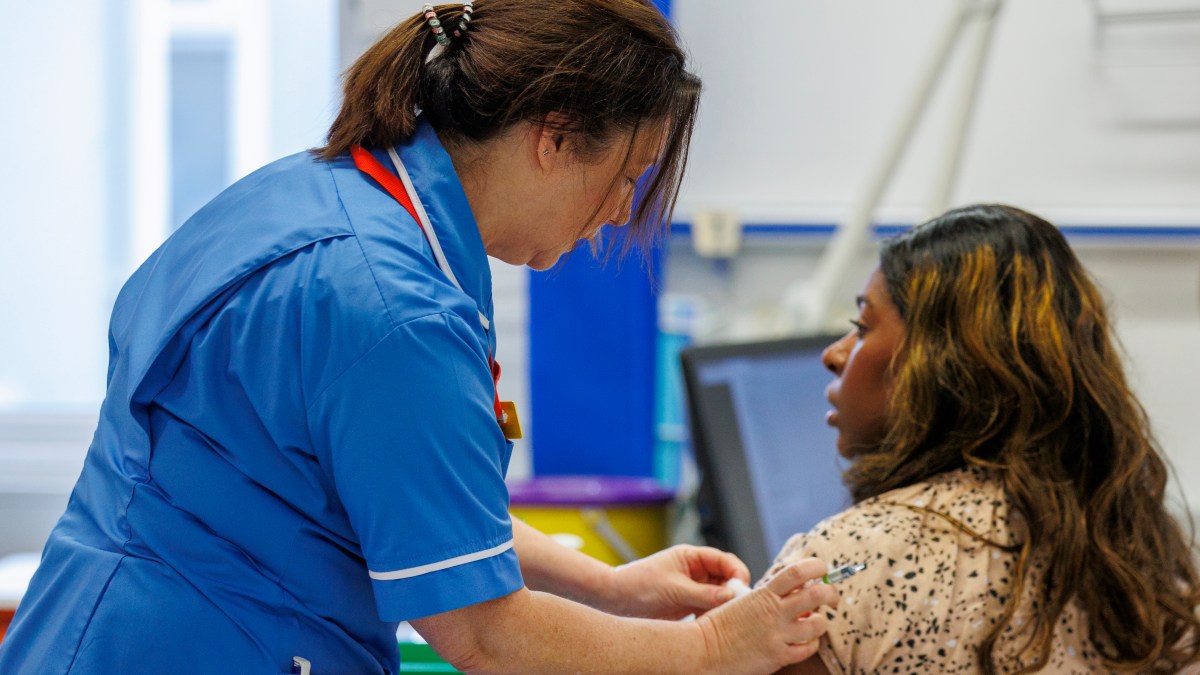
The public are being urged to get vaccinated. Health officials say that “time is running out” to be protected for Christmas Day because the jab takes up to two weeks to work.
All over-65s, children and adults with health conditions are eligible for a free NHS vaccine, while anyone else can buy one for about £20 from high street pharmacies.
The UK Health Security Agency said that there was “less natural immunity in the community” to the dominant strain of flu that is circulating this winter, a mutated version of the H3N2 strain dubbed “subclade K”. The strain “typically affects older adults more severely, leading to more hospitalisations and deaths”. However, vaccines still provide good protection.
• You must wear a mask in public if you have a cold, NHS chief says
Separate NHS data revealed that the overall hospital waiting list rose in October to 7.4 million. Labour is attempting to halve the list to 3.4 million before the next election, but it has decreased by only 220,000 in total since the party took power.
The stats also showed that A&E departments are experiencing “worryingly high” levels of corridor care and demand heading into winter.
In November, some 50,468 people waited 12 hours or more in emergency departments, often on trolleys in corridors. This is the highest on record for that time of year. Some 2.35 million people went to A&E in November, the highest on record for that month.
 Wes Streeting: Christmas strikes could be the Jenga piece that collapses the tower
This winter, our NHS faces a challenge unlike any it has seen since the pandemic.
Last week an average of 2,660 hospital beds each day were occupied by flu patients, up more than 42 per cent from the same week last year.
The trend is set to continue and the numbers could triple by the peak of the pressures — and the NHS doesn’t know when the peak will hit.
The consequences are that our neighbours, friends and loved ones are not getting the timely care they need. The scenes in our hospitals are inexcusable.
I have been working with the NHS team to get through this incredibly difficult period. We have vaccinated 17 million patients, over 170,000 more than this time last year, with an extra 60,000 NHS staff also getting their jab.
Patients are finding it much easier to see a GP, thanks to our modernisation of online consultations and recruitment of 2,500 more GPs. As a result, we should make serious inroads into the four million patients who go to A&E each year because they can’t see their GP.
The whole NHS team is working around the clock to keep the show on the road. But it’s an incredibly precarious situation, and Christmas strikes could be the Jenga piece that collapses the tower.
That’s why I am appealing directly to resident doctors to accept the government’s offer.
I haven’t just listened to resident doctors’ complaints about the competition for jobs. I agree with them.
It used to be that resident doctors competed amongst themselves for specialty training places — the next rung on the ladder in a medic’s career. Thanks to obscure immigration and visa changes introduced by the Conservatives post-Brexit, they now compete with the world’s doctors.
In 2019, there were around 12,000 applicants for 9,000 specialty training places. This year, that has soared to over 30,000 applicants for 10,000 places.
Taxpayers shell out £4 billion a year to train doctors. It is in all of our interests to protect our investments and stop them going offshore.
If our offer is accepted, we will introduce emergency legislation to prioritise UK medical graduates for foundation and specialty training places. International talent will always have a home in our NHS. But this will return us to the fair terms doctors competed on before Brexit.
Along with an extra 4,000 specialty places, including 1,000 this year, the changes will be real and immediate for this year’s applicants. Instead of four doctors competing for every training post, it will now be fewer than two doctors for every place.
On pay, I have said all along that we cannot go further on pay this year. Resident doctors have had a 28.9 per cent pay rise. The country can’t afford more, nor would it be fair to NHS staff who will never in their careers earn as much as the lowest-paid doctor.
I have recognised that there are specific mandatory costs faced by resident doctors. Our offer reimburses resident doctors for Royal College membership, portfolio and exam fees, with exam fees backdated to April this year. That is money going direct into the pockets of resident doctors.
I made one more offer to the BMA’s leadership this week. I offered them the chance to call off the Christmas strikes, put their offer to their members, and rearrange the strikes if the offer was rejected.
It would have given the NHS certainty this week, when it is firefighting the flu epidemic. It would have prevented staff seeing their Christmas leave cancelled and patients being told their operation won’t go ahead. I cannot understand why the BMA’s leadership turned this down.
So I am appealing over their heads and directly to resident doctors. In this season of goodwill, I’m asking them to call off the Christmas strikes and choose a fresh start. Bring an end to the dispute and begin a new era of partnership. Vote for more jobs, fairer competition for places, and more money in your pockets. Give the NHS the only gift it’s asking for this Christmas.
Wes Streeting, secretary of state for health and social care