
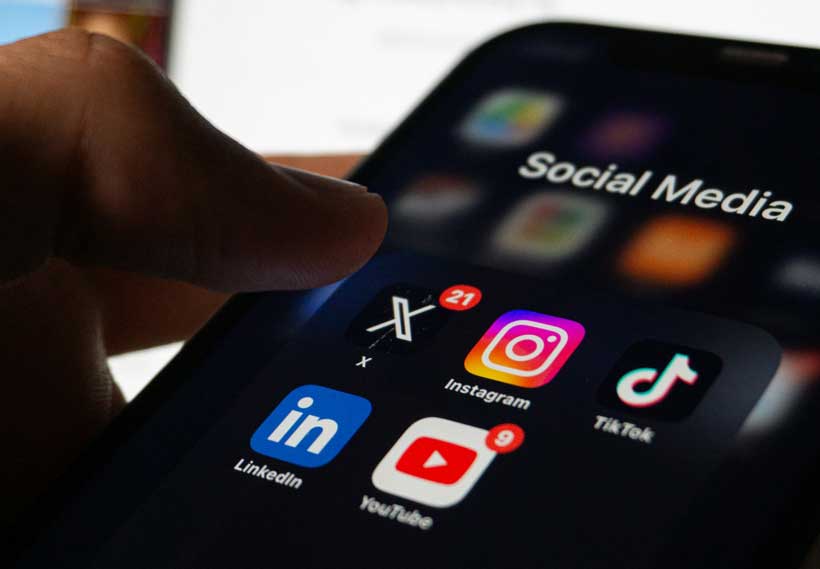
Australia’s new law delaying social‑media account access for under‑16s reflects growing concerns about youth mental health and digital well-being. The Albanese Government has framed the policy as protecting children “at a critical stage of their development” from platform design features and content that can harm their health and resilience. This follows decades of research linking excessive screen time to anxiety, depression, low self‑esteem and addictive behaviours in adolescents. By raising the minimum age and imposing strict age‑verification on major platforms, Australia is prioritising long‑term social sustainability over the unregulated online environment once championed by tech firms.
Education and public health authorities note that giving younger teens “some friction” before they join social media can reduce exposure to cyberbullying, unhealthy body‑image messaging and other harms. However, critics warn the ban may simply drive online behaviour underground or hamper young people’s access to news and educational content. The government insists the measure is a delay, not a prohibition; under‑16s may still view content passively, but without logged‑in accounts or algorithms curating content for them. In sum, domestically the policy is sold as a child‑protection and public education strategy – one many Australians support – even as its real‑world effectiveness remains to be seen.
Domestic Aims: Protecting Youth Well-Being and Education
Australia justifies the ban as addressing a public health and education challenge. Health experts cite correlations between social media use and rising rates of teen depression, anxiety, attention disorders and body‑image issues. Inman Grant, Australia’s eSafety Commissioner, emphasizes that social media’s “rewarding algorithms” have no natural frictions, which the law seeks to introduce for kids. The official rationale stresses education and wellbeing: children under 16 can “start a new sport, read that book… or play video games” instead, reflecting a hope they will engage more with learning and real‑world activities. Prime Minister Anthony Albanese declared it a “proud day” for families, saying the change “will make an enormous difference” in protecting young Australians. He argued Australia can legislate proactively to keep children safe and uphold rights: “It is one of the biggest social and cultural changes our nation has faced,” he said, pointing to the government’s confidence in balancing child safety with legal safeguards.
Yet the policy also reignites debates about youth education and rights. The United Nations Convention on the Rights of the Child (UNCRC), which Australia ratified, grants children the right to access information (including via the Internet) while also obliging states to protect them from harm. Critics note this dual mandate: Article 17 of the UNCRC says children should get information from the Internet but that “adults should make sure the information they are getting is not harmful”. Australia’s ban can be seen as prioritizing the protective side of that mandate. In education policy terms, supporters argue the reform encourages healthier screen habits and digital literacy from a young age. For example, UNICEF and WHO recommend stronger age‑appropriate safeguards online, including design changes and user controls, to complement bans. Indeed, one Australian psychologist has likened social media to other regulated risk factors for children (like tobacco) and urges parents and schools to support kids through the transition. Opponents counter that a blanket age ban risks punishing responsible families and could undermine teenagers’ online learning and civic participation.
Still, evidence on effectiveness is mixed. Surveys show many teens intend to bypass the rules, and parents worry about enforcement costs and privacy (for age checks). A Brookings analysis notes there is “little evidence” that bans alone solve online safety, and stresses parallel investments in education, parental guidance and platform design reforms. Many experts urge a balanced policy package: digital literacy curricula in schools, counselling resources for young people, and collaboration with tech companies to build in-of-age-of-age solutions. The Australian Financial Review warns that without such measures, the ban could simply be a “grand social experiment” with uncertain outcomes. In practice, the government has also increased funding for school well‑being programs and signposted digital‑safety education as part of the initiative, attempting to tie the reform into broader child development and lifelong learning goals.
Digital Governance as Normative Statecraft and Soft Power
Framed in international terms, Australia’s ban is an act of normative statecraft: it signals a model of digital governance based on collective values rather than laissez‑faire markets. By being “first in the world” to enact this policy, Canberra is projecting a form of soft power – conveying that democratic governments can set proactive standards for future generations. This idea echoes Joseph Nye’s concept of soft power, where policy leadership and values projection can enhance a country’s influence. Strategically, the Australian government clearly seeks to position itself as a thought leader at the upcoming global forums on Internet safety. As Reuters notes, officials hope to “cure online harms that have outpaced traditional safeguards”, implicitly contrasting Australia’s precautionary approach with the Silicon Valley ethos of minimal intervention.
Nor is Australia alone in courting such reputational benefits. The European Union’s recent Digital Services Act and media regulators likewise emphasize child protection online. For example, an EU lawmaker told Reuters that Europe “has a chance to learn from Australia” on this issue. UNESCO and other multilateral bodies reinforce this normative framing: UNESCO’s Guidelines for the Governance of Digital Platforms call for consistent global approaches that “respect, protect and fulfil human rights” online. By stressing its adherence to human‑rights principles (free expression, due process, privacy) even as it tightens restrictions, Australia tries to show the move is not an authoritarian violation but a values‑driven choice. In foreign policy language, Canberra is “selling” a digital‑child‑safety norm – a form of transnational advocacy akin to campaigns on climate or education, but focused on the well-being of the next generation.
However, such signalling also invites scrutiny. Allies and partners will assess whether Australia’s approach is proportional, transparent and consistent. As one global media analysis observed, while some laud Australia’s courage, others see the reform as a “cautionary tale”. Democracies that cherish both internet openness and social stability – for example, Nordic welfare states or Canada – will watch whether the ban inadvertently fuels private VPN use or data privacy risks from age checks. Critics like Amnesty International have already warned that blanket bans could “leave children at even greater risk” by pushing them to unmonitored channels. Pragmatic partners (especially in the Indo‑Pacific) will want concrete evidence: Are kids safer? Does the law respect due process? Are exceptions needed for educational access? Australia must manage these diplomatic conversations carefully.
In practice, Canberra has thus emphasised outreach. The government has invited independent evaluation of the ban’s impact and promised to share metrics (e.g. mental‑health outcomes, account deactivations, enforcement costs). Officials are engaging like‑minded countries in bilateral talks and proposing agenda items at OECD Digital Ministerials on youth safety. For instance, Australia helped co‑chair an OECD workstream on children’s online safety in 2024, setting the stage to present this case study. The idea is to encourage harmonised regulations – perhaps through the Council of Europe, G7 or an Asia‑Pacific Digital Framework – so that restrictions become interoperable rather than isolating. If other governments adopt similar age limits or “time‑caps”, Australian tech firms will not be uniquely burdened. In short, Canberra’s foreign‑policy posture is: we did this at home; let’s make it part of a cooperative, rights-based global agenda.
Comparative Contexts and Global Trends
Australia’s approach is part of a broader international trend of national digital regulation. No other country has fully implemented an under‑16 ban yet, but Denmark’s government announced plans to restrict social media for under‑15s (with parental opt‑ins at age 13). In the UK, policymakers have debated raising the online age of consent or introducing time limits for minors. U.S. states like Florida and Louisiana have passed (and are litigating) bans similar to Australia’s, and major Congressional proposals (e.g. the Kids Online Safety Act in 2024) reflect the same concerns. Even developing countries are eyeing restrictive measures: Malaysia’s officials have signalled study of Australia’s model, while some Latin American legislatures are discussing analogous safeguards.
Nevertheless, there are contrasting approaches. France and Germany recently raised the parental‑consent age to 16 (in line with EU law on data protection). The Netherlands and South Korea have targeted in‑school smartphone use. China has taken heavy‑handed steps (curbing gaming and social media for teens) in the name of social harmony, but its overall internet governance is state‑centric and not a democracy. Canada focuses on content moderation and support services rather than outright bans. These differences reflect each country’s history: Australia’s own regulatory tradition – from anti-piracy copyright laws to the eSafety Commission – leans toward active intervention in the digital sphere. By comparison, the United States historically preferred self‑regulation (though that is shifting), and tech‑friendly economies like Singapore or Ireland promote innovation with lighter touch.
Where Australia sits in this spectrum is significant. If seen as outlier or trailblazer, it will shape global norms. A sympathetic view is that it joins the ranks of “liberal democracies that govern with purpose” – as one British commentator put it, Australia is taking a “brave stand” that others might emulate A skeptical view is that it may provoke trade or legal friction (e.g. with the U.S. on data flows, or within WTO debates on digital trade) by diverging from more open‑internet models. So far, early signals from allies are cautiously positive: New Zealand’s government has hinted at follow‑up, and even some tech companies have accepted the change as inescapable (Meta’s leaders said they will comply, though reluctantly). Ensuring the policy is implemented predictably – with clear guidelines and judicial review avenues – will bolster foreign confidence that this is a rule‑based reform, not a protectionist or ideological blockade.
Education, Well-Being and Social Sustainability
The ban also intersects with educational and social sustainability goals. By encouraging youth to postpone full social‑media engagement, policymakers hope schools and families can use that time for learning and healthy development. Indeed, sustainable development frameworks (such as the UN’s SDGs) emphasize the right to quality education (SDG 4) and the importance of mental health and well‑being (SDG 3). One Laptop Per Child initiatives – as shown above – illustrate how technology, when guided by pedagogy and safeguards, can empower young learners worldwide. The Australian law’s architects argue that delaying social media access is akin to setting age ratings on alcohol or gambling: it protects young minds while allowing adult freedoms to persist. In philosophical terms, they invoke the precautionary principle and intergenerational justice: children have a right to a safe environment (online and offline) where they can mature without being targeted by exploitative algorithms.
At the same time, the policy raises questions for educators and communities. Will teenagers miss out on digital skills or peer networks? Some educators fear isolation of “vulnerable teens” who rely on online forums for support. To address this, Australian schools are partnering with eSafety and NGOs to bolster digital citizenship education, anti-bullying programs and media literacy classes. In theory, if the ban reduces cyberbullying incidents or alleviates sleep and attention problems, it can contribute to a more resilient, “socially sustainable” youth cohort. Conversely, if kids simply switch to unregulated platforms or fake IDs, the net effect could be negative. The government has therefore tied the ban to broader well-being efforts: increased funding for youth counseling, research on screen time impacts, and consideration of “digital detox” programs.
In sum, from an educational and well-being perspective, Australia’s measure is designed as a long‑term investment in social capital. It acknowledges that digital tools are neither inherently good nor bad, but context matters: unmediated use by very young teens is viewed as harmful. If successful, the policy could become a case study in sustainable digital development – balancing innovation with ethical safeguards so that future generations can use technology healthily. Internationally, Australia plans to share its findings (both positive and negative) with UNESCO, UNICEF and WHO networks focused on children’s online health. This openness is key: it will allow other countries and educators to learn from Australia’s “grand experiment”, making it a truly cooperative rather than unilateral endeavour.
Conclusion
Australia’s world‑first under‑16 social media restrictions thus serve multiple purposes. Domestically, they reflect a commitment to children’s well-being and a precautionary approach to digital safety. Diplomatically, they act as a signal of values: that democracies need not wait for crises to legislate for vulnerable populations, and that preserving a “light-touch” internet is not the only liberal model. The policy has been likened to soft power: setting an example that others might follow, from the EU to Asia, in forging a new normative framework for platform regulation. Moving forward, Canberra will need to navigate international skepticism by showing data (e.g. on youth mental health trends and enforcement fairness) and by engaging in multilateral dialogues. If managed transparently and with respect for cross-border information flows, the ban could enhance Australia’s reputation as a principled innovator in digital governance. If mishandled, it risks being seen as protectionist or censorious.
In this complex interplay of education policy, rights‑based ethics and foreign relations, Australia’s law is a textbook case of 21st-century statecraft. It underscores how domestic digital policies now carry foreign-policy weight, influencing global debates on the Internet’s future. By foregrounding children’s futures, Australia is effectively arguing for a new social contract in the digital age – one that international partners will either help refine through cooperation or challenge as too restrictive. The outcome will tell us whether values like child protection and free expression can be balanced not just nationally but as part of a global digital order.