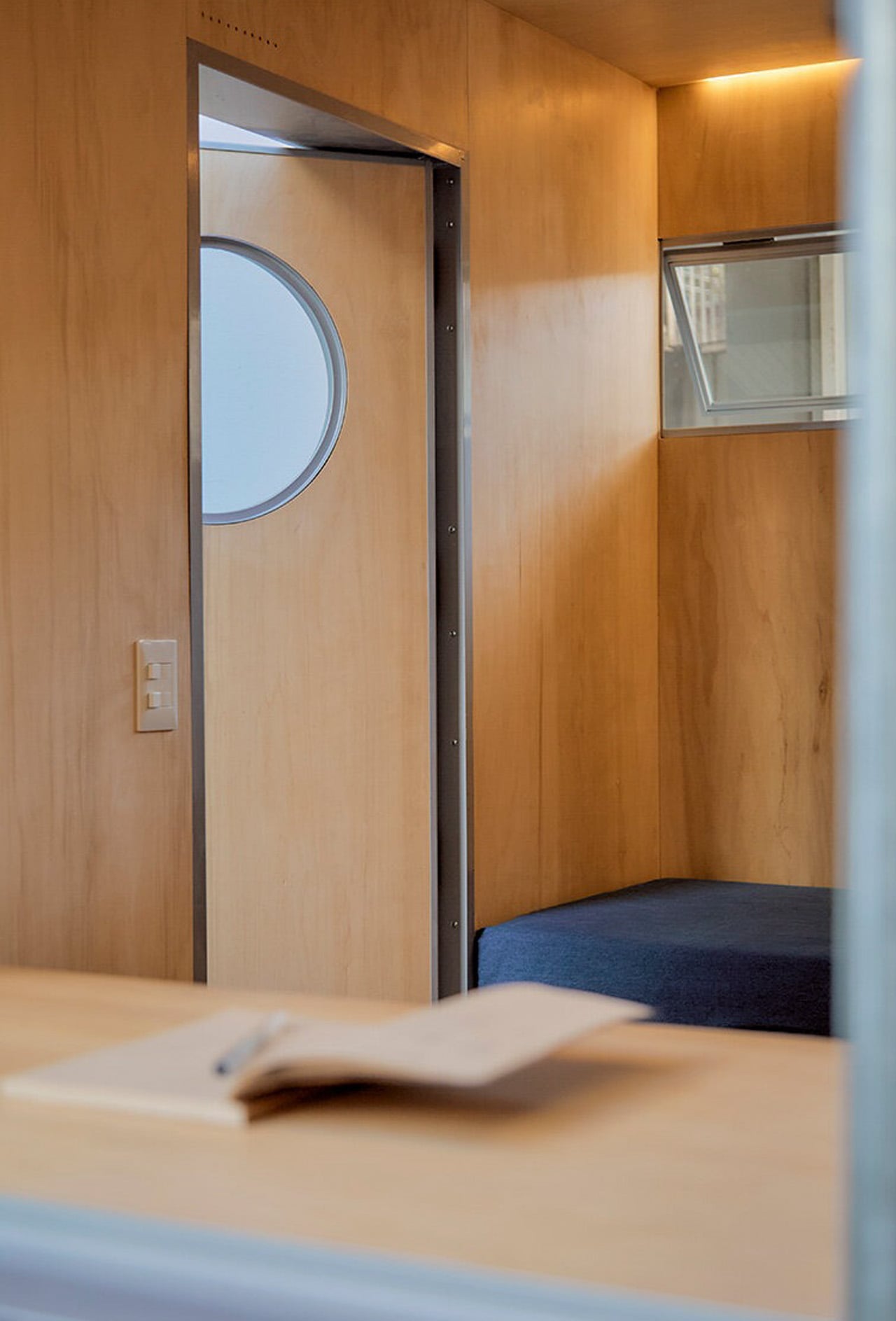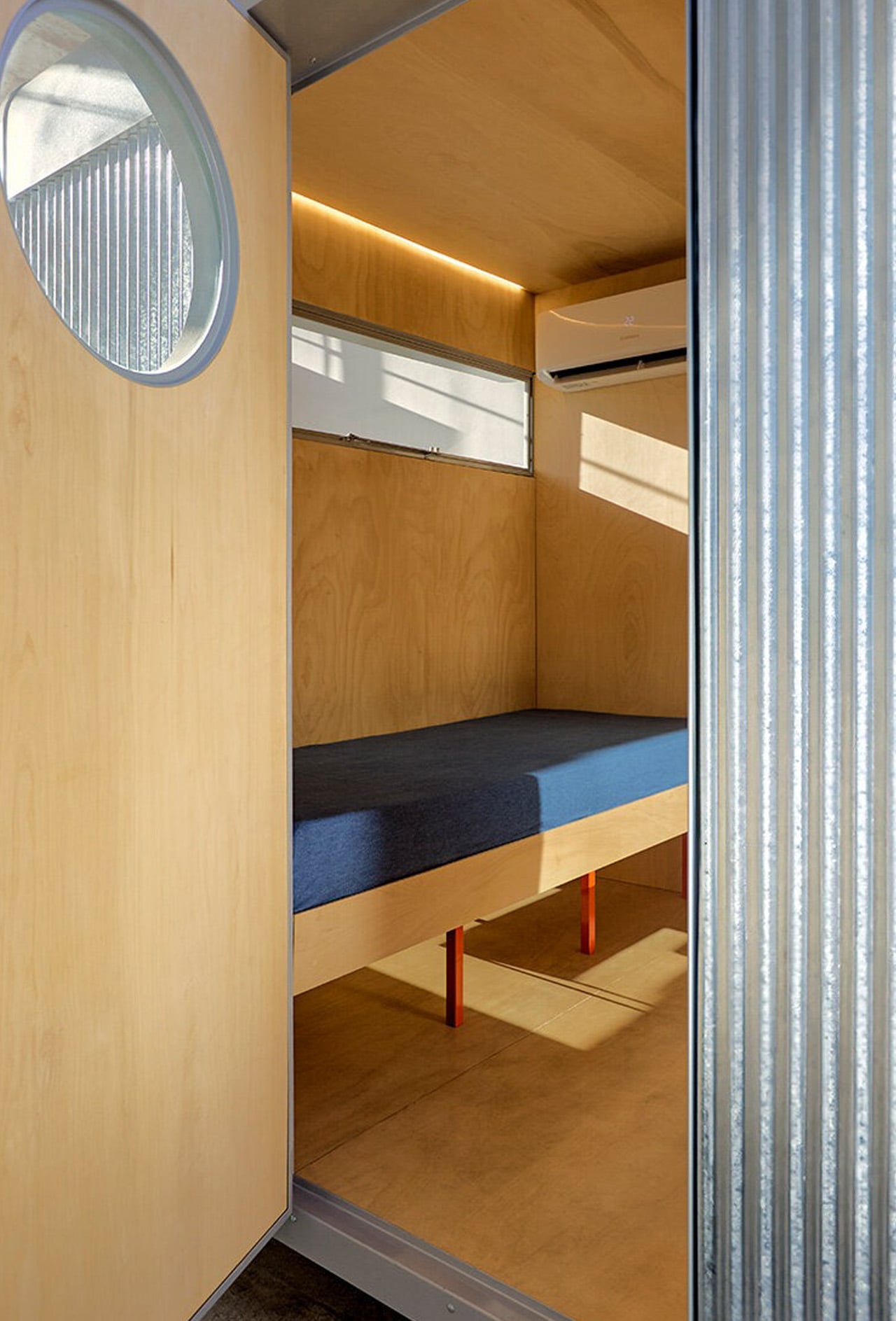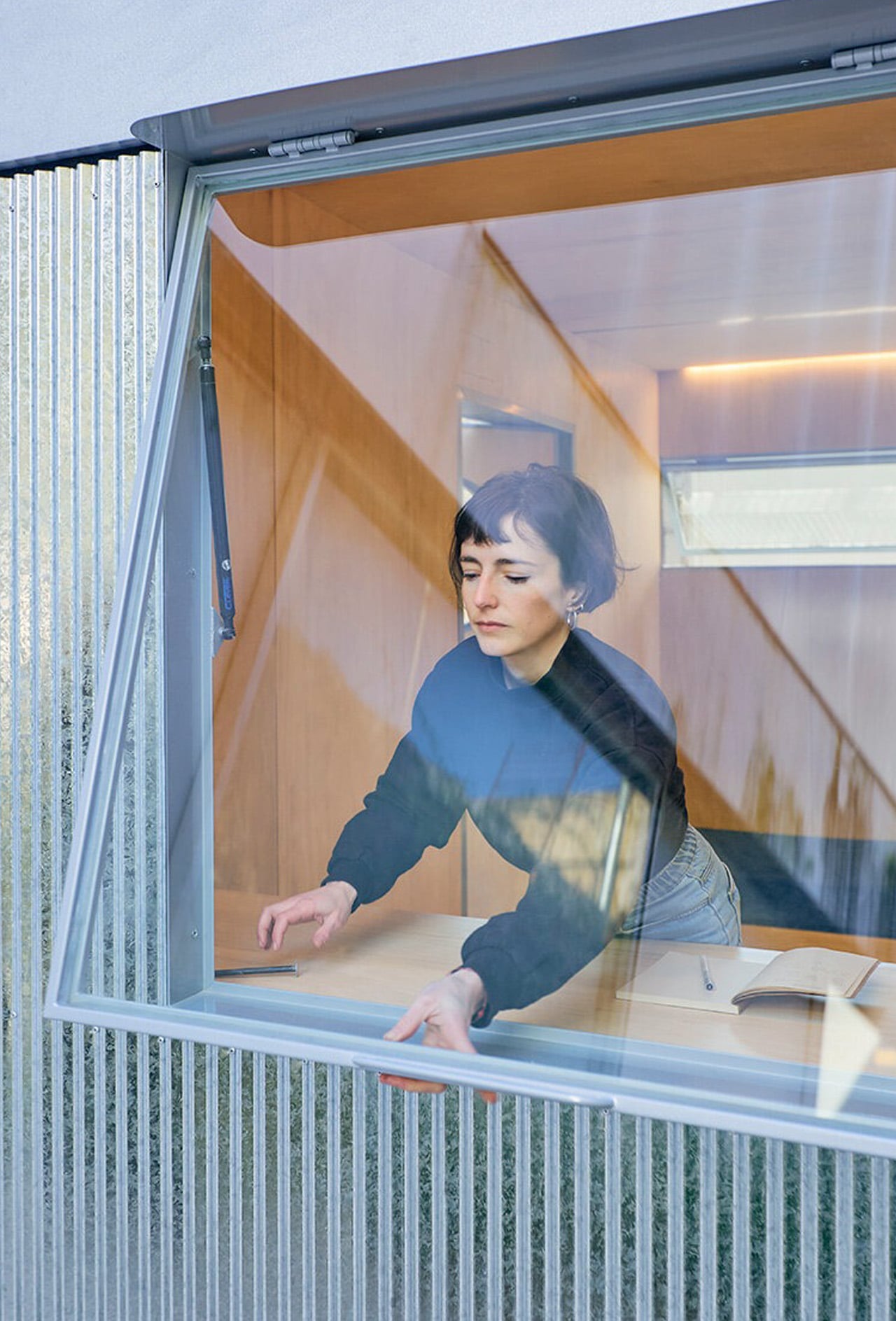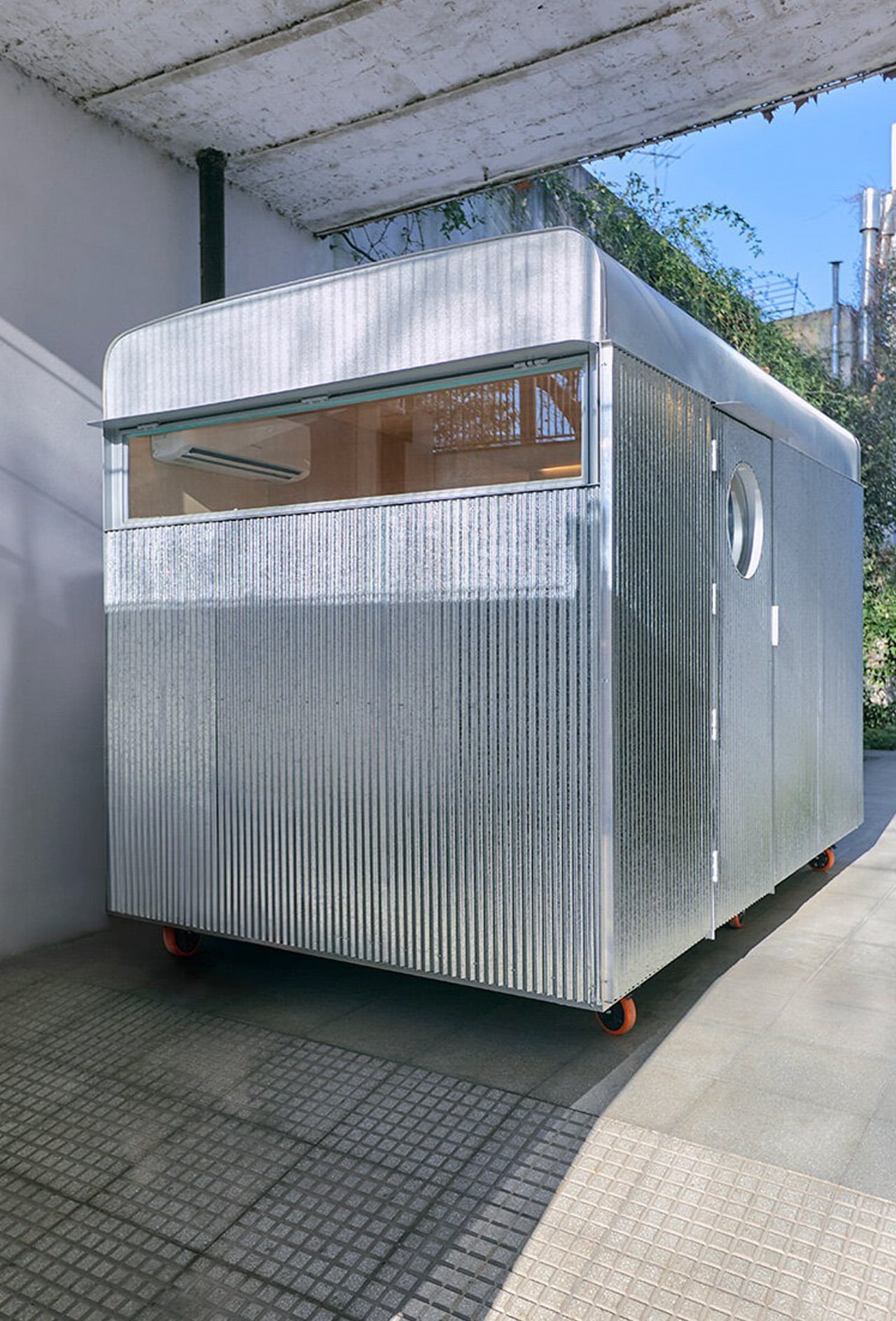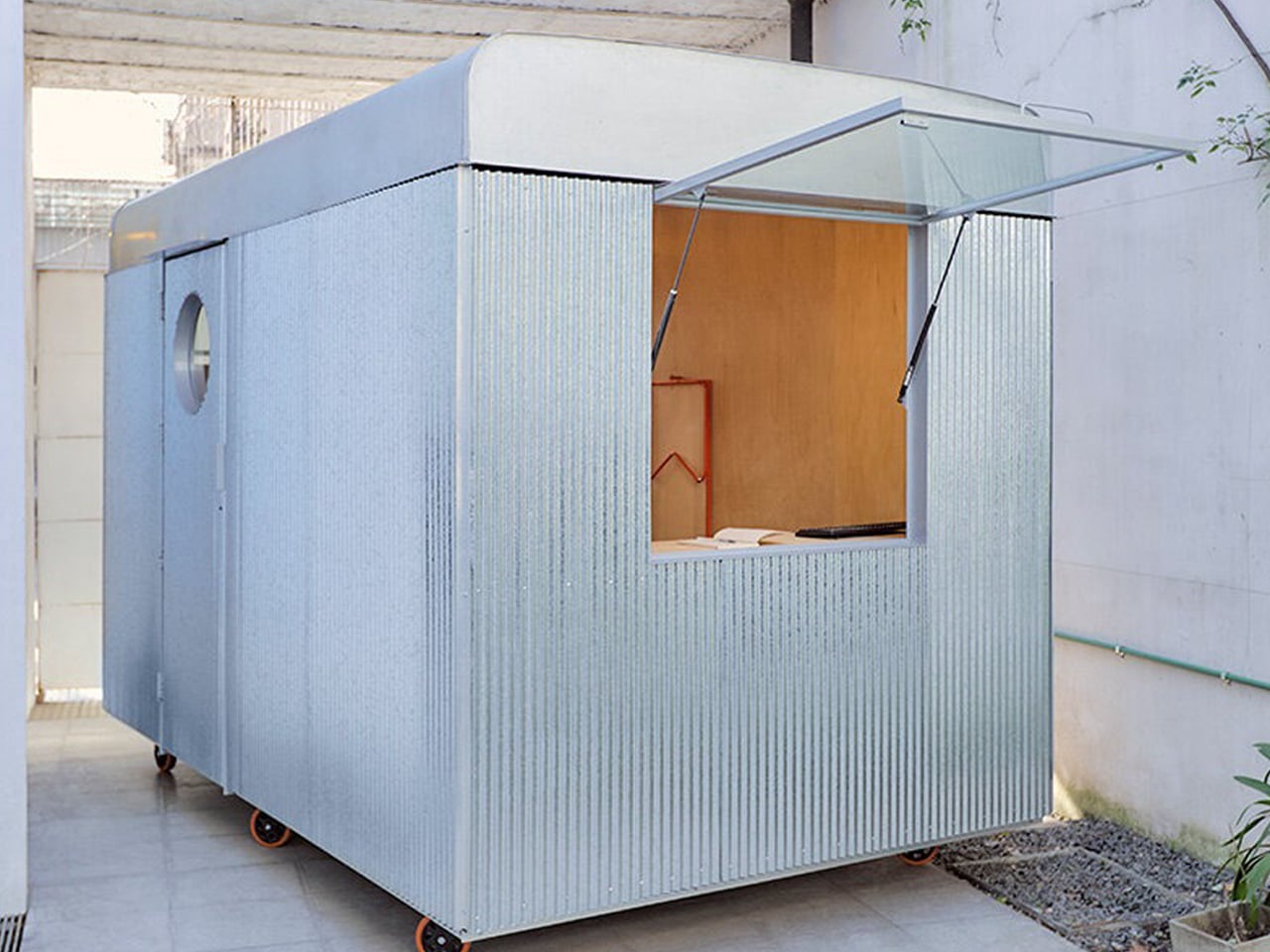
Parked in the courtyard of a private home in Buenos Aires, the Castillo Mobile Office challenges everything we expect from workplace architecture. Morsa Taller has distilled the essence of mobility into seven square meters, creating a structure that moves between sites with the ease of rolling luggage yet operates with the seriousness of a permanent studio.
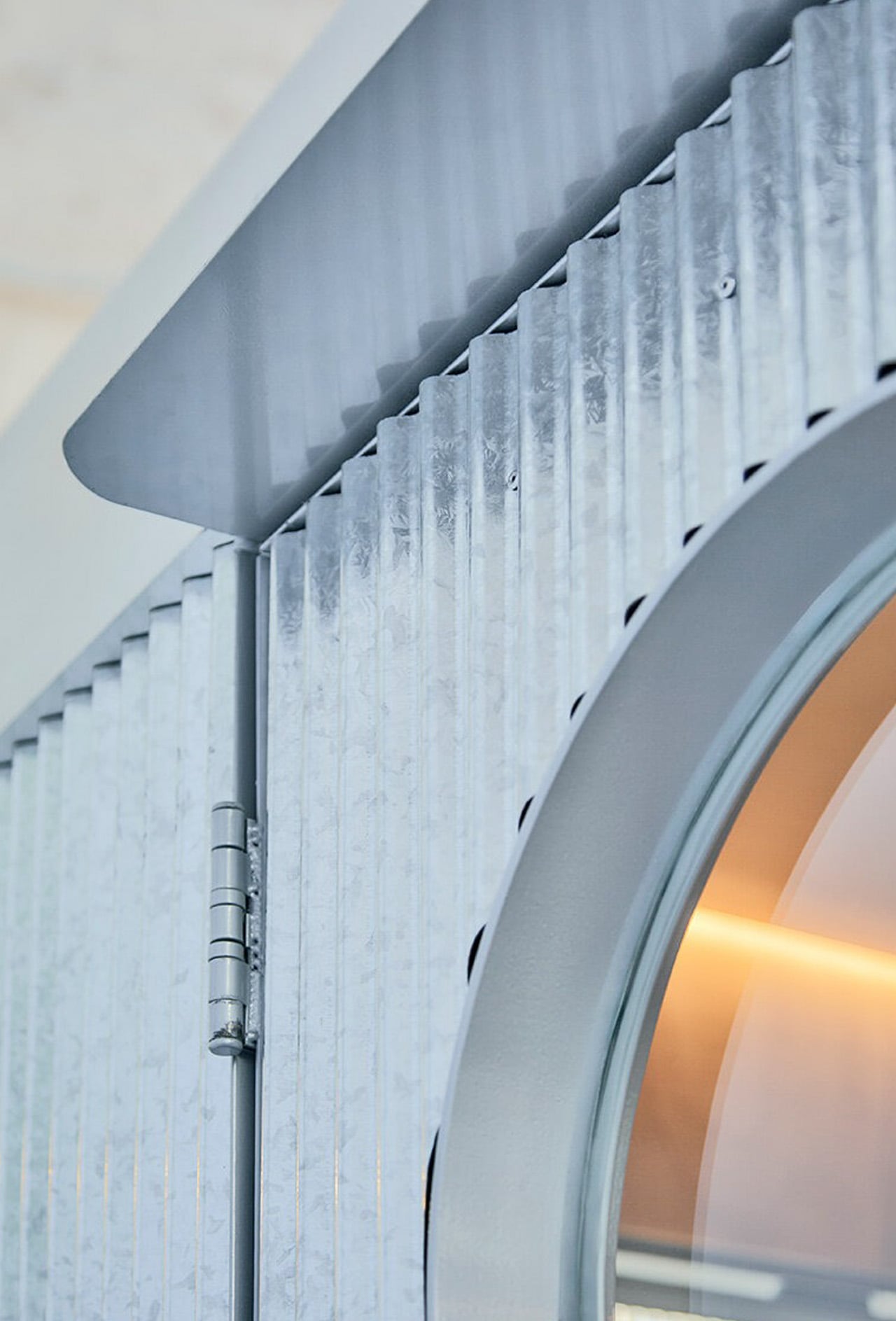
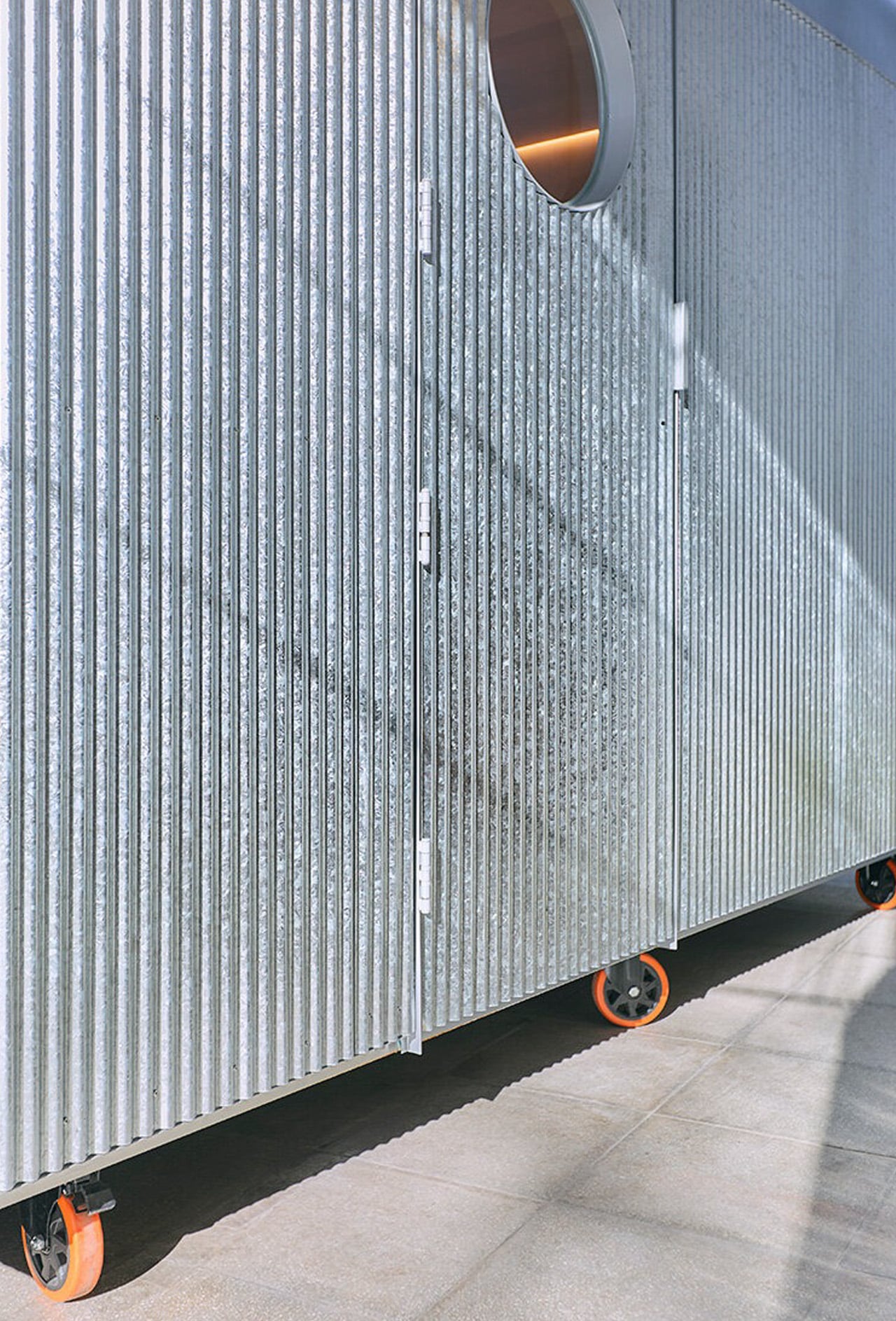
The design reads like architectural origami. Six prefabricated pieces arrive separately, then snap together within a single day using nothing more than a screwdriver and a riveter. Four detachable facade panels frame strategic openings for light and air. A curved roof caps the composition, channeling rainwater while nodding to the rounded profiles of Buenos Aires’ iconic buses. The wheeled base turns the entire volume into a vehicle of sorts, ready to relocate from backyard to rooftop, from residential plot to rural outpost.
Designer: Morsa Taller
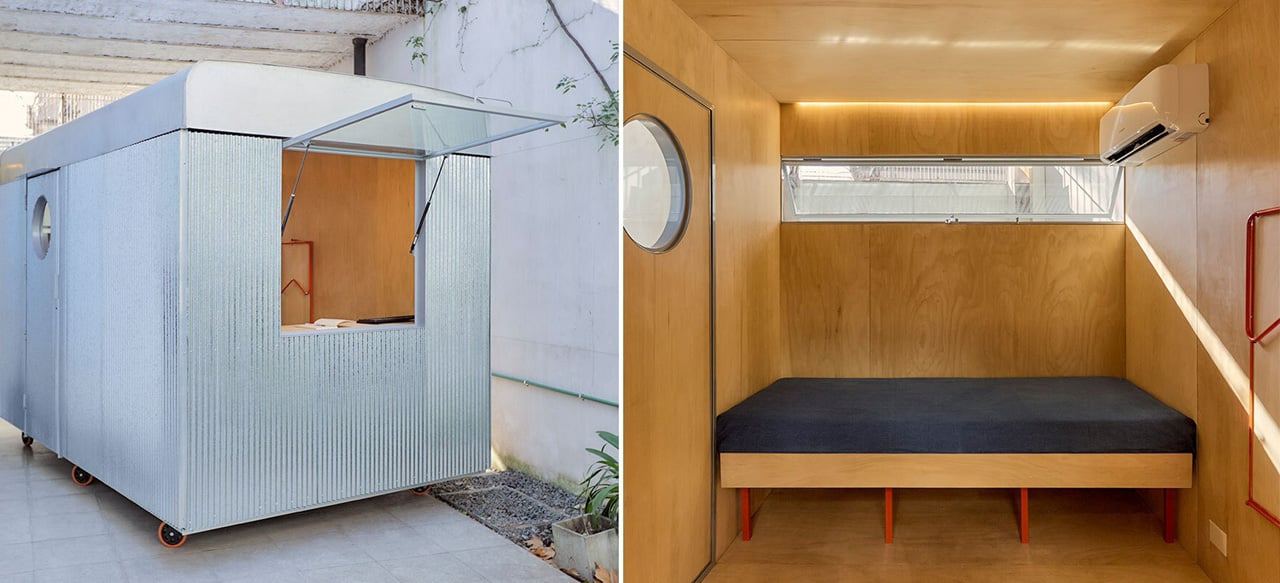
What makes Castillo remarkable is its refusal to compromise on craft despite its temporary nature. Every junction required its own insulation and mechanical connection, transforming the project into an exercise in layered logic. The team at Morsa Taller, working alongside fabricator Santiago Legnini, custom-built each interior element, from carpentry to storage systems to equipment mounts. The result feels less like a portable shed and more like an inhabitable machine, where form follows the internal demands of function rather than external architectural conventions.
The structure draws from Morsa Taller’s broader practice in material investigation and objectual construction, led by architect Alejandra Esteve, who describes herself as both designer and welder. This hands-on approach permeates the Castillo project, where metalworking expertise translates into precise modular connections that allow independence and integration to coexist.
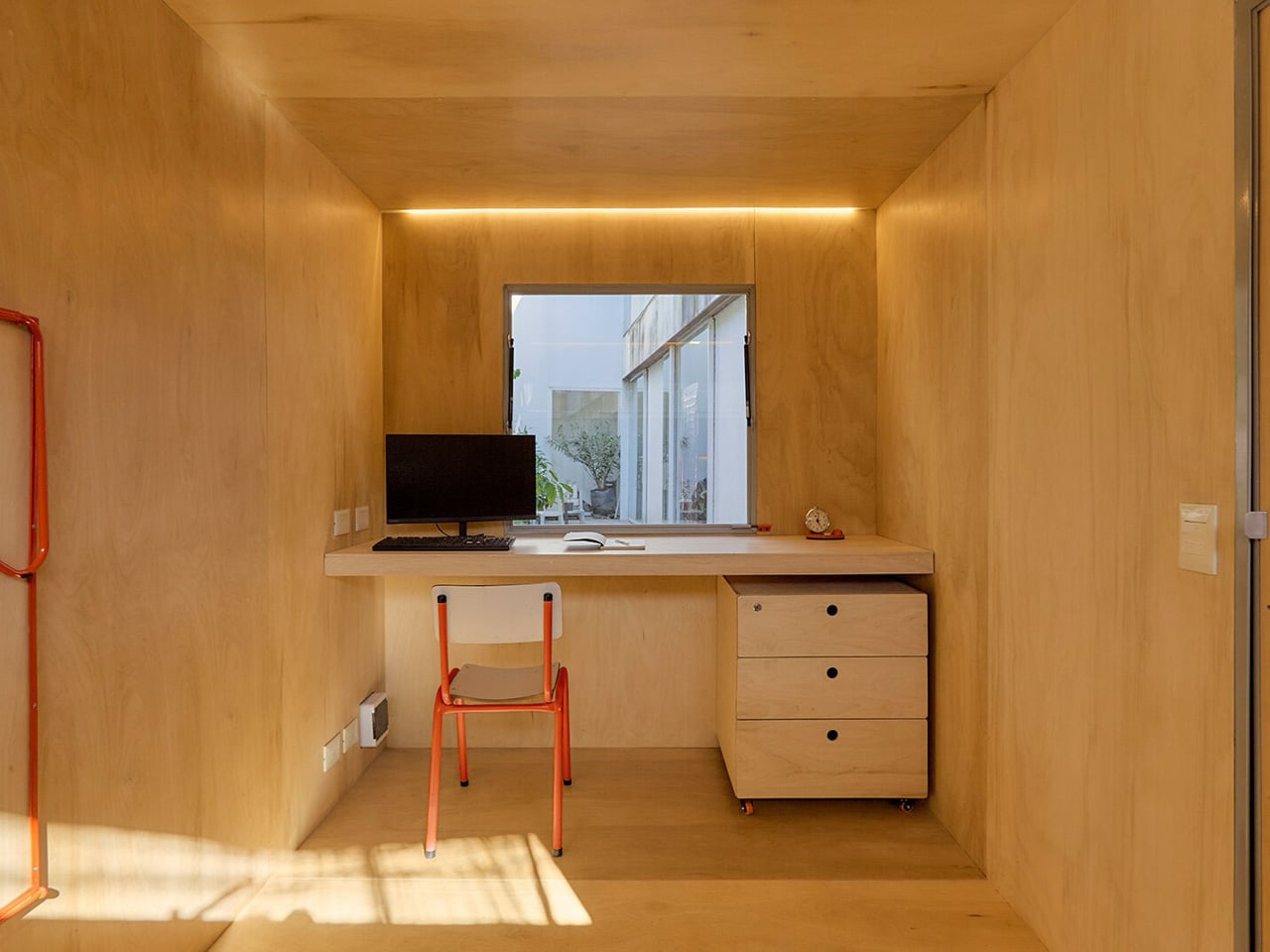
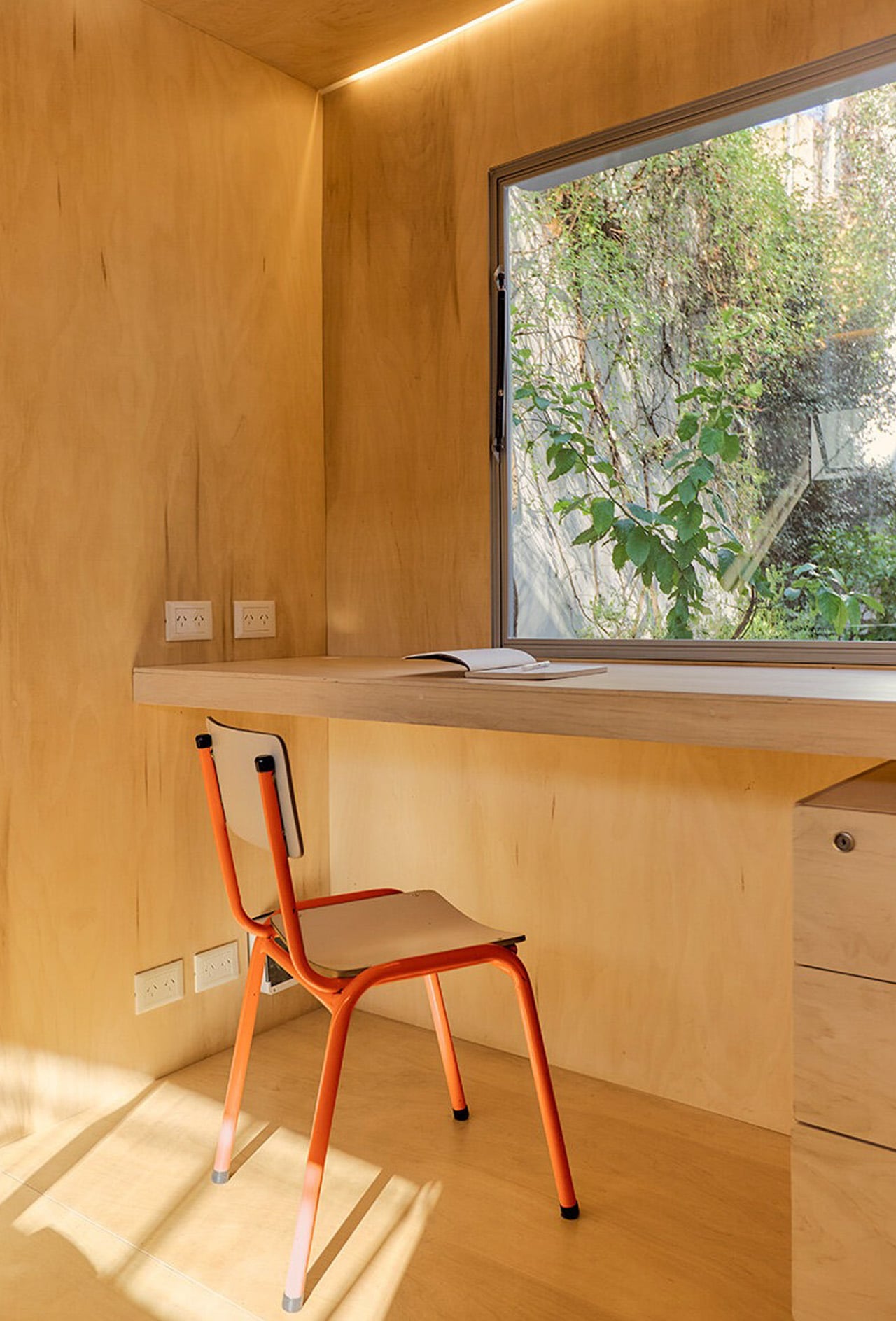
Currently stationed in Buenos Aires, the mobile office represents a shift in how workspace can respond to contemporary work patterns. It doesn’t anchor professionals to fixed addresses but instead follows them, adapting to changing needs without sacrificing quality or comfort. The seven-square-meter footprint proves that small doesn’t mean compromised when design treats constraints as creative fuel. Castillo demonstrates that architecture can be nomadic without being provisional, compact without being cramped, and prefabricated without losing its soul.