
Few would dispute that Australian cricket is typically tougher than it is in England — Ben Stokes tacitly admitted as much after the Brisbane Test when he said that this is no country for weak men — but there are various theories as to why. One of the most popular is that grade cricket is naturally Darwinian, an unforgiving classroom policed by gnarled veterans dispensing life lessons to the young, one martial generation passing down the arts of war to the next.
It was a shock, therefore, to visit two grade matches in Adelaide on Saturday and not find the air buzzing with profanities, to struggle to spot any local player aged above mid-twenties, or anyone who resembled Travis Head, the most archetypal of the present Australian Test cricketers who looks like he has been hewn out of a lump of rock mined at Coober Pedy, or generated in a laboratory from a scrap of Ned Kelly’s DNA.
Anyone familiar with the Grade Cricketer podcasts, the creation of Sam Perry and Ian Higgins, may think that the old-school game still exists, but they are essentially satirising the absurdities of the grade cricket they played in 20 years ago. That world has largely vanished; the bad news for English cricket followers is that it may have been replaced by something superior.

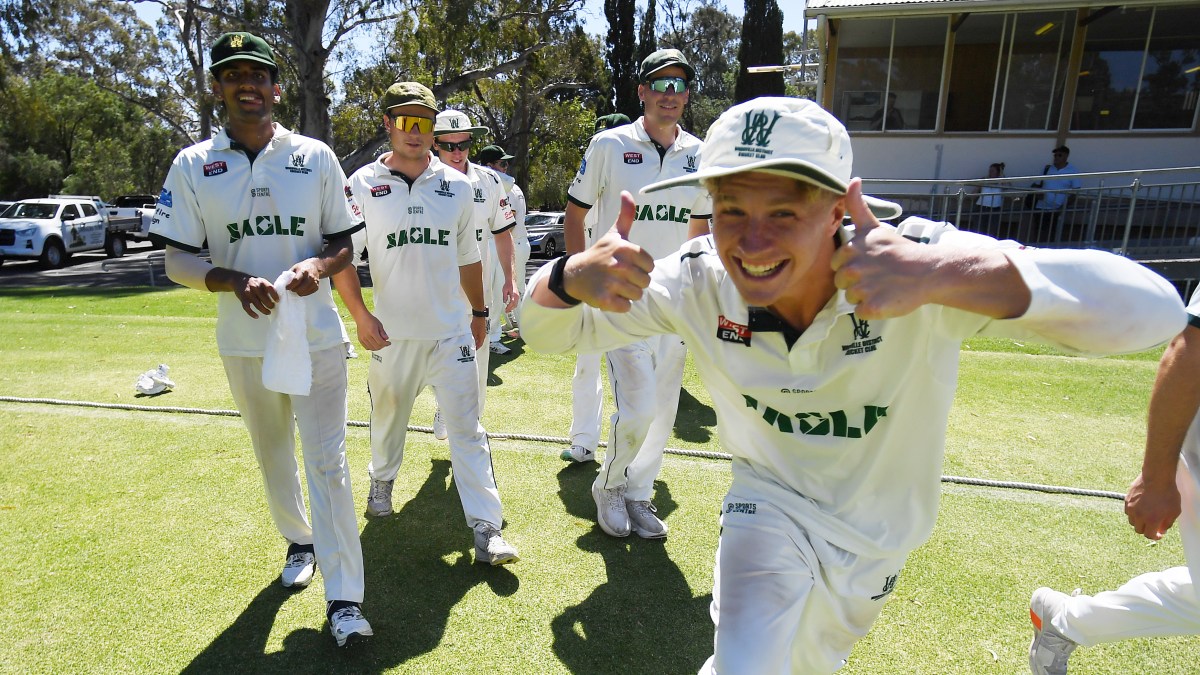
White, formerly of Middlesex, acknowledges the crowd after proving that Poms can still bat with an immaculate century off 74 balls
PHILIP BROWN FOR THE SUNDAY TIMES
“Twenty years ago, Australian cricket really did work like a pyramid,” said Perry, who played many seasons for Balmain, in Sydney. “It was based on discipline, patience and toughness. It was a time of real exceptionalism, and a lot of that exceptionalism was predicated on ideas of hostility and a machismo led by Steve Waugh. Nobody was regarded as good until they proved it on the field. Reputations counted for nothing. It was ignorant and arrogant.
“It has been broken up a fair bit. Once Greg Chappell took on a senior role in the identification of talent for the Australian team, the policies shifted towards finding young guns and advancing them, and moving away from experienced players. It’s a young man’s game. If you’re in your mid-twenties, you’re old.
“Pat Cummins has also made a big point of trying to get rid of those cultural mores, and that has flowed through Australian cricket. It’s not a tea party, but it is a lot more welcoming.”
Australian grade cricket — of which there are several bands, with first grade being the highest — is effectively the final stepping stone into first-class cricket, with each of the six major states running their own competitions involving about 90 premier clubs across the country. The best would be a match for many county second XIs.
The connections between international players and their grade sides remain strong. It is one of the curiosities of an Australia Test squad announcement that attached to the names of the chosen players will be the local teams they represent, at state and grade level. If there is a chance for them to turn out for their grade XI they will still do so, though these are rare.
What is noticeable is that the pre-match preparations are more thorough than they would be for a club game in England. At the Price Memorial Oval, where Sturt hosted Tea Tree Gully, the players arrived more than an hour before the 10.30am start to go through various drills and sit in huddles to discuss strategy.

Head may be the most archetypal of the present cricketers representing Australia but few players resemble him in Australian grade cricket
PATRICK HAMILTON/AFP/GETTY IMAGES
Louis Cameron, who played several seasons of grade cricket for Essendon, in Melbourne, as well as two seasons for English club sides in Kent and Cheshire, said: “It [grade cricket] is more concentrated and more professional compared with English premier leagues. The guys train twice a week at least but at Essendon we were encouraged to train more, to be in the gym, to run.
“The net sessions were pretty intense and there was a big emphasis on fielding. They start pre-seasons in July. The top few players get paid but it asks very professional standards of the rest, who are amateurs.
“The coaching is really good. Having done both, you train a lot and get access to really good coaches in Australia but a drawback is you don’t play anywhere near as much as in England. Nowadays I play at sub-district level, which is a lot more like English club cricket.” Grade seasons also finished with grand finals, and with them fresh layers of pressure.
Among the smattering of spectators who watched Sturt and Tea Tree Gully in a low-scoring scrap, which the visitors shaded by two runs on first innings, is Michael Weatherald, uncle of Test opener Jake. Michael has been a coach for 60 years and has worked with three of the present Australia XI including Jake, who now plays for Tasmania but who originally moved from Darwin to Adelaide and played regularly for Sturt.

The house in which Bradman lived most of his life is only a short walk away from the Kensington club that is a shrine to the Test legend
PHILIP BROWN FOR THE SUNDAY TIMES
He also coached Alex Carey, who plays for Glenelg, and Head, who is one of Tea Tree Gully’s greatest products. “I saw Head at 14 and immediately said this guy has got to go up into the under-17s. Even then he hit the ball hard,” he said. What is also evident is how much more carry there is in hard, sun-baked surfaces than there would be in England.
In New South Wales and Western Australia grade cricket, there is a limit of one overseas player per team, but not in South Australia, and as a result there is a fair sprinkling of English players among the teams around Adelaide. They are needed partly to maintain standards when some players are away training with Big Bash sides, and others have been called up for the state under-19s, as happened this weekend.
When Tea Tree Gully lost three early wickets, one of them fell to the Sturt wicketkeeper who ran back before putting in a full-length dive to pouch the catch. It was a replica of Carey’s catch to dismiss Gus Atkinson in the second Ashes Test, but in this instance it was Oli Carter, the Sussex keeper.
Sturt are based in an affluent suburb in south Adelaide and can draw on college boys whose families have the money to fund their cricket-playing. Kensington, over to the east, falls into a similar category and has the added attraction of being Sir Donald Bradman’s former club. The house in which he lived for most of his life is only a short walk away.
The Kensington Gardens Reserve is a tree-lined idyll and here in the afternoon Robbie White, formerly of Middlesex but now settled permanently in Adelaide, scored an immaculate century off 74 balls, without frills or funkiness. For a golden hour or two, it seemed the Poms could still play cricket after all.
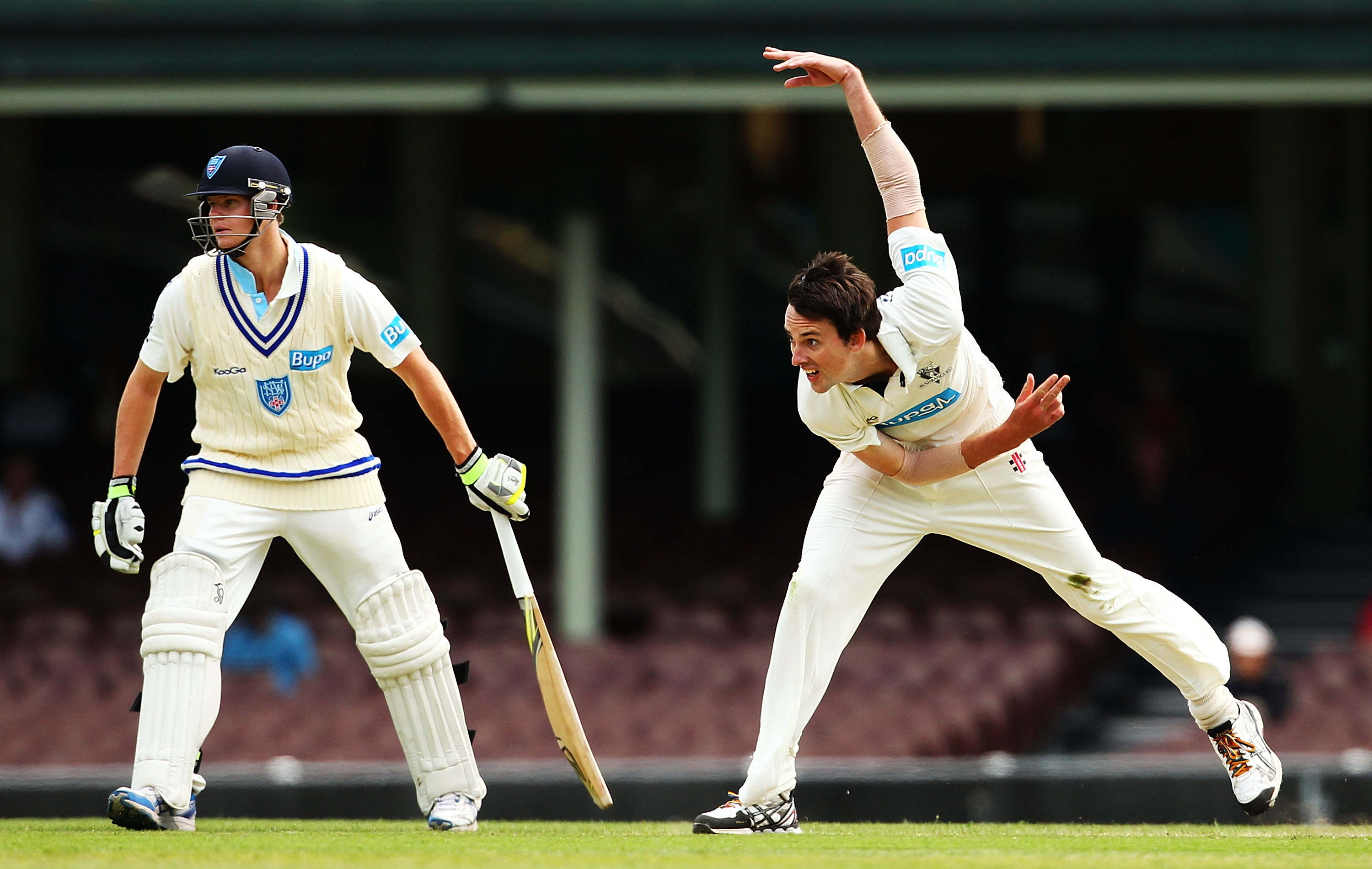
Cameron has played grade cricket in Melbourne and club cricket in England, and has also appeared in the first-class Sheffield Shield competition in Australia
MARK NOLAN/GETTY
Players of earlier generations such as Jason Gillespie and Chris Rogers say that some of the worst sledging they ever received was in grade cricket but things have changed. “When I first came in, it was pretty tough,” Cameron said. “It’s much better that a lot of the abuse has gone. This generation is more in tune with what constitutes good behaviour.”
The temptation to have a sly dig at the English does not seem to have entirely disappeared, however. When Archie Vaughan, son of Ashes-winning captain Michael and a regular at Somerset, arrived to play at Mosman in Sydney, he found himself starting off in the second grade rather than the first, and the decision was not entirely down to the rule on one overseas player per team.
“He should not be playing second grade cricket, he’s got three first-class five-fors and has a big future,” Perry said. “But there are Australians who enjoy that kind of thing. Personally, I think it’s outrageous.”