
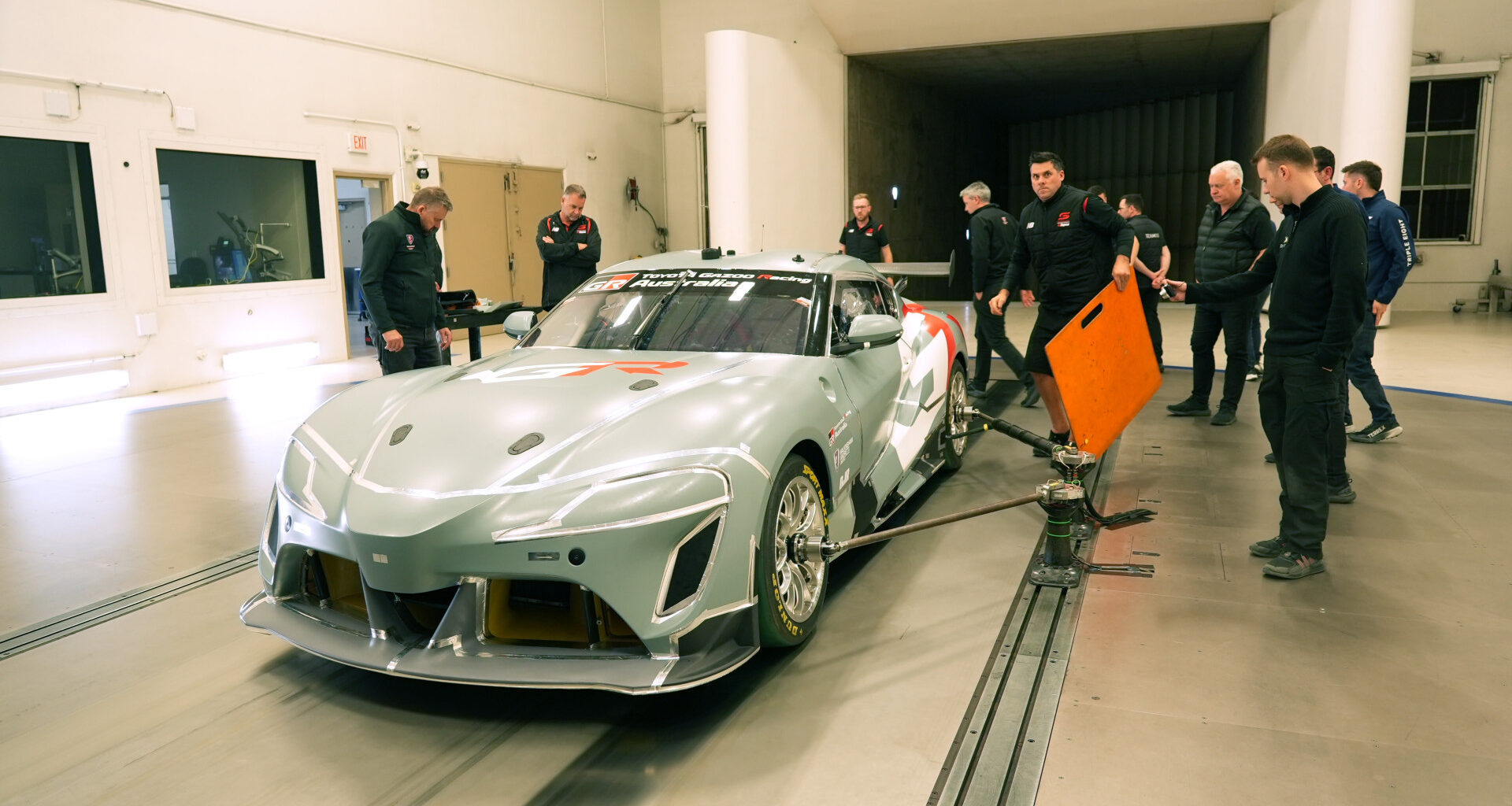
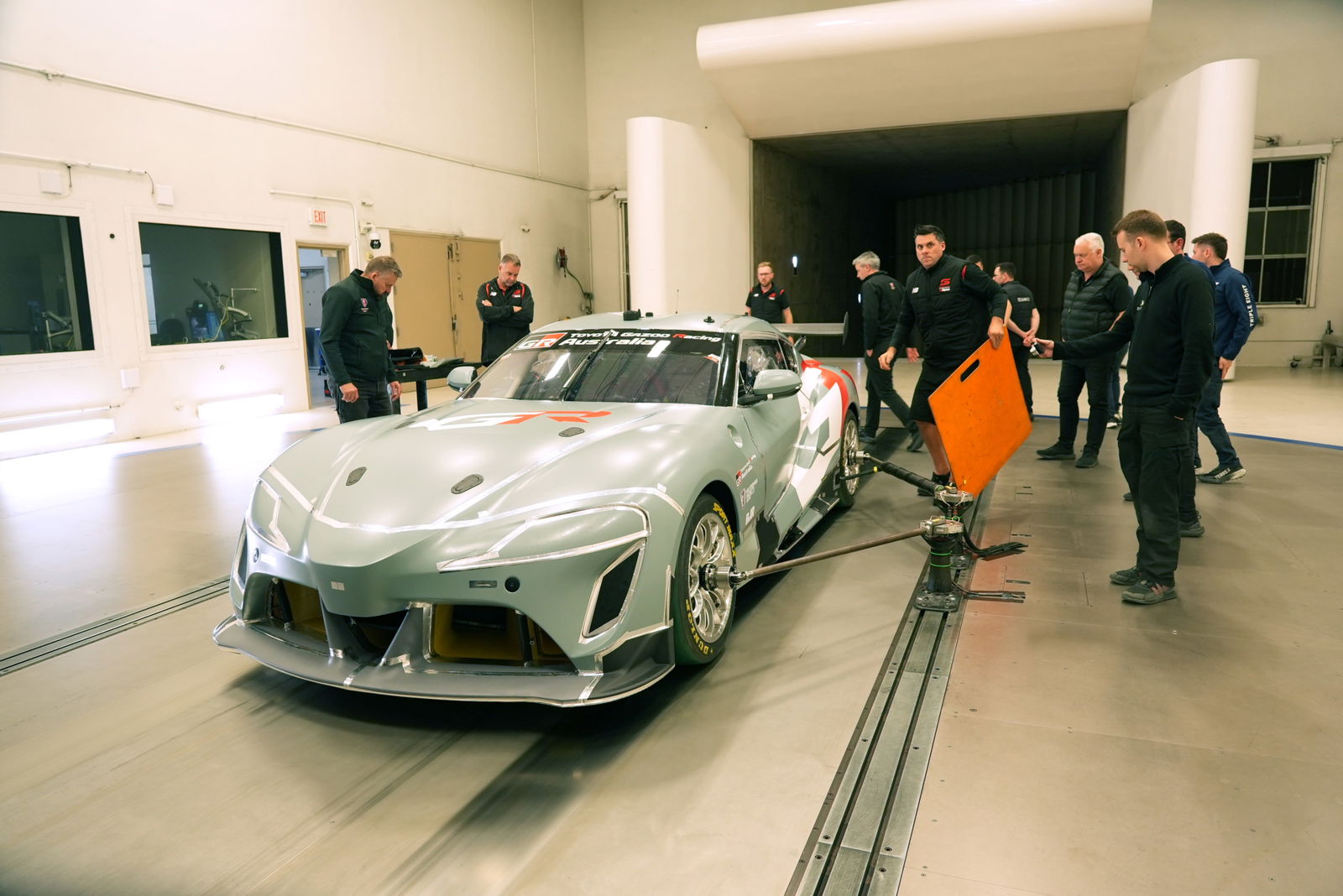
The Toyota Supra in the Windshear wind tunnel. Image: Supplied
The 10-day process involving 30 personnel from Supercars and homologation teams Triple Eight, Team 18 and Walkinshaw Andretti United is now complete.
Supercars reports more than 3000km and 50 hours of running in the rolling road Windshear wind tunnel was undertaken, in what was a multi-million dollar exercise.
The category doubled down on preparation efforts ahead of its return trip this year, following lingering aero parity concerns in the wake of the 2023/24 off-season running.
“We’ve got parity, and we’ve got three HTs that are very happy with the results,” declared Supercars motorsport boss Tim Edwards at the end of the testing.
“You could almost say it’s minor miracle, because we set the bar so much higher than when we came here last time.
“We focused on downforce and drag last time we were here. This time, we added a whole sensitivity band to it and we actually managed to achieve that as well, so a fantastic result for the category.
“We now know we’ve got aerodynamic parity and to a much, much finer tolerance than we had when we were here last time. So first box ticked next, next box is move on to the engine.”
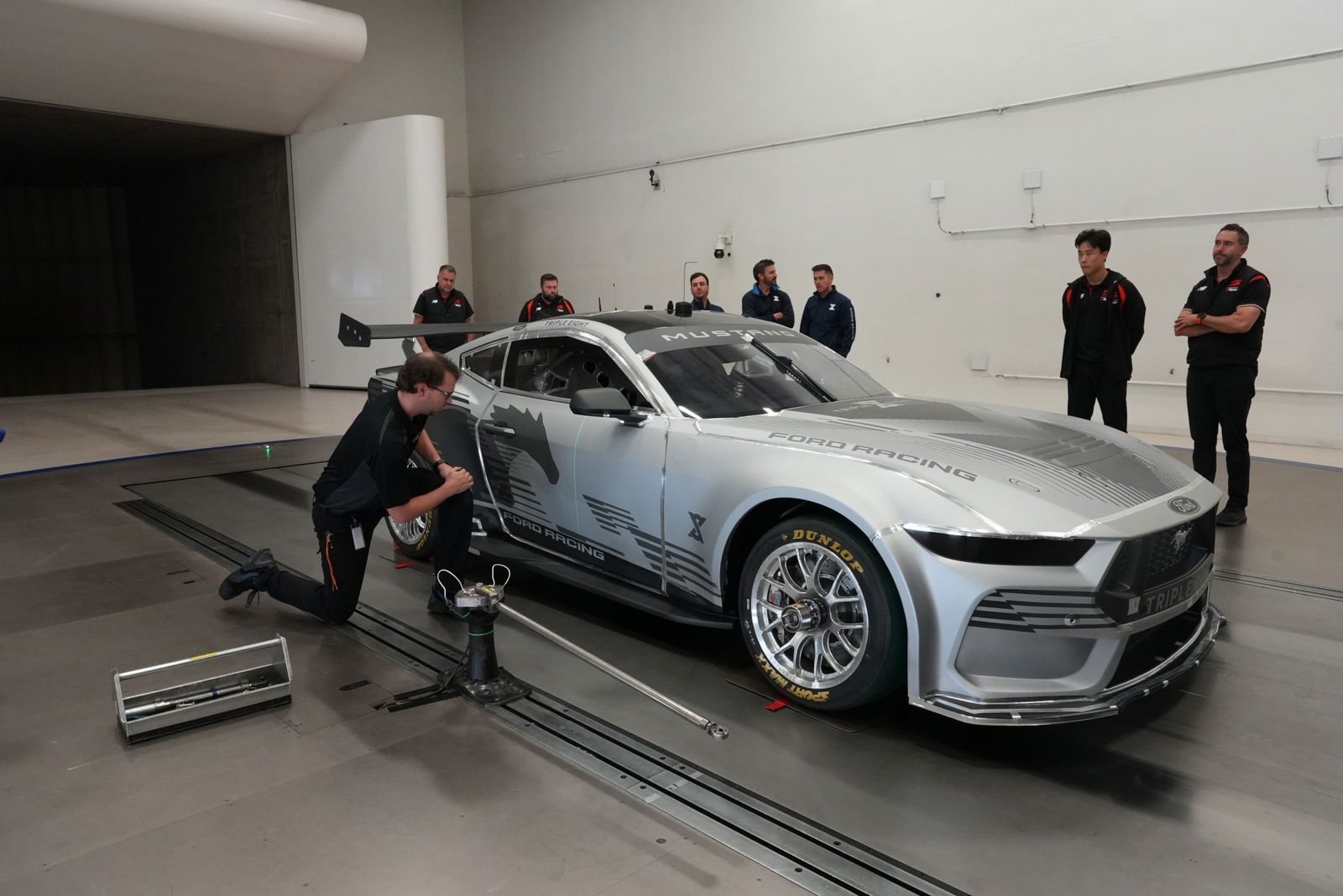
The Mustang in the wind tunnel. Image: Supplied
The main purpose of the wind tunnel test was to homologate the new Toyota Supra.
Supercars, however, elected to take all three models, with changes having been made to the Ford during its construction in a bid for commonality, and the Chevrolet brought as the datum.
It’s believed the plan shifted after initial running, with it being deemed easier to use the refined Mustang as the benchmark for the Supra and Camaro to match.
WAU team principal Carl Faux expressed his pleasure at the end result, noting a “target change” midway through the process.
“I think it’s astonishing that three cars of such different shapes and sizes have been able to get within the bounds that Supercars have set out for us and in the parity box,” he said.
“I’m actually a little bit overwhelmed by it, to be honest, it’s been a huge few days with targets moving and car changes and stuff like that.
“[We had] 18 hours in the tunnel for the Ford, 12 and a half hours in the tunnel for the GM, and we managed to do it in 24 hours, and that’s with the target change 12 hours in.
“I’m stoked for the team. I’m glad that this is over, and can’t wait to get to the racetrack.”
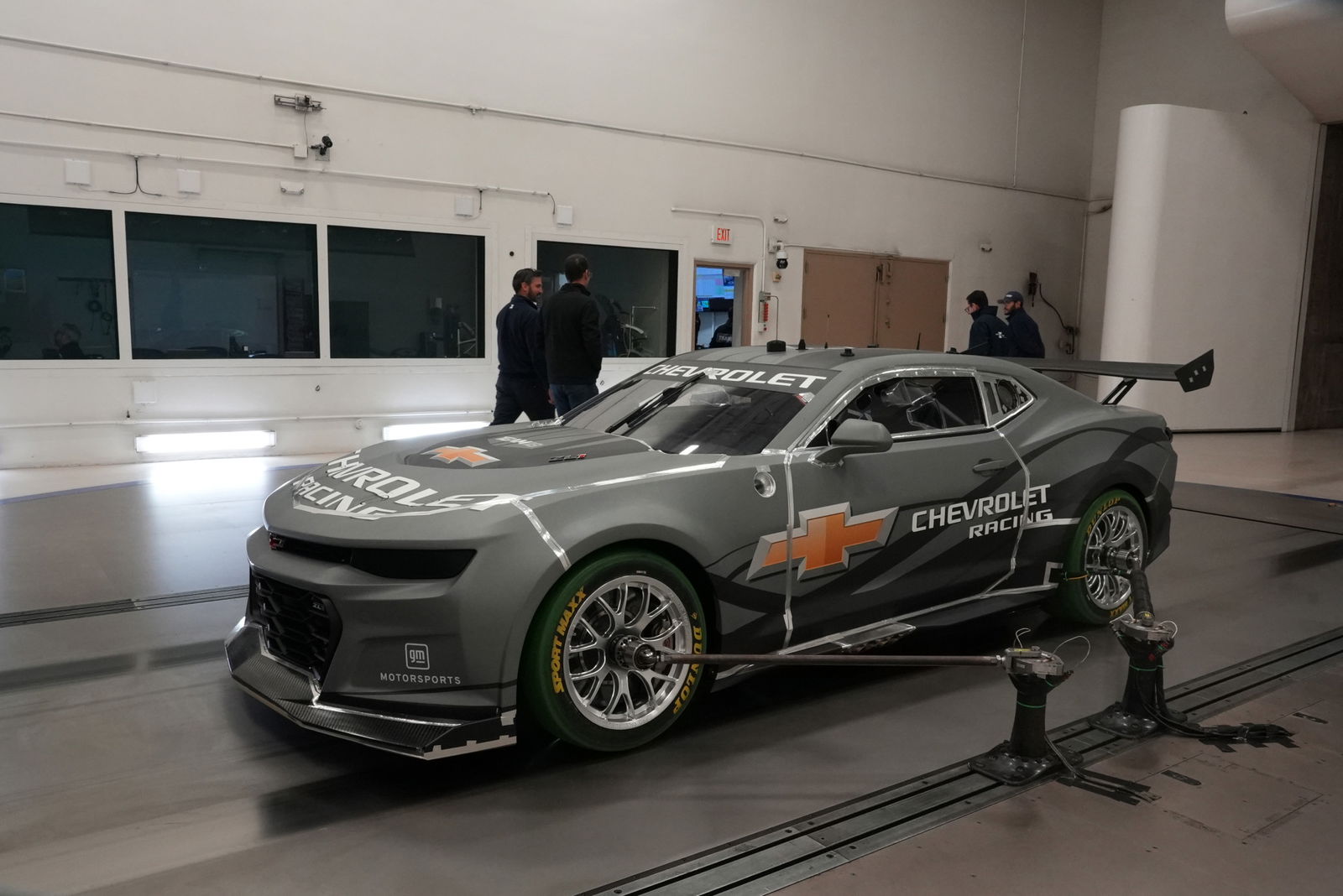
The Camaro was brought as the benchmark car. Image: Supplied
Triple Eight manager Mark Dutton and Team 18 team principal Adrian Burgess also hailed a collaborative effort between the rival squads.
“You can work together here because everyone has a common goal,” said Dutton.
“The common goal is having parity. That’s the dirty word that we don’t want to be a dirty word. We want to put it behind us and then do our racing on the racetrack.
“That’s where we can go hammer and tong. But in these four walls, everyone worked together brilliantly.”
Kostecki a surprise visitor at US wind tunnel testing
Burgess also praised the process, but noted the “proof will be in the pudding” once the cars hit the race track.
“We’ve all been looking at each other’s cars, inspecting them, looking at the gaps, pushing here, pushing there, making sure that the preparation of the cars is all the same,” he said.
“I think everybody here will agree, hopefully, that we leave in a really good position, and now we just get to focus on what we really want to do, and that’s just go racing.”
Supercars is expected to undertake a locally-based engine parity testing program ahead of the 2026 season, with overseas AVL dyno testing not scheduled to take place until at least April.
