
With 36 films (soon to be 37 when his UFO movie is released), Steven Spielberg has proved himself a master of every genre out there. With thrillers (that possess some sprinklings of horror) there’s Duel and Jaws. To the history of war movies, he contributed Saving Private Ryan. As for historical dramas, The Color Purple, Schindler’s List, and Munich are all important. When it comes to sci-fi, Close Encounters of the Third Kind, Minority Report, E.T. the Extra-Terrestrial, and Ready Player One were all well-reviewed and remain well-liked. But his bread and butter is the action-adventure film, as seen in the first three Indiana Jones movies and Jurassic Park.
But the one genre he’s always struggled with is comedy. To this day he’s only directed one straightforward comedy movie, and that would be his sixth film, 1941. Since that film debuted (46 years ago today), he has since avoided making such a thing. The closest he’s come is the comedy dramas Catch Me If You Can and The Terminal.
Why Did 1941 Flop?
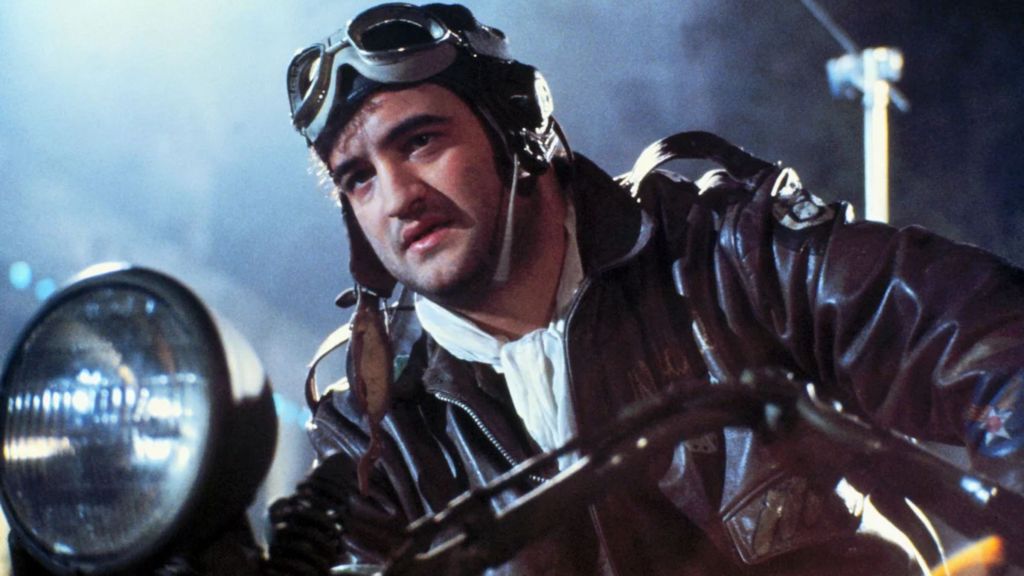 image courtesy of universal pictures
First off, 1941 technically didn’t flop, but it did very much underperform when compared to Universal’s expectations. One must remember that this was coming on the heels of Jaws and Close Encounters of the Third Kind. Jaws made about 53 times its price tag back in 1975 while Close Encounters made about 15 times its budget in 1977. So, for 1941 to not even triple its cost was seen as a pretty big letdown.
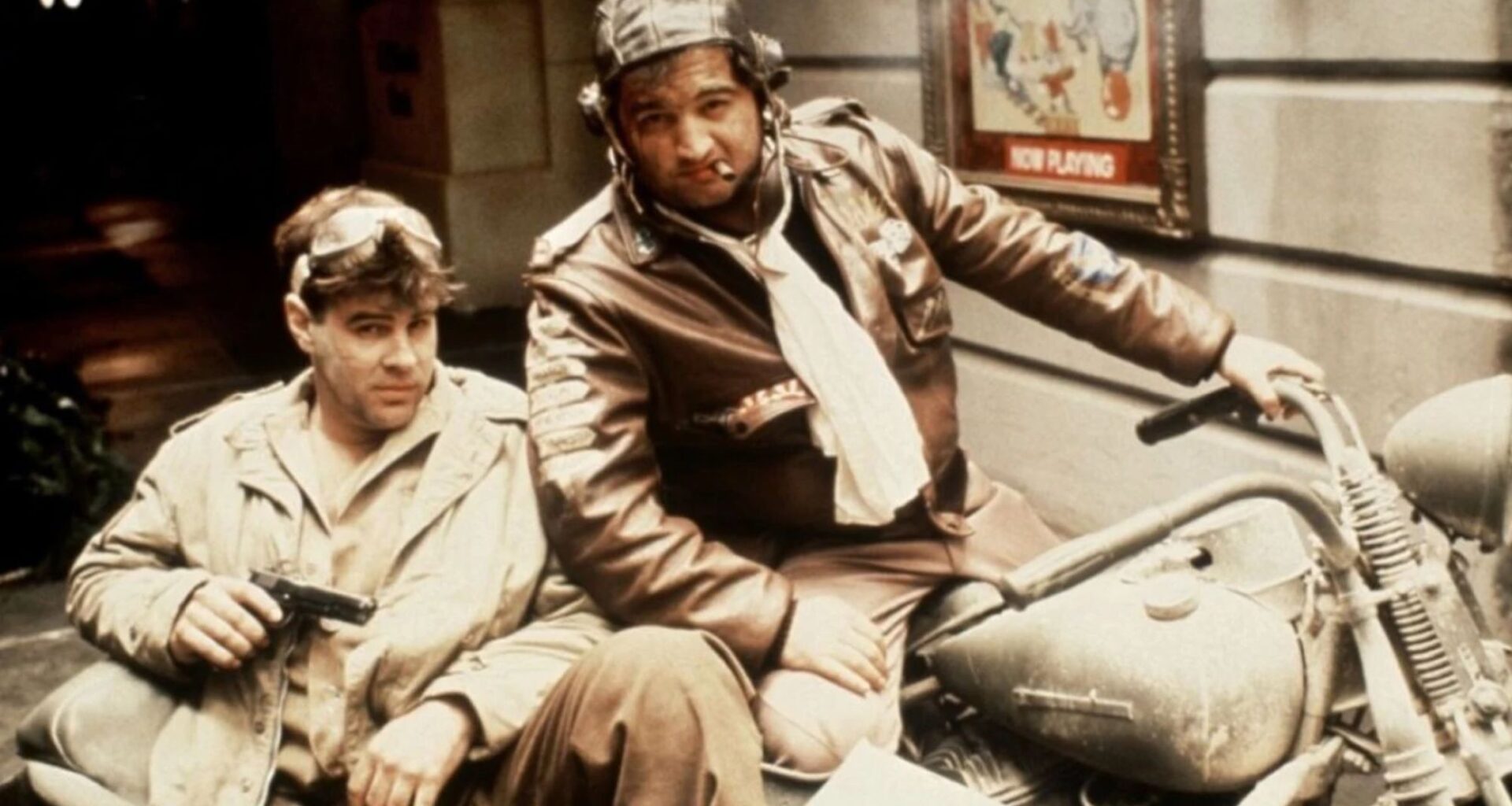
Part of the reason for its failure is that it isn’t particularly rewatchable. Focusing on the post-Pearl Harbor panic is strange terrain to embrace for a film with such an outlandish, almost cartoonish tone. Furthermore, for a farce, it’s an awfully crowded narrative, where few cast members outside Dany Aykroyd or John Belushi.
And to a degree that makes sense, considering 1941 came out just seven months after the duo filmed their final episode of Saturday Night Live. They were two of the biggest names in the business at that point and it’s fair to assume that a substantial portion of the audience bought a ticket not to see this particular movie, but to see them together for the first time on the big screen (they would then collaborate on the much more popular The Blues Brothers and Belushi’s final film, Neighbors).
Fortunately, Spielberg couldn’t have rebounded any better than he did. His next two films were Raiders of the Lost Ark and E.T. the Extra-Terrestrial, two monstrously successful films that cemented 1941‘s underperformance as a fluke.
And, at the end, 1941 ended up being one of Spielberg’s most important movies. After all, this was his second collaboration with Robert Zemeckis and Bob Gale, the former of whom was Spielberg’s protégé.
The trio first worked on the Beatles-themed comedy I Wanna Hold Your Hand (1978), which was directed by Zemeckis, written by Zemeckis and Gale, and executive produced by Spielberg. In 1980 they again collaborated on the underrated Kurt Russell comedy Used Cars, which again was directed by Zemeckis, written by Zemeckis and Gale, and executive produced by Spielberg.
But the apex of their trifecta collaboration came a few years later, when Back to the Future took the world by storm. That iconic trilogy was created by Zemeckis and Gale, written by Zemeckis and Gale, directed by Zemeckis, and once more executive produced by Spielberg, and unlike I Wanna Hold Your Hand and Used Cars you can feel his fingerprints all over it. Not to mention, Spielberg also executive produced Who Framed Roger Rabbit, which was directed by Zemeckis but did not feature Gale’s involvement. That animated-live action classic came out between the first and second Marty McFly adventures.
Not to mention, this was also the start of Spielberg’s working relationship with Belushi and Aykroyd. First, a year after 1941, Spielberg put in a cameo appearance in The Blues Brothers. The director also went on to produce Belushi’s penultimate movie, Continental Divide, which was the first time Spielberg’s Amblin Entertainment was credited as a film’s production company.
As for Aykroyd, Spielberg wrote and co-directed Twilight Zone: The Movie, which features Dan Aykroyd in the two wraparound segments. That said, those two scenes were directed by John Landis and George Miller, respectively, not Spielberg. Aykroyd also had a cameo in Indiana Jones and the Temple of Doom and put in another cameo appearance as Ghostbusters‘ Ray Stantz in Casper, which Spielberg executive produced. So, at the end of the day, it’s doubtful Spielberg thinks of 1941 as a complete failure.
Have you seen 1941? Let us know in the comments.