
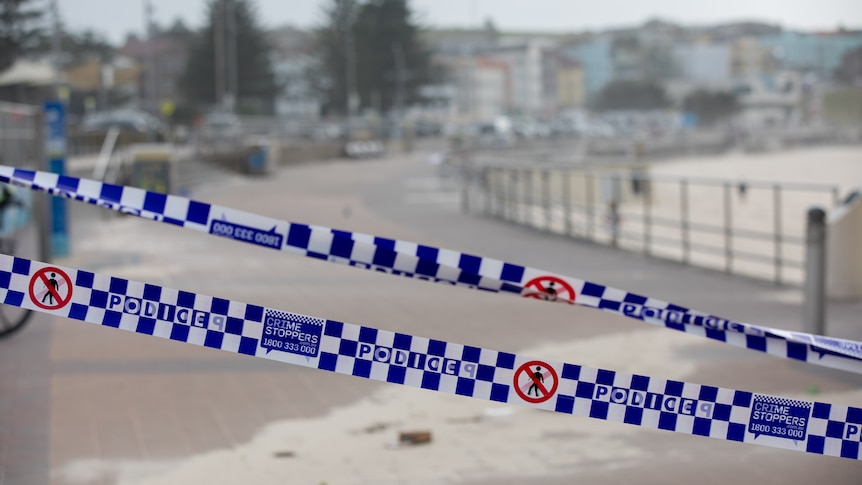
Shock, grief, foreboding, a sense that something like this was inevitable, and anger at that inevitability pervaded the room. It was noon in the auditorium of the Israeli Foreign Ministry in Jerusalem. Chanukah, the Jewish festival of lights, was about to start that evening. Half a world away, back in Australia, the festival had already begun. The lights had been lit in Jewish homes and at communal celebrations. At one Jewish community celebration, taking place at Bondi Beach, two gunmen opened fire.
I am in Jerusalem for a week-long conference of the International Holocaust Remembrance Alliance (IHRA). The conference opened with a moment of silence for the victims in Australia. Diplomats from IHRA’s 43 member and observer countries, experts appointed by each country, and representatives of the permanent partners like the United Nations, all stood still in quiet reflection.
The phones of members of the Australian delegation vibrated in our pockets as family checked in, friends asked if we were safe and details spread through messaging apps. More messages passed back and forth between my colleagues at the Online Hate Prevention Institute. Hours earlier, while making my way to the conference, I had been alerted to the breaking news of the attack and readied the team up for a crisis response.
In such a crisis, the role of the Online Hate Prevention Institute is to monitor social media responses. In two previous crises — attacks on synagogues in Melbourne in 2024 and 2025 — we captured and documented the online chatter seemingly intended to erode public sympathy and support. There was also content that used the attacks on the Australian Jewish community to spread further hate against victims. The same pattern is beginning to emerge in the wake of this latest tragedy.
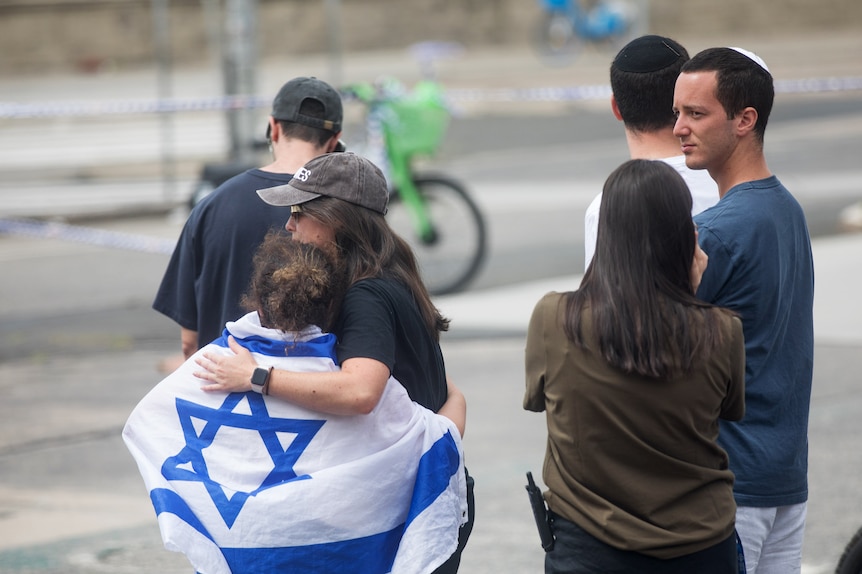
A woman wearing an Israeli flag is consoled near the scene of the mass shooting at Bondi Beach in Sydney, on Monday, 15 December 2025. (Photograph by Brent Lewin / Bloomberg via Getty Images)
What took place at Bondi Beach was not a senseless act of violence; it was terrorism that targeted Jews because of their identity and at a time and place designed to maximise Jewish casualties. Some have responded to the bloodshed by calling on the Australian community to stand against all acts of violence. This is a noble sentiment, but as the bodies of Jewish Australians, including children, are being prepared for burial, the last thing we should do is erase their identity. Nor should we gloss over the specific nature of the hate that has been on the rise in Australia and that has now led to such horrific violence.
Earlier this year, Australia’s Special Envoy to Combat Antisemitism, Jillian Segal, delivered a comprehensive plan to address the rising tide of antisemitism. The federal government has yet to respond to that plan. Rather that standing firm against antisemitism, we have securitised the problem. Funding for the Jewish community has been almost entirely dedicated to enhancing physical protections: building walls, adding bollards, installing cameras, and hiring security guards. Meanwhile, in our public spaces — the university campuses, the steps of state parliaments, the city streets — as well as online, expressions of virulent antisemitism are permitted, normalised, allowed to grow.
Australia has become a country where excuses are made rather than action taken. Instead of confronting hate and calling it out, we give it a wide berth so as to avoid confrontation. That approach, as many have warned, leads to the kind of bloodshed we’ve just witnessed at Bondi Beach.
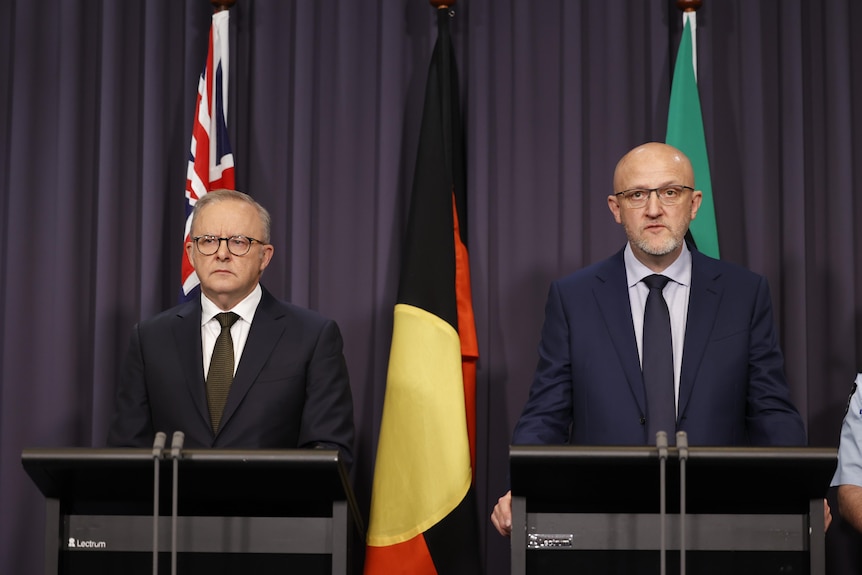
Director-General of the Australian Security Intelligence Organisation (ASIO) Mike Burgess (right) and Prime Minister Anthony Albanese (left) speak to the media at Parliament House on 14 December 2025 in Canberra, following the mass shooting at Bondi Beach. (Photo by Hilary Wardhaugh / Getty Images)
When AISO announced that it had linked a number of antisemitic incidents to criminals paid by Iran, many Australians breathed a sigh of relief. For them, this meant arson attacks on a Melbourne synagogue and a Jewish-owned restaurant weren’t really antisemitism. But that’s like arguing structural racism isn’t really racist. For the victims, it really doesn’t matter if the hate comes from the person who pulled the trigger or the person who gave the orders. The tragic results are the same.
After the mass shooting at Port Arthur in 1996, we saw a new resolve in Australia. There was a willingness to make hard choices in the name of public safety. The attack at Bondi Beach is now the second deadliest mass shooting in Australia’s history. Out of this tragedy we too must summon a new resolve. Unlike the indiscriminate killing that took place in 1996, yesterday’s attack targeted a particular community — a community that has been under siege for more than two years and whose expressions of concern have been undermined and dismissed by those wanting greater latitude to use antisemitic rhetoric in public discourse.
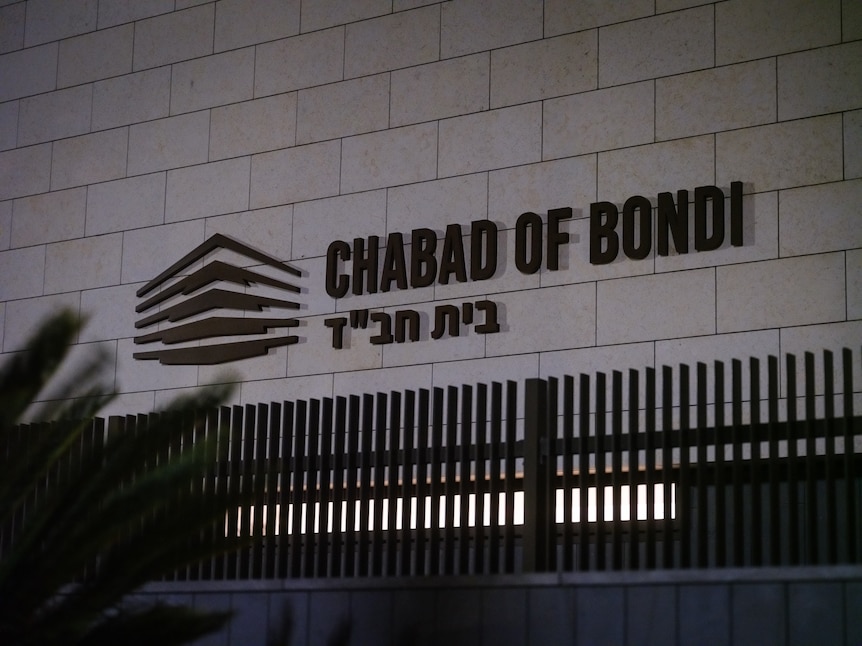
The Jewish community centre, Chabad of Bondi, located near Bondi Beach on 14 December 2025 in Sydney, Australia. (Photo by George Chan / Getty Images)
Let me conclude by reflecting on just one specific social media comment I saw. It begins by saying that what happened at Bondi Beach is a tragedy. It then goes on to say that we will never know who was behind the attack, opening the door for all sorts of conspiracy theories. It continues by saying this event will be spun out of all proportion, thereby undermining the seriousness of one of Australia’s deadliest mass shooting events. It expresses concern about a backlash against Muslims following the attack — a sentiment that redirects concern and sympathy away from the community that was the actual victim of violence. The comment ends by claiming that Zionists will be filled with glee at shooting.
I will confess that the way this comment used the pretext of a deadly antisemitic attack to demonise Zionists and subtly invite conspiratorial speculation left me struggling for words.
Most, if not all, of the victims would have been both Jews and Zionists. Zionism is nothing more or less than support for the existence of a Jewish state in the ancient homeland of the Jewish people — something the vast majority of Australian Jews support. Such a Jewish state does not preclude a Palestinian state alongside it, and most Jews support a two-state solution. To claim that Zionists would be gleeful at this tragic event is frankly sick.
Want the best of Religion & Ethics delivered to your mailbox?
Sign up for our weekly newsletter.
I write this from Zion, another name for Jerusalem, the symbolic home of the Jewish people. I write this as I prepare to go back into meetings where we will discuss how to remember the Holocaust when our survivors are no longer with us. I write this as I prepare for the meeting of IHRA’s Committee on Antisemitism and Holocaust Denial later in the week. Today in Zion, in Jerusalem, we stood in silence out of respect for the dead — out of respect for those whose lives were tragically cut short for no reason other than the fact they were Jews.
Back in Australia, we need to see change. We need to stop ceding ground to antisemitism. We, all decent Australians, need to speak up. We need greater public awareness and understanding of antisemitism. Most importantly, we need to stop excusing it and allowing it to fester and grow.
Andre Oboler is CEO of the Online Hate Prevention Institute, an Adjunct Associate Professor at the La Trobe Law School and an expert member of the Australian government’s delegation to the International Holocaust Remembrance Alliance. He is recognised as an international expert on antisemitism, online hate and extremism.
Posted 13m ago13 minutes agoMon 15 Dec 2025 at 2:11am, updated 1m ago1 minutes agoMon 15 Dec 2025 at 2:22am