
Illustration by Diana Bolton
After five years of planning and saving and a sizable inheritance from his late father’s estate, 35-year-old Jake bought his first home.
At the end of the summer, the digital marketer closed on a one-bedroom condo for $415,000. The building has a gym, pool and lounge. His monthly condo fee is $550, and he takes possession this month.
While Jake acknowledges this country’s cult of home ownership – it’s “kind of an obsession in Canada” – owning his own place was still important to him.
He buckled down near the start of the pandemic, when he set a goal to save about $200,000 – roughly the same amount he expected to receive from his father’s estate. He figured that together that would be enough for a condo on the outskirts of Toronto.
“I basically set out a plan where I would live at home, work at my home office, accumulate savings, invest … and once I had the amount of funds required to buy property outright, I would then pull the trigger and make that a reality.”
Living at home allowed him to save aggressively. Jake lived on about 10 per cent of his income, which is now a little more than $100,000. That left room for one vacation a year. “Some extreme measures were definitely taken. Some compromises were made,” he said.
Growing up, he was exposed to minimalism, which taught him that you could get by with less, making financial discipline an easier pill to swallow.
How to cut down on spending and save money on household finances, according to our experts
What he saved went straight into guaranteed investment certificates that offered low-risk, stable returns. He chose GICs because he needed the money accessible and safe, but with better rates than savings accounts. During the pandemic, he was at times earning as much as 5-per-cent interest.
“I just locked in for a year continuously and then reupped once the year was over. But in hindsight, I should have been more aggressive when the interest rates were high. It was a good deal back then,” he said.
By 2024 he began viewing condos in Hamilton and Burlington and eventually found one that balanced size, price and amenities.
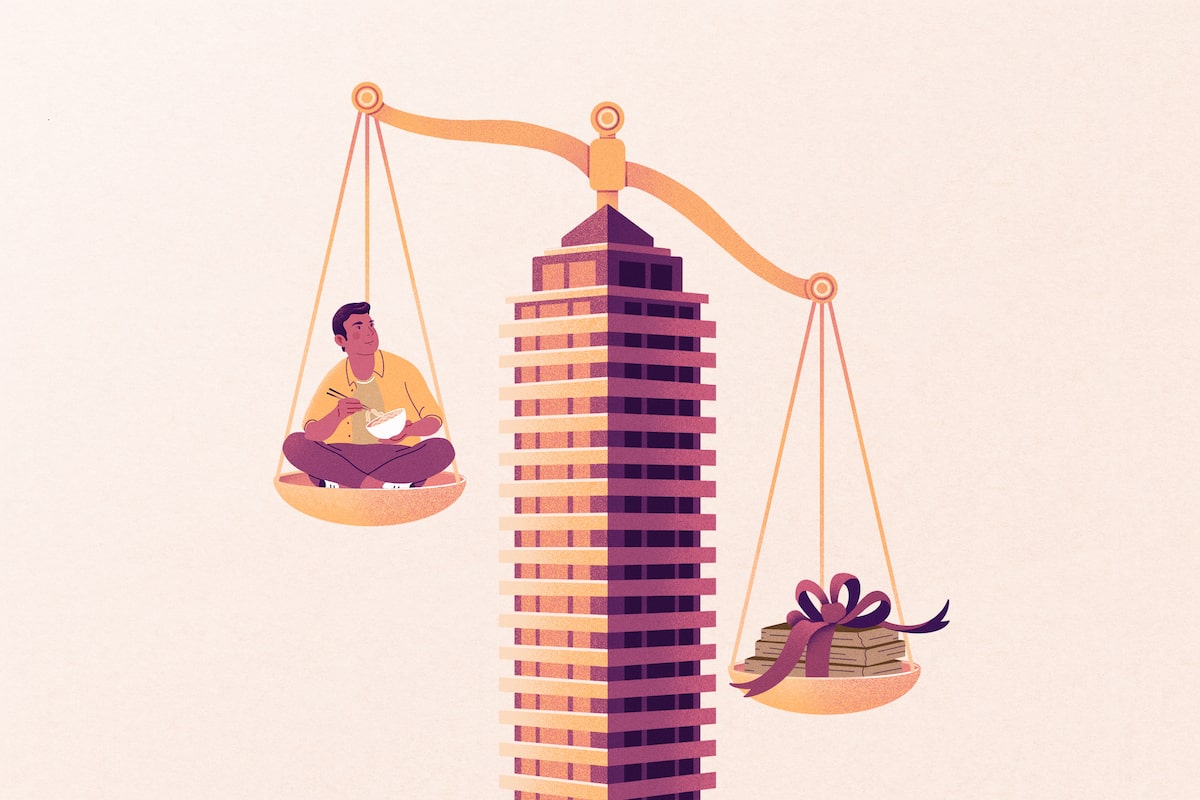
Jake is at peace with using the money his dad left him to buy a place, noting that a growing number of people are relying on gifts and inheritances to make it happen. Buying without some form of help, he says, is increasingly difficult. “That is not the Canadian reality for our generation.”
Unlike most first-time buyers, Jake bought his condo outright, with no mortgage and no monthly payments beyond his condo fee, utilities and taxes. Owning the unit fully means he can focus on saving for the future instead of paying off debt.
“The thing with mortgages is that you’re essentially just making minimum payments. … I like my money in my pocket,” he said.
Jake moves into his condo this month and plans to live there for at least the next five years, using the time to continue saving and building equity. “The next thing is bridging the gap between a $400,000 condo and a million-dollar home,” he said. “That gap is significant.”
“You pass one journey, from having credit-card debt and student loans to owning property. Then you have to bridge the next one to owning a full-sized home. That’s a whole other journey.”
Closing costs:
Legal fees and land transfer tax: $1,900 (after a $4,000 rebate on the latter that Jake qualified for as a first-time homebuyer) Moving, painting and furniture: $5,000 (estimate)
Ongoing costs:
Monthly mortgage payment: NoneMonthly condo maintenance fee: $550Home insurance that covers fire, water and possessions: $350 a yearHydro: $150 to $250 a month (estimate)
Advice: Buying a home as a single person in Ontario is incredibly difficult. Make a strategic plan with a long-term outlook and stick to it no matter how painful it gets.
Some details may be changed to protect the privacy of the people profiled. Are you a first time homeowner who would like to share their story? Send us an e-mail.