
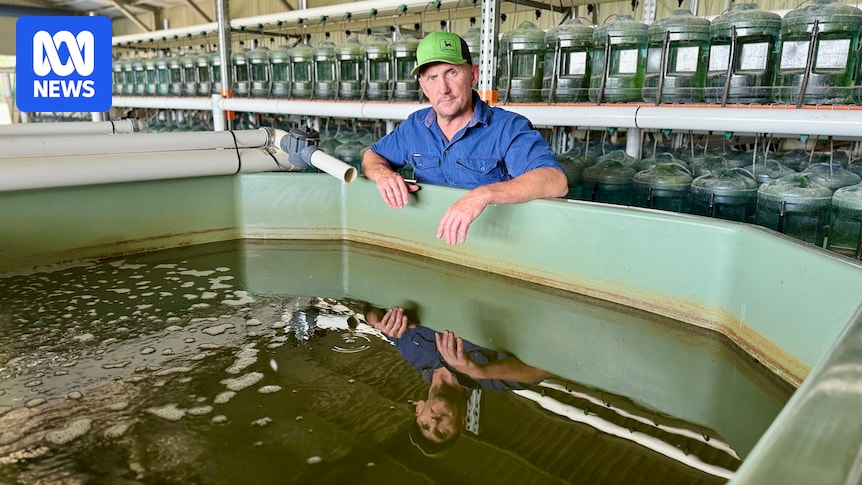
Diving into his dams, Darren Knowles knows that the territorial male Mary River cod he is about to encounter will not welcome him.
During the breeding season, male cod rush from nests in large plastic pipes to defend the eggs the HinterNoosa hatchery owner needs to transfer to his tanks.
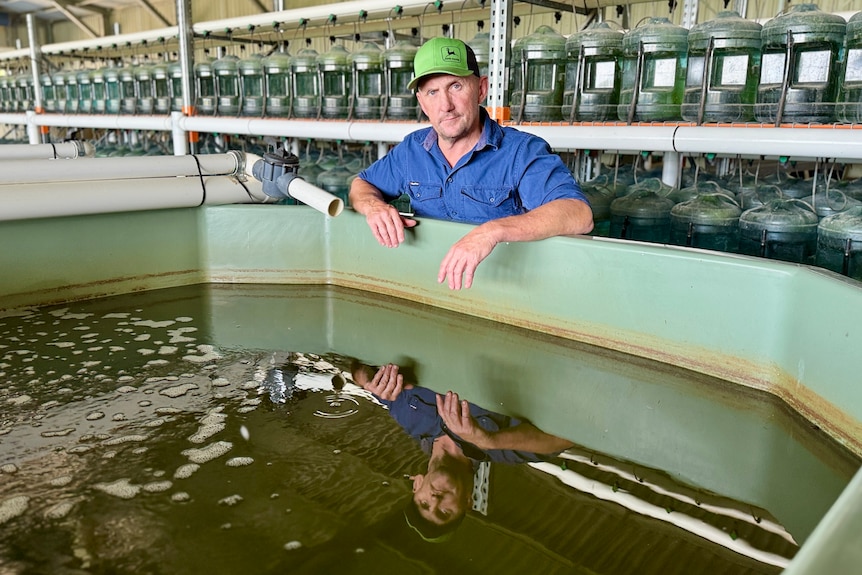
Darren Knowles is a leading breeder of endangered Mary River cod and Australian lungfish. (ABC Rural: Jennifer Nichols)
“To see one of them come out of a mud cloud at you, it’s quite scary, and I’ve found it’s pretty hard to scream when you’re under the water,” the specialist fish breeder said.
“You don’t have any extremities exposed; you have your toes dug into the mud and your fingers in a fist.”
Fierce, large fish have even dislodged his face mask, forcing him “coughing and choking” to the surface.
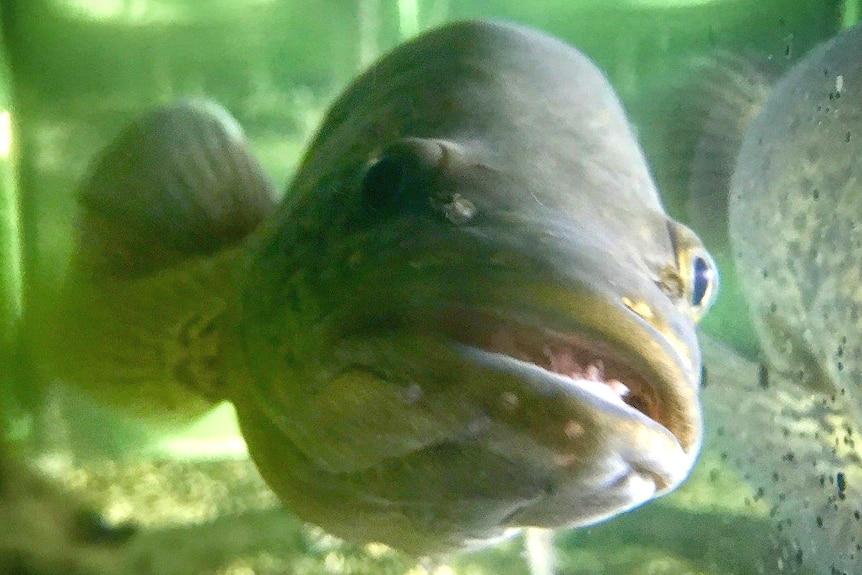
‘Obi’ the endangered Mary River cod attacks anyone who tries to clean the glass in his tank. (ABC Rural: Jennifer Nichols)
But saving lives is Mr Knowles’s calling, whether in his job as a firefighter or in the battle to save one of Australia’s most endangered freshwater species.
The 50-year-old was just 14 when he began volunteering to help cod hatchery pioneer Gerry Cook restock Queensland’s Mary River and its tributaries.
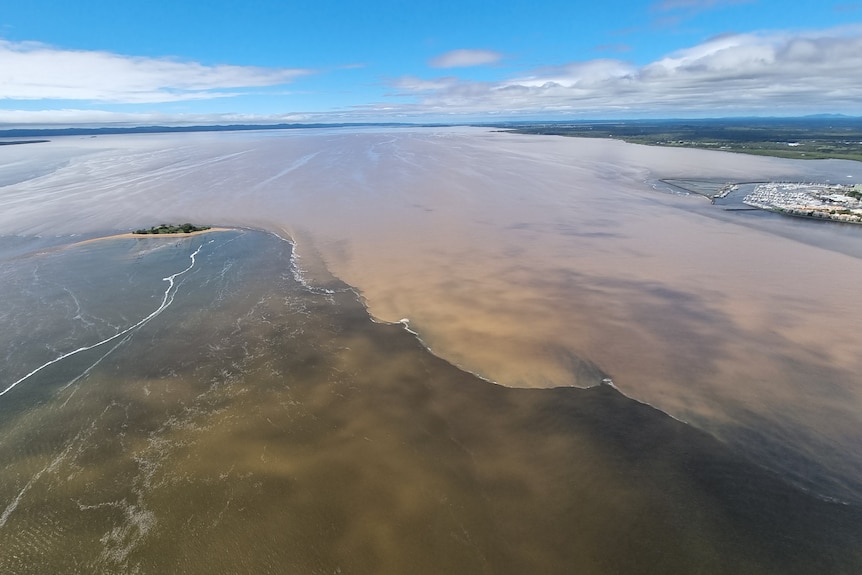
The flood plume from the Mary River heading into the Great Sandy Strait at River Heads in 2022. (Supplied: Jess Dean, MRCCC)
The mighty Mary River
Stretching from its headwaters in the Sunshine Coast hinterland to the ocean just south of Hervey Bay, the 291 kilometre Mary River is the fourth-highest contributor of sediment to the Great Barrier Reef.
Burnett Mary Regional Group (BMRG) chief executive Tom Espinoza said habitat destruction and overfishing had decimated cod numbers, which dropped to as low as 600 in its natural habitat in the late 1990s.
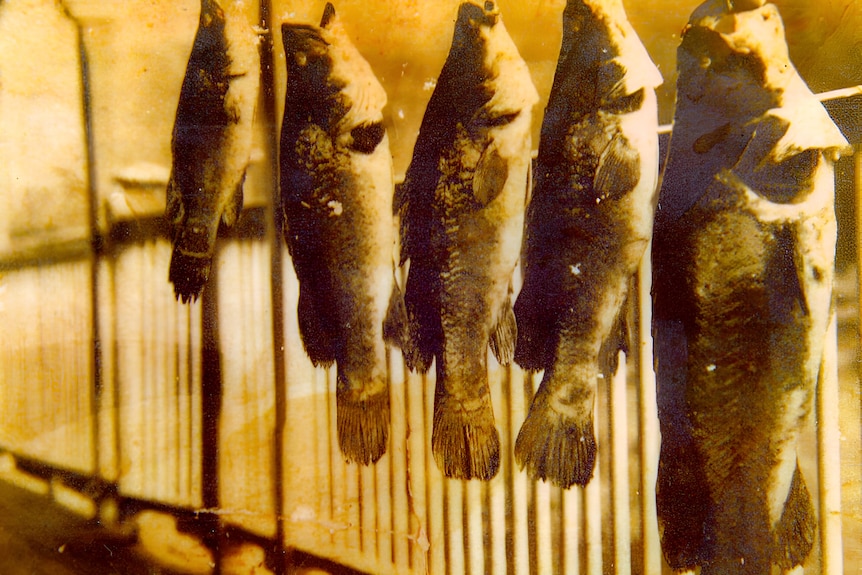
The endangered Mary River cod was overfished and its habitat was destroyed. (Supplied: Mary River Catchment Coordinating Committee)
“These species were so abundant at one point they were used as pig feed. At some point in history we were fishing for them with sticks of gelignite,” Mr Espinoza said.
The largest wild cod on record was 120 centimetres long and weighed almost 40 kilograms.
Outdated government advice instructed early settlers to de-snag waterways, removing the hollow logs and log-jams that are crucial for cod nesting.
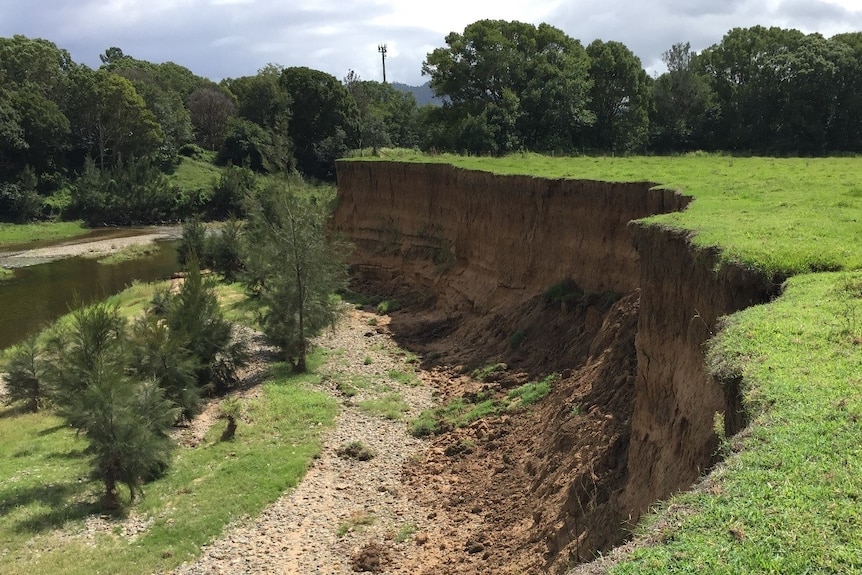
A river repair site before restoration at Kenilworth in April, 2019. (Supplied: Mary River Catchment Coordinating Committee)
River and creek banks were stripped of trees that stabilised soils, shading and cooling the water.
Erosion has filled what were once deep waterholes.
Shared purpose
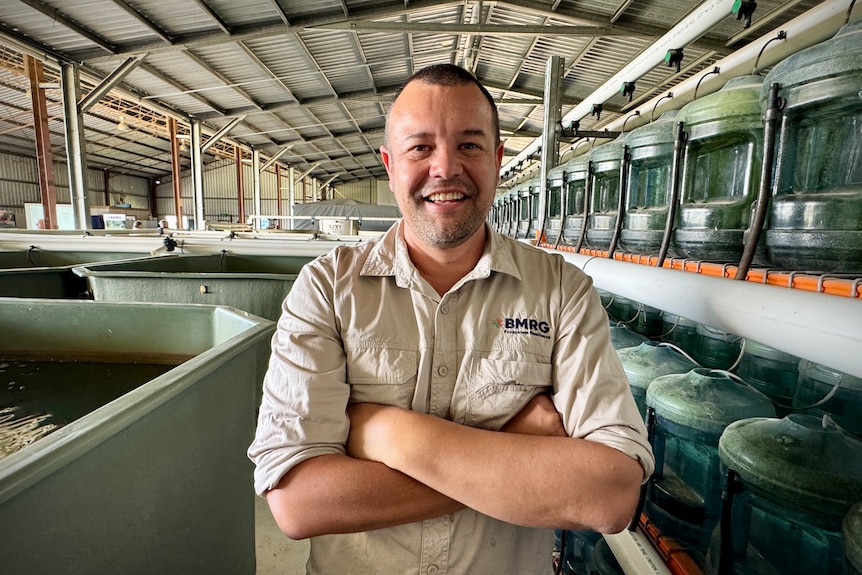
Tom Espinoza is determined to raise awareness and action to help save the endangered Mary River cod. (ABC Rural: Jennifer Nichols)
Mr Espinoza has made it his personal mission to get more action taken to save the species.
He organised a two-day workshop at Mr Knowles’s hatchery, bringing together traditional owners, recreational fishing and natural resource management groups, Murray River cod conservation experts from interstate, hatchery owners and scientists.
The plan is to update the 25-year-old Mary River Recovery Action plan, with a team approach to research and seeking funding.
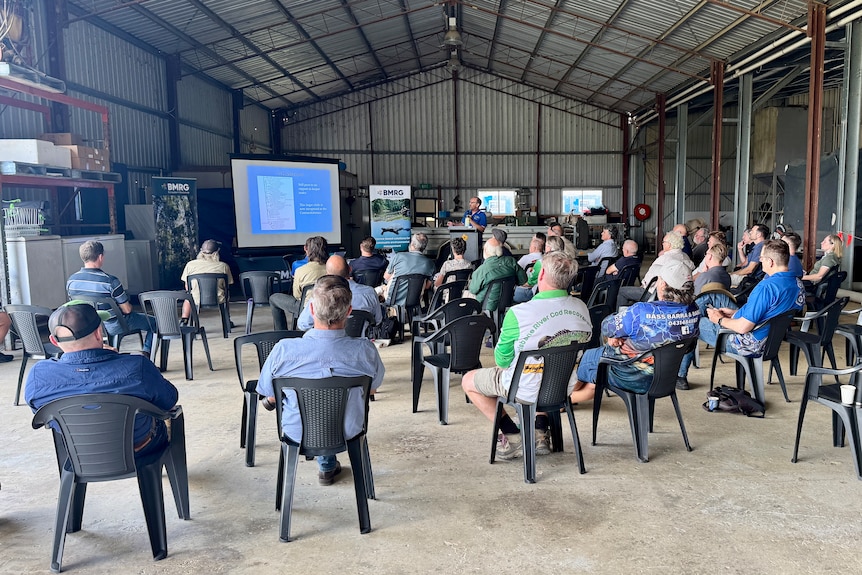
People from around Australia attended the Mary River cod action plan meeting. (ABC Rural: Jennifer Nichols)
“We’ve had forums in 2012 and 2019, and we’re still talking about the same things and begging for, asking for the same actions and management interventions,” Mr Espinoza said.
“From my part, I think it’s about getting something done.”
Australian Rivers Institute deputy director Mark Kennard said collaboration was key to cod conservation.
“We’ve got a commitment to work together over the long term and seek those funding opportunities,” Mr Kennard said.
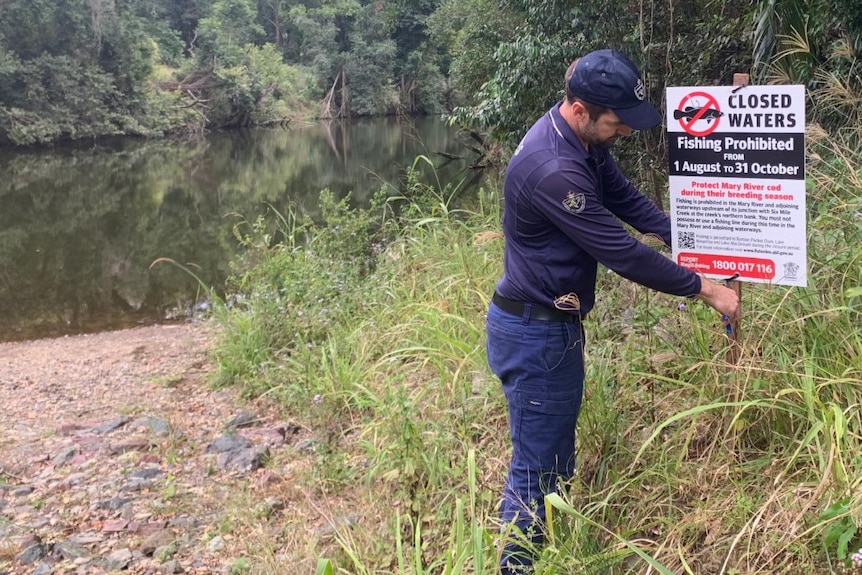
Two people were fined for ignoring the fishing ban designed to protect Mary River cod in 2023. (Supplied: Fisheries Queensland)
Environmental action
Some gains have already been made
In 2019 a decision was made to install a total fishing ban during August, September and October in the upper Mary River and its tributaries to better prevent protected cod being accidentally caught during their breeding season.
Genetic testing will help guide where wild brood stock should be sourced to minimise inbreeding.
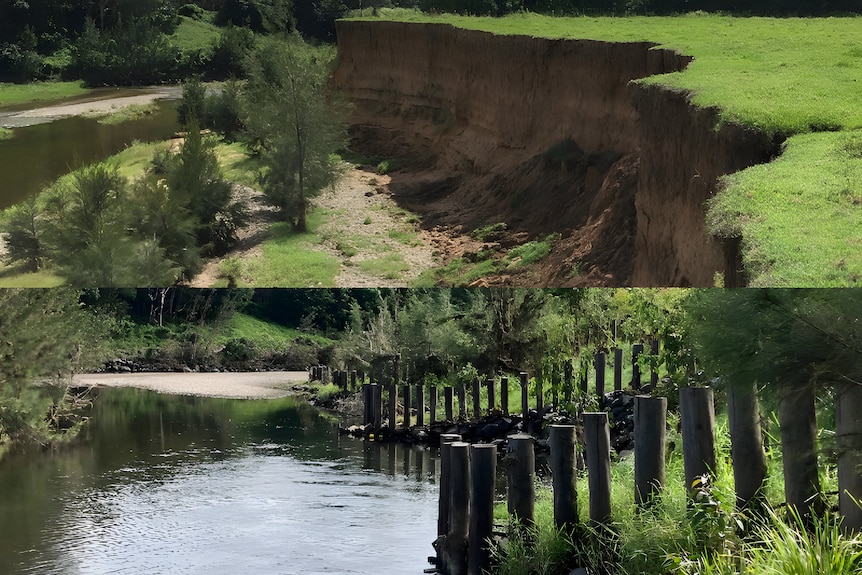
Before and after erosion control work at Kenilworth to tackle sediment runoff. (Supplied: Mary River Catchment Coordinating Committee)
To slow water flow during floods, the Mary River Catchment Coordinating Committee (MRCCC) and BMRG have helped landowners install pile fields at some of the Mary River’s worst erosion sites.
Riverbanks have been reshaped and replanted to prevent huge chunks of land from being washed away.
Loading…Logs for cod
Luke Carpenter Bundhoo from Griffith University is one of the scientists involved in a MRCCC project to place hollowed-out logs in the river for cod nesting.
“It’s nice to see that this is snowballing,” Mr Carpenter-Bundhoo said.
“Jinaburra and Kabi Kabi people are involved now, also carving out these logs and helping us deploy them.”
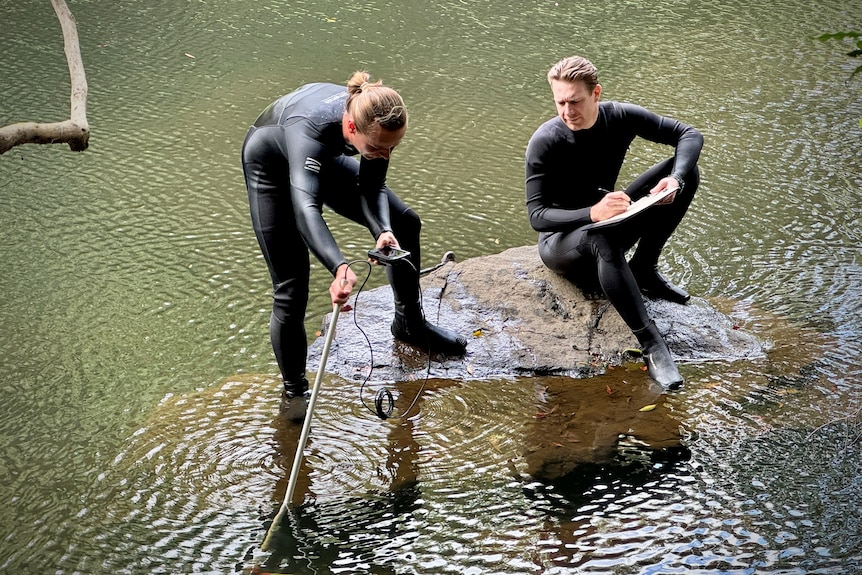
Nathaniel Larsen and Luke Carpenter-Bundhoo drop an endoscopic camera down to one of their “logs for cod”. (ABC Rural: Jennifer Nichols)
Many challenges lie ahead for the Mary River cod.
But evaluating what he described as “limited” restocking, Mr Knowles is feeling hopeful.
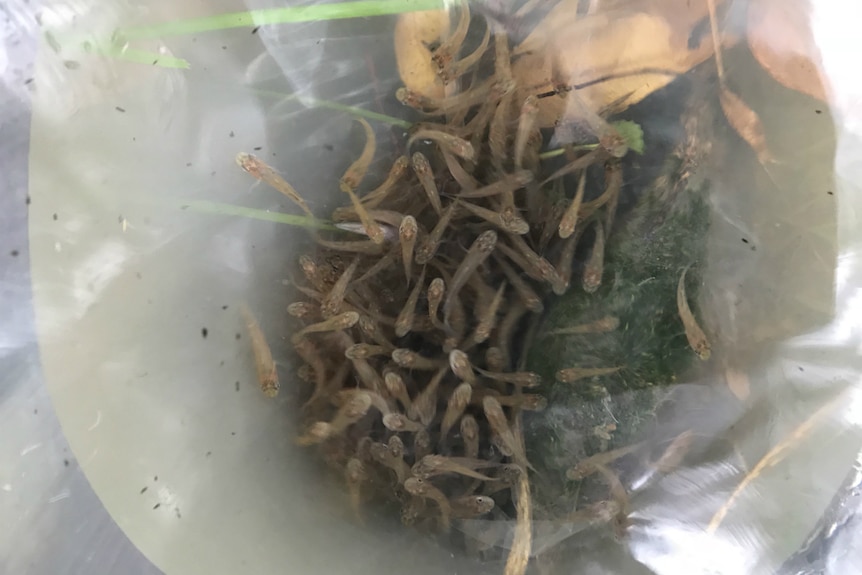
Mary River cod fingerlings ready for release at Kenilworth. (ABC Rural: Jennifer Nichols)
“We’re starting to see some anecdotal results and some research-driven results that the numbers are starting to stabilise and even starting to come back in certain areas,” he said.
“I think there’s a pretty bright future for them, as long as we take some really important steps.”