
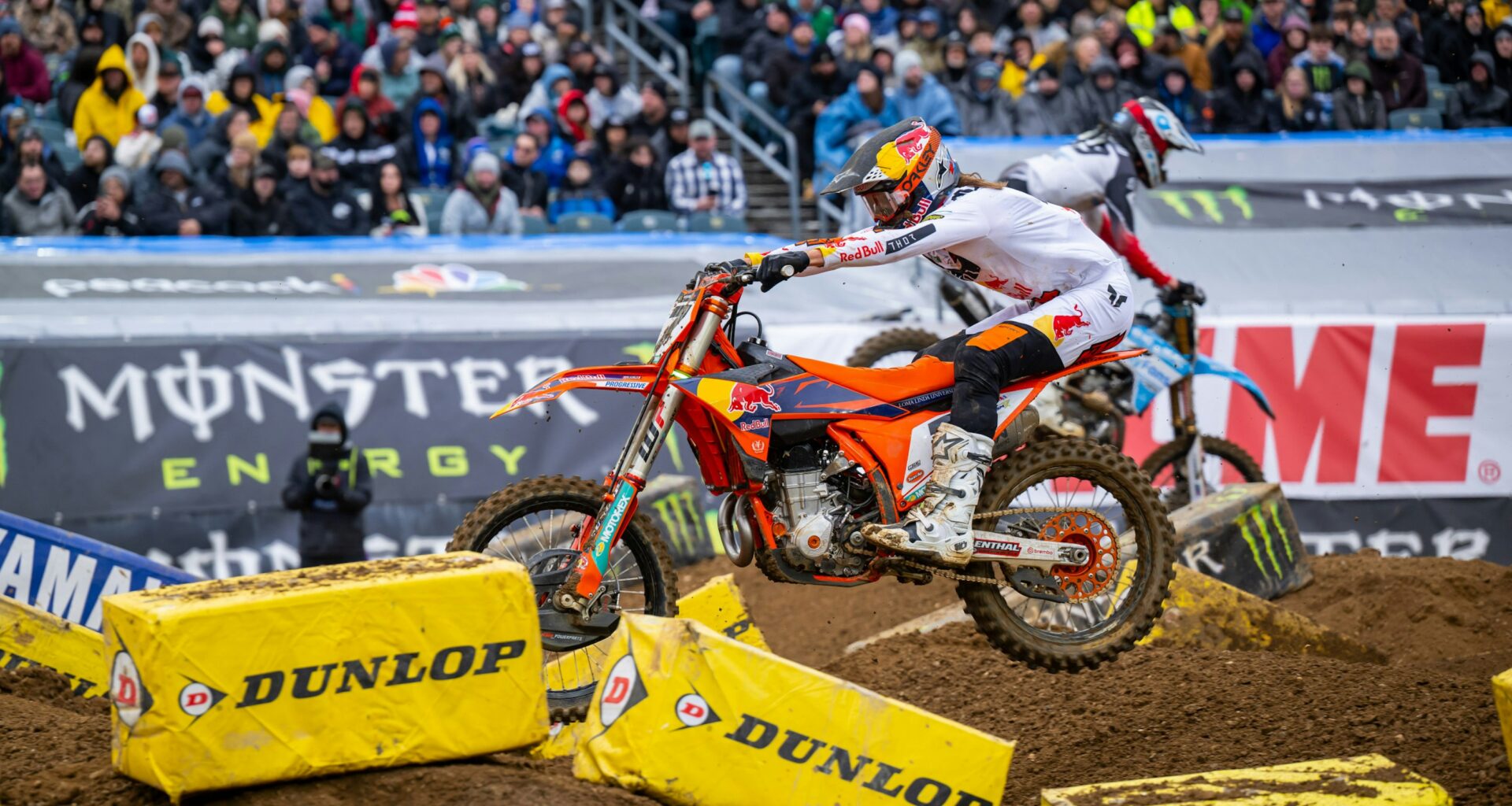
With free practice not counting for overall qualifying sessions, eliminating these sessions does eliminate the risk factor for riders pushing it in a session that has no result on qualifying position. This change makes it so that each time riders are on track, it counts for something.
He continued to say the schedule is flexible when it comes to the night show/main program as he said, “We can adjust the schedule as much as we need to: we have a three-hour broadcast window and that’s what we fit into.”
Muye noted the emphasis on rider safety too, especially when it comes to the whoops. Previously, the decision was made to go to nine whoops at each round, with hopes to cut down on the number of crashes in the dangerous and tricky obstacle. However, Muye said we will see a few races in ’26 with varying number of whoops and a few tracks with ten or 11 whoops are in the plan. The whoops section has been a talking point the last few years as Feld and the AMA continue to navigate the fine line of allowing a tricky track that separates riders but also creates good racing while also maintaining a safe racetrack.
He also noted the team is looking at options for in-helmet communications, which might be a possibility in the near future—although not for 2026. He did say if there would be any communication devices used that it would only be one way, so the riders would not be able to talk back. That is an ongoing discussion.
All in all, Muye, among the other personnel within the supercross division of Feld Motor Sports, wants the sport to grow and they are always looking at options for improvement on every front when it comes to the racing, safety, broadcast, and more.