

As in humans, dolphins show signs of ageing such as reduced energy, wear to the skin, slower movement and fading sight. The scientists measured the animals’ epigenetic ages by analysing skin samples, which were collected with small, floating darts that did not harm the animals, she said.
Dolphin friends support each other in hunting and facing predators, team up to find mates, surf waves and play together, and even rest side by side.
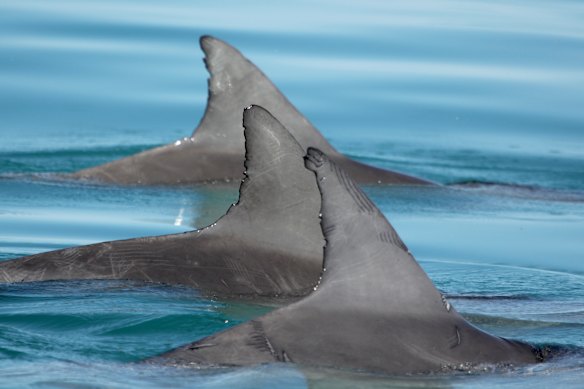
Quality over quantity: Scientists found dolphins with a few close friendships were better off than those in a large group.Credit: Simon Allen
Among the dolphins, the loners aged more quickly than those with strong social bonds, which the researchers believe is because of higher stress from facing threats or competing for mates solo.
Yet the scientists found a few close friendships was better than being part of a crowd.
“What was so surprising is that a lot of the dolphins in the larger groups actually age faster, and that probably has to do with [the fact that] in larger groups, you encounter more diseases, you encounter more competition, and those are all stressors that then mean that you accelerate ageing,” Gerber said.
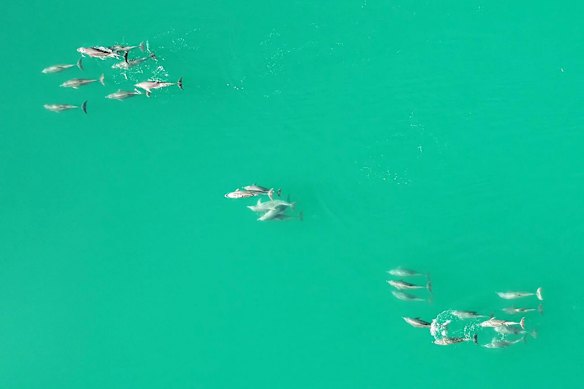
Social interactions between bottlenose dolphins at Monkey Mia in Western Australia.Credit: Simon Allen
“It doesn’t even matter how many friends you have, it’s really the quality of that social bond that affects ageing.”
The study did not distinguish between family and friends, but Gerber said previous research found most of the friends in a dolphin’s social network were not related.
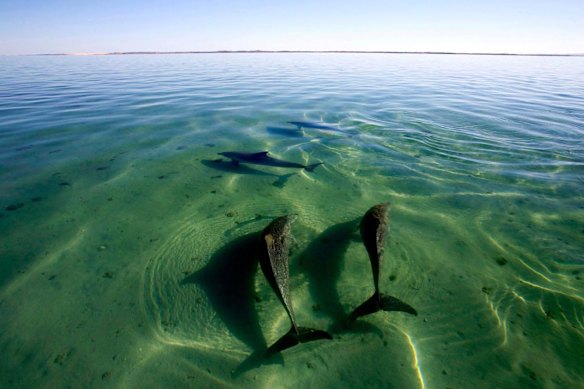
The bottlenose dolphins at Shark Bay have been studied for over 40 years.Credit: Simon Allen
The study focused on male dolphins, Gerber said, because there was a clear record of their friendships, with the animals forming close bonds with peers at age four and then sustaining the same relationships for decades.
Loading
Female dolphin friendships were also important, Gerber said, but tended to be more fluid, such as bonding with other mothers while their offspring were young.
Get to the heart of what’s happening with climate change and the environment. Sign up for our fortnightly Environment newsletter.