
Normal text sizeLarger text sizeVery large text size
When you see a Stephen Spielberg film, you know it’s a Spielberg film: over the past five decades, the director has been just as famous as the blockbuster movies he directed. But (cinephiles aside) how many of us knew, off the top of our heads, that the late Rob Reiner – who, along with his wife, Michele Singer Reiner, was found dead in his home on Monday – helmed a remarkable run of movies from the mid-1980s through to the early 1990s?
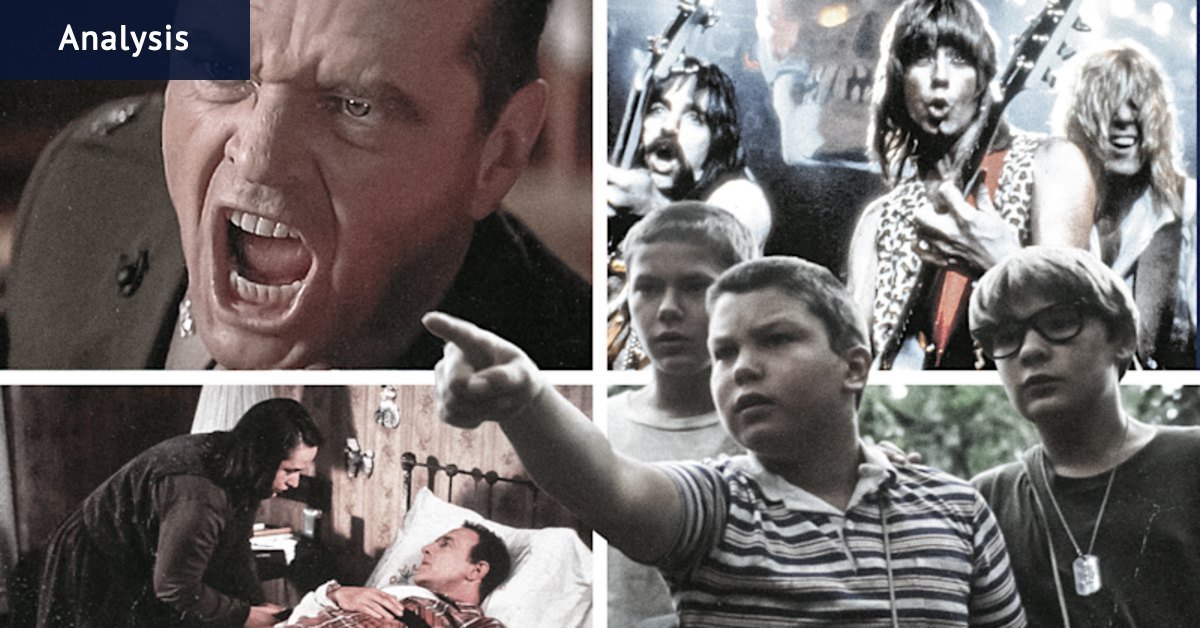
During that span Reiner made an extraordinary mockumentary (This Is Spinal Tap), an iconic coming-of-age movie (Stand By Me), an Oscar-winning Stephen King adaptation (Misery), a pitch-perfect legal drama (A Few Good Men) and, for good measure, the single greatest romantic comedy of all time (When Harry Met Sally), The Washington Post has noted.
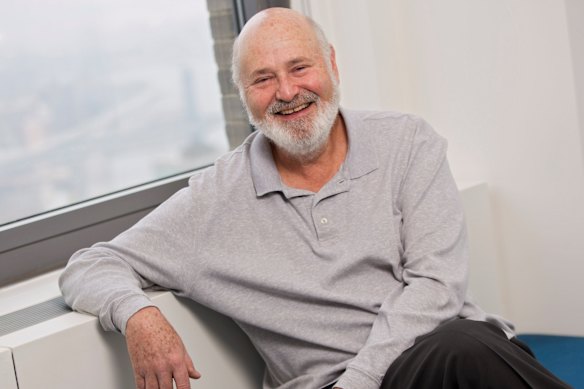
Rob Reiner had a remarkable run of movies between the mid-1980s and early 1990s.Credit: Brian Ach/Invision/AP
These are not just hit movies; they’re cultural touchstones, with an influence that lingered long after their box office success.
When we use the phrase “up to eleven”, we’re quoting an idiom coined in the 1984 film This Is Spinal Tap, which paved the way for other mockumentary movies and TV series, including The Office. When we say, “I’ll have what she’s having”, we’re quoting a well-known scene in When Harry Met Sally. (That line was uttered by Reiner’s mother, Estelle, who made a cameo appearance .)
“You can’t handle the truth!” entered the lexicon in 1992, thanks to A Few Good Men. When my partner calls me “Annie Wilkes” – having just caught me nudging decorative knickknacks back to their “correct” positions – he’s referring to the obsessive character played by Kathy Bates in Misery. (“Annie Wilkes had her faults,” I’ll reply, “but keeping an untidy home was not one of them.”)
My editor tells me that, as a girl, she and her siblings played their VHS copy of the 1987 fantasy adventure comedy The Princess Bride so often, they wore out the tape. And although it drew mixed reviews from critics, the title of Reiner’s 2007 film The Bucket List remains shorthand for “things I want to do before I die”.
Loading
What makes these achievements even more astonishing is that Reiner was already a successful actor in his own right, becoming widely known in the 1970s for playing Michael Stivic, Archie Bunker’s liberal son-in-law on Norman Lear’s sitcom All in the Family. He is also the son of comedy legend Carl Reiner, whose career spanned seven decades.
If he started out today, Reiner would be dismissively referred to as “a nepo baby”. But Reiner more than earned his place as one of Hollywood’s most successful directors.
Among those to pay tribute are former US president, Barack Obama, who said, “Rob’s achievements in film and television gave us some of our most cherished stories on screen. But beneath all of the stories he produced was a deep belief in the goodness of people – and a lifelong commitment to putting that belief into action.” Journalist Maria Shriver, the former First Lady of California, said, “We had dinner [with Rob and Michele] this past week, and they were in the best place in their lives: loving one another, their friends, their family, their country. They never gave up on our country. They always wanted to make our world better and were willing to fight to make it the country they loved.” Stephen King, who wrote the novels Stand By Me and Misery, referred to Reiner as a “wonderful friend, political ally, and brilliant filmmaker”.
The fact the US president was so unsettled by Reiner’s criticisms speaks to his influence.
President Donald Trump was less generous when he posted on his social media platform, Truth Social.
“A very sad thing happened last night in Hollywood,” Trump wrote, before turning his guns on the late director. “Rob Reiner, a tortured and struggling, but once very talented movie director and comedy star, has passed away, together with his wife, Michele, reportedly due to the anger he caused others through his massive, unyielding and incurable affliction with a mind crippling diseases known as TRUMP DERANGEMENT SYNDROME. He was known to have driven people CRAZY by his raging obsession of President Donald J. Trump, with his obvious paranoia reaching new heights as the Trump Administration surpassed all goals and expectations of greatness.”
Loading
Of course, in posting such a deranged statement himself, Trump inadvertently cemented Reiner’s status as a Hollywood great. After all, the fact the US president was so unsettled by Reiner’s criticisms speaks to his influence.
Here, Washington Post staffers list their own favourite movies from the peak of Reiner’s career:
This Is Spinal Tap (1984)
It’s pretty funny that in his filmmaking debut, Reiner plays a gasbag director – in this case, a riff on Martin Scorsese’s self-insertions into his own rockumentary work. The deliciousness goes to 11. So does the influence of this faux documentary of an ambitious/pretentious rock band, which is quotable to this day (“You can’t really dust for vomit”), poignant in its bottling of desperation and delusion, and as monumentally hilarious as a Stonehenge stage prop. – Jonathan Fischer
The Sure Thing (1985)
Scruffily charming, The Sure Thing is under-rated Reiner: a road trip rom-com, riffing on Frank Capra’s It Happened One Night. It was the screenwriters’ debut, and only Reiner’s second feature. John Cusack was so young he had to be legally emancipated to work on it! It’s a movie about, for and by young people; maybe that’s why it still feels so fresh. As of this writing, it’s unavailable to stream, but physical discs are on sale – and worth it. – Sophia Nguyen
Stand by Me (1986)
What an eye for talent. Reiner’s dazzling first five films launched the stars who would shape the multiplex experience of the 1980s and 1990s: John Cusack, Meg Ryan, Billy Crystal and most poignantly, River Phoenix, not yet 15 when this coming-of-age story was filmed. It would have been so easy for this movie to surrender either to nostalgia for a 1950s free-range childhood or the jump scares of its darker layers, but Reiner and Phoenix – a golden boy comfortable with darkness – deftly handled both. Phoenix would die of a drug overdose just seven years later, lending an emotional wallop to later viewings of a movie that hasn’t aged a bit. – Amy Argetsinger
The Princess Bride (1987)
When my brothers and I first experienced video on a computer, our most-played clip was Vizzini (Wallace Shawn): “No more rhymes now, I mean it.” While the book and script came from legendary writer William Goldman, Reiner perfectly balanced the comedy and the stakes, while assembling an anomalous collection of watchable actors and disparate elements – “fencing, fighting, torture, revenge, giants, monsters, chases, escapes, true love, miracles”, as the grandfather reading the story explains, plus, of course “marriage”, a word that we will never hear the same way again. – Zachary Pincus-Roth
When Harry Met Sally (1989)
In lesser hands, the Katz Deli scene would have been a disaster. Would any woman really fake an orgasm in a bustling restaurant just to prove to her male companion that she could? Probably not. But Reiner knew subtle direction would make Nora Ephron’s wacky screenplay sing. He films Meg Ryan and Billy Crystal’s neurotic New Yorkers in a warm, nostalgic light that makes you want to hop in a time machine to this cosier era. I’ll have what they’re having. – Sonia Rao
A Few Good Men (1992)
Has anyone ever come upon A Few Good Men while perusing cable and not stopped to watch? The stacked cast, taut storytelling and spellbinding climactic court scene (which permanently entered Jack Nicholson’s “you can’t handle the truth” line into common parlance) made for a perfect piece of entertainment. One amazing piece of trivia that attests to Reiner’s inventiveness as a director – unable to satisfactorily cast the part of Lance Corporal Dawson, Reiner plucked the right man directly from the set: Wolfgang Bodison, a non-actor who was working as the film’s location scout and went on to turn in a memorable performance. – Jenny Rogers
Sleepless in Seattle (1993)
Reiner has two short scenes in Sleepless in Seattle, but he still managed to deliver the film’s most memorable line, and with only one word: “tiramisu”. Sitting at a bar over lunch, Reiner’s job is to matter-of-factly coach a mystified widow (Tom Hanks) on re-entering a much-changed dating world. And who better? We need no backstory to trust Reiner as the best friend who will always give it to you straight. “First you have to be friends,” he says. “You have to like each other. Then you neck. This could go on for years. Then you have tests and then you get to do it with a condom.” Reiner stops, beer in hand, and introduces the concept of tiramisu with a sidelong glance, as if it were a secret code. “What is it?” Hank asks. “You’ll see,” Reiner responds. “Some woman is going to want me to do it to her and I’m not going to know what it is,” Hank protests. “You’ll love it,” Reiner insists. And we did, of course. But mostly we just loved him. – Ellen McCarthy
With The Washington Post
Find out the next TV, streaming series and movies to add to your must-sees. Get The Watchlist delivered every Thursday.