

In K-dramas, how characters address each other reveals their true relationship
If you’ve ever felt a K-drama relationship quietly recalibrate without a clear blowup, the explanation is often linguistic rather than plot-driven.
Korean is a language that prioritizes relationships and social context over individual identity, and the way one person addresses another often betrays how they truly feel. In this regard, titles and honorifics frequently do the storytelling in K-dramas that the script doesn’t explain in detail. Certain titles recur so often across K-dramas that recognizing them becomes a form of essential viewing literacy.
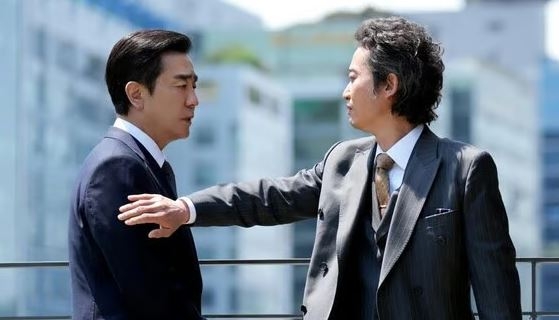 “The Dream Life of Mr. Kim” (SLL)
“Hyung” is literally translated as older brother, but that definition goes deeper in the K-drama context. In practice, hyung operates as a linguistic shortcut to chosen family. When used outside of blood relationships, it establishes a bond rooted in deep friendship and intimacy. When Nak-soo in “The Dream Life of Mr. Kim” refers to his workplace superior as hyung rather than by an official title, the atmosphere shifts. The hierarchy largely disappears, with the title signaling personal intimacy that exists beyond workplace ranks.
At the same time, these terms can function as emotional boundaries. When a woman refers to an older man as hyung instead of “oppa,” the romantic temperature tends to drop significantly. The choice suggests a desire to recast the relationship as familiar and non-romantic. Ensemble dramas and youth-focused series use this tension repeatedly, letting these words build boundaries of emotional comfort while also setting up conflict once feelings begin to outgrow the label meant to contain them.
 “Misaeng” (tvN)
The suffix “-ssi” mostly sits at the far end of the emotional spectrum. Polite, neutral and intentionally restrained, the suffix is the default mode of address between adults who are neither close nor openly antagonistic — a dynamic frequently employed in office series such as “Misaeng.”
Using “ssi” after a name serves as a linguistic reminder that intimacy has not yet been earned or has been withdrawn. When a drama allows a character to drop it, the moment often functions as a narrative pivot, signaling trust or affection without an overt declaration. On the flip side, reverting to “-ssi” after a period of closeness can be an equally important narrative device, communicating emotional distance more clearly than an outwardly spoken breakup.
 “Hospital Playlist 2” (tvN)
“Seonsaengnim,” literally translated as teacher, extends well beyond its literal meaning in real life and K-dramas. It marks a relationship defined by respect. In medical, legal and slice-of-life series, the title elevates the person addressed into a figure of guidance and authority. Even when dependence or affection develops, continuing to use “seonsaengnim” keeps the relationship deliberately non-romantic, framing it instead as one grounded in trust and mentorship. By holding onto this form of address, K-dramas often withhold romantic resolution by design.
In K-dramas, storytelling is less confined to grand confessions than through the gradual evolution of a single word. How characters address each other often reveals the truth of their relationship before they are willing to acknowledge it.
For viewers unfamiliar with the language, these distinctions may pass unnoticed, but understanding them will help the viewers catch the subtext that drives K-dramas.
“K-drama Survival Guide” series is your passport to decoding the language quirks and social cues of K-dramas. Each installment unpacks the nuances often lost in translation, offering a deeper look into the subcontexts of K-drama. — Ed.