
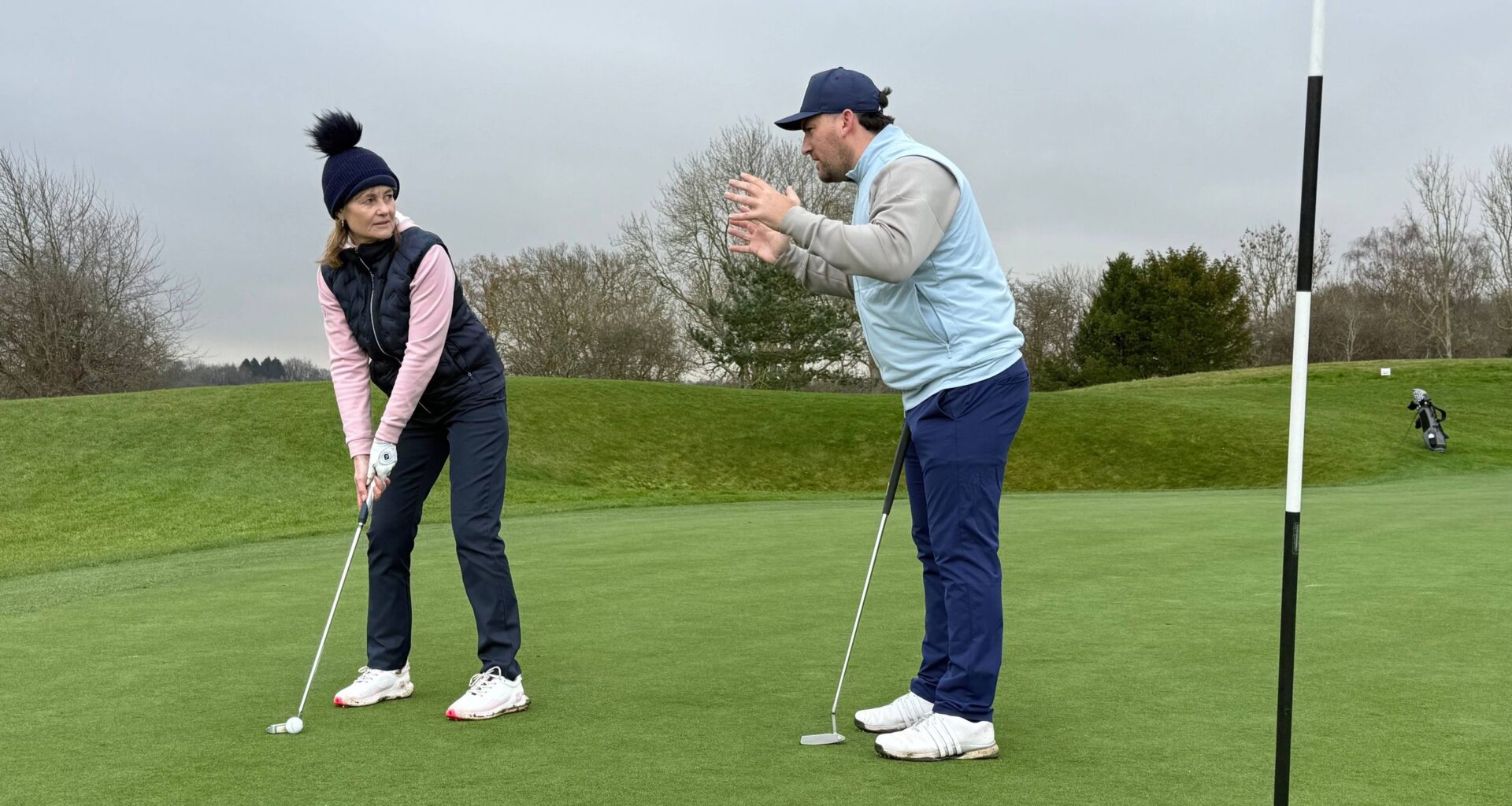
A recent social media post shared by golf content creator Hannah Holden captured an experience many women who play golf are familiar with. Holden, a +3 handicapper, was practicing her short putts using the classic two tee peg gate drill when she was interrupted by a man offering his advice.
Man: “Excuse me, you putted that well, do you mind me saying something?
Holden: “Uh huh”
Man: Do you speak English?
Holden: “Yeah”
The man proceeded to share his wisdom from a putting lesson he had many years ago, which was the transformational, groundbreaking advice, telling Holden to keep her head over the ball. He checks she understands this hugely complicated concept and instructs her to try it. Hannah continues her practice and holes the next putt. The man then proudly says, “There you are.” What a guy!
You may like
The reaction to the post was telling. Many women responded with recognition, “This happens to me too.” Others, largely men, questioned the video’s legitimacy. Was it staged? Why didn’t she say, “No thank you.” Was it exaggerated for likes?
With so much we see online being staged, these questions seem reasonable and neutral, but to me they reveal something deeper about the culture of golf and about how women’s experiences are routinely minimised, doubted or reframed to make them easier to dismiss.
At its core, this isn’t about one interaction, one video, or one social media post; it is about how women exist in golf spaces and what they are expected to tolerate in order to be there.
The Burden Of Politeness
Let’s start with one of the most common responses women hear when they say they don’t appreciate unsolicited advice: “Why didn’t she shut him down, say no thank you, I’m all good thanks.”
On the surface, that sounds straightforward. In reality, it misunderstands how women tend to navigate public and male-dominated spaces. Women are often taught to prioritise politeness, to avoid confrontation and to keep situations calm. This isn’t about weakness or lack of confidence, it’s about risk assessment.
When a woman is approached by a stranger, particularly in a setting where she may be alone or isolated, she has no reliable way of knowing how that person will react to rejection. For many women, a polite smile or deflection isn’t agreement, it’s self-protection. Women aren’t saying every man who offers advice is dangerous, they’re saying they don’t know which ones might be and so, they behave accordingly.
In golf, this dynamic is amplified. Golf spaces are still largely male-dominated, practice areas are often quiet. All of this contributes to an environment where women learn to manage interactions carefully, even when they shouldn’t have to. The people who think it is as simple as saying no, have likely never had to calculate their personal safety in that way.
You may like
Let Me Show You!
The topic of unsolicited advice always makes me think of the scene in Greta Gerwig’s hugely successful 2023 Barbie movie where Ken and other men repeatedly step in with an eager “let me show you” for a range of activities. They are certain of their authority and oblivious they’ve not been asked.
Played for humour, the scene lands because it reflects something many women recognise immediately; the assumption of permission, the confidence to instruct, and the expectation that their advice will be gratefully received.
The film isn’t accusing individual men of bad intent, it’s illustrating how this behaviour can quietly sideline women’s agency. In that sense, it mirrors what happened to Holden, the mystery man’s “helpfulness” crossed into intrusion, and she was expected to manage the interaction rather than question why it happened at all.

(Image credit: Future)
Credibility On Probation
The irony is that women don’t need to manufacture these moments. Ask almost any woman who plays golf regularly and she will have her own version of the story and casual sexism she encounters.
Unsolicited swing tips, rules explanations she didn’t ask for, assumptions about her handicap or ability before she’s even hit a shot. I have far more conversations with the women I teach about how to navigate their male friends and partners being ‘helpful’ than I ever have with the men I teach.
The instinct to dismiss these stories as fake says more about the discomfort they cause than about their accuracy. It’s easier to believe a video is staged than to accept that the sport still has a problem with how women are treated within it.
From Dismissal To Sexualisation
Perhaps the most dispiriting aspect of the backlash of Holden’s post is how quickly the conversation can slide from dismissal into sexualisation. There were comments like, “If she wants more followers, she should just hit balls in a bikini like the other social media golf girls, rather than make staged videos.”
When women are told, implicitly or explicitly, that their golf content would be better received if they focused on their appearance rather than their skill, it reinforces a damaging message, that women’s value in the sport is conditional. You can be taken seriously or you can be visible, but not both.
This false choice doesn’t exist for men. Male golfers are rarely asked to justify their presence, tone, or credibility in the same way. They are allowed to be average, passionate, instructional, outspoken, or quietly competent without their motives being questioned. Women, meanwhile, are expected to prove that they belong, and to do so without making anyone uncomfortable in the process.
Why This Conversation Matters
Some may argue that social media amplifies minor issues, or that this is simply part of online life. But I believe this misses the point. These interactions don’t begin or end on social media. They reflect real world dynamics that affect participation, confidence, and retention in the sport. Golf prides itself on being a game of respect and integrity, yet those values are undermined when women are expected to absorb discomfort in silence to belong.
If the sport wants to grow, it’s important to keep looking at the culture surrounding it, which means listening when women describe their experiences, even when those experiences are inconvenient or uncomfortable. Most of all, it means shifting the burden. Women shouldn’t have to perfect the art of polite refusal so they can practice in peace. Men manage to respect other men’s boundaries without being asked.
The value of moments like this isn’t in outrage or pile-ons from either side, it is in what they reveal. It’s not a problem created by social media but one that has long existed and should no longer be ignored. Hannah Holden’s video and the comments that followed wasn’t unusual and that is why it matters.