
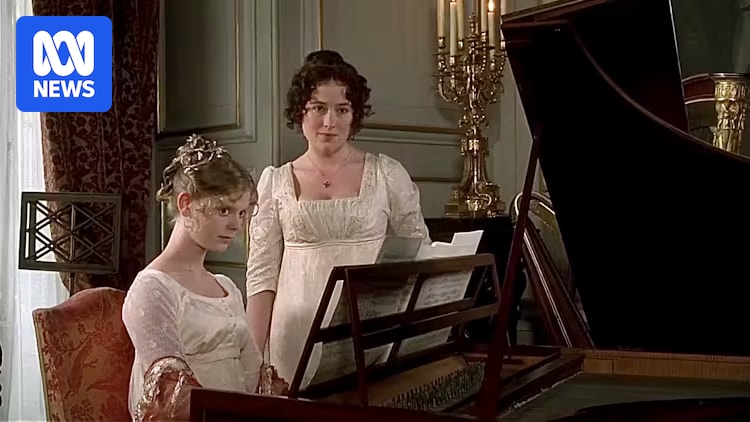
Jane Austen loved music.
“She played the piano and sang throughout her life,” says Gillian Dooley, pianist, academic and author of She Played and Sang: Jane Austen and Music.
For two centuries, the queen of imaginary ballrooms and witty dialogue has fascinated lovers of books, music and the screen.
In 2025, Austen fans have been celebrating the 250th anniversary of the author’s birth.
Austen’s life, spanning from 1775 to 1816, intersected with some of our most beloved composers, including Wolfgang Amadeus Mozart and Josef Haydn.
The author also had music by George Frideric Handel, Thomas Arne and dozens of popular composers of the time in her collections.
250 years of Jane Austen in soundtracks
Austen’s work has inspired many beloved screen adaptations, and music is a huge part of those worlds.
Screen composers who worked on these adaptations were heavily influenced by music from Austen’s time.
“[Music] is one way of peering into and understanding Austen’s world,” says ABC Classic’s Breakfast presenter Megan Burslem.
The musical world of Jane Austen
In her time, young women like Austen and her sisters entertained themselves by playing popular contemporary songs on the piano or another instrument using sheet music.
But often Austen had to copy out the music owned by acquaintances or the circulating libraries because they were not always available or affordable.
Dooley has researched Austen’s extensive sheet music collection, indexing at least 160 pieces of music in Austen’s hand, comprising songs, nursery rhymes and dances.
This forms the broader Austen family’s collection, which has around 600 pieces of music.
“A lot of them are unattributed or [popular] folk music,” Dooley says.
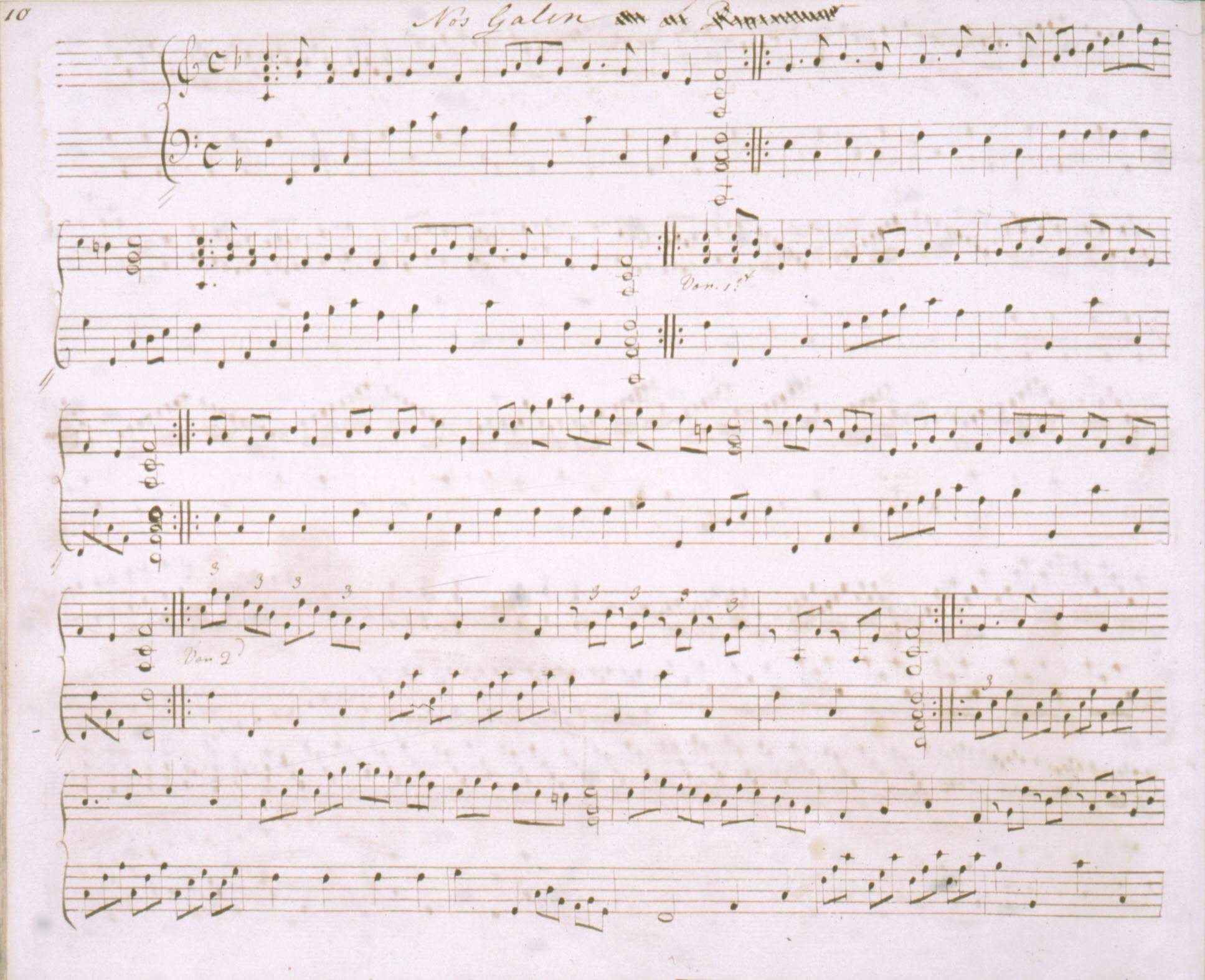
Jane Austen copied hundreds of pieces sheet music by hand, including popular songs and dances. (Gillian Dooley: Jane Austen House Museum, Chawton)
Unlike many of her heroines, who played for their social standing, Austen played for her own enjoyment or to amuse her nieces and nephews.
Among Austen’s sheet music, Dooley found piano arrangements of Mozart’s waltzes, songs by Haydn and other composers including women.
“Three songs in Austen’s own manuscript books are attributed to female composers,” Dooley says.
These songs were composed by the Duchess of Devonshire, a Miss Mellish, and even one attributed to Marie Antoinette or one of her companions.
The broader Austen family collection also featured songs by female composers, as well as words written by women.
Even though many Austen adaptations feature music by Beethoven, who was a contemporary of Austen, “there are no works identified as being by Beethoven in any of the Austen family music books that I’m aware of,” Dooley says.
Drama by the piano
The pianoforte was the centrepiece of many dramas in Austen’s novels.
It was the most fashionable instrument of the era and the status symbol du jour.
The grander the piano, the more expensive it was.
Dooley says Austen had a square piano at home.
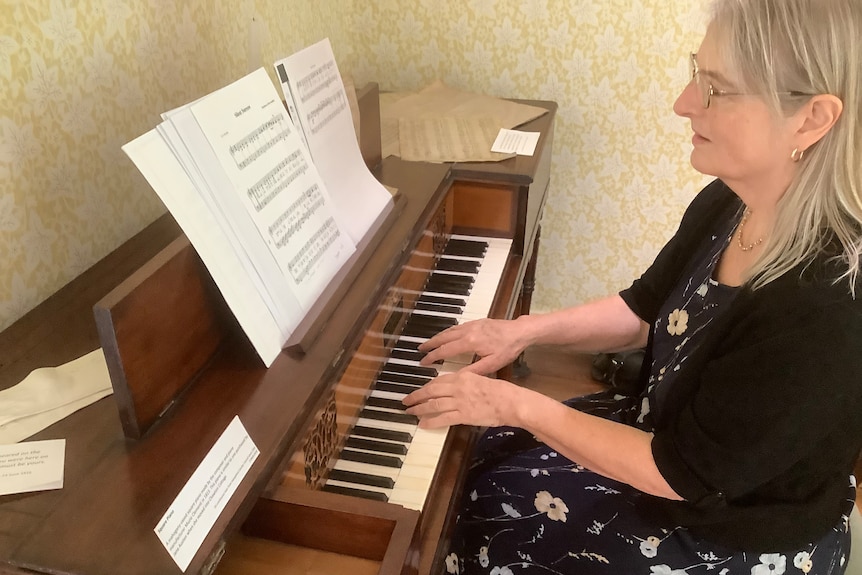
Jane Austen owned a square piano like this instrument, played by Dr Gillian Dooley. (Supplied: Gillian Dooley)
“It looks like a table, and it doesn’t have the full range of a piano with 88 keys,” Dooley explains.
Enthusiasts like Dooley love performing on the historic square piano, but in its day, it was the most modest of the models, unlike Austen’s imaginary pianos.
In Emma, the heroine’s frenemy, Jane Fairfax, receives a pianoforte from an anonymous donor.
It thickens the plot by giving Emma more fuel for her unfounded speculations about Jane.
Jane’s pianoforte is an expensive, “very elegant looking instrument — not a grand, but a large-sized square pianoforte”.
The incident is reported by Mrs Cole, herself a proud owner of a grand piano despite admitting: “I do not know one note from another.”
Jane is an orphan with limited options, making her prowess at the piano a catch-22 situation.
Historically, women were supposed to play only for family and friends, not professionally.
History of female pianists and composers
While Jane can’t fully explore her potential as a piano player, “[Emma] feels guilty about not being a better musician,” Dooley says.
Another character who tries and fails to be “the most accomplished girl in the neighbourhood” is Mary Bennett from Pride and Prejudice, whom Austen said had “neither genius nor taste.”
In contrast, Austen wrote that Mary’s sister, “Elizabeth, easy and unaffected, had been listened to with much more pleasure, though not playing half so well”.
Austen valued sincerity over technical brilliance, according to Dooley.
The attraction between Elizabeth and Mr Darcy literally blossoms around the piano, first when he observes her performance in Netherfield, then when the pair meet again at Rosings.
All of this music-driven tension and irony makes rich fodder for drama on screen.
Classical music in period dramas
Some of the best-known Austen screen adaptations include gorgeous music.
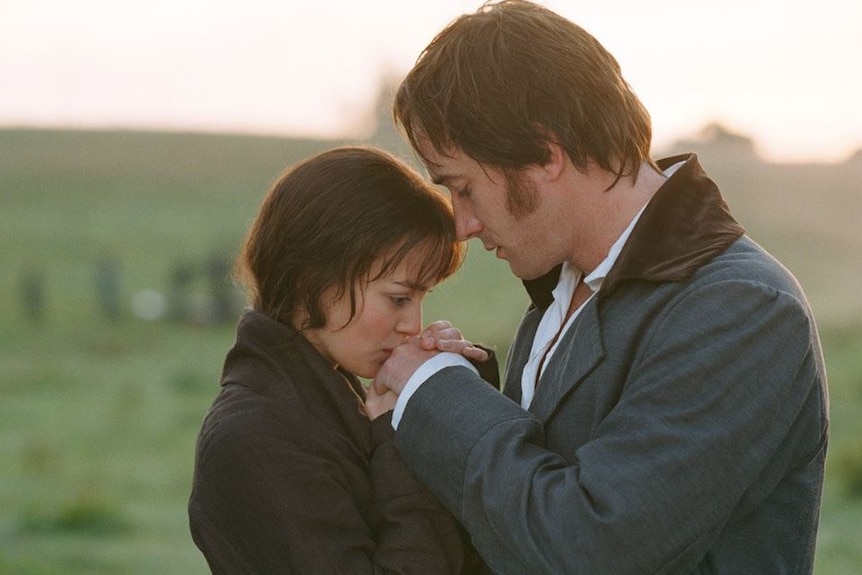
Music is one way to immerse ourselves in the world depicted in period dramas. (Imdb: Focus Features)
The 1995 and 2005 adaptations of Pride and Prejudice were beautifully scored by Carl Davis and Dario Marianelli.
Both composers drew heavily on music from Austen’s lifetime for inspiration.
“You could think of music in the same way that you see costumes,” Megan Burslem says of how researching music history can enhance the on-screen experience.
“An historically informed score brings to life a story of the era in a way that no other music can.”
Scenes of young women playing the piano for themselves, or showing off their talents in the company of guests, are familiar fixtures in period dramas about Regency England.
But Burslem says music can go deeper than aesthetic, such as in the 1995 Pride and Prejudice.
“Carl Davis used a hunting horn motif to represent Mrs Bennett’s constant hunt for husbands for her daughters,” Burslem says.
“[Davis’s soundtrack] has become iconic as a standalone work.”
As well as the historically informed music, the 1995 Pride and Prejudice is Burslem’s favourite because the neutral screen aesthetic really lets the words and the glances between characters speak for themselves.
Burslem’s runner-up, also from 1995, is Ang Lee’s Sense and Sensibility.
“Every scene looks painted and [underscored] by John Powell’s music,” Burslem says.
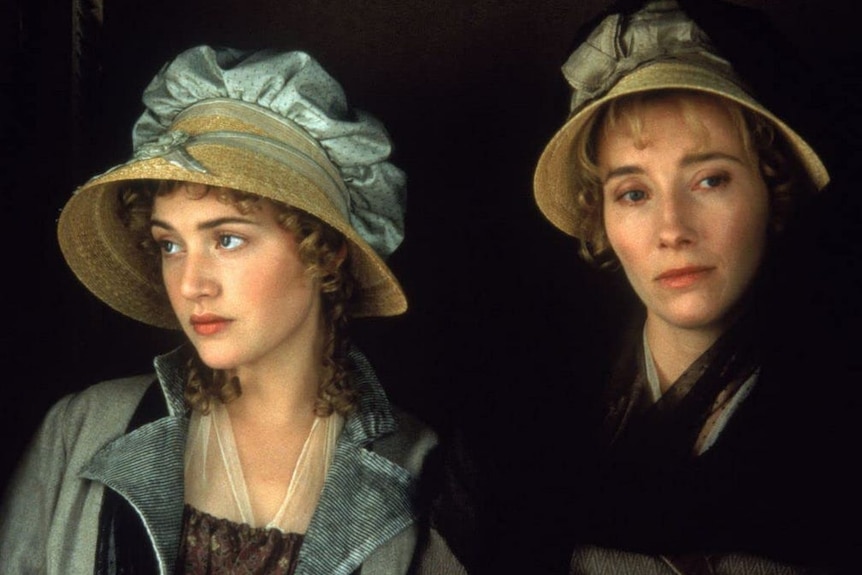
Just like costumes, a historically-informed score is an important part of making a period drama. (Source: Sony Pictures)
“These big, sweeping, sad motifs underpin the quest to find yourself and your place in the world.”
Burslem argues Sense and Sensibility has one of the most beautiful piano scenes in the entire canon of Austen adaptations.
“Watching Alan Rickman as Colonel Brandon fall in love when he first sees Kate Winslet as Marianne singing at the piano is gorgeous, heartbreaking and so tragic,” she says.
Austen wrote: “[Marianne] spent whole hours at the pianoforte alternately singing and crying.”
“The way the light hits her [brings out] this real melancholy about her playing,” Burslem says.
Music lovers, including Dooley, have expressed admiration for Autumn de Wilde’s adaptation of Emma in 2020.
The film, scored by Isobel Waller-Bridge and David Schweitzer, used music by Mozart and Haydn as well as numerous recordings of folk song artists.
Emma has historically been groundbreaking for female composers.
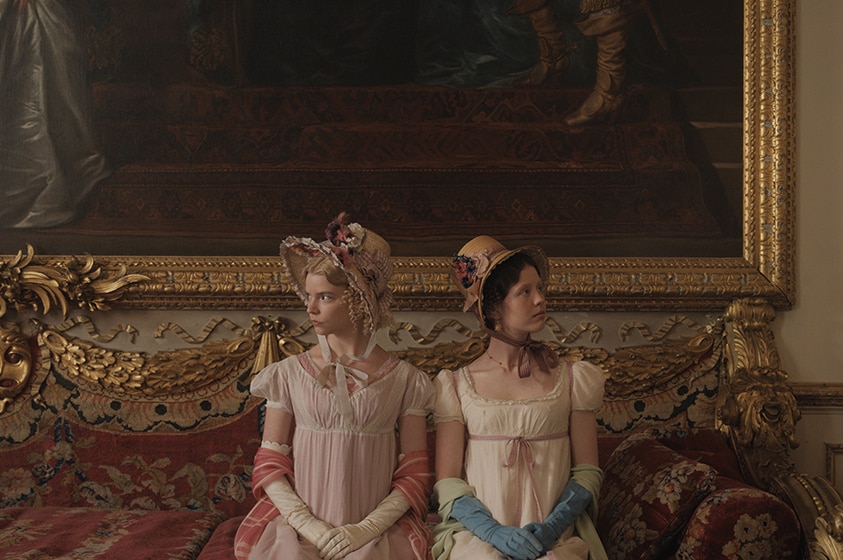
Audiences appreciate the musical detail in the 2020 adaptation of Emma, which features music from Austen’s time. (Supplied: Universal Pictures)
The 1996 adaptation was scored by Rachel Portman, who became the first woman to win the Academy Award for Best Original Score for her work on Emma.
Austen’s stories might be set in Georgian England, but the way she portrayed how we fall in love, acquire confidence and overcome adversity makes them timeless.
Burslem is positive that these stories will keep being remade.
“We’re going to keep remaking them like we keep remaking Little Women,” Burslem says.
Sign up to the ABC Classic Newsletter