
DL Atelier’s multi-use residential prototype in Xueshan Village
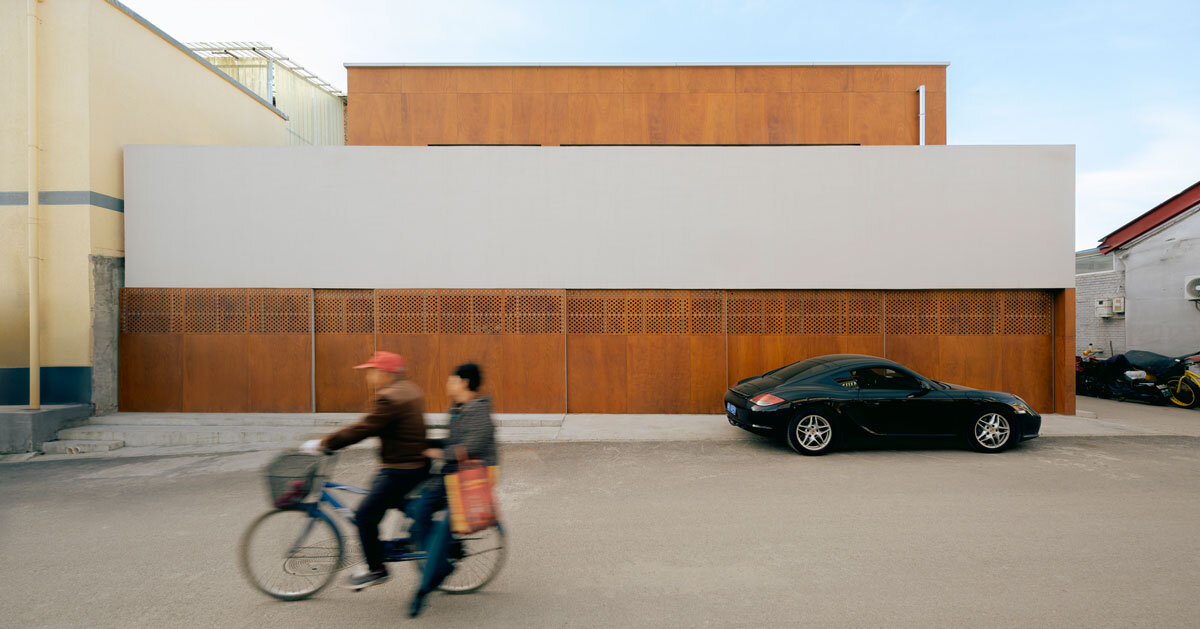
A House in Xueshan Village is a 350-sqm self-developed residential project designed by DL Atelier in Xueshan Village, Changping District, Beijing. Located at the urban-rural fringe, approximately 30 minutes from the city’s Second Ring Road, the building operates simultaneously as a private residence, a design office, and a space for community-oriented activities. The project explores how multiple programs can coexist within a single architectural framework while remaining adaptable to future change.
The site occupies a rectangular plot at the northeastern edge of the village, bordered by village roads to the north and west and neighboring courtyards to the east and south. Initially undeveloped, the plot was activated through a design process that addressed three potential uses: residential living, office operation, and rental or commercial activity. Rather than fixing a single function, the project was conceived as a flexible spatial system capable of supporting these different scenarios over time.
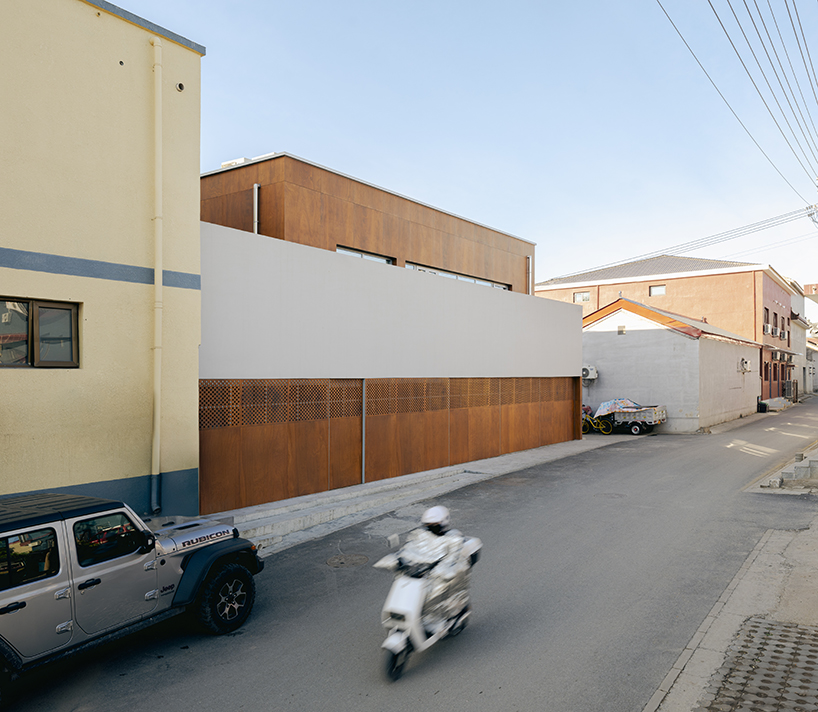
The architectural strategy reverses the typical rural housing model in which buildings enclose a central courtyard. Instead, the building volume is placed at the center of the site, allowing courtyards of varying sizes to surround it on all sides. This arrangement ensures that each room has direct outdoor access while improving daylight, ventilation, and spatial flexibility. Perimeter walls are raised to maintain privacy, and the building mass steps back at upper levels to form terraces for second-floor bedrooms. A three-car garage occupies the side of the site facing the village road, responding to both functional requirements and street conditions. A large sliding door allows the garage to open fully to the street, enabling its use for outward-facing programs while visually extending the street into the site. The garage is integrated with a workshop used for fabrication and prototyping, separating noisy or dusty activities from the living areas while maintaining operational efficiency.
all images by ©Zhu Yumeng – Coppak Studio
A Hybrid Interior Framework for Public and Private Activities
Interior spaces are organized as open, fluid zones that can shift between residential, office, exhibition, and commercial uses. On the ground floor, public interior spaces connect directly to the courtyard, allowing indoor and outdoor activities to overlap. The second floor combines private living areas with open workspaces accommodating over ten people. An independent office entrance, staircase, and restroom on the street-facing side allow work functions to operate separately from the residence or be connected as needed.
The building, developed by DL Atelier design studio, also incorporates exhibition and community functions. A former living room has been converted into a display space, while a ground-floor room currently operates as a small community library accessible from the street. The building itself serves as a demonstrative platform for rainwater harvesting and recycling systems, while ground-level and rooftop gardens are used for ongoing landscape and planting experiments. Anticipating future changes in village infrastructure, the east facade was designed with increased glazing to support potential street-facing commercial use once the adjacent road is widened. Throughout the project, architectural expression was intentionally kept neutral, prioritizing economical construction, standard materials, and ease of replication over individualized formal gestures.
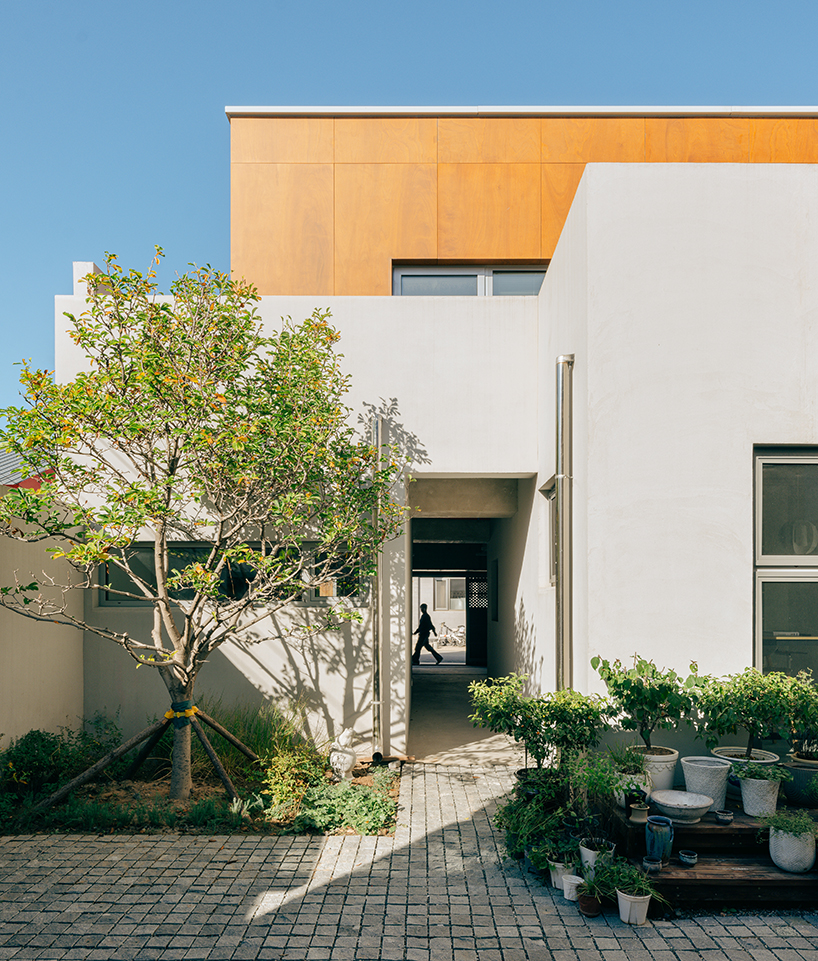
House in Xueshan Village is a hybrid residence designed by DL Atelier in Beijing’s urban-rural fringe
Hybrid Program and Passive Design at the Urban-Rural Edge
The project employs a passive energy-saving approach aimed at reducing long-term operational costs and improving environmental performance. Building form, insulation, and orientation were carefully calibrated, alongside detailed studies of window placement, courtyard wall heights, and seasonal ventilation patterns. Courtyard walls help promote cross-ventilation in summer while shielding the building from cold winds in winter. Landscape and water systems were developed in collaboration with the homeowner, whose professional background informed the rainwater management strategy. Permeable paving, planted courtyards, and a partially soil-covered green roof work together as an integrated rainwater collection, infiltration, and reuse system. These elements support both environmental performance and ongoing research into water-efficient landscape design.
By accommodating residential, work, exhibition, and income-generating functions within a single structure, A House in Xueshan Village proposes a hybrid lifestyle model suited to the urban-rural fringe. The project positions architecture as a tool for flexible living and small-scale development, responding to changing professional patterns and housing needs. Rather than presenting a fixed solution, the building functions as a prototype for adaptable, self-developed housing. Its design supports phased growth, potential connections with neighboring plots, and the gradual formation of a small, mixed-use community. As such, the project frames architecture not as an isolated object, but as a scalable framework for future rural development at the edge of the city.
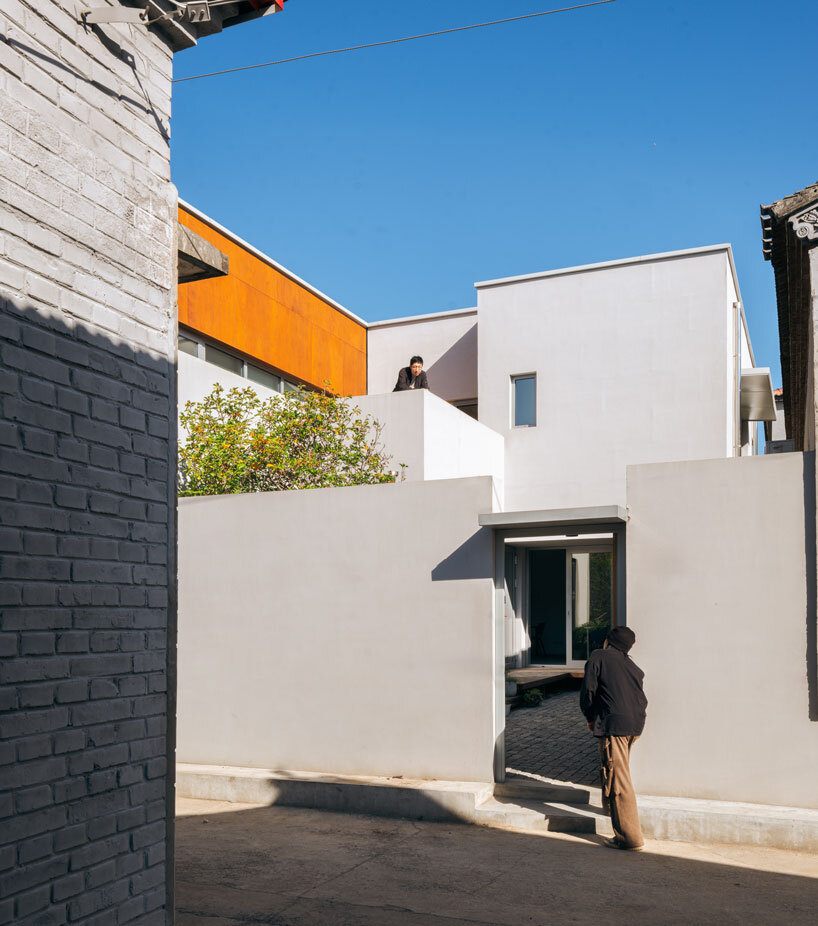
the project combines living, working, and community programs within a single adaptable structure
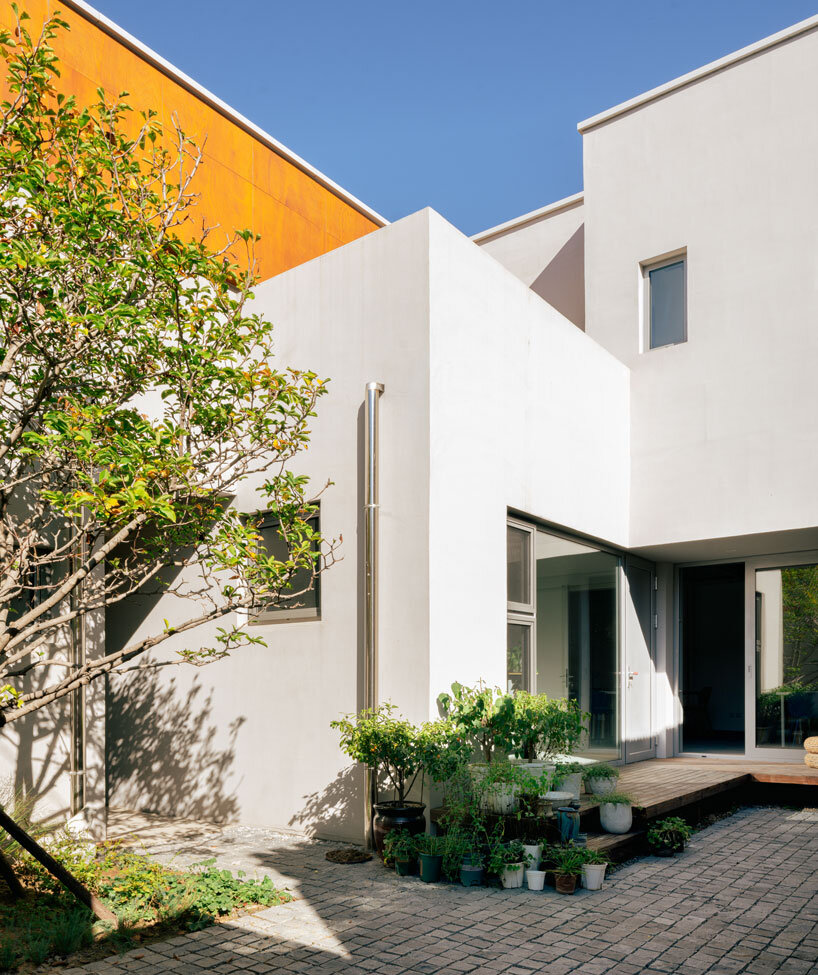
the building volume is positioned at the center of the site rather than enclosing a single courtyard