
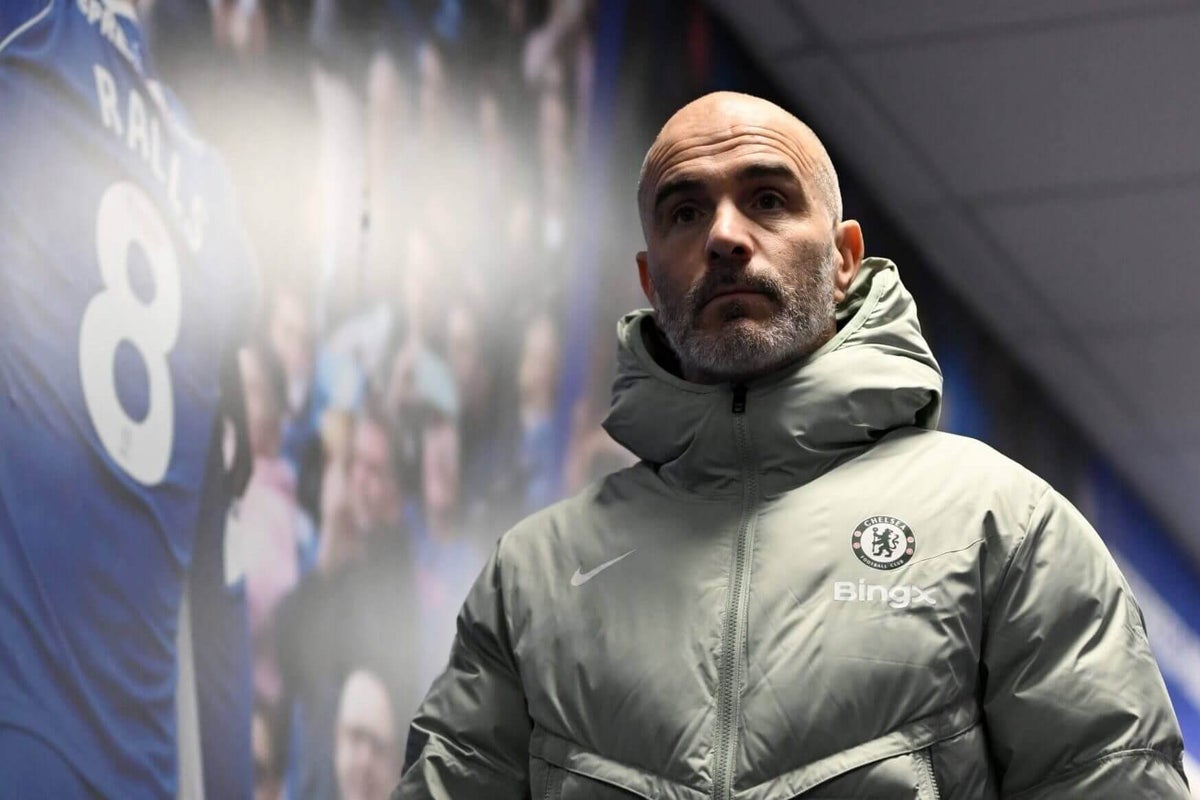
We are nearly half a week on from Enzo Maresca’s sudden outburst following Chelsea’s game over Everton — and it is still unclear exactly what caused it.
Any hope that a 3-1 win over Cardiff City to progress to the Carabao Cup semi-finals would lighten Maresca’s mood were soon quashed post match. Two goals from Alejandro Garnacho and one from Pedro Neto ended the League One side’s resistance but did not put a stop to the drama of the last few days.
After smiling during the post-match celebrations on the pitch in front of an away support singing his name for the first time in several months, the Italian looked ashen faced during his debrief with the written media. He looked so glum, one journalist even asked if he was genuinely happy about reaching the last four. Maresca ended the inquisition by revealing that he had not spoken to any member of the sporting leadership team or owners since complaining at the weekend that he had experienced the worst 48 hours of his career at Stamford Bridge.
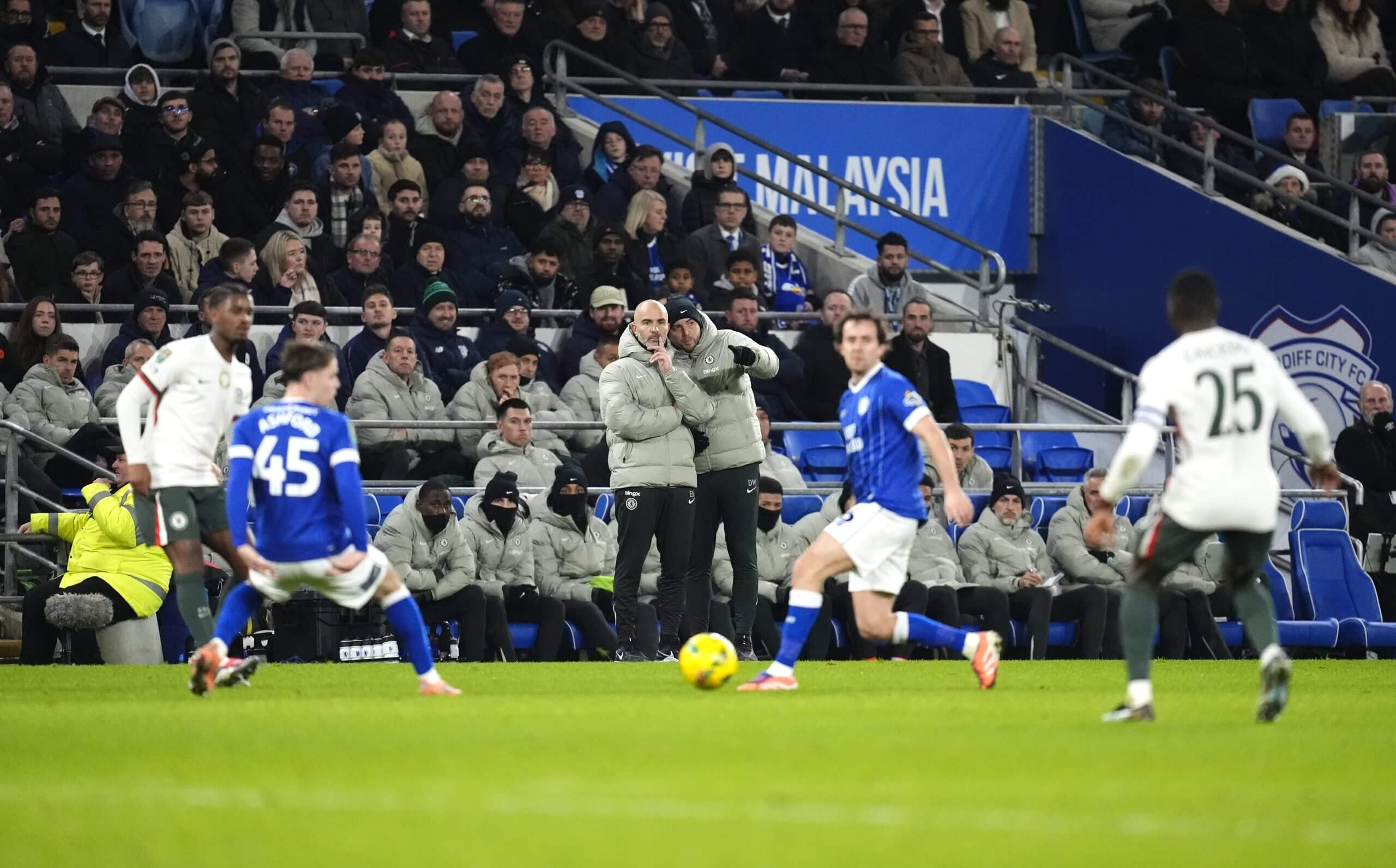
Enzo Maresca and coach Danny Walker look on during Chelsea’s Carabao Cup quarter-final win at Cardiff (Nick Potts/Getty Images)
It just prompted more questions over what is going on with Maresca. In constructing this article, The Athletic has spoken to a number of sources who, unless otherwise noted, all asked to be kept anonymous in order to protect relationships.
What happened?
During a routine post-match press conference following Chelsea’s 2-0 win over Everton on Saturday, Maresca revealed he had just experienced the worst 48 hours of his career at Stamford Bridge. He referred to a lack of support for him and his team.
Chelsea’s head coach had not been provoked into a reaction from a tough line of questioning, but reacted to a simple query over Malo Gusto scoring and assisting a goal in the match.
Maresca did not clarify who he was referring to, saying it was ‘in general’ and that he loved the fans. It sparked a lot of speculation from a number of quarters that there are issues between him and the Chelsea hierarchy.
During his next encounter with the media on Monday to preview the Carabao Cup tie versus Cardiff City, the Italian refused to take the opportunity to explain his actions any further or admit any regret over what he said.
Given how often senior officials converse with Maresca after matches, it seemed significant that he admitted there had been no communication since Everton or following the Cardiff victory. When asked if any conversations had taken place, he said: “No, as I said yesterday, the day after Everton, I started to prepare for Cardiff, focus on Cardiff. Now I just said, on the bus I will watch Newcastle (to prepare for the Premier League game between the two sides on Saturday) and I didn’t speak with one of them.”
Was this a shock?
The journalists in the room were not the only ones surprised by what they heard on Saturday afternoon. One Chelsea source speaking to The Athletic suggested Maresca had had an ‘emotional response to an emotional win’.
Further conversations with Chelsea sources have revealed that those at the club genuinely did not see it coming. They suggested that nothing of note had happened over the previous two days to spark such an outburst.
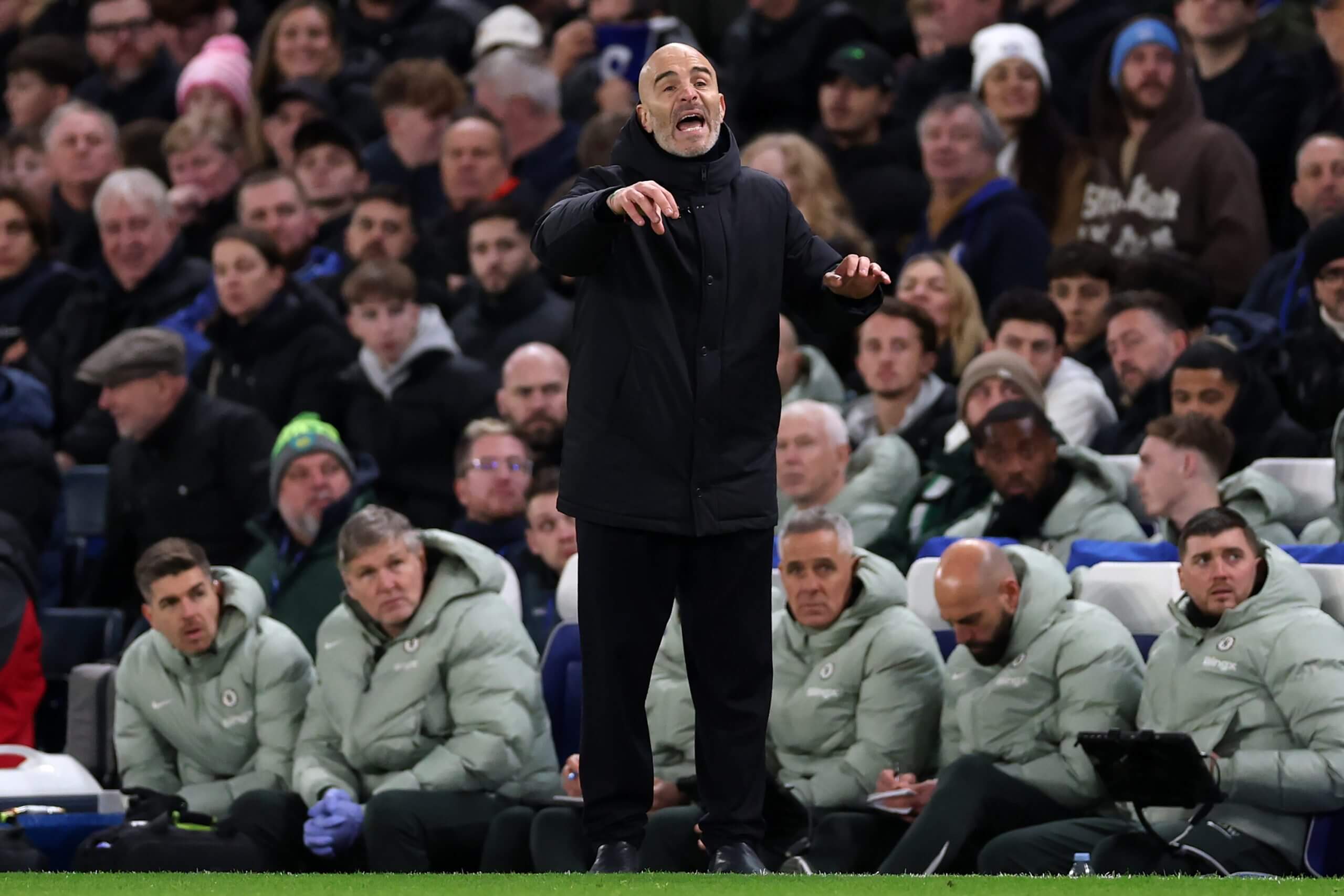
Enzo Maresca reacted after the win over Everton (Justin Setterfield/Getty Images)
Why did Maresca choose to make a statement?
This is a very good question and one he has refused to answer so far. Maresca has made a point of keeping the reasons away from the public domain.
According to Chelsea sources, they are not sure as to the reasons why or who he was referring to. Maresca has tried to insist the matter is closed as far as he is concerned, but the speculation will inevitably continue.
Maresca has been criticised by fans. Were they the focus of his ire?
Well, he insisted they were not on Saturday, saying, “I am very happy with the fans.”
There is seemingly quite a split in the fanbase among those who are pro or against the Italian being in charge. Naturally, there was a lot more criticism on social media after the disappointing results and performances prior to the Everton fixture, against Leeds United (3-1 loss), Bournemouth (0-0 draw) and Atalanta (2-1 defeat).
But it was only a few weeks earlier that Maresca was being heralded for masterminding a 3-0 victory over Barcelona and a 1-1 draw against Premier League leaders Arsenal despite being down to 10 men for nearly an hour.
The media, including The Athletic, also judged those three Chelsea displays negatively and rightly so. If Maresca was unhappy with the treatment, he could have easily said something on Friday, Saturday or Monday, but did not do so. In fact, on Monday, he stressed how ‘everyone is entitled to their opinion’ and added: “I’m not annoyed with all of you.” However, that does leave the door open to suggest there are some in the industry he is not best pleased with.
A lot of theories are based on the idea that something must have happened at the club, but as pointed out above, Chelsea sources insist there has been no confrontation to spark all this.
The mood at the club a few weeks ago was very upbeat, with Chelsea doing well in the Premier League, Champions League and Carabao Cup, and it is not going to dramatically shift after just three matches, even if they did not go as planned. Chelsea showed their backing for Maresca when he went through a much worse run of form between December and late February last season, picking up just nine Premier League points out of 30 and being knocked out of the FA Cup by Brighton & Hove Albion.
When asked by reporters about his relationship with the owners on Monday, he replied, “It’s OK, it’s good.” Pressed on whether it is as good as it has always been, he added, “I think so, yes.”
His going over to acknowledge the away supporters with the players at full-time in Cardiff, and the manner of his warm interaction with them, would appear to be further indication the source of his angst lies elsewhere
Are there any issues behind the scenes?
The club are not acting in any different way than when Maresca was hired in June 2024.
Chelsea’s structure is akin to Liverpool’s in that the strategy, including transfers, is led by the sporting directors. There are five in all at Stamford Bridge, but Paul Winstanley and Laurence Stewart head up the team.
Maresca is kept in the loop on transfers, but his role is geared towards coaching.
In the summer window, he did ask for a centre-back to be signed after defender Levi Colwill suffered an anterior cruciate ligament injury to rule him out for most — if not all — of the season. But multiple Chelsea sources have told The Athletic that this request was denied because there were still plenty of centre-backs to choose from. Last week, The Athletic reported that Chelsea also did not want to block the pathway of Josh Acheampong.
The same sources say the matter was resolved a long time ago and played no part in this.
It is customary for Maresca to have a debrief with the sporting leadership team after matches — this is standard procedure whether Chelsea win or lose.
Chelsea have always planned to conduct a review at the end of Maresca’s second season — next summer — about everything going on. That has not changed either.
Maresca made it clear on Monday that he just wants to move on from what took place, and Chelsea sources say that is the view shared within the club.
Could the load management policy be a problem?
Maresca has come under a lot of scrutiny from fans and media alike for the number of changes he makes to his first XI and substitutions during the matches themselves. The Athletic questioned whether it should be toned down a little after the defeat at Atalanta, while recognising it is a deliberate strategy led by the medical department and backed by everyone at the club, including Maresca.
Chelsea hope this will not only help players with a history of injuries, such as captain Reece James, to play regularly, but also with injury prevention and the team’s ability to be fresh in the closing stages of the campaign.
Maresca has not voiced any public complaint, but there is obviously a challenge for him to keep winning games when his best players are not always on the pitch.
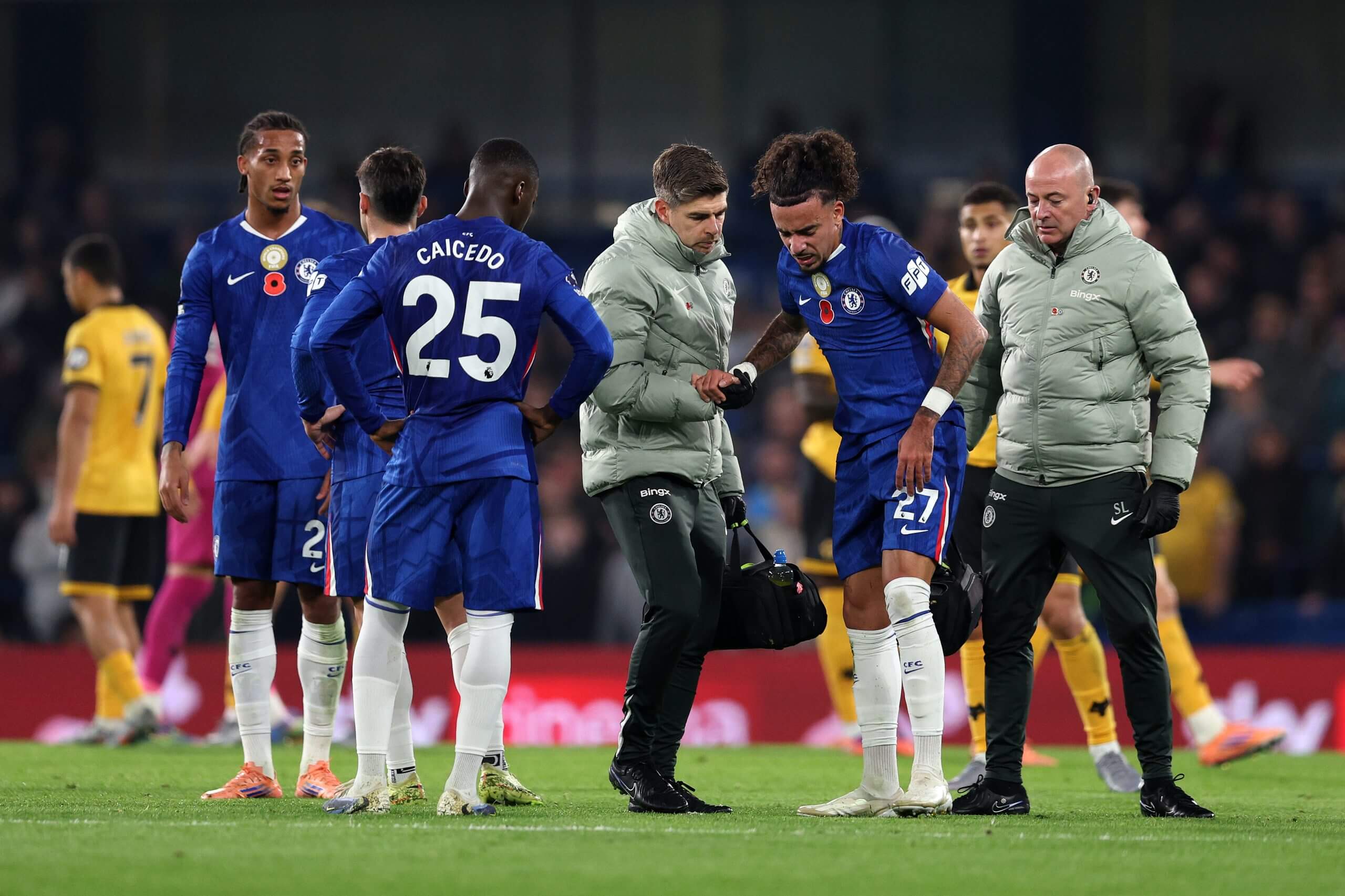
Chelsea have implemented a rotation system to help with load management (Steve Bardens/Getty Images)
What else could be causing tension?
Being the coach of Chelsea is a highly pressurised job, and after Maresca’s achievements last season, expectations from the fans have gone up. Chelsea qualified for the Champions League and won the Conference League and Club World Cup in Maresca’s first campaign.
Internally, though, Chelsea have placed no demands on him to win the Premier League in May. The club’s aim is to stay in the title race for longer and finish closer to the leaders while qualifying for the Champions League again.
Chelsea also wanted to do well in the three cup competitions, and they have now reached a Carabao Cup semi-final and should progress to at least the play-offs in the Champions League. They play an FA Cup third-round tie at Charlton Athletic next month.
What’s the state of play with Maresca’s contract?
On accepting the post, Maresca signed a deal until 2029, but there is a 12-month club option to extend it.
Maresca changed agents in October and is now represented by the high-profile Jorge Mendes.
Why did he not get a new deal after the Club World Cup win?
Maresca was only one year into the job, and it is very rare for any club to discuss contract extensions with a manager after such a short period. For example, Arne Slot, whose deal expires in 2027, has yet to be given fresh terms at Liverpool, and he won the Premier League earlier this year.
However, in August, Chelsea did choose to reward sporting directors Winstanley and Stewart for the work they have done by extending their tenure from 2028 to 2031. Joe Shields (recruitment/talent) and Sam Jewell (global recruiting) had three more years added to their agreements and were promoted to sporting directors as well.
The quartet are only contracted to Chelsea for one more year than Maresca — if his option is exercised — so it is not an enormous disparity.