
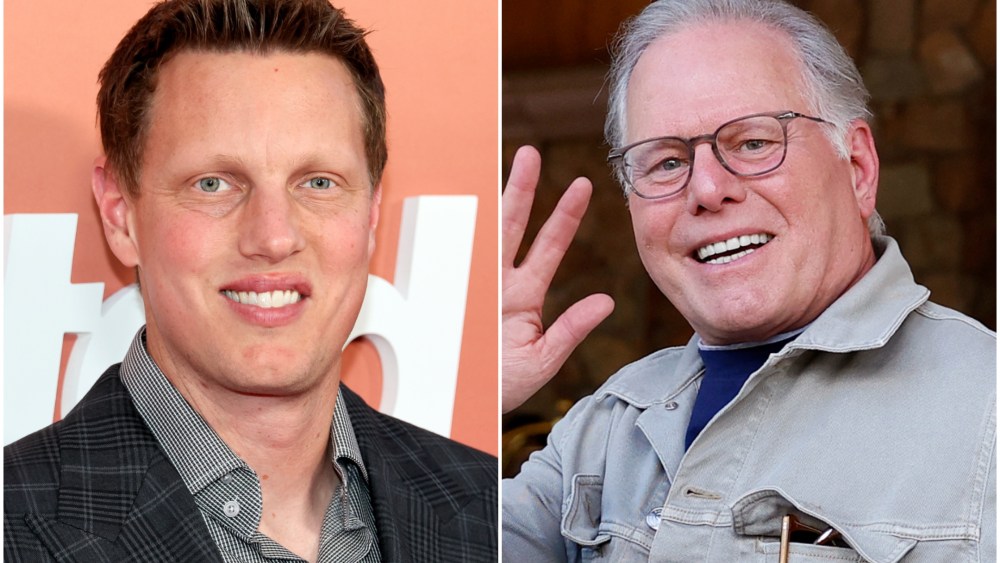
The Ellisons came promising boatloads of cash. They told Warner Bros. Discovery chief David Zaslav they would give him a pay package worth hundreds of millions of dollars. Over a four-month stretch, David Ellison pressed his case aggressively that Paramount Skydance had the best offer on the table.
None of it — so far — has been enough to sway the Warner Bros. Discovery board.
On Wednesday, the board of Warner Bros. Discovery officially rejected Paramount Skydance’s $30-per share unsolicited takeover offer for the whole company, saying it’s sticking with the “superior” deal offer with Netflix. As part of the WBD response, the company disclosed a timeline of the interactions between Warner Bros. Discovery and Paramount, which grew contentious over the several weeks that Paramount’s David Ellison was driving aggressively to land a multibillion-dollar deal for WBD in its entirety.
The WBD filing presents a chronology of events and meetings that occurred, leading up to WBD’s Dec. 5 announcement of its deal to sell Warner Bros. studios and HBO Max to Netflix, following by David Ellison’s hostile takeover bid and the WBD board’s official rejection of the $30/share bid on Dec. 17.
Per the filing with the SEC, WBD CEO David Zaslav told the company’s board after David Ellison’s initial $19/share offer in September that the Ellisons — David and his father, billionaire Larry Ellison — had “indicated to him that, if a transaction between PSKY and WBD were to occur, Mr. Zaslav would receive a compensation package worth several hundred million dollars.” According to the WBD filing, Zaslav advised the Warner Bros. Discovery board that “he informed the Ellisons that it would be inappropriate to discuss any such arrangements at that time.”
Note that Zaslav stands to reap a windfall of hundreds of millions from his WBD stock holdings, whether Warner Bros. sells to Netflix or Paramount — and he’s projected to become a billionaire if either deal goes through.
For Paramount’s hostile bid to prevail over the Netflix agreement, both the board of directors of WBD and WBD stockholders would be required to approve it — unless Paramount receives at least 90% of the outstanding shares of WBD common stock in favor of the proposal.
WBD also noted in the filing that Zaslav is “subject to a non-competition covenant and a non-solicitation of customers and employees covenant that are each applicable during the period of his employment and for a period of 24 months thereafter, unless Mr. Zaslav’s employment is terminated without ‘cause’ or by Mr. Zaslav for ‘good reason,’ in which case the restricted period would be reduced to 12 months following such qualifying termination.”
According to WBD, Ellison made Paramount’s first official interest in acquiring the company in a Sept. 14 meeting with Zaslav. That came after a WSJ report Sept. 11 that Paramount was prepping a bid for WBD, which prompted the Warner Bros. Discovery share price to spike.
At that first meeting, Ellison proposed to combine WBD and Paramount Skydance in a transaction in which WBD stockholders would receive a 60%-40% cash-stock mix, comprised of $11.40 in cash and 0.404 of a share of PSKY Class B common stock for each outstanding share of WBD common stock. The offer was subsequently delivered in writing, with an implied a value of approximately $19.00 per share of WBD common stock.
That initial proposal “suggested that Mr. Zaslav could be the Chairman of the combined company’s board and that PSKY ‘would also want other WBD directors to join the combined company’s Board.’”
On Sept. 15, the WBD board met to discuss the “potential risks and benefits” of the Paramount proposal. “The WBD Board noted that the PSKY September 14 Proposal significantly undervalued WBD (taking into account, in particular, that PSKY’s share price was inflated in value relative to its recent unaffected price prior to rumors of a potential transaction), that the proposal lacked details or commitments regarding equity financing, and that the stock consideration offered by PSKY consisted of non-voting Class B common stock of PSKY, ensuring that the Ellison family would retain voting control of the combined entity despite owning a minority of the economic interests in the combined company,” per the filing.
On Sept. 22, Zaslav and Samuel Di Piazza Jr., chair of the WBD board, sent a letter to Ellison rejecting the Paramount proposal — the first of what would be six more rejections. Later that day, Ellison called Zaslav to request that Zaslav meet with his father, Larry Ellison, to discuss the Paramount’s interest in acquiring WBD. Mr. Zaslav agreed.
On Sept. 24, Zaslav, John Malone, chair emeritus of the WBD board, and Larry Ellison had a videoconference meeting to discuss the Paramount initial proposal. At that meeting, Zaslav “reiterated the reasons for the WBD Board’s decision that were conveyed in WBD’s September 22, 2025, letter to Mr. D. Ellison and the WBD Board’s commitment to the separation plan as a superior path to value creation.”
The Ellisons persisted. Paramount Skydance submitted bids of $22/share on Sept. 30; $23.50/share on Oct. 13; $25.50/share on Nov. 20; an all-cash bid of $26.50/share on Dec. 1; and the $30/share offer on Dec. 4. According to Paramount, Ellison sent texts to Zaslav on Dec. 4 about that last offer — including one that read “It would be the honor of a lifetime to be your partner and to be the owner of these iconic assets” — but never heard back.
Paramount ultimately was vying in the deal against three bidders: Netflix, Comcast and an unidentified third company referred to as “Company C,” described in the filing as “an American media company” that submitted a proposal to buy Discovery Global (WBD’s TV networks business) and 20% of the WBD Streaming & Studios Business including HBO Max for $25 billion in cash. Per the filing, “WBD determined that Company C’s proposal was not actionable at that time.”
In its Dec. 1 bid, Comcast, referred to in the document as “Company A,” proposed combining the WBD Streaming & Studios Business and certain of Comcast’s related businesses for per share consideration of $5.25 in cash and an amount of stock per outstanding share of WBD Common Stock “such that WBD stockholders would own 49% of the combined company.”
Based on a variety of valuation assumptions Comcast set forth in its bid letter, it ascribed a “headline price” of $35.43 per WBD share in the Dec. 1 bid. Comcast’s bid also included a regulatory termination fee of $5 billion and a WBD termination fee of $2.275 billion.
“The WBD Board determined that, while there could be strategic merit in the transaction proposed by Company A, the value of the equity portion of Company A’s bid was uncertain, the percentage of cash in Company A’s proposed consideration mix was lower than that of Netflix and PSKY, and the complex transaction structure would require an extended timeline to complete due diligence and documentation,” per the WBD filing.
“Given that, among other things, Netflix submitted the meaningfully highest bid of the December 1 Bids accompanied by the most readily actionable legal documentation, with few issues remaining to be resolved, the WBD Board unanimously decided to accelerate discussions with Netflix in order to resolve remaining issues in Netflix’s merger agreement markup and other transaction agreements,” according to WBD’s version of events. “At the same time, the WBD Board instructed WBD’s management and advisors to remain engaged with Company A and PSKY, and provide them feedback consistent with the WBD Board’s discussions regarding the deficiencies in their proposals.”
Ultimately, WBD’s board coalesced around Netflix as the winning bidder.
“The terms of the Netflix merger are superior. The PSKY offer provides inadequate value and imposes numerous, significant risks and costs on WBD,” Warner Bros. Discovery’s board said in a letter to shareholders released Dec. 17.
In rejecting Paramount’s $30/share hostile bid for WBD, the board said Paramount “has consistently misled WBD shareholders that its proposed transaction has a ‘full backstop’ from the Ellison family. It does not, and never has.” In addition, the board of Warner Bros Discovery asserted that Paramount Skydance’s $9 billion merger cost synergies target ($3 billion from Skydance-Paramount and $6 billion from a merger with WBD) would “make Hollywood weaker, not stronger.”